
- Release Year: 2016
- Platforms: Linux, Windows
- Publisher: Panoramik Inc.
- Developer: Panoramik Inc.
- Genre: Role-playing (RPG), Strategy, Tactics
- Perspective: Diagonal-down
- Game Mode: Single-player
- Setting: Fantasy
- Average Score: 71/100
Description
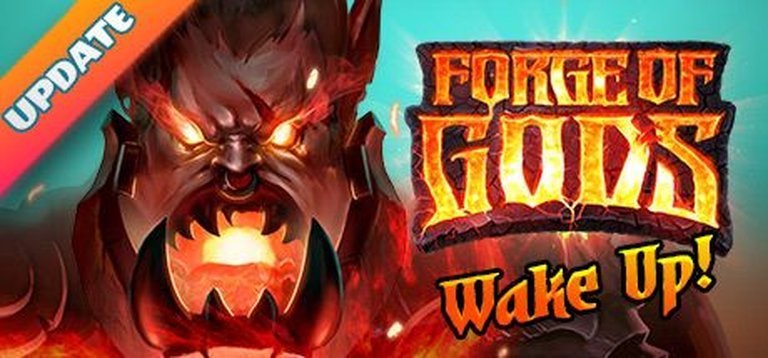
Forge of Gods is a multiplayer card strategy RPG set in the fantasy world of Pangea, where players collect, train, and evolve hundreds of unique creatures to build an unstoppable army. With a mix of tactical battles, PVP duels, guild wars, and castle-building, the game challenges players to forge legendary warriors and conquer enemies in fast-paced, skill-based combat. Originally released in 2016 by Panoramik Inc., it later became a sub-game within Mighty Party, offering a rich blend of strategy, RPG elements, and competitive gameplay.
Gameplay Videos
Forge of Gods Guides & Walkthroughs
Forge of Gods Reviews & Reception
metacritic.com (76/100): A triumphant return to form for the series.
mmos.com (60/100): Pay-to-win. Game ported to PC from mobile platforms. Laggy UI.
steambase.io (75/100): Mostly Positive
steam-backlog.com (75/100): Mostly Positive
Forge of Gods: A Forgotten Gem of Tactical Card-Based Strategy
Introduction: The Rise and Fall of a Unique Hybrid
Forge of Gods (2016) is a game that defies easy categorization—a bold fusion of tactical RPG, collectible card mechanics, and base-building strategy, all wrapped in a vibrant fantasy aesthetic. Developed by Panoramik Inc., a studio with a history of mid-core mobile and PC titles, Forge of Gods emerged during a golden age of hybrid genre experimentation, blending the addictive progression of card games with the depth of turn-based strategy. Yet, despite its ambitious design and a dedicated player base, the game’s life was cut short, shuttering in 2019 and later absorbed as a sub-game within Mighty Party. This review seeks to dissect Forge of Gods in its entirety: its innovative mechanics, its narrative and thematic underpinnings, its reception, and its lasting—if underappreciated—legacy in the pantheon of digital card games.
Development History & Context: A Mobile-to-PC Odyssey
The Studio Behind the Forge
Panoramik Inc., founded in 2005, was no stranger to blending genres. Specializing in “casual to mid-core” experiences, the studio had dabbled in everything from VR shooters (Cargo Cult: Shoot’n’Loot VR) to chibi-style RPGs (Mighty Party). Forge of Gods was initially conceived as a mobile title, launching on Android in May 2014 before making its way to Steam via Greenlight in 2016. This mobile-to-PC transition was not without its growing pains, as evidenced by player complaints about a “laggy UI” and controls that felt more at home on touchscreens than keyboards.
The Gaming Landscape of 2016
The mid-2010s were a period of explosive growth for digital card games, with Hearthstone (2014) dominating the market and titles like Shadowverse and Elder Scrolls: Legends vying for attention. Forge of Gods entered this fray with a unique selling point: it wasn’t just about collecting cards—it was about forging them, evolving creatures through a deep fusion system, and deploying them in tactical, grid-based battles. The game’s “diagonal-down” perspective and emphasis on positional strategy set it apart from the more straightforward lane-based or deck-building competitors.
Technological Constraints and Design Philosophy
Built on a custom engine (later transitioning to Unity for some updates), Forge of Gods was designed to be accessible yet deep. The game’s art style—a colorful, almost storybook fantasy—was optimized for mobile devices but scaled up nicely to PC, though some textures and animations felt simplistic compared to AAA contemporaries. The developers prioritized progression over polish, offering players a staggering 1,000+ creatures to collect, evolve, and deploy. This focus on quantity over quality in asset design would later become a point of contention among critics.
Narrative & Thematic Deep Dive: Gods, Souls, and the Cycle of Power
The World of Pangea
Forge of Gods is set in the fictional land of Pangea, a realm where gods are not born but made—crafted from the souls of fallen enemies. This central premise is both the game’s greatest strength and its most underdeveloped aspect. The lore, delivered through sparse dialogue and environmental storytelling, paints Pangea as a world in flux, where warlords and guilds vie for dominance in a landscape dotted with towers, runes, and ancient ruins. The narrative, however, takes a backseat to gameplay, serving more as a loose framework for the player’s actions rather than a driving force.
Themes of Creation and Domination
The game’s title is a double entendre: players literally forge gods by capturing and evolving creatures, but they also forge their own destiny in Pangea’s brutal hierarchy. Themes of power, transformation, and cyclical conflict permeate the experience. Every battle is a chance to harvest souls, every evolution a step toward godhood. Yet, the game rarely interrogates the moral implications of this system—players are encouraged to conquer without question, to treat creatures as mere resources in their ascent.
Characters and Dialogue: A Missed Opportunity
While Forge of Gods boasts hundreds of creatures, few have distinct personalities or backstories. The game’s dialogue is functional, often limited to battle cries or guild chat snippets. The lack of a strong central narrative or memorable characters means that the world of Pangea, while visually rich, often feels hollow. This absence is particularly glaring in an era where games like Slay the Spire and Gwent proved that card-based RPGs could weave compelling stories around their mechanics.
Gameplay Mechanics & Systems: The Heart of the Forge
Core Gameplay Loop: Collect, Evolve, Conquer
At its core, Forge of Gods is a game of collection and evolution. Players assemble a squad of creatures, each with unique abilities, and deploy them in turn-based, grid-based battles. The game’s most innovative mechanic is its evolution system, which allows players to fuse creatures to create more powerful variants. For example, combining a “Redhead Scout” with an “Ogre Warlord” could yield a hybrid unit with transformed abilities—a tactic that became a meta-defining strategy in PvP.
Combat: Tactical Depth on a Grid
Battles unfold on a hexagonal grid, where positioning is paramount. Units are divided into four archetypes:
– Attackers: High damage, low defense.
– Defenders: Tanky, with taunt abilities.
– Ranged: Deal damage from a distance.
– Stouts: Balanced units with unique auras.
The “rearrange and move” system allows players to shift units mid-battle, adding a layer of tactical depth rare in card games. However, the AI in PvE modes often feels predictable, making PvP the true test of skill.
Progression and Economy: The Grind and the Paywall
Forge of Gods employs a freemium model, with a heavy emphasis on daily quests, guild raids, and crypt openings (the game’s equivalent of loot boxes). While the game is technically free-to-play, its monetization is aggressive:
– Crypts: Randomized creature drops, with rare units locked behind premium currency.
– Guild Wars: Require coordinated team efforts but reward powerful evolution materials.
– Castle Building: A base-management system that, while charming, often feels like a time-gated chore.
The game’s economy is its most divisive aspect. Free-to-play users could progress, but at a glacial pace, while paying players could dominate leaderboards with ease. This imbalance led to accusations of “pay-to-win,” a criticism that dogged the game throughout its lifespan.
UI and Quality-of-Life Issues
The PC port suffered from a clunky interface, with menus that felt designed for touchscreens. Inventory management was cumbersome, and the lack of hotkeys or streamlined navigation frustrated many players. These issues, while minor in isolation, compounded to create a sense of jankiness that undermined the game’s strategic depth.
World-Building, Art & Sound: A Fantasy Sandbox
Visual Design: Vibrant but Repetitive
Forge of Gods’ art style is its most immediately striking feature. The game’s creatures are a menagerie of mythical beasts, warriors, and hybrids, all rendered in a bright, cartoonish aesthetic reminiscent of Heroes of Might and Magic meets Disney’s Gargoyles. The world of Pangea is divided into over 100 locations, each with distinct themes—from lush forests to volcanic wastelands—but the environments often lack interactivity, serving as little more than backdrops for battles.
Sound and Music: Atmospheric but Forgettable
The game’s soundtrack is a mix of orchestral fantasy themes and ambient tracks, competent but unremarkable. Sound effects—creature roars, spell casts, and battle cries—are functional, though some units share audio cues, leading to a lack of distinctiveness. The absence of voice acting further flattens the game’s personality.
Atmosphere: A World That Feels Alive, If Shallow
Pangea is a world that feels alive, thanks to its bustling guilds, dynamic events (like the “Beastial Beauty” Valentine’s tournament), and the ever-present sense of progression. Yet, it’s a world that rarely breathes. There are no NPCs with quests, no lore-rich codexes, no moments of quiet reflection—just an endless cycle of battle, evolution, and repetition.
Reception & Legacy: A Cult Classic’s Short-Lived Reign
Critical and Commercial Reception
Forge of Gods launched to a lukewarm critical reception. On Metacritic, it holds a user score of 7.6/10 (based on 13 ratings), with players praising its depth and addictive gameplay but criticizing its monetization and technical issues. Steam reviews are similarly mixed, with a 75/100 “Mostly Positive” rating from over 2,600 reviews. Common praises included:
– “Addictive and strategic” (Ghosta, Metacritic)
– “A hidden gem for TCG fans” (regard, Metacritic)
– “Great guild system and PvP” (impaler_vlad, Metacritic)
However, criticisms focused on:
– Pay-to-win mechanics (“The game is a grindfest unless you pay,” noted multiple Steam reviewers).
– Clunky PC controls (“Feels like a mobile port,” complained others).
– Repetitive endgame (“After 100 hours, it’s just the same battles,” wrote a long-time player).
The Shutdown and Absorption into Mighty Party
Despite its dedicated fanbase, Forge of Gods struggled to retain players in the long term. On March 18, 2019, Panoramik Inc. announced the game’s shutdown, citing “server costs and shifting priorities.” The game’s assets and mechanics were later repurposed into Mighty Party’s “Outlands” mode, a bittersweet end for a title that had carved out its own niche.
Influence and Legacy
While Forge of Gods never reached the heights of Hearthstone or Gwent, its legacy lives on in several ways:
1. Evolution Mechanics in Modern TCGs: Games like Monster Sanctuary and Tactics Ogre: Reborn have adopted similar fusion systems.
2. Guild-Based Progression: The game’s emphasis on guild wars and cooperative raids influenced later mobile RPGs like Raid: Shadow Legends.
3. A Cautionary Tale for Freemium Design: Forge of Gods serves as a case study in how aggressive monetization can alienate players, even in a game with strong core mechanics.
Conclusion: A Flawed Masterpiece Worth Remembering
Forge of Gods is a game of contradictions—a title with brilliant tactical depth and a vibrant world, yet one that stumbles over its own monetization and technical limitations. It is a game that rewards dedication but punishes those unwilling to engage with its grind. Most of all, it is a game that could have been a classic, had it received the polish and narrative care it deserved.
Final Verdict: 7.5/10 – A Bold Experiment with Lasting Ideas
- Strengths: Deep evolution system, strategic combat, vibrant art style, strong guild mechanics.
- Weaknesses: Aggressive monetization, clunky UI, shallow narrative, repetitive endgame.
Forge of Gods may be gone, but its ideas endure. For players willing to look past its flaws, it remains a fascinating relic of a time when card games dared to be more than just digital decks—a time when they aspired to be forges.
Post-Script: For those curious about its spiritual successor, Mighty Party’s “Outlands” mode retains some of Forge of Gods’ DNA, though stripped of its tactical depth. Meanwhile, indie titles like Monster Train and Griftlands continue to explore the fusion of card mechanics and RPG progression, proving that the forge’s fire still burns.