
- Release Year: 2018
- Platforms: Windows
- Publisher: Petroglyph Games Inc., Team17 Digital Limited
- Developer: Petroglyph Games Inc.
- Genre: Strategy, Tactics
- Perspective: Diagonal-down
- Game Mode: Online PVP, Single-player
- Gameplay: Fog of war, Real-time strategy
- Setting: Futuristic, Sci-fi
- Average Score: 58/100
Description
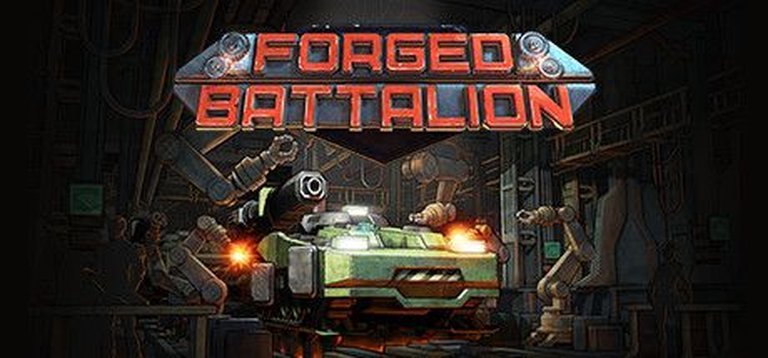
Forged Battalion is a real-time strategy game set in a mid-21st century sci-fi world plagued by climate change and escalating wars, where players command customizable battalions of units, designing and upgrading armies to engage in intense campaigns, skirmish modes, and online multiplayer battles with fog of war and free camera perspectives.
Gameplay Videos
Where to Buy Forged Battalion
PC
Forged Battalion Cracks & Fixes
Forged Battalion Guides & Walkthroughs
Forged Battalion Reviews & Reception
metacritic.com (58/100): This is C & C with a deep tech tree, modern graphics, and custom armies. It fails only because it was too ambitious.
saveorquit.com : Forged Battalion seems to be the next logical step, since it has better graphics, and presents more gameplay possibilities.
steamcommunity.com : Overall I enjoyed the game. But I wanted it to be much better if we want it to compete with other games out there.
steambase.io (58/100): Mixed
Forged Battalion: Review
Introduction
In an era where real-time strategy (RTS) games have largely ceded the spotlight to MOBAs and battle royales, Forged Battalion emerges as a defiant throwback—a customizable war machine forged from the ashes of Westwood Studios’ Command & Conquer legacy. Developed by Petroglyph Games, a studio staffed by ex-Westwood veterans, this 2018 title promised to revitalize the genre with player-driven faction design amid a dystopian sci-fi backdrop. Yet, for all its ambitious blueprint, Forged Battalion often feels like a prototype: innovative in concept but rough-hewn in execution. This review argues that while its unit customization system carves a unique niche, persistent mechanical flaws, a forgettable campaign, and a dwindling multiplayer scene relegate it to a footnote in RTS history rather than a cornerstone revival.
Development History & Context
Petroglyph Games, founded in 2003 by Westwood alumni including Command & Conquer architects like Joseph Bostic, has long chased the ghost of their former employer’s voxelated glory. Titles like Star Wars: Empire at War (2006) and Grey Goo (2015) showcased their RTS chops, but financial pressures led to the pixel-art simplicity of 8-Bit Armies (2016). Forged Battalion represents an evolution: a “gussied-up” iteration with 3D visuals, released in Steam Early Access on January 16, 2018, and fully launched August 14, 2018, under publishers Team17 Digital Ltd. and Petroglyph itself.
The creators’ vision centered on “design-it-yourself equipment,” echoing the canceled End of Nations (2010), where Petroglyph envisioned modular factions battling a tyrannical empire. Technological constraints of the mid-2010s—GlyphX engine limitations, modest budgets—manifested in single-threaded production queues reminiscent of classic Westwood, but without modern niceties like multi-queue cranes. The 2018 RTS landscape was barren: StarCraft II expansions were winding down, Age of Empires IV years away, and indies like They Are Billions dominated niches. Forged Battalion entered as a $20 digital download, banking on nostalgia and Steam Workshop support amid Early Access hype, but faced stiff competition from free-to-play giants like Warzone 2100 forks and Supreme Commander mods.
Credits highlight RTS royalty: Frank Klepacki on audio, Bostic on design, and a 62-person team constrained by indie realities—no FMVs, text-only briefings. Early Access feedback drove patches for AI, balance, and multiplayer stability, but post-launch support waned, mirroring Petroglyph’s pattern of promising starts and quiet fades.
Narrative & Thematic Deep Dive
F Forged Battalion‘s story unfolds in a “20 Minutes into the Future” crapsack world: by 2057, climate change has sunk coasts, scorched farmlands, and toppled governments, sparking resource wars. Enter Milos Thymos (variants: Miles, Milos Thymes), a techno-mesmerist whose Modular Manufacturing Plants (MMPs) promise infinite food, energy, and bunkers—for the price of sovereignty. He unites nations under “The Collective,” a red-and-black clad juggernaut wielding WMDs against holdouts. Players command a faceless resistance leader from Charleston Settlement, seizing MMPs to forge a counterforce, liberating the U.S. before assaulting Europe.
The plot, loosely cribbed from End of Nations, is delivered via scrolling text crawls (Star Wars-lite) and sparse in-mission radio chatter—no FMVs, just diary entries admitting the Collective’s appeal (“Jerkass Has a Point”). Characters like Robert Dallas (debates “Liberty Over Prosperity”), Irene Aberthany (gas-cloud boss), Max Carter (defects in a Face–Heel Turn), and generals in “Boss in Mook Clothing” mechs add flavor, but dialogue is functional: “Get Carter!” or “Snake Hunt.” Missions like “Prelude to Invasion” or “Bottom of the World” nod to C&C‘s structure—defend assets, hunt elites—but devolve into “destroy all enemies.”
Thematically, it grapples with techno-fascism: Thymos stabilizes chaos via MMPs, but at freedom’s cost. Resistance embodies “La Résistance,” prioritizing liberty amid starvation winters. Subtle motifs—theme-named Collective regions (totem animals), JSON acronym fun—underscore control vs. anarchy, but execution is shallow. No branching paths or moral choices; betrayal feels scripted, not earned. As one diary notes, players grasp why nations joined: prosperity trumps ideology. Yet, the narrative’s dryness undermines its potential, serving as tutorial fodder rather than epic saga.
Gameplay Mechanics & Systems
At its core, Forged Battalion loops the C&C economy: Command Centers drop harvesters on ore, generate power, and anchor build radii. Single-threaded construction (one building/unit at a time) demands meticulous build orders—Power Plant delays mean stalled air wings. Factories gain speed multipliers (up to x3), but no queues force constant base babysitting, snowballing early rushes per Wayward Strategy’s analysis.
Innovation shines in the persistent tech tree: battles earn points across 60+ Tier 1-4 unlocks for chassis (infantry mechs, light/heavy vehicles, drone aircraft), weapons (plasma, toxic gas, rockets), supports (regen, stealth, hazmat), locos (wheels, treads, hovers), HQ passives (stealthed buildings, fusion power), and superweapons (nuke, ion cannon, rocket barrage). Design 16 units (4/factory), adapting mid-campaign: anti-tank jets vs. armor, glue-fire vs. infantry. Rock-paper-scissors evolves—armor types counter weapons (e.g., ballistic shreds light vehicles x2, falters vs. infantry x0.25)—with geo-effects (mud slows treads, tox clouds demand hazmat).
Combat is “spammy”: massed doomstacks overwhelm via economy, AI pincers or superweapons adding flair. Fog of war, free camera, and point-select interface feel classic, but flaws abound: no unit speed-matching (stragglers die), unqueueable production frustrates late-game, UI lacks DPS stats (base damage misleads). Campaign (15+ missions) is “formulaic”—kill HQs, defend tech centers—but AI cheats with aggression, doomstacks, and imbalance (easy mode overwhelms). Skirmish/multiplayer (1v1-8, ranked/co-op) leverages Workshop maps, but dead community (post-2019 abandonment claims) and no observer/AI factions limit replayability. Map editor shines, but lacks ambition.
| Core Systems | Strengths | Flaws |
|---|---|---|
| Economy | Harvester auto-pathing, capturable outposts | Power micromanagement, no silos |
| Production | Multipliers scale factories | Single-threaded tedium |
| Customization | Endless combos, meta-progression | Slow unlocks, no sandbox preview |
| Combat | Deep counters, geo-effects | Unit bloat drowns micro, missile no FF/AoE |
World-Building, Art & Sound
The setting—a irradiated, flooded 2057 Earth—evokes C&C‘s grit: MMPs churn endless war machines amid toxic wastes, mud bogs, and cliffs. Color-coded armies (blue Resistance vs. Collective red/black) aid clarity, but visuals are “pretty enough” cel-shaded homogeneity—no faction aesthetics, just functional chassis swaps. Maps vary (Salamander Fortress, Whiskey Outpost), with neutral gold nodes and elevation, but bland backdrops lack apocalypse punch.
Art direction prioritizes readability: diagonal-down perspective, free camera zoom to infantry-scale mechs. UI, though cluttered, improves post-EA, but lacks polish (no multi-language fixes until late patches).
Sound elevates: Frank Klepacki’s iconic score—gritty synths, pounding beats—channels Red Alert. Effects pop (Macross barrages, plasma zaps), VO terse but fitting (“JSON online”). It “sounds like war,” immersing amid visual mediocrity, contributing to nostalgic highs in multiplayer clashes.
Reception & Legacy
Launch reception was muted: MobyGames critics averaged 60% (Gameplay Benelux: “leuk idee… zwakke afwerking”; Svet kompjutera unscored AI gripes). Steam: Mixed (63% of 774 reviews), praising customization/music (“C&C with deep tech tree”) but slamming AI (“Doomstack cheese”), campaign brevity, production caps, and dead MP (“abandoned trash”). Metacritic user 5.2/10 echoed: “potential unfulfilled.”
Commercially modest ($4.99-9.99 sales), it sold via bundles (Petroglyph Mega-Pack). Reputation soured post-support—Steam forums lament crashes, no achievements, sparse updates (last 2024 maintenance). Influence? Niche: inspired modders, echoed in 9-Bit Armies, but no genre shift. Petroglyph iterated (8-Bit Hordes/Invaders), yet Forged Battalion symbolizes RTS indiedom—ambitious revivals stifled by scope, community fade.
Conclusion
F Forged Battalion tantalizes with its engineer-commander fantasy: forge bespoke battalions, unleash Klepacki-scored Armageddon. Petroglyph’s Westwood DNA shines in economy loops and customization depth, a breath of fresh schematics in stagnant RTS winds. Yet, execution falters—tedious production, unmanageable swarms, bland narrative—yielding frustration over triumph. Mixed reception and legacy as “promising mess” cement its place: not history’s pinnacle like C&C, but a cult curio for tinkerers. Verdict: Recommended for RTS diehards (7/10), a flawed forge worth firing up on sale, but no battalion to storm the halls of greatness.