
- Release Year: 2022
- Platforms: Macintosh, Windows
- Publisher: FM Studio
- Developer: FM Studio
- Genre: Adventure, Puzzle
- Perspective: 1st-person
- Game Mode: Single-player
- Gameplay: Graphic adventure
- Setting: Horror
- Average Score: 90/100
Description
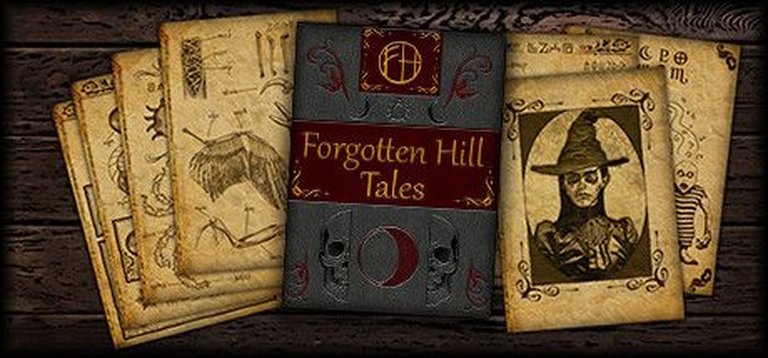
Forgotten Hill: Tales is a first-person horror point-and-click adventure anthology and spin-off from the Forgotten Hill series, featuring five grotesque short stories set in the eerie, disturbing world of Forgotten Hill. Players explore tales like a boy escaping a locked cabin with his grandfather after a tragic past, a clinic founder’s obsession with a strange painting, an exterminator aiding a grandma against rodents, a butler’s delicate task, and a kidnapped child’s flight from a horrific museum, all through puzzle-solving and creepy atmospheres.
Gameplay Videos
Where to Buy Forgotten Hill: Tales
PC
Forgotten Hill: Tales Guides & Walkthroughs
Forgotten Hill: Tales Reviews & Reception
steambase.io (90/100): Very Positive
Forgotten Hill: Tales: Review
Introduction
In the shadowed annals of indie horror gaming, few series evoke the grotesque elegance of FM Studio’s Forgotten Hill franchise, a labyrinth of point-and-click nightmares that began on mobile devices in 2016 and clawed its way to PC dominance. Forgotten Hill: Tales, released on April 27, 2022, marks the first official spin-off anthology, bundling five self-contained “side stories” that peel back layers of the eponymous town’s eldritch underbelly. These vignettes—Little Cabin in the Woods, Portrait of an Obsession, Grandma’s Delicious Cakes, Rise of Pico, and The Left Behind—promise not just chills, but a deeper excavation of the lore that has ensnared fans since Fall. As a historian of adventure games, I posit that Tales is a masterful interstitial chapter: it doesn’t reinvent the wheel but polishes it to a macabre sheen, rewarding series devotees with contextual riches while serving as an accessible entry for newcomers to this Unity-powered house of horrors.
Development History & Context
FM Studio, an Italian indie outfit helmed by a small team of passionate creators, has been the sole architect and publisher of the Forgotten Hill saga since its mobile inception. Specializing in first-person point-and-click adventures, the studio transitioned from iOS and Android releases—like the 2016 trio of Fall, Puppeteer, and Surgery—to Steam ports with First Steps in 2021, culminating in Tales as a budget-friendly $2.99 bundle (often discounted to $1.49). Built on Unity, the game leverages the engine’s cross-platform prowess for seamless Windows and Macintosh support, reflecting the era’s indie renaissance where tools like Unity democratized horror development amid the post-Amnesia boom.
Released in 2022, Tales arrived during a saturated point-and-click revival fueled by titles like The Room series and Rusty Lake, yet FM Studio carved a niche with its unflinching body horror and Italian gothic flair. Technological constraints were minimal—2D illustrated realism prioritized atmosphere over AAA visuals—but post-launch patches (documented diligently on Steam forums) addressed glitches like persistent hints, save corruption in The Left Behind, and puzzle exploits, showcasing the studio’s responsiveness. Contextually, it slots into a timeline bridging 19th-century prequels (Mementos) and modern entries (Disillusion, 2019), expanding a universe born from mobile escapism into a cohesive, Steam-optimized anthology. FM Studio’s vision? To “tell side stories… in different periods… to new characters,” as per their site, transforming episodic mobile experiments into a lore-deepening opus.
Narrative & Thematic Deep Dive
Forgotten Hill: Tales thrives as a mosaic of five vignettes, each a grotesque vignette illuminating the town’s festering history. Lacking a unified protagonist, it employs anthology storytelling to fractalize themes of isolation, obsession, and monstrous domesticity, weaving threads into the broader Forgotten Hill tapestry of mad scientists, cannibals, and spectral abductions.
-
Little Cabin in the Woods: A boy, scarred by a “violent, tragic event,” endures grandfatherly imprisonment in a woodland prison. Themes of trauma and desperate escape culminate in revelations of familial monstrosity—an eye in the wall, chimeric soups—echoing series motifs like Other Friends. Chronologically pre-Fall, it humanizes generational curses.
-
Portrait of an Obsession: Victor Ostergard, Surgery Clinic founder, encounters a cursed painting in Japan, spiraling into artistic madness. Yōkai elements (yurei, oni) blend Eastern horror with Western obsession, foreshadowing his Playground villainy. The Teru-Teru Bōzu ritual underscores futile defiance against supernatural compulsion.
-
Grandma’s Delicious Cakes: An exterminator aids elderly Martha Blumenthal against “rodents,” unearthing cannibalistic hospitality. Cakes laced with human fare invert Lethal Chef tropes, tying to Abigail Blumenthal’s poisons. Multiple endings (e.g., Martha’s cyclopean third eye) amplify moral decay.
-
Rise of Pico (or simply Pico): The Hofmeier butler wrangles escaped lab abominations for his master, delving into loyalty amid biohorror. Pixel-art shift signals experimental flair, linking to Oliver Hofmeier’s Mix-and-Match Critters and Buried Things (1886).
-
The Left Behind: Post-Disillusion, a kidnapped child flees Ruth Norwood’s museum amid freed peers. Survival against serial killers (resurrected guardians) and soul-draining rituals critiques institutional evil, with chess puzzles against Mr. Sadil Farah adding ironic civility.
Dialogues are sparse, delivered via environmental logs and twisted notes, fostering ambiguity. Themes coalesce around Forgotten Hill’s Supernatural Hotspot status—High-Class Cannibals like Jonah Thompson, Grand Theft Me via Ruth—culminating in a lore expansion that rewards wiki-divers with timelines from 1886 onward.
Gameplay Mechanics & Systems
At its core, Tales is a pure graphic adventure: point-and-select interface in first-person, emphasizing inventory hunts, riddles, and mini-games. Each tale’s 30-60 minute loop follows a familiar cadence—explore grotesque rooms, combine items (feather + heart for coins), solve shape-matching (ancient creatures, statue orientations), and navigate mazes or scarab boards.
Innovations shine in the innovative hint system—a single-click lifeline preventing frustration, refined post-launch—and multilingual support (8 languages). Puzzles escalate logically: Cabin‘s frog-blood soup, Cakes‘ monitor hacks, Left Behind‘s chess/scarab duels demand observation (e.g., paintings conceal clues). No combat or progression trees; “character growth” is narrative-driven realization. UI is minimalist—bottom inventory, arrow navigation—flawlessly intuitive on Unity, though early bugs (e.g., infinite scarabs) were patched swiftly. Achievements like “Brainiac” (no-hint runs) add replay value, while save issues were ironed out. Flaws? Pixel-art Pico jars stylistically, and some riddles border obtuse without hints, but accessibility cements it as puzzle mastery.
World-Building, Art & Sound
Forgotten Hill: Tales conjures a grotesque diorama of sepia-toned cabins, infested homes, and yokai-haunted galleries, rendered in illustrated realism with hand-drawn 2D assets. Settings pulse with detail: eye-sprouting plants (Disillusion echoes), chimeric organs, fetus-fruits—Fantastic Fruits and Vegetables abound. Atmosphere builds via concealing canvases (hidden horrors behind art), cramped cabins evoking And I Must Scream isolation, and Spectrum-like Dark Worlds teased in portals.
Visual direction masterfully deploys Gonk characters—haggard faces, stretched mouths—and Art Shifts (Pico‘s pixels), heightening unease. Sound design, sparse yet surgical, layers creaking floors, dripping blood, and dissonant stings; no voice acting amplifies environmental storytelling. These elements synergize for immersive horror: a cake’s “delicious” reveal horrifies via visual decay, sounds cue revelations, forging an experience where world-building is the scare.
Reception & Legacy
Launch reception was niche but fervent: Steam’s Very Positive 90/100 (97 reviews) praises puzzles and lore, contrasting MobyGames’ scant 3.0/5 (1 rating, no reviews) and Metacritic’s void. Patches (April-May 2022) boosted polish, earning developer kudos. Commercially modest—collected by few, priced low—it thrives in the long tail, influencing indie anthologies like Rusty Lake Hotel sequels.
Legacy-wise, Tales cements FM Studio’s influence on mobile-to-PC horror, bridging First Steps (2021) and Third Axis (2023). It expands tropes (Creepy Child, Mad Scientist) into a timeline-spanning mythos, inspiring fan wikis and walkthroughs. In point-and-click history, it echoes I Have No Mouth‘s despair, positioning Forgotten Hill as a cult cornerstone amid Unity indies.
Conclusion
Forgotten Hill: Tales is no revolution but a meticulously grotesque refinement, distilling FM Studio’s horrors into lore-enriching gems that punch above their anthology weight. Exhaustive puzzles, thematic depth, and atmospheric mastery earn it a 9/10—essential for horror aficionados, a thrilling primer for others. In video game history, it secures the series’ niche as indie point-and-click’s unblinking id, a testament to persistent nightmares in a fleeting digital age. Play if you dare; escape if you can.