
- Release Year: 2023
- Platforms: Macintosh, PlayStation 5, Windows
- Publisher: Plug In Digital SAS
- Developer: Black Drakkar Games Sp. z o.o., Fallen Leaf S.A.
- Genre: Action
- Perspective: Behind view
- Game Mode: Single-player
- Gameplay: Graphic adventure, Puzzle elements, Walking simulator
- Setting: Futuristic, Mars, Sci-fi
- Average Score: 77/100
Description
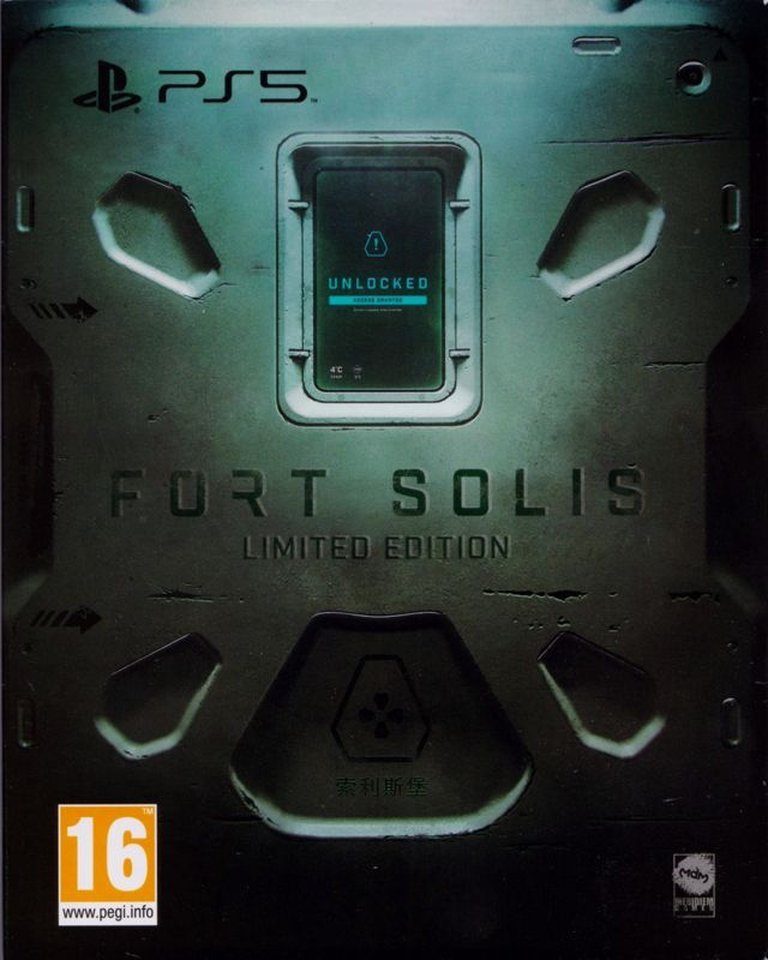
Fort Solis is a third-person thriller set on a desolate Mars base, where players assume the role of an astronaut investigating a mysterious disappearance. As the sole survivor of a routine mission gone wrong, players navigate the isolated environment, solve intricate puzzles, and uncover the truth behind the crew’s vanishing. Combining atmospheric sci-fi storytelling with exploration and puzzle-solving mechanics, the game immerses players in a tense narrative of survival and mystery on a futuristic Martian outpost.
Gameplay Videos
Where to Buy Fort Solis
Fort Solis Free Download
Fort Solis Cracks & Fixes
Fort Solis Guides & Walkthroughs
Fort Solis Reviews & Reception
metacritic.com (85/100): Fort Solis delivers an immersive cinematic experience, enriched by exceptional voice acting, stunning graphics, and elements such as audio and video that enhance the narrative.
opencritic.com (80/100): Fort Solis features some of the best voice acting I’ve heard, and an engaging story that carries you through to the tense reveal at the end.
polygon.com : Fort Solis is visually beautiful and well performed, at least. I loved the game’s atmosphere, particularly the gorgeous retro sci-fi aesthetic and liminal spaces the talented artists created.
Fort Solis: Review
Introduction
Fort Solis arrives on the Red Planet not as a conqueror, but as an enigma—a cinematic sci-fi thriller promising the narrative depth of prestige television with the immersive interactivity of gaming. Developed by the fledgling studios Fallen Leaf (UK) and Black Drakkar Games (Poland), and published by Dear Villagers, it burst onto the scene in August 2023 with an audacious pitch: a Netflix-style bingeable experience on Mars, starring Roger Clark (Red Dead Redemption 2‘s Arthur Morgan) and Troy Baker (The Last of Us‘ Joel Miller). Fort Solis aims to distill the isolation of COVID-19 lockdowns, the psychological tension of The Thing, and the industrial dread of Dead Space into a 4–6-hour odyssey. Yet, while its technical prowess and performances are undeniable, the game stumbles in its execution, revealing a chasm between its cinematic ambitions and its interactive foundations. This review dissects Fort Solis not merely as a product, but as a cultural artifact—a reflection of pandemic-era storytelling and the precarious tightrope walked by indies chasing AAA-quality immersion.
Development History & Context
Fort Solis germinated in the crucible of the COVID-19 pandemic. Director James Tinsdale, a former Asobo Studio veteran, envisioned translating the binge-worthy, character-driven narratives of streaming services like Netflix into an interactive format. “For them, an eight-hour TV show is a big commitment,” Tinsdale noted, aiming to avoid “bloat” by capping the experience at five hours. This philosophy of density over breadth shaped the game’s DNA, inspired by the grounded sci-fi of Moon (2009) and the industrial horror of Dead Space, blended with the ensemble tension of John Carpenter’s The Thing (1982).
Technologically, Fallen Leaf leveraged Unreal Engine 5.2 aggressively. Nanite rendered 90% of environments with photorealistic detail using Quixel Megascans assets, while Lumen’s dynamic global illumination simulated Mars’ harsh lighting. Nvidia’s Omniverse Audio2Face enabled lifelike facial performances, though the team faced optimization hurdles on PC. Production began with a skeleton crew—Tinsdale, art director Mark Cushley (Evolution Studios), and producer Max Barton—later expanding to 20 across Liverpool and Warsaw. An Epic Games MegaGrant in 2021 provided crucial funding, while Black Drakkar handled outsourced work. The cast—Clark, Julia Brown (as Jessica Appleton), and Baker—performed full motion capture, allowed to improvise to deepen character authenticity.
The 2023 gaming landscape was saturated with narrative-driven titles (Stray, The Last of Us Part II), but Fort Solis carved a niche as an indie “walking simulator” with AAA aspirations. Its May 2022 reveal at Summer Game Fest, fronted by Clark and Baker, generated buzz; its August 2023 release on PS5, PC, and macOS (with Xbox Series X/S slated for 2025) positioned it as a test case for indies leveraging next-gen tools.
Narrative & Thematic Deep Dive
Fort Solis unravels over a single night on Mars in 2080. Engineer Jack Leary responds to a distress call from the titular mining station, discovering it eerily deserted. His search for answers—aided remotely by colleague Jessica Appleton—uncovers a grim truth: Dr. Wyatt Taylor, the station’s medical officer, has slaughtered the crew to contain a viral outbreak. Martian soil, treated with a growth accelerant, infected plants with a virus spreading to humans. Taylor, ignored by corporate authorities, resorted to murder to prevent the contagion from reaching Earth.
The narrative unfolds through environmental storytelling, audio logs, and surveillance footage, painting a portrait of Taylor’s descent. His video logs reveal a man torn between duty and familial love—his final message to his wife, imploring her not to open a contaminated plant, underscores the tragedy of his actions. The plot culminates in two endings: Jack escapes with external help, or he and Taylor perish mutually in a dust storm, both fates underscored by a post-credits voicemail implying Taylor’s family is already infected.
Characters & Themes
– Jack Leary (Roger Clark): A vulnerable “everyman” engineer, haunted by personal demons and the isolation of deep space. Clark’s performance emphasizes weariness and empathy, grounding the horror in human fragility.
– Jessica Appleton (Julia Brown): Jack’s foil—younger, tech-savvy, and darkly humorous. Her dynamic with Jack echoes Firewatch’s Henry and Delilah, offering moments levity amid dread.
– Wyatt Taylor (Troy Baker): A morally complex antagonist. Baker infuses him with sympathetic desperation—his fear for Earth and family blurs the line between villain and victim.
Thematically, Fort Solis interrogates isolation, both physical and psychological. The pandemic’s echoes permeate the narrative—Taylor’s logs about missing his children mirror real-world separation anxiety. Mars becomes a liminal space, where corporate negligence and human vulnerability collide. The virus symbolizes unchecked hubris, while Taylor’s murders force players to confront moral ambiguity: Is his evil a necessary evil? The game’s greatest strength lies in its character-driven tension, though the resolution feels rushed, leaving thematic threads like corporate accountability underexplored.
Gameplay Mechanics & Systems
Fort Solis prioritizes atmosphere over action, employing a third-person perspective with no camera cuts or loading screens to maintain immersion. Core gameplay revolves around exploration, environmental puzzles, and light interaction, with mechanics tailored to its “walking simulator” ethos.
Core Loops
Players navigate Fort Solis’ nine interconnected sections—surface structures, underground tunnels, and sub-levels—using a rover for transit. Progress hinges on unlocking areas via keycards and solving context-based puzzles, such as rerouting power by inputting server codes (e.g., “25-28-23-35-39”). The multi-tool, a wrist-mounted device, serves as the sole interaction hub: scanning logs, hacking terminals, and repairing equipment.
Combat & Action
Combat is absent in traditional form. Confrontations with Wyatt are resolved via quick-time events (QTEs), timed button prompts that feel inconsequential due to their linear outcomes. For example, failing a dodge sequence still progresses the story, undermining tension. These “Key Sequences,” inspired by God of War and The Last of Us Part II, aim for player agency but fall flat, offering no meaningful branching.
Flaws
– Pacing & Movement: Jack’s deliberate walking speed (initially capped even on PC) transforms exploration into a slog. A December 2023 patch added a sprint option, but the damage to immersion was done.
– Navigation: A diegetic map, displayed on the multi-tool, is cluttered and often unreadable, forcing tedious backtracking.
– Limited Interactivity: Despite its open layout, the station feels sterile. Puzzles are rudimentary (e.g., find batteries for doors), and collectibles (logs, videos) offer lore without rewarding engagement.
– QTE Overuse: These events punctuate climax moments but feel rote, with Abbie Stone of Play noting they “lack any noticeable impact on the narrative.”
Fort Solis’ systems ultimately prioritize narrative flow over player agency, a gamble that pays off in immersion but sacrifices engagement. As Joe Parlock of TheGamer lamented, it’s “all presentation and no substance.”
World-Building, Art & Sound
Fort Solis’ Martian mining station is a triumph of environmental storytelling, designed to evoke dread through its architecture and atmosphere. The base is a labyrinth of industrial pragmatism and eerie emptiness: sterile corridors contrast with overgrown greenhouses, and flickering emergency lights cast long shadows. The surface, traversed via rover, is a hostile expanse where dust storms gradually obscure visibility, mirroring Jack’s deteriorating hope.
Visual Direction
– Grounded Aesthetics: Inspired by The Expanse, the art avoids excessive futurism. Rusted machinery, worn spacesuits, and cluttered crew quarters feel lived-in. The greenhouse, with its dead plants, becomes a haunting metaphor for the virus’ spread.
– Technical Prowess: Unreal Engine 5.2 enables breathtaking visuals. Nanite renders detailed Martian landscapes, while Lumen’s global illumination creates dynamic lighting that reacts to dust and smoke. Character models, crafted via Audio2Face, exhibit subtle tics—Jessica’s nervous gestures, Wyatt’s weary stares—that sell their humanity.
– Limitations: PC optimizations were inconsistent, with frame rate drops and glitches reported. Some critics, like Josh West of GamesRadar, felt the visual design was “underdeveloped” compared to its technical ambitions.
Sound Design
The soundscape is a masterclass in tension. The creak of shifting metal, the hiss of leaking oxygen, and the howl of Martian winds create constant unease. Troy Baker’s voice work is standout—his Taylor shifts from clinical detachment to guttural panic, making his monologues chillingly intimate. The minimalist score, composed by Ted White, swells during QTEs but recedes during exploration, letting ambient sounds dominate.
Together, the art and sound transform Fort Solis into a character—a hostile, breathing entity that mirrors the crew’s unraveling. As Tauriq Moosa of Polygon noted, its “retro sci-fi aesthetic and liminal spaces” make even mundane corridors feel ominous.
Reception & Legacy
Fort Solis launched to a chorus of mixed reviews. Metacritic scores hovered at 60/100 for PS5 and 56/100 for PC, with OpenCritic reporting a 33% recommendation rate. Critics praised its cast, visuals, and atmosphere but lambasted its gameplay.
Critical Consensus
– Praise: Roger Clark and Troy Baker’s performances were universally lauded. Mark Delaney of GameSpot called them “the game’s strongest asset,” while Ashley Bardan of Kotaku singled out Baker for balancing “camp and realism.” Visuals and sound design earned near-universal acclaim, with Larryn Bell of Shacknews noting they set “a higher standard for visual design.”
– Criticism: The narrative’s uneven pacing drew ire. Eurogamer’s Emma Kent felt it “loses clarity over time,” and Adventure Gamers lamented its “underdeveloped” character arcs. Gameplay was the primary target: Joe Parlock of TheGamer deemed it “dated,” and Polygon’s Tauriq Moosa compared it to “watching a 4K YouTube video” for its limited interactivity.
Commercial Performance
Despite the lukewarm reception, Fort Solis found an audience. It sold 100,000 units by late 2024, with Steam user reviews leaning positive (66%). Its legacy is twofold:
– Cinematic Ambition: It demonstrated that indies could achieve AAA-level production values, albeit with compromises. Its seamless design (no cuts or loads) influenced subsequent narrative games aiming for immersion.
– Media Adaptations: In December 2023, Fallen Leaf partnered with Studios Extraordinaires for film/TV adaptations, signaling the game’s potential beyond gaming.
– Cautionary Tale: Fort Solis became a textbook example of prioritizing presentation over interactivity. As John Bales of PC Gamer quipped, “If it really was a Netflix series, it wouldn’t get a second season.”
Conclusion
Fort Solis is a paradox: a visually stunning, narratively rich experience undermined by its own ambition. It succeeds as a character study and a technical showcase, elevating the indie sci-fi thriller genre with its performances and atmosphere. Yet, its gameplay—marred by slow pacing, repetitive QTEs, and limited interactivity—relegates it to a footnote in interactive storytelling.
In the grand tapestry of video game history, Fort Solis occupies a unique space. It reflects the pandemic’s emotional toll and the industry’s push toward cinematic experiences, proving that small studios can punch above their weight. However, it also serves as a reminder that interactivity is not optional; a game must engage as much as it impresses. Fort Solis is a worthy, if flawed, journey for fans of sci-fi and narrative-driven games, but one that ultimately leaves players stranded on a desolate Martian shore—longing for the thrills it promised but never fully delivered.
Verdict: A compelling, frustrating, and ambitious experiment. Fort Solis is not a masterpiece, but it is a necessary one—a testament to the power of storytelling in games and the high cost of chasing cinematic perfection.