
- Release Year: 2018
- Platforms: Windows
- Publisher: SakuraGame
- Developer: La’cryma, YAMAYURI GAMES
- Genre: Adventure
- Perspective: 1st-person
- Game Mode: Single-player
- Gameplay: Visual novel
- Average Score: 82/100
Description
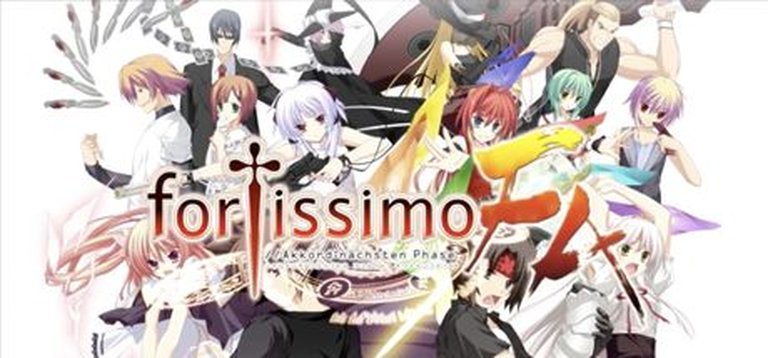
Fortissimo FA is a visual novel adventure set on Tsukuyomi Island, where protagonist Yoshino Reiji is thrust into a supernatural conflict after encountering No.13, a human manifestation of a powerful weapon called the M.S.D.W. Dragged into a cyclical war between 13 summoners gifted with reality-altering magic, Reiji must navigate battles, time loops, and emotional turmoil while striving to protect his ordinary life and untangle bonds of love amid chaos. The game blends meditative storytelling with intense clashes and romantic drama.
Where to Buy Fortissimo FA
PC
Fortissimo FA Cracks & Fixes
Fortissimo FA Guides & Walkthroughs
Fortissimo FA Reviews & Reception
steambase.io (82/100): A triumphant return to form for the series.
raijin.gg (82/100): A triumphant return to form for the series.
Fortissimo FA: A Fractured Symphony of Moé and Mayhem
Introduction: When Magic Misses Its Mark
In the crowded pantheon of Japanese visual novels, Fortissimo FA (2018) emerges as a curious anomaly—a game that boldly advertises “tears and blood”-styled storytelling while juggling moé romance, supernatural warfare, and hot-blooded battles. Developed by La’cryma and published internationally by SakuraGame, this Windows title promised a genre-blending experience but delivered a fragmented symphony. This review argues that while Fortissimo FA reflects the creative ambitions of its developers and the shifting appetites of the late 2010s visual novel market, its execution stumbled under the weight of tonal dissonance and underdeveloped systems, leaving it as a footnote rather than a landmark.
Development History & Context: A Studio’s Turbulent Crescendo
Vision Amid Constraints
La’cryma, a studio with roots in niche Japanese visual novels (VNs), conceived Fortissimo FA as part of a broader series dating back to 2010’s fortissimo // Akkord:Bsusvier. The game’s 2018 Steam release—localized by SakuraGame—targeted a growing Western audience hungry for anime-styled narratives. Yet, budgetary and creative constraints are evident. Unlike同年 AAA titles leveraging advanced engines, Fortissimo FA relies on Ren’Py-esque presentation, with static sprites and minimal animation—a hallmark of small-studio VNs of the era.
The 2018 Landscape
Arriving alongside acclaimed narrative titans like Doki Doki Literature Club (2017), Fortissimo FA faced stiff competition. The late 2010s saw visual novels evolving beyond kinetic storytelling, incorporating meta-commentary and branching systemic depth. In contrast, La’cryma doubled down on traditional tropes: school settings, magical battles, and harem-style romance. This conservative approach, while comforting to genre purists, limited its broader appeal.
Narrative & Thematic Deep Dive: War, Love, and Wasted Potential
Plot: A Clash of Genres
The story centers on Yoshino Reiji, a pacifist student thrust into a war among 13 summoners on Tsukuyomi Island after encountering “No.13,” a humanoid weapon granting time-manipulation powers. The premise merges Fate/stay night-esque magic battles with slice-of-life romance—a combination that sounds electrifying but unfolds unevenly.
Characters: Archetypes Over Individuals
The summoners—including Reiichi (childhood friend), Towa (tsundere prodigy), and Osamu (brooding musician)—adhere rigidly to anime tropes. As one Steam review noted, routes feel “copy-pasted,” with romantic payoffs lacking buildup. The protagonist’s pacifism, a potential thematic anchor, drowns in power-fantasy clichés, such as summoning “anyone seen in 24 hours” for combat—a system rarely explored beyond superficial encounters.
Themes: Unresolved Dissonance
Fortissimo FA gestures toward weighty ideas: the morality of violence (“Return all matter to its prior state” tempts players with ethical shortcuts) and the cost of cyclical conflict (“Samsara Magic” perpetuates tragedies). Yet, these concepts are undermined by tonal whiplash. For instance, No.13’s tragic backstory clashes with comedic beach episodes, diluting emotional impact. A contributor to yuscake.com lamented, “The game could use a better plot… scandals resolve instantly, leaving no drama.”
Gameplay Mechanics & Systems: The Illusion of Choice
Core Loop: Visual Novel Conventions
As a kinetic VN with minor branching (via a text-message choice system), Fortissimo FA offers minimal interactivity. Players navigate dialogue trees influencing romance paths—akin to Brothers Conflict (another La’cryma title)—but choices rarely alter the overarching war narrative. The much-touted M.S.D.W. mechanics, like time reversal, serve as plot devices rather than gameplay tools.
Innovations and Flaws
The inclusion of a flowchart (to track unlocked scenes) and Steam Trading Cards nods to modern VN conventions. However, the UI feels dated: text displays lack customization, and save slots are limited. Combat, described in-text as “hot-blooded,” manifests as still images with sound effects—a far cry from the dynamic battles promised in SakuraGame’s marketing.
World-Building, Art & Sound: Aesthetic Highlights in a Muddled Vision
Setting: Tsukuyomi Island
The island’s idyllic school-town dichotomy evokes Persona’s urban fantasy—but lacks depth. Lore about “Samsara Magic” feels underexplored, reducing the world to a stage for set-piece battles. Players craving environmental storytelling will find little beyond generic classrooms and cherry-blossom parks.
Visual Direction: Strength in Stasis
Character designs by Udajo (of Brothers Conflict fame) shine with vibrant, detailed sprites—especially No.13’s ethereal aesthetic. Yet, CGs often feel static, with backgrounds reused excessively. A yuscake critic noted, “Some CGs are just characters standing there… zero dynamism.”
Sound Design: A Missed Beat
The OST, hyped as “music that’s the true protagonist,” delivers forgettable J-rock battle themes and saccharine piano melodies. Voice acting (Japanese-only) ranges from earnest (Reiji’s pacifist resolve) to grating (Towa’s tsundere outbursts). Notably, pre-battle crowd noises loop obtrusively during dialogue—a baffling production oversight.
Reception & Legacy: A Niche Survivor
Launch Reception
Despite middling critic reviews (Metacritic lists none; Steam reviews average “Very Positive” from 357 users), Fortissimo FA found an audience. Steambase reports 22,635 owners and $125K revenue—modest but sustainable for a niche title. Players praised its “old-school charm” and “cheap thrills” (per Steam user Kaeli), while detractors cited “repetitive writing” and “flat villains.”
Enduring Influence
The game’s legacy lies in its reflection of late-2010s VN trends: the SakuraGame-led localization boom and otome/idol-game hybridization. Yet, its failure to innovate relegated it to obscurity. Unlike Doki Doki Literature Club or Hades, which reshaped their genres, Fortissimo FA remains a curious artifact—a reminder of untapped potential.
Conclusion: A Discordant Finale
Fortissimo FA aspires to symphonic grandeur—melding moé, magic, and melodrama—but delivers a cacophony of half-realized ideas. Its strengths (Udajo’s art, ambitious premise) are neutered by weak execution (repetitive routes, tonal inconsistency). For visual novel completists, it offers fleeting enjoyment at $0.99 (Steam sale price); for historians, it exemplifies the challenges of genre fusion in a market demanding innovation. Ultimately, Fortissimo FA is less a masterpiece than a missed note in La’cryma’s repertoire—a game that grasps for greatness but falls short of crescendo.