
- Release Year: 2017
- Platforms: Macintosh, PlayStation 4, Windows, Xbox One
- Publisher: Epic Games, Inc.
- Developer: Epic Games, Inc., People Can Fly, Sp. z o.o.
- Genre: Action, Role-playing
- Perspective: Behind view
- Game Mode: Online Co-op
- Gameplay: Action RPG, Open World, Sandbox, Shooter
- Setting: Fantasy
Description
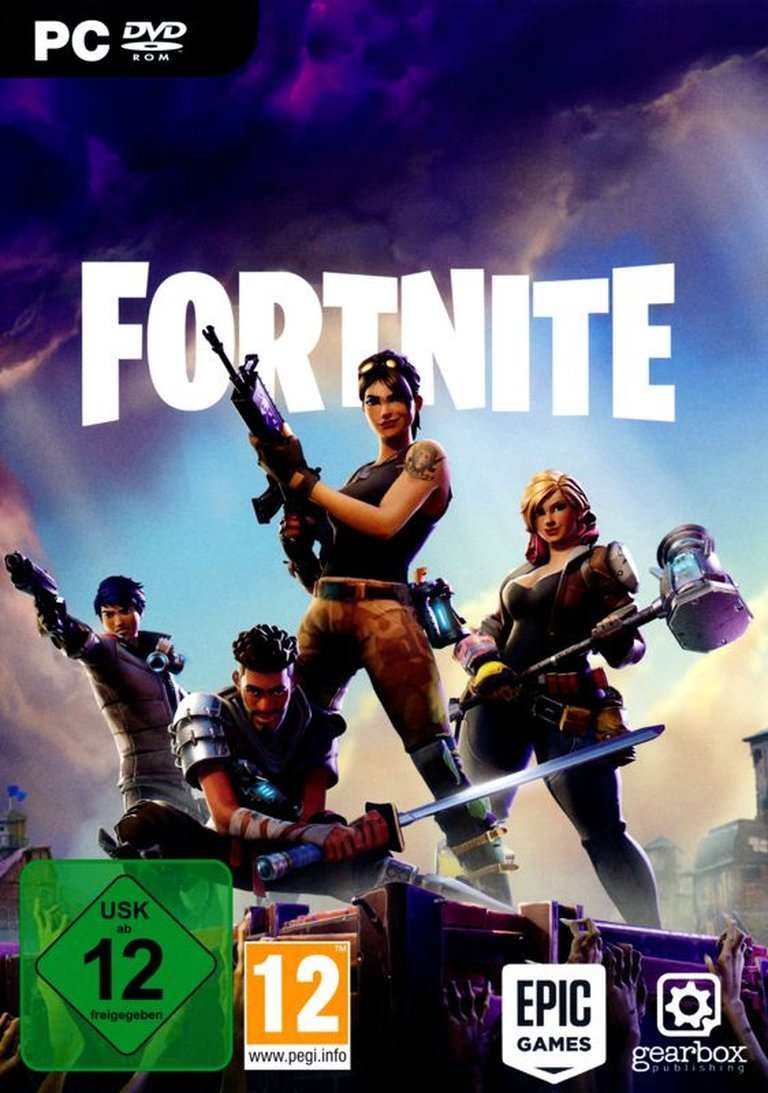
Fortnite: Standard Founder’s Pack centers on the cooperative ‘Save the World’ campaign, a fantasy-based survival experience where players team up in an open-world setting to engage in action RPG combat, build defensive structures, and battle hordes of monsters through tower defense gameplay.
Gameplay Videos
Fortnite (Standard Founder’s Pack) Reviews & Reception
reddit.com : The only positive at that time was that given the amount of founders back then, players were all coming together to help grind, build, upgrade, and trap on the missions.
polygon.com : Fortnite is the Willy Wonka three-course dinner chewing gum of games.
mobygames.com : The good part of the most overrated game in existence.
Fortnite (Standard Founder’s Pack): Review
Introduction: The Co-op progenitor buried beneath a cultural behemoth
To discuss the Fortnite (Standard Founder’s Pack) is to dissect the ghost in the machine of modern gaming. Released on July 21, 2017, for Windows, Mac, PlayStation 4, and Xbox One, this product was not the Fortnite that seized global consciousness. It was Fortnite: Save the World, a paid early access cooperative tower-defense shooter, sold in a series of Founder’s Packs ranging from $40 to $250. Its thesis is stated plainly in the ad copy: “Welcome to Epic Games’ new Action Building game.” This was the ambitious, messy, and ultimately overshadowed progenitor—a game about surviving a zombie apocalypse by building elaborate forts—that would inadvertently engineer the platform that now dominates digital culture. This review argues that the Standard Founder’s Pack represents a critical juncture: a flawed but fascinating experiment in hybrid game design, a monetization blueprint for the live-service era, and the sacrificial offering that funded the rise of Fortnite Battle Royale. Its legacy is not in its own gameplay, but in the ecosystem it subsidized and the design DNA it contributed to the most successful video game in history.
Development History & Context: From ‘Project: Fun’ to a Last-Ditch Gamble
The origins of Fortnite trace to an internal game jam at Epic Games following the release of Gears of War 3 around 2011. The core concept—merging Minecraft’s destructible building with a shooter—was promising, but development lagged for years. The project, internally codenamed “Project: Fun,” faced significant hurdles: a switch from Unreal Engine 3 to the nascent Unreal Engine 4, a pivot from a dark, mature tone to a cel-shaded, family-friendly aesthetic, and an expanding RPG scope. Crucially, Epic was simultaneously investing in its “games as a service” future, bringing in Tencent as a major investor in 2013. This deal, which diluted the stakes of original founders like Cliff Bleszinski (who subsequently left Epic), signaled that Fortnite was less a passion project and more a strategic testbed for a persistent, monetized world.
By 2017, the “games as a service” model was nascent but risky. Epic needed a live product to iterate on. The timing was fortuitous and tragic. PlayerUnknown’s Battlegrounds (PUBG) exploded in early 2017, proving the battle royale genre’s viability. Epic recognized that its existing Fortnite foundation—with its shooter mechanics and large maps—could be rapidly retooled. The Save the World mode, the sole focus of the Founder’s Packs, launched into early access on July 25, 2017. Its development was slow, its systems complex, and its audience niche. Just two months later, Fortnite Battle Royale emerged as a free, standalone mode from the same codebase. The narrative is now infamous: a last-ditch pivot that accidentally created a phenomenon. The Standard Founder’s Pack, therefore, exists in a unique historical parenthesis: it was the commercial product that kept the Fortnite engine alive long enough for the free-to-play battle royale mode to rescue it. It is the paid ancestor of a free empire.
Narrative & Thematic Deep Dive: A saccharine apocalypse with surprising depth
Fortnite: Save the World presents a world ravaged by “the Storm,” a cataclysm that erased 98% of humanity and transformed most survivors into “husks”—zombie-like creatures with their skulls dangling from their necks, a macabre yet oddly endearing design. The player assumes the role of a “Commander,” leading a rag-tag group of heroes from the last bastion, “Homebase.” The narrative is delivered through a series of mission-based vignettes, often punctuated by energetic, cartoonish cutscenes featuring characters like the gruff soldier Jonesy, the eccentric robot Qwin, and the heroic Ramsay.
The themes are straightforward: survival, hope, and community against overwhelming odds. Where the narrative surprises is in its commitment to tone. It is aggressively upbeat, reminiscent of a Pixar take on The Walking Dead. The voice acting, as noted by a player review, is often “tacked on and of poor quality,” but this inconsistency feels strangely fitting for a world where a cheerful, goofy aesthetic constantly collides with the grim reality of zombie slaughter. The story serves as a functional, if forgettable, scaffold for the gameplay loop. However, its true narrative depth lies not in the plot, but in the emergent stories of player cooperation and progression—the tale of a community grinding for rare schematics, the strategy sessions before a Storm Shield defense, or the relief of a successful “Atlas” mission. This is a game whose story is primarily written by its systems and its players, not its script. The ultimate, tragic irony is that this PvE narrative, designed to be the game’s core, was forever relegated to the shadow of the emergent, player-driven narratives of the Battle Royale island.
Gameplay Mechanics & Systems: A brilliant foundation buried under a mountain of menus
The core gameplay loop of Save the World is a hybrid of three distinct genres: cooperative third-person shooter, tower defense, and action RPG. It is this synthesis that is both its greatest strength and its most significant flaw.
1. The Core Loop: Explore, Gather, Build, Defend. Each mission begins with a squad of up to four players parachuting onto a procedurally generated map. The initial phase is largely selfish exploration and scavenging for resources (wood, brick, metal, nuts and bolts) and, most importantly, treasure chests containing weapons (“schematics”), traps, heroes, and survivors. Once an objective (often an “Atlas” device) is found and activated, a timed horde defense begins. Players must use gathered materials to construct elaborate fortifications—walls, floors, ramps, traps—in real-time using a streamlined, contextual building system that was vastly more intuitive and fast than Minecraft’s. Combat involves a mix of ranged weapons and melee attacks, with hero-specific abilities on cooldown.
2. RPG Systems: A labyrinth of progression. Here, the game’s complexity becomes overwhelming. The player’s “Commander” levels independently, unlocking global skill tree points (a system later removed). More importantly, every hero, weapon schematic, trap schematic, and survivor is its own individual entity with its own XP and level cap. To improve one’s power, players must:
* Level Up: Use “Reagent” and “Manual” resources to upgrade each schematic/survivor.
* Perk/Evolution: Increase an item’s rarity and stats via a later “Perk Recombobulator” system, a source of immense grind.
* Squad Building: Equip up to 10 heroes into a “Hero Squad” and 8 survivors into “Support Squads,” with bonuses triggered by matching leader/subordinate “personalities.” This meta-game, as the Dutch critic noted, is “te complex” (sic), presenting a dizzying array of statistical interactions. A player review perfectly captures this: “With so many menus in this game it’s easy to get lost in a maze of statistics and recipes.”
3. Innovative Systems & Notable Flaws.
* Building: The contextual building was revolutionary for its time, allowing rapid, intuitive fort construction that felt integral to combat, not separate from it. This system directly seeded the building mechanics of Battle Royale.
* Loot Economy & Monetization: The game was built around loot boxes (“Loot Pinatas”), a precursor to the V-Bucks store. The player review’s frustration with RNG—having to “save up all of your vbucks in bulk and then wait for the Legendary Loot Troll Truck Llama”—is a direct critique of a predatory model that rewarded patience or heavy spending. Early post-launch controversy erupted when players hit a “level cap” and feltforced to buy loot boxes to progress, leading Epic to distribute a “care package” of 15 free crates.
* Crafting & Economy: The “down-tier crafting” restriction was a brutal early-game flaw. Over-leveling a schematic with materials you couldn’t yet farm would render it unusable, forcing players to maintain multiple versions of the same weapon (copper, silver, malachite tiers). This created a jarring, archaic grind.
* Monotony & Mission Variety: As Polygon’s review astutely observed, “On a macro scale, things got old quickly… the vast majority of missions play out the exact same way.” The loop of explore-scrounge-defend became a grueling treadmill. The critic from Gameplay (Benelux) summarized it succinctly: “De metagame is echter te complex” (“The metagame is however too complex”).
Conclusion of Mechanics: Save the World contained the seeds of genius—its building-combat synthesis is the cornerstone of Fortnite’s design—but buried it under an impenetrable, grindy meta-game. It was a hardcore action-RPG disguised as a casual co-op shooter, and the cognitive dissonance was its fatal flaw for mass appeal.
World-Building, Art & Sound: A charming, cohesive world undermined by technical demands
Visuals & Atmosphere: Utilizing Unreal Engine 4, Save the World presented a vibrant, cartoonish, and surprisingly cohesive world. The procedural generation, while repetitive in layout, produced distinct biomes (suburban sprawl, snow-swept mountains, canyons) that felt explorable and tactile. The art style—bright colors, exaggerated character designs, and a generally whimsical tone—created a stark, intentional contrast with the zombie apocalypse premise. This “sickly sweet” aesthetic, as Polygon described, was a defining feature. The destructibility was a key selling point; buildings crumbled satisfyingly, and the environment was fully interactive.
Sound Design: This is a area of stark division. The voice acting, as repeatedly criticized, is frequently poor—cheesy, wooden, or overly energetic. Yet, the sound effects for weapons, traps, and building are punchy and satisfying. The music is energetic but forgettable. The most infamous audio issue, cited by a long-time founder in 2024, was the introduction of a new, overpowering hitmarker sound that “overshadowed all other sounds,” a minor but symbolic detail about how post-launch changes often prioritized feedback from the louder Battle Royale community over the nuanced audio landscape of PvE.
Technical Performance & Demands: The player review’s claim that the game required a “supercomputer” and nearly “burned out” a high-end laptop’s GPU is telling. In 2017, Save the World was notoriously poorly optimized for PC, demanding far more resources than its simpler Battle Royale sibling would later require. This created a high barrier to entry for a game that was already expensive and complex, further limiting its audience. The console versions, reviewed identically by Gameplay (Benelux), shared these performance quirks.
Overall Contribution: The world is charming and functionally sound, but its artistic cohesion is let down by inconsistent voice work and, at launch, abysmal technical performance. It successfully built a “place” that felt worth defending, even if the act of defending it grew repetitive.
Reception & Legacy: The paid prototype that funded a free empire
Critical Reception at Launch: Reviews were mixed but leaned cautiously positive. Gameplay (Benelux) awarded 77%, praising the co-op tower defense core but criticizing the overwhelming metagame. Polygon’s 2017 review captured the duality perfectly: “Fortnite is sloppy in its current iteration, but it also shows a lot of promise… I keep coming back because it has small flashes of brilliance all over.” The German magazine GameStar was more critical, calling the €40-€60 price tag a “real hurdle” for what was fundamentally a free-to-play structure with XP boosts and daily quests. The consensus recognized a flawed but compelling foundation.
Player Reception & Community Fracture: The MobyGames player score for the Founder’s Pack sits at a dismal 1.7/10 (based on 10 ratings). This is not just a bad score; it is a score of active disdain. The single written player review calls it “the most overrated game in existence” (prior to Battle Royale’s fame) and details the common grievances: menu maze, poor voice acting, and brutal hardware demands. This stark divide—77% critic vs. 1.7% player—speaks to a game that critics assessed on potential while early adopters suffered its daily grind. The community that did form was intensely dedicated but small, as chronicled by the Reddit user “CrazedManiacRPG.” His multi-year testimony reveals a cultish, hardcore player base that endured griefers, leechers, and relentless RNG, organizing to share knowledge (like his eventual “Fortnite Database Project”). They were the loyalists who funded the ship, only to watch it sail away from them.
Commercial Reality & The Pivot: The Founder’s Packs were a commercial success relative to expectations for a niche early access title, but a catastrophic failure compared to what followed. The packs were discontinued in June 2020 when Save the World finally left early access and became a separate, still-paid product. Owners were automatically upgraded to higher tiers; Ultimate Edition buyers received 8,000 V-Bucks as compensation. The Standard Founder’s Pack, the entry-level $40 product, is now an artifact, a piece of Fortnite’s “legacy” program.
Legacy & Influence on the Industry:
1. The Engine for a Phenomenon: Every dollar spent on Founder’s Packs directly funded the development of Fortnite Battle Royale. The PvE mode was the financial and technical foundation. Its assets, animation systems, and—most critically—its building mechanics were lifted wholesale and refined for the PvP mode.
2. The Live-Service Blueprint: Save the World was Epic’s first full-scale implementation of a “games as a service” model: a live game with seasonal updates, a battle pass (implied in its quest structures), a premium currency (V-Bucks), and a loot-box-driven progression system. This template was perfected and scaled to billions with Battle Royale.
3. The Building Revolution: The intuitive, three-material building system was Fortnite’s killer mechanic. It originated here. Battle Royale didn’t invent building; it weaponized and democratized the system perfected in Save the World.
4. A Cautionary Tale of Scope: Save the World is a monument to feature creep. Its ambition—to blend shooter, RPG, tower defense, crafting, and co-op—resulted in a game too complex for its own good. The industry learned from this: Battle Royale succeeded by stripping the formula down to its two most exhilarating components: shooting and building.
5. The Founder’s Paradox: The players who paid premium prices to support the game’s earliest days were eventually marginalized. As the Reddit founder laments in his 2026 edit, changes to power level calculation and the removal of item sharing “left me on the sidelines.” They are the forgotten pioneers of a world they helped build but no longer inhabit.
Conclusion: A flawed cornerstone, not a finished monument
The Fortnite (Standard Founder’s Pack) is not a good game by conventional metrics. Its narrative is forgettable, its mission design repetitive, its meta-game a labyrinthine chore, and its early monetization predatory. Its player reception is abysmal. Yet, to dismiss it as merely a failed prototype is to miss its profound historical importance.
This was the crucible. It was Epic Games’ costly, time-consuming, and commercially uncertain investment in the Fortnite technology and live-service philosophy that would redefine the industry. The building mechanic that now feels intuitive to billions was first stress-tested here. The V-Bucks economy that generates billions was prototyped here. The commitment to constant, seasonal updates was proven here.
Its place in video game history is that of a critical foundation stone. It is the ugly, complex, and paid basement upon which the gleaming, free, and universally accessible skyscraper of Fortnite was built. It represents a specific moment in the mid-2010s where AAA studios were tentatively exploring live-service models, often with clumsy, player-hostile designs. The Standard Founder’s Pack is a museum piece of that awkward adolescence.
In the end, the verdict is clear: as a standalone product, the Standard Founder’s Pack is a fascinating but deeply flawed curiosity, rated 5.4/10 on MobyGames for good reason. As a historical artifact, it is essential. It is the $40-$250 key that unlocked the development of the free-to-play engine that captured the world. Its legacy is not in the hours spent by its founders in grindy, repetitive missions, but in the hundreds of millions of hours spent by Battle Royale players building, shooting, and dancing—all made possible by the financial and technical sacrifice of this strange, ambitious, and ultimately superseded co-op zombie shooter. It is the revolution that ate its own children.