
- Release Year: 2020
- Platforms: Windows
- Publisher: Meng Games
- Developer: Meng Games
- Genre: Action
- Perspective: 3rd-person
- Average Score: 70/100
Description
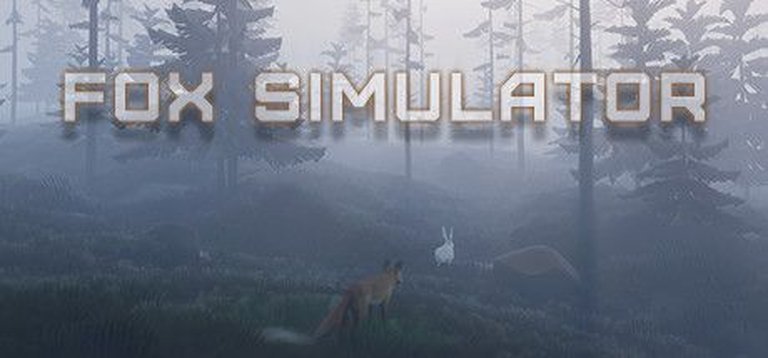
Fox Simulator is a third-person action-simulation game set in an open-world, stylized natural environment. Players embody a fox, progressing from a 1-year-old cub to a 14-year-old adult through activities like hunting small animals, fighting other creatures, upgrading abilities, and engaging in social behaviors such as finding a spouse and mating, all within a casual, relaxing, and family-friendly framework.
Gameplay Videos
Where to Buy Fox Simulator
PC
Fox Simulator Guides & Walkthroughs
Fox Simulator Reviews & Reception
stmstat.com : Fun hunting/catching survival game to grind some time into.
Fox Simulator: A Cursed Glimpse into the Animal Simulator Boom
Introduction: The Allure of the Vulpine Fantasy
In the crowded ecosystem of video games, few niches are as oddly specific yet persistently popular as the “simulator” genre. From the life-altering complexities of The Sims to the mundane responsibilities of Farming Simulator, players have long sought digital proxies for experiences both fantastical and quotidian. Into this landscape trotted Fox Simulator, an Early Access title from the obscure Meng Games studio, promising a singular fantasy: the chance to live as a fox. Released in August 2020, it arrived not as a pioneer but as a participant in a burgeoning trend of minimalist, often whimsical animal simulators, directly succeeding the developer’s own Rabbit Simulator. This review posits that Fox Simulator is a fascinating, deeply flawed artifact—a game whose genuine charm and moments of serene beauty are perpetually at war with a barren design philosophy, inconsistent execution, and an Early Access model that ultimately promises more than it delivers. It stands not as a classic, but as a potent case study in the perils and possibilities of indie development in a genre defined by its own ambition.
Development History & Context: A Solo Dev’s Blueprint in a Crowded Forest
The story of Fox Simulator is intrinsically linked to its creator and the market moment of its release. Developed and published by Meng Games, a studio with virtually no public footprint beyond its Steam page, the game follows a clear lineage from its predecessor, Rabbit Simulator (also released in 2020). The developer’s stated vision, as per the Steam blurb, is transparent: “After releasing ‘Rabbit Simulator’, I accumulated some experience in making animal simulators… I hope this ‘fox simulator’ can help them realize their desire to raise foxes.” This reveals a design ethos focused on realizing a specific, relatable fantasy—the appeal of a wild yet manageable pet—rather than on systemic depth or narrative scope.
Technologically, the game was built in Unity, the engine of choice for countless indies due to its accessibility and asset store. This decision reflects both pragmatic constraints and a desire for “high-quality graphics” as mentioned by the developer, though the final aesthetic is firmly stylized and minimalist rather than photorealistic. The year 2020 was a watershed for this subgenre. The monumental success of Animal Crossing: New Horizons on the Nintendo Switch had Legion players yearning for more virtual pastoral living. Simultaneously, Steam was experiencing an influx of “-simulator” titles, many from small studios leveraging the term’s marketability, from Prison Simulator to Vacation Simulator. Fox Simulator entered this fray not as a innovator, but as a focused iteration on a proven formula: take an animal, give it basic survival and progression mechanics, and wrap it in a low-stakes, explorative package.
The choice of Early Access was pivotal. The developer explicitly stated a planned 6-month Early Access period to gather feedback and improve systems like survival and environment interaction. However, the last significant update was in September 2022, over three years before the time of this writing. This abandonment transforms the game from a “work in progress” into a permanent snapshot of a specific, incomplete vision—a ghost of what might have been.
Narrative & Thematic Deep Dive: The Poetry of a Life Lived Without a Plot
To speak of a “narrative” in Fox Simulator is to engage with a profound absence. There is no scripted plot, no cutscenes, no named characters beyond the player’s own fox. The “story” is emergent and purely systemic, derived from the loops of survival, growth, and reproduction. The thematic core is straightforward: the cycle of a wild animal’s life from youth to elder, framed through a lens of playful empowerment.
The only “plot” is the personal journey of the player-controlled fox. It begins as a “1-year-old little fox,” vulnerable and small, and through gameplay, can grow to a “14-year-old big fox.” This aging mechanic, while superficially simple, is the game’s primary narrative device. Each year of life is a chapter marked by increased stats, new abilities, and the potential to find a “spouse.” The act of mating, which produces offspring the player can briefly interact with, serves as the game’s closest equivalent to a “goal” or “ending,” reinforcing themes of legacy and continuation.
Where the game stumbles thematically is in its missed opportunity for ecological or emotional storytelling. The world is populated by other foxes (AI), rabbits, turtles, deer, bears, scorpions, and bizarrely, a toucan (Tucano) in a pine forest. These creatures exist not as part of a believable ecosystem but as resources (food, XP) or obstacles (hostiles). There is no sense of a food chain, migration, or seasonal behavior beyond the day/night cycle. The theme of “survival” is reduced to managing three meters: Hunger, Thirst, and Health. There is no meditation on predation, the harshness of nature, or the beauty of the wild—only the mechanics of consumption and conflict.
Contrast this with the narrative depth even a simple The Sims title offers. The Sims is a canvas for social storytelling; players create dramas, families, and careers. Fox Simulator provides no such canvas. Its world is a theme park without a story, where the only narrative is the player’s own invented justification for why they are chasing a rabbit for the 100th time. The developer’s hope that players can “realize their desire to raise foxes” is telling—it reduces the fox to a plush toy come to life, a cute pet to be upgraded and paired, rather than a wild animal to be understood. This anthropocentric lens is the game’s defining, and ultimately limiting, thematic perspective.
Gameplay Mechanics & Systems: Loops of Grind and Glitch
The core gameplay loop of Fox Simulator is deceptively simple: Explore -> Hunt/Fight -> Collect XP -> Upgrade -> Survive. This loop is supported by several interconnected systems, many of which feel half-implemented or frustratingly opaque.
1. Core Actions & Combat: Movement is third-person with direct control. The primary mechanics are pouncing (a lunge attack to catch small prey like rabbits) and a tail whip for combat against larger enemies like bears or scorpions. Hunting is the primary activity, but it is mechanically barebones. Prey like rabbits have a simple “catch” radius; once close enough, a button press instantly captures them. There is no stalking, no stealth, no tracking—just chasing and pouncing. Combat is similarly rudimentary: a button-mashy hit-and-run against enemies that lunge back. The update log notes that “Bear and Scorpion will actively attack the player,” but AI pathfinding is often poor, leading to bears materializing frustratingly close to the player’s den (“spawn distance” was a common community complaint).
2. Progression & Customization: Progression is twofold. Aging is automatic, moving the fox from year 1 to 14. With each year, base stats (strength, speed, stamina) presumably increase, though the UI offers no clear numerical breakdown. The second axis is the Star-based ability upgrade system, added in Update 2. Players earn “Experience Points” by hunting and killing, which are converted to “Stars” to upgrade abilities. The available upgrades are not clearly listed in-game, a major point of community confusion. Customization is available at the start and possibly in-game: “Various types of fox customization options, including body and skin.” However, user reviews and guides indicate this is extremely limited, perhaps just a few color presets, far short of the deep creation promised by phrases like “according to your preferences.”
3. Survival & Inventory: The survival system is barely functional. Hunger and Thirst deplete over time and must be replenished by eating (caught animals, carcasses, fruits) and drinking (from water sources, which the update log oddly calls “magic water sprinklers”). Health drops from combat or starvation. The inventory system is simplistic: slots for collected items. “If all slots are occupied – inventory is full and player can’t add new stuff.” There is no crafting, despite the Itch.io description mentioning it as “to be implemented.” This creates a disconnect between advertised features and reality.
4. Quest & Social Systems: The Quest System (Update 6) was a significant, late addition. Quests involve hunting specific animals or collecting items. They provide direction but are repetitive. The spouse system is bizarrely implemented. To find a mate, the player must hunt and present prey to an AI fox. Once paired, the spouse can help in combat (“spouse will help the player to attack the enemy”), but the mechanic is clumsy and often more of a hindrance than a help. The update notes that “player and spouse will not cause damage to each other,” suggesting early versions had them hurting each other. Reproduction leads to a litter of kits, but interaction is minimal.
5. UI & Quality of Life: The UI is minimalist and often non-intuitive. Key mechanics like eating, drinking, and attacking are not explicitly taught in the tutorial (Update 3 “optimized tutorial”). Players must discover that to eat a caught rabbit, they must carry it to a “catch collector” or perhaps just stand still? Community guides are needed for basics. Controller support is listed, but users report inability to rebind controls and prompts showing keyboard keys (e.g., “Press E”) even when using an Xbox controller. The day/night cycle is abrupt and, initially, made visibility nearly impossible at night—a fixed in later updates.
6. The “Photo Mode” & Cosmetic Systems: Update 9 added a photo mode (press T), a clear nod to the game’s “Beautiful” and “Atmospheric” user tags. This acknowledges the game’s primary strength: its presentation. It also added three new achievements, a small attempt at long-term goals.
In summary, the gameplay is a collection of half-realized systems. The foundation for a compelling animal survival sim is there—growth, hunger, combat, social units—but none are deeply developed. The loop becomes grindy: hunt rabbits to level up to hunt bears, with little emotional or systemic reward. The significant updates show a developer reacting to feedback (adding spouse help, fixing black screens, optimizing performance), but the core loop’s shallowness remains. The game is caught between being a casual “walking simulator” and a grindy survival RPG, failing to commit fully to either.
World-Building, Art & Sound: A Pretty, Empty Stage
Fox Simulator’s world is its most consistently praised element, and also its most glaring evidence of wasted potential.
Visuals & Atmosphere: Built in Unity, the game employs a stylized, low-poly aesthetic that users tag as “Cartoony,” “Cute,” and “Minimalist.” The lighting is frequently highlighted as excellent for a small-budget title. One Steam review notes: “Great lighting, you don’t get blinded by light in the day or clueless in the dark.” The three biomes—forest, desert, snow/mountain—are visually distinct. The forest is lush and green, the desert sandy and sparse, the snowy areas bright and open. However, as many reviews state, the world feels eerily empty. “Why is there a toucan in the middle of a pine forest that has bears and deer?” asks one player, highlighting the lack of ecological coherence. There are no ambient life animations beyond the functional AI; no birds in trees (except the static toucan), no insects, no weather effects beyond a basic day/night cycle. The “PCG Environment” mentioned in the Itch.io description (Procedural Content Generation) is absent from the Steam version, making the world a static, small map. The beauty is surface-level, a diorama without life.
Sound Design: The soundscape is functional. Animal calls, footsteps, and combat noises are present. The update log mentions “optimize the idle animation of tucano” and notes that “animal death sounds are funny af” (per a Steam review). There is “adaptive background music,” but it is sparse, often just ambient tracks that loop. It lacks the dynamic, situational scoring of a game like The Sims, which uses music to underscore emotional states. Here, sound serves a purely utilitarian purpose.
Contribution to Experience: The art and sound create a calm, contemplative, sometimes lonely mood. The minimalist style prevents visual clutter, focusing the player on the fox and its immediate tasks. The pretty landscapes invite exploration, but the lack of points of interest or ambient life turns that exploration into a futile trek. The atmosphere is atmospheric as the tags suggest, but in a vacuous way—like a serene painting with nothing happening in it. It successfully sells the idea of a wild, peaceful place, but fails to make it feel real or lived-in. This directly supports the developer’s goal of a “simple and relaxing” experience, but the relaxation stems from a lack of engagement, not from satisfying immersion.
Reception & Legacy: A Mixed Bag Fading into Obscurity
At launch and in the years since, Fox Simulator has received a consistently “Mixed” reception on Steam, with a player score hovering around 68% positive from roughly 35-37 reviews. This score masks a polarized experience.
Positive Reception: Praise centers on the game’s charm and premise. Reviewers love the cute fox customization, the fun of hunting small animals, the beautiful (if simple) graphics, and the potential for a relaxing, low-stress experience. Streamers and players with accessibility needs or low energy have found it a perfect “background” or “low-energy” game. The fantasy of being a fox is deemed “adorable” and executed with a certain naive sincerity. One review states: “I personally got this game for low energy stream while I deal with some health issues, and it is perfect for that.”
Negative Reception: Criticisms are systematic and damning. The game is shallow and empty. “The map felt… it doesn’t really offer much content to explore.” The gameplay is repetitive and grindy: “grinding levels felt a bit repetitive after a while.” Technical issues persist, especially regarding controllers and occasional black screens. The lack of clear goals or progression is a major hurdle: “I have to kill 5 bears… Why?” The AI is spotty (enemies spawning too close, spouse AI being useless). And the abandonment of Early Access is the final blow. The community discussions are filled with posts from 2024 asking, “is this game still getting updates?” and “Abandonware?” The developer’s promise of a 6-month Early Access period, stretched into years with no further updates, has bred cynicism.
Evolution of Reputation: Initially, some saw potential. The update history shows a developer actively responding to feedback—adding quests, improving AI, fixing bugs, and even adding a photo mode. This activity suggested a commitment. However, the stopping of updates in 2022 solidified the game’s status as an abandoned project. Its reputation has shifted from “flawed but promising” to “a finished (and insufficient) product” or simply “abandoned.” It is now likely considered a cautionary tale about the risks of Early Access.
Influence on the Industry: Fox Simulator has had no discernible influence on the broader industry. It did not spawn clones, inspire major developers, or enter the cultural conversation. It exists in the long tail of the “simulator” trend, a minor ripple in the wake of The Sims and Animal Crossing. Its legacy is purely as a data point: a small-scale attempt to capitalize on a niche (animal sims) with a specific aesthetic (cute, minimalist) and a business model (cheap Early Access) that ultimately failed to build a sustaining player base or justify continued development. It represents the commodification of the “simulator” label, where a simple concept can be packaged and sold with minimal content, relying on the appeal of the fantasy and the low barrier to entry.
Conclusion: A Fox in the Henhouse of Genre Expectations
Fox Simulator is not a good game by any critical standard. It is shallow, repetitive, often confusing, and clearly unfinished in ways that will never be addressed. Its world is pretty but desolate, its mechanics barebones, its narrative nonexistent. Yet, to dismiss it entirely is to miss its peculiar, modest power. In its best moments—tracing a silent path through a sun-dappled forest, watching a customizable fox cub pounce on a virtual rabbit against a stylized mountain backdrop—it captures a sliver of the pastoral fantasy it promises. This is the game’s singular achievement: making you feel briefly, faintly, like a fox.
Its historical significance lies not in innovation or quality, but in its archetypal status. It is a perfect specimen of the 2020s indie Early Access simulator: a solo or micro-team project using accessible tools (Unity) to tap into a trending niche (animal life simulation), sold at a low price point ($3.99-$7.99), with an initial burst of updates that slowly peter out, leaving behind a community wondering what might have been. It is the antithesis of the meticulously crafted, socially resonant world of The Sims, which spent years building a universe of human drama. Fox Simulator offers no such drama; its universe is one of solitary survival and quiet repetition.
The final, definitive verdict is this: Fox Simulator is a charming curiosity and a developmental dead end. It is an informative failure, demonstrating that a compelling core fantasy (be a fox!) and competent presentation are not enough to sustain a game without deep, compelling systems or a commitment to post-launch support. For game historians, it is a footnote—a small, fuzzy, easily forgotten footnote—in the ongoing chronicle of players’ desire to escape into other lives, and the oftentimes humble, flawed digital vessels built to fulfill that desire. It is not a classic, but it is, in its own incomplete way, a genuine artifact of its time.