
- Release Year: 2017
- Platforms: Android, Genesis, iPad, iPhone, Linux, Macintosh, Nintendo Switch, PlayStation 4, PS Vita, Windows Apps, Windows, Xbox One
- Publisher: BUG-Studio, Eastasiasoft Limited, OraMonkey, PSCD Games, Ratalaika Games S.L.
- Developer: BUG-Studio
- Genre: Action, Platform
- Perspective: Side view
- Game Mode: Online Co-op, Single-player
- Gameplay: Platform
- Setting: Fantasy
- Average Score: 55/100
Description
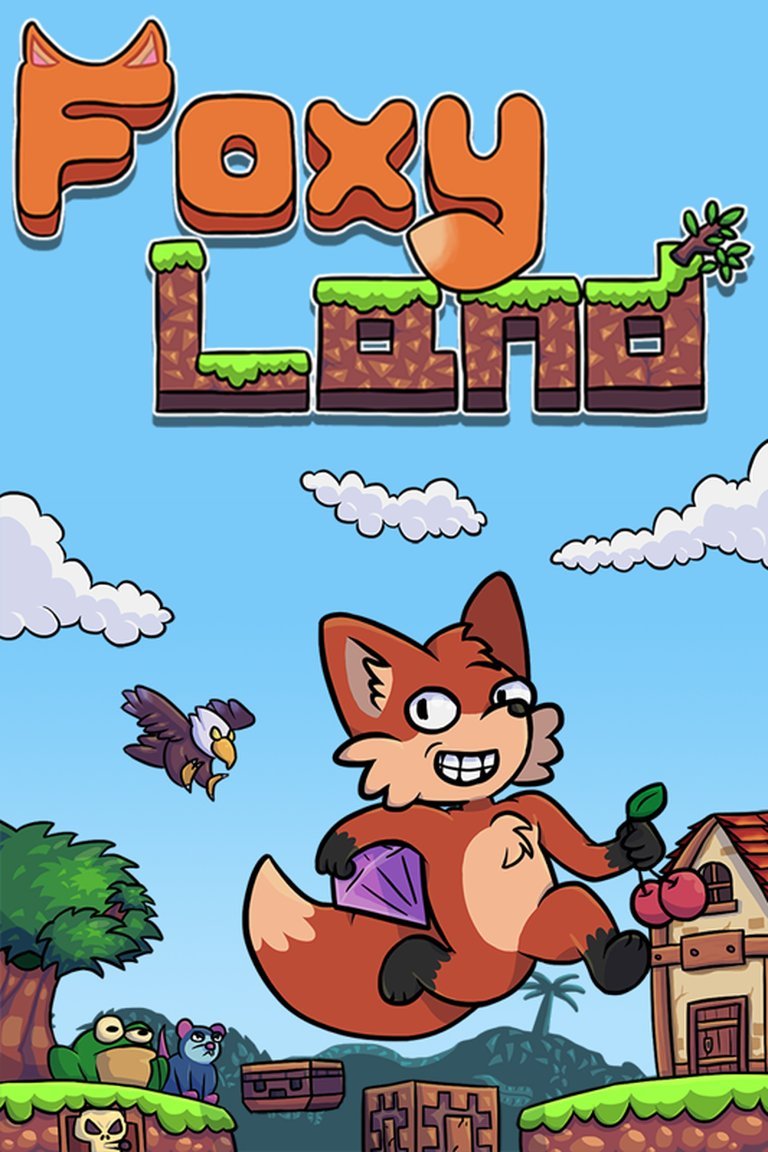
FoxyLand is a 2D side-scrolling platformer where players guide a fox through vibrant fantasy environments, overcoming obstacles and collecting coins and fruits. Featuring straightforward controls and colorful, retro-inspired visuals, the game offers a mix of exploration and light challenges across multiple levels. With optional online co-op mode, it delivers bite-sized platforming fun suitable for casual play.
Gameplay Videos
Where to Buy FoxyLand
PC
FoxyLand Mods
FoxyLand Guides & Walkthroughs
FoxyLand Reviews & Reception
metacritic.com (54/100): FoxyLand is a by-the-numbers platformer which won’t come close to setting the world alight.
monstercritic.com (54/100): FoxyLand is a must play for casual and more experienced platformer fans, with levels mostly being fairly easy to traverse.
imdb.com (50/100): The game is short and boring but takes like 2 hours to do the plat trophy and is cheap so it has a purpose at least.
steambase.io (65/100): FoxyLand has earned a Player Score of 65 / 100, reflecting a mixed reception.
infinitefrontiers.org.uk : It is a fun and entertaining game, but the lack of originality is really its biggest drawback.
FoxyLand: A Retro Platformer’s Charming Yet Forgettable Journey Through Pixelated Forests
Introduction
In an era dominated by triple-A blockbusters and live-service behemoths, FoxyLand (2017) emerged as a humble tribute to the golden age of 2D platformers. Developed by BUG-Studio and ported globally by Ratalaika Games, this indie title promised nostalgic simplicity with a pixel-art fox protagonist. Yet beneath its adorable veneer lies a game trapped between earnest homage and creative stagnation. This review argues that while FoxyLand delivers a mechanically sound platforming experience, its lack of innovation and derivative design relegate it to the crowded periphery of retro-inspired indies—a competent but ultimately forgettable entry in gaming history.
Development History & Context
Born from the vision of Russian developer BUG-Studio, FoxyLand debuted on Steam in October 2017, later expanding to 11 platforms, including Nintendo Switch and PlayStation Vita by 2019. Built using the Construct 2 engine—a tool favored for its accessibility but criticized for cookie-cutter output—the game epitomized the “budget indie” wave of the late 2010s. Ratalaika Games, known for porting minimalist titles to consoles, leveraged its in-house tools to adapt FoxyLand, targeting an audience hungry for quick, nostalgia-fueled completions amid rising achievement/trophy culture.
The game arrived in a landscape saturated with retro revivals (Shovel Knight, Celeste), yet FoxyLand’s stripped-down scope and mobile roots (it launched simultaneously on iOS/Android) positioned it closer to disposable arcade experiences than genre-defining adventures. Priced at $1.49–$4.99, it courted casual players and completionists alike, embodying the “disposable charm” ethos of its publisher’s catalog.
Narrative & Thematic Deep Dive
FoxyLand’s narrative is threadbare even by platformer standards: Foxy Fox must rescue his beloved Jennie from a giant bird across 36 levels. The plot unfolds via minimal dialogue (e.g., signposts declaring “Save Jenny!”) and lacks thematic depth, relying wholly on archetypal “heroic quest” tropes. Characters—voiceless, expressionless sprites—serve as functional avatars rather than emotive entities. Jennie exists solely as a damsel, her kidnapping a hollow motivator.
Thematically, the game gestures vaguely at love, perseverance, and sacrifice, yet these ideas remain unexplored. Collecting cherries to buy Foxy hats or neckerchiefs (purely cosmetic) trivializes the stakes, reducing emotional investment to a wardrobe simulator. In contrast to contemporaries like Hollow Knight or Ori, which weave environmental storytelling into gameplay, FoxyLand’s narrative feels like an afterthought—a scaffolding to justify running and jumping.
Gameplay Mechanics & Systems
At its core, FoxyLand is a by-the-numbers precision platformer with a three-star rating system per level. Players must:
1. Collect all gems to unlock exits.
2. Gather cherries for currency and collectibles.
3. Avoid enemies (slimes, bats) and hazards (crumbling platforms, spikes).
Controls are tight but uninspired. Foxy’s movement lacks momentum physics, offering “floaty” jumps reminiscent of early Mario clones. The absence of power-ups or combat mechanics (beyond stomping enemies) limits strategic depth, while sudden difficulty spikes—especially in later levels—expose rushed pacing. One moment, players breeze through gentle slopes; the next, they face pixel-perfect jumps over bottomless pits.
The shop system uses cherries to unlock costumes, but these provide no gameplay benefits, undermining replay incentives. Coupled with generous checkpoints and infinite lives, the game struggles to balance challenge with engagement. Multiplayer, mentioned cryptically in one Steam review, appears vestigial—no critics confirm its functionality.
World-Building, Art & Sound
FoxyLand’s aesthetic channels 8-bit charm with vibrant forests, caves, and autumnal landscapes. Pixel art is crisp but derivative, evoking Super Mario Bros. 3’s grasslands and Sonic’s loop-de-loops without memorable flair. Environmental diversity is minimal; levels repeat tilesets, and enemies lack distinctive behaviors (e.g., bats mindlessly patrol set paths).
The chiptune soundtrack, while pleasant, fades into the background. Tracks recycle upbeat loops that mirror the game’s lack of tonal ambition—no foreboding motifs for “dangerous” zones, no triumphant fanfares for boss encounters (notably absent). Sound design is functional but forgettable: cherries plink, jumps boop, and deaths trigger a comedic “wah-wah” trombone.
For a game billing itself as a “love story,” the world feels emotionally inert. Levels exist as obstacle courses rather than lived-in ecosystems, severing immersion.
Reception & Legacy
Critics met FoxyLand with polite indifference. Aggregating a 70% average from MobyGames critics, reviews praised its “solid fun” (Save or Quit) but lambasted its “lack of originality” (Infinite Frontiers). The Nintendo Switch version fared worst, earning a 30% score from BonusStage for feeling “bitesize” and “unremarkable.” Players were harsher, awarding a 1.5/5 across platforms, citing repetitive design and mobile-game shallowness.
Commercially, FoxyLand’s legacy lies in its cult status among trophy hunters. At launch, PlayStation and Xbox achievements were notoriously easy to unlock (e.g., “Complete Level 1”), making it a go-to for quick Gamerscore boosts—a fact underscored by IMDb user reviews (“2 bucks for a plat trophy”). Its 2020 Genesis port, inexplicably released on Sega’s 16-bit hardware, became a quirky collector’s item.
While the game spawned a sequel (FoxyLand 2, 2019), neither entry influenced the genre. Instead, FoxyLand epitomizes the “disposable indie” era—small-scope titles flooding stores, buoyed by low prices rather than innovation.
Conclusion
FoxyLand is neither a triumph nor a disaster. It is a competently executed echo of platforming’s past, offering fleeting enjoyment for undemanding players or achievement completists. Its charming visuals and tight controls hint at potential, but the lack of narrative depth, inventive mechanics, and audiovisual identity render it a footnote in indie history. For $1.49, it’s a harmless diversion; for anyone seeking a transformative platformer, dozens of superior alternatives await. In the grand taxonomy of gaming, FoxyLand is less a bold fox and more a cautious field mouse—content to scurry in the shadows of giants.
Final Verdict: A nostalgically quaint but creatively starved platformer. Approach only for curiosity or quick completions.