
- Release Year: 2022
- Platforms: Windows
- Publisher: Ravenage Games
- Developer: Sezhes
- Genre: Role-playing (RPG)
- Perspective: 3rd-person (Other)
- Game Mode: Single-player
- Gameplay: Japanese-style RPG (JRPG), Turn-based
- Setting: Fantasy
- Average Score: 78/100
Description
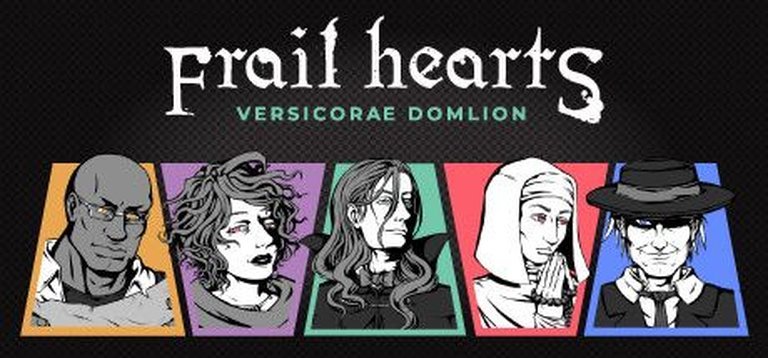
Frail Hearts: Versicorae Domlion is an old-school JRPG set in the fictional dark city of Gris, blending fantasy and horror elements in a turn-based, Japanese-style RPG experience. Players follow the deep and mysterious storyline of four troubled souls as they explore a Lovecraftian world, battling grotesque abominations that threaten the very fabric of reality itself, complete with pixel graphics, mature themes, and a narrative rich in drama and mystery.
Gameplay Videos
Where to Buy Frail Hearts: Versicorae Domlion
Frail Hearts: Versicorae Domlion Guides & Walkthroughs
Frail Hearts: Versicorae Domlion Reviews & Reception
metacritic.com (70/100): The story always works well, but the gameplay doesn’t always.
opencritic.com (70/100): The story always works well, but the gameplay doesn’t always.
Frail Hearts: Versicorae Domlion: Review
Introduction
In the shadowed alleys of the fictional city of Gris, where the veil between sanity and cosmic horror thins to a razor’s edge, Frail Hearts: Versicorae Domlion emerges as a haunting elegy to fractured psyches and eldritch abominations. This 2022 indie gem from Italian studio Sezhes conjures the spirit of 90s JRPGs laced with Lovecraftian dread, inviting players to unravel the intertwined fates of four troubled souls—or five, if you count the enigmatic narrator Alexis. Amid a sea of bloated open-world epics, Frail Hearts stands as a defiant testament to intimate, narrative-driven horror, blending visual novel introspection with tactical turn-based combat. My thesis: While constrained by its RPG Maker roots, this game carves a niche as a masterful exercise in atmospheric storytelling and psychological unease, earning its place as a cult classic for fans of retro horror RPGs like Shin Megami Tensei and Drakengard.
Development History & Context
Sezhes, a small Italian indie team founded by multidisciplinary artist Kristian Fiore Sinzar Hafner (who wore hats as director, producer, designer, scriptwriter, artist, and programmer), birthed Frail Hearts from a university project inspired by H.P. Lovecraft’s cosmic insignificance. Assembling passionate collaborators like co-writer and artist Sebastiano Andreani, artists Isabella Galletto and Michael Cesarano, and composer Undreamed Fantasy Folk Band, the team kicked off development on July 1, 2019, enduring a grueling three-year journey marred by the COVID-19 pandemic’s financial and mental tolls. Hafner emphasized self-expression as the core ethos, drawing from his master’s in concept design to infuse traditional art into digital pixels via tools like Clip Studio, Piskel, and RPG Maker MV—a choice that echoed the era’s indie boom in accessible engines.
Released on August 16, 2022, exclusively for Windows via Steam (with GOG and itch.io ports), the game arrived in a post-Undertale landscape where retro pixel art RPGs proliferated, but Lovecraftian hybrids remained rare. Publisher Ravenage Games joined late in production, polishing quality assurance, marketing (including Kickstarter efforts and trailers by Modotive), and Steam visibility—proving a “lifesaver” for the team. Technological constraints were pronounced: RPG Maker’s limitations meant fixed/flip-screen visuals, menu-driven interfaces, and modest specs (Intel Core 2 Duo, 3GB RAM minimum), prioritizing narrative over graphical fidelity. This mirrored the 90s JRPG golden age, when resource scarcity birthed innovative storytelling in titles like Final Fantasy VI. Sezhes’ vision—to craft “stories that recreate the emotions we felt as children” through self-discovery and peril—positioned Frail Hearts as a bridge between Japanese influences (manga, anime like Sailor Moon and monster-collectors like Digimon) and European fairy tales, all set against 1938’s pre-WWII gloom.
Narrative & Thematic Deep Dive
Plot and Structure
Frail Hearts unfolds as a tapestry of five interconnected vignettes (four protagonists plus Alexis’ framing device) set in May 1938’s decaying city of Gris, a grayscale metropolis pulsing with forbidden secrets. Players experience individual “theater acts” for the gangster (Michael), nun (Cathrine), scholar (Arthur), bookworm (Anne), and the shadowy Alexis, whose impious prologue—”This World is filled with an infinity of stories… Filthy. Impious of perversions”—sets a tone of unraveling psyches. Each arc explores personal burdens: inner demons manifest as eldritch horrors, with choices dictating evolution from isolation to reluctant alliance. Pull one thread, and the web activates—revealing a greater tragedy of wishes granted at reality-shattering costs. No linear hero’s journey here; it’s a mind-screw mosaic demanding multiple playthroughs (7-10 hours total) to connect the dots, culminating in self-discovery or void-embracing doom.
Characters and Dialogue
The cast shines through stark contrasts: Michael’s brute machismo cracks under guilt; Cathrine’s piety wars with doubt; Arthur’s intellect frays against incomprehensibility; Anne’s introversion blooms into quiet resolve. Alexis, the omniscient puppeteer, breaks the fourth wall, blurring narrator and antagonist. Dialogue, co-written by Hafner and Andreani, drips with dramatic flair—poetic, fragmented, laced with religious and fairy-tale motifs. Italian roots infuse operatic intensity, translated crisply by Alberto Furlan into English. No romance or heroes; these are “troubled souls knee-deep in madness,” their growth hinging on player agency in riddles and moral checkpoints.
Themes
Lovecraftian horror dominates—madness as evolution, where confronting abominations forces “coming out” to reshape an unlivable world. Themes of perilous freedom, mental disorders, and wish-fulfillment’s backlash echo Drakengard‘s tragedy and Shin Megami Tensei‘s moral ambiguity. Violence against humans/animals and psychological gore underscore impurity’s allure, warning that “mindless freedom can be very dangerous.” It’s a fable of catharsis: heroes (or victims) pursue dreams amid existential threats, mirroring Sezhes’ pandemic-forged resilience.
Gameplay Mechanics & Systems
Core Loops and Combat
Hybrid JRPG/visual novel loops alternate riddle-solving exploration with turn-based battles against 22 unique bosses—never repeating foes ensures tactical depth. Combat demands exploiting weaknesses via five playable characters’ bespoke styles (e.g., blunt weapons, pistols, magic/ESP, daggers), reflecting backstories that evolve with narrative branches. Teamwork is paramount: no grinding, just adaptive strategies in a D&D-inspired system. Pacing favors deliberation—”take your time”—but RPG Maker’s clunkiness (no auto-save, skip, or backlog) frustrates, per VNDB notes.
Progression and UI
Progression ties to story checkpoints, side-missions, and riddles unlocking Gris’ secrets; no traditional leveling, emphasizing character interpretation. UI relies on menu structures and map movement, with gloomy pixel art maps hiding perils. Innovations like selective coloring for character temperaments aid immersion, but flaws abound: naive RPG Maker limits (no event CGs, quick saves) yield uneven pacing—strong narrative drags weaker fights. Achievements (24 on Steam) reward completionism, while mature elements (nudity, gore) suit its 16+ rating.
World-Building, Art & Sound
Gris is a masterpiece of urban fantasy horror: a 1938-inspired labyrinth of rotting tenements and void-rifts, evoking cosmic insignificance. Atmosphere builds through selective grayscale palettes punctuated by temperament-revealing colors—Michael’s fiery reds clashing with Cathrine’s muted blues—crafted in gloomy pixel art/hand-drawn sprites (no gallery, lots of character portraits). Fixed-screen vistas distort reality, amplifying dread.
Sound design elevates: Undreamed’s fantasy folk soundtrack (Voltaire-like violins) weaves tension, with additional SFX from Cesarano et al. enhancing abomination roars and psychic fractures. No voice acting, but captions (English/Italian) and moody BGM create a symphony of unease, making Gris feel alive—and lethally secretive.
Reception & Legacy
Launch reception was modestly positive: Steam’s 85% approval (41 reviews, 87/100 player score via Steambase) praises story, atmosphere, and old-school vibes, though some decry RPG Maker jank. IGN Italia awarded 70/100, lauding Gris’ suggestiveness and cast but critiquing gameplay naivety. No MobyGames user reviews; Metacritic/OpenCritic lack aggregates, underscoring indie obscurity. Commercially niche ($9.99, bundles/DLC like artbook/soundtrack), it garnered cult buzz via Discord/Twitter, with curators (36 on Steam) highlighting Lovecraftian appeal.
Legacy evolves: Post-release patches address feedback; plans for translations and expansions hint at multimedia potential. Influences ripple in indie horror RPGs, blending VN depth with monster-slaying—paving for Soul’s Spectrum kin. As a standalone with franchise potential, it endures as Sezhes’ defiant artifact, influencing narrative indies amid AAA dominance.
Conclusion
Frail Hearts: Versicorae Domlion masterfully weds Lovecraftian self-discovery to retro JRPG bones, its Gris a powder keg of madness where every choice frays reality. Strengths—profound themes, evocative art/sound, tactical intrigue—outweigh RPG Maker flaws, delivering 7-10 hours of unforgettable dread. In video game history, it claims a vital spot among indie horror pioneers, a frail heart pulsing with impure genius. Verdict: 8.5/10—Essential for JRPG enthusiasts craving narrative shadows over mechanical polish; a timeless pull on the thread of indie evolution.