
- Release Year: 2009
- Platforms: iPad, iPhone, Macintosh, Windows
- Publisher: Anuman Interactive SA, Game Factory Interactive Ltd., Gameloft S.A., iWin, Inc., Ludigames, Russobit-M, S.A.D. Software Vertriebs- und Produktions GmbH
- Developer: Mzone Studio, Solilab
- Genre: Adventure
- Perspective: 1st-person
- Game Mode: Single-player
- Gameplay: Hidden object, Puzzle elements
- Setting: Horror
- Average Score: 48/100
Description
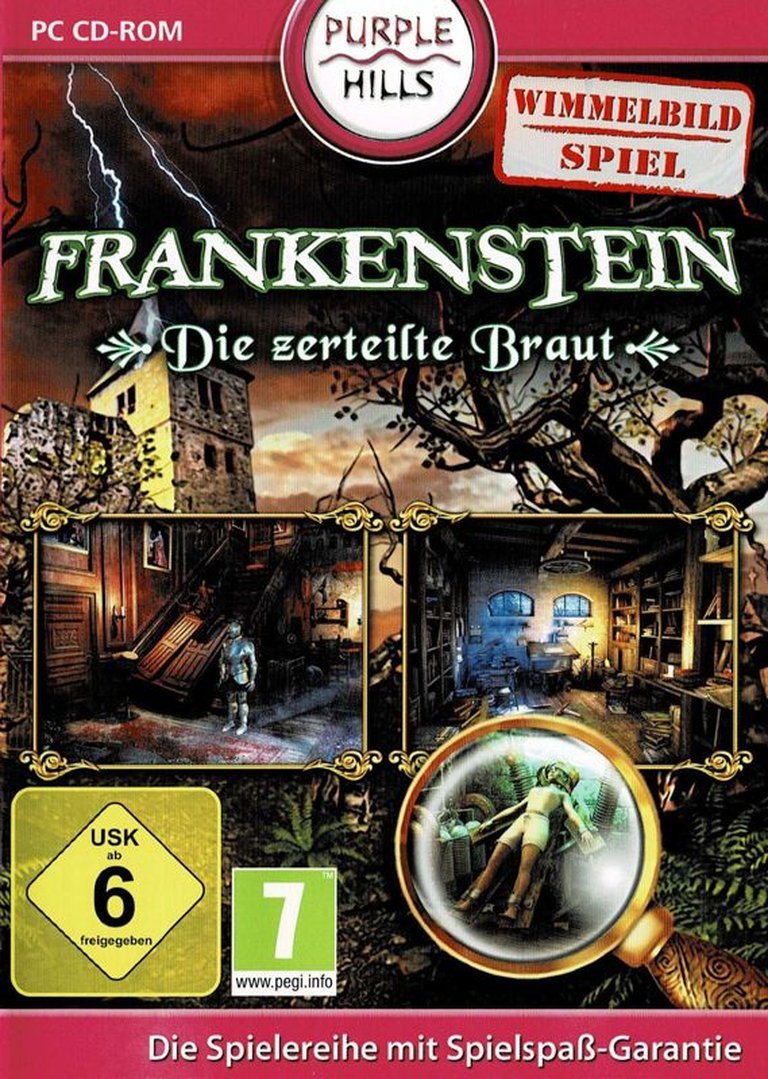
In ‘Frankenstein: The Dismembered Bride’, players follow Brad’s quest to locate his missing fiancée, Janet, after his car breaks down near a Bavarian mansion owned by the infamous Dr. Frankenstein. Exploring the eerie manor, Brad discovers Janet’s dismembered body parts, which Frankenstein has reanimated and scattered across the estate. As a hidden object adventure game, players search static scenes to collect items, reassemble Janet’s limbs, and gather machine parts to confront the mad scientist. Featuring horror-themed puzzles, unlimited hints with cooldowns, and multiple language options, the game blends classic Gothic inspiration with puzzle-solving gameplay.
Gameplay Videos
Frankenstein: The Dismembered Bride Free Download
Frankenstein: The Dismembered Bride Patches & Updates
Frankenstein: The Dismembered Bride Guides & Walkthroughs
Frankenstein: The Dismembered Bride Reviews & Reception
mastertronic.co.uk (50/100): An entertaining entry into the hidden object genre, but it is more Rocky Horror Show than it is Horror.
mobygames.com (47/100): Average score: 47% (based on 3 ratings)
Frankenstein: The Dismembered Bride: A Grotesque Curiosity in the Hidden Object Pantheon
Introduction
In the shadowed corners of casual gaming history lies Frankenstein: The Dismembered Bride—a 2009 hidden object adventure that dared to fuse Mary Shelley’s gothic legacy with B-movie camp. Developed by Solilab and Mzone Studio, this game promised macabre intrigue but delivered a divisive, often absurd experience. Its legacy is one of unintentional humor, technical vexations, and a stark reminder of the hidden object genre’s hit-or-miss experimental phase. This review argues that The Dismembered Bride is less a horror masterpiece and more a fascinating relic: a flawed but memorable oddity that straddles the line between earnest homage and parody.
Development History & Context
A Frankenstein’s Monster of Casual Gaming
Released in July 2009 by Anuman Interactive (with ports to Mac, iOS, and iPad), The Dismembered Bride emerged during the hidden object genre’s commercial peak. Titles like Mystery Case Files dominated digital storefronts, and studios like Solilab—known for A Vampire Romance: Paris Stories—sought to capitalize on low-budget, high-volume production. The game’s development team, including designer Julien Brard and composer Dominik Hauser (Cabinet of Dr. Caligari soundtrack), operated within tight constraints. Static screens, minimal animations, and repetitive mechanics were industry norms, but The Dismembered Bride’s reliance on clichéd tropes (spooky mansions, scattered body parts) reflected a rush to market rather than innovation.
Technologically, the game was unremarkable: a CD-ROM/download title requiring only a Pentium III processor and 512MB RAM. Its simplicity allowed for multiplatform releases, but critics noted it felt more like a template-driven asset flip than a passion project. The era’s hunger for casual content shielded it from scrutiny—until players realized its runtime barely exceeded 90 minutes.
Narrative & Thematic Deep Dive
Camp Horror and Narrative Whiplash
Loosely inspired by Shelley’s novel, the plot follows Brad, a protagonist whose fiancée Janet is kidnapped by Baron Albrecht von Frankenstein. After Brad’s car breaks down near the Baron’s Bavarian manor, he discovers Janet has been dismembered, her organs and limbs scattered as “experiments.” The game’s tone lurches from grim to ludicrous: early scenes feign gothic tension, but the moment Brad converses with Janet’s sentient brain (Rocky Horror Picture Show parallels are unavoidable), the narrative collapses into camp.
Characters and Dialogue
- Brad: A blank slate with zero personality, serving only as a vessel for clicking.
- Janet: Reduced to a plot device—her disembodied voice urging Brad to “find my arm!” amid dark humor.
- Baron Frankenstein: Never appears, rendering him a hollow threat.
Themes of body horror and scientific ethics are gestured at but never explored. Instead, the game leans into absurdity: reassembling Janet’s corpse and a mechanical contraption feels like assembling Ikea furniture, not confronting mortality. Dialogue is functional at best (“This is Janet’s leg!”), stripping the premise of gravitas.
Gameplay Mechanics & Systems
A Formulaic Skeleton
The Dismembered Bride follows the hidden object handbook to a fault:
Core Loop
- Explore static screens of Frankenstein’s manor (laboratory, dungeon, wine cellar).
- Find 10-15 items from a randomized list (e.g., “white wine bottle” in a cellar cluttered with identical bottles).
- Collect a body part or machine component to progress.
Flaws and Frustrations
- Visibility Issues: Low contrast made objects maddeningly obscure, forcing reliance on the unlimited hint button (with a cooldown). Mastertronic’s review noted players were advised to “maximize monitor brightness”—a band-aid for poor art design.
- Backtracking: Rooms only became “searchable” after arbitrary triggers, creating disjointed pacing.
- No Puzzles: Unlike genre peers (Grim Legends, Mystery Case Files), there are no lockpicking or inventory puzzles—just repetitive scavenging.
- Length: At 90 minutes, the experience felt anemic. GameZebo criticized its lack of replay value beyond randomized item lists.
Innovations?
The dual assembly tabs (tracking Janet’s body and the machine) offered mild novelty but no strategic depth.
World-Building, Art & Sound
Atmosphere Marred by Execution
Visuals
Hand-drawn 2D backgrounds evoked German Expressionism—creaky doors, jagged shadows—but suffered from cluttered composition and inconsistent lighting. The brain in a jar or a severed arm might blend into dungeon debris, undermining scares.
Sound Design
Hauser’s score was a highlight: haunting strings and Gothic motifs lent gravitas. Unfortunately, looping tracks grew repetitive, and sound effects (creaks, whispers) felt stock.
Tone
The art/sound clash epitomized the game’s identity crisis: visuals aimed for dread, but Janet’s chipper disembodied dialogue (“Thanks for finding my spleen!”) evoked dark comedy.
Reception & Legacy
A Critical Corpse
Upon release, The Dismembered Bride was met with 47% aggregate critic scores (MobyGames) and 2.5/5 player ratings. Key critiques:
- GameZebo (40/100): “Disappointing… a 90-minute slog with lackluster presentation.”
- AppSafari (60/100): “Short, linear, and visually confused—not the genre’s worst, but far from its best.”
- Mastertronic (5/10): “Brightness issues and absurd plotting undermine its eerie potential.”
Commercial performance is nebulous (no sales figures), but its legacy is twofold:
1. Genre Symptom: Exemplified hidden object games’ tendency to prioritize quantity over quality in the late 2000s.
2. Cult Quirk: Its Rocky Horror-esque camp earned it minor notoriety as a “so bad it’s good” curiosity.
No sequels or direct successors emerged, though Anuman iterated on similar templates (Dr. Jekyll and Mr. Hyde). Its true influence lies as a cautionary tale: a reminder that even niche genres demand narrative coherence.
Conclusion
Frankenstein: The Dismembered Bride is a paradoxical creation—a game that aimed for Gothic grandeur but stitched itself into farce. Its short runtime, frustrating design, and tonal whiplash render it a bottom-tier hidden object entry, yet its unabashed absurdity (talking brains, French-kissing body parts) grants it perverse charm. For genre historians, it’s a fascinating artifact of casual gaming’s wild west era. For players? A slog best left to masochists and irony enthusiasts. In the pantheon of Shelley-inspired media, this Bride deserves a silent burial—not a revival.
Final Verdict: ★★☆☆☆ (2/5)—A grotesque misfire with occasional glimmers of unintentional genius.