
- Release Year: 2021
- Platforms: Linux, Windows
- Genre: Action
- Perspective: Side view
- Game Mode: Single-player
- Gameplay: Metroidvania, Platform
- Setting: Fantasy
- Average Score: 76/100
Description
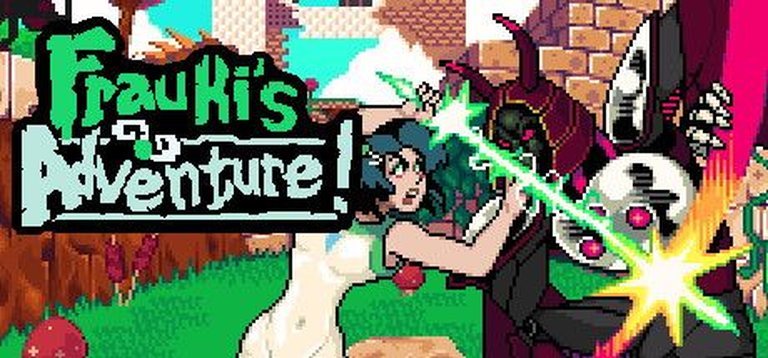
Frauki’s Adventure! is a challenging melee-combat platformer set in a sprawling, interconnected world known as Frogland. Players take on the role of Frauki, battling intelligent alien robots with precise swordplay while navigating maze-like ruins filled with shortcuts and hidden upgrades. The game blends Metroidvania exploration with punishing combat, requiring skill and strategy to retrieve prism shards and unravel the mysteries of this bizarre, retro-inspired fantasy setting.
Gameplay Videos
Where to Buy Frauki’s Adventure!
PC
Frauki’s Adventure! Cracks & Fixes
Frauki’s Adventure! Guides & Walkthroughs
Frauki’s Adventure! Reviews & Reception
steambase.io (76/100): A triumphant return to form for the series.
games-popularity.com (76/100): A triumphant return to form for the series.
Frauki’s Adventure!: A Modern Love Letter to Classic Platformers
Introduction
In an era where indie games often chase hyper-realistic graphics or sprawling open worlds, Frauki’s Adventure! stands as a defiant throwback—a meticulously crafted homage to the golden age of 16-bit platformers, infused with the punishing precision of Dark Souls and the exploratory depth of Metroidvania classics. Released in April 2021 by solo developer Casey Clyde under the CLYDE Games banner, this deceptively simple 2D action-platformer has quietly carved out a niche as one of the most underrated indie gems of the past decade. With its pixel-perfect combat, labyrinthine world design, and an atmosphere dripping with eerie nostalgia, Frauki’s Adventure! doesn’t just emulate the past—it refines it, offering a masterclass in how to distill the essence of retro gameplay into a modern, cohesive experience.
This review will dissect Frauki’s Adventure! from every angle: its development journey, narrative subtleties, mechanical brilliance, artistic identity, and cultural impact. By the end, we’ll answer the question: Is this a fleeting indie curiosity, or a future cult classic deserving of a place alongside the greats?
Development History & Context
The Solo Developer’s Vision
Frauki’s Adventure! is the brainchild of Casey Clyde, a solo developer whose passion for retro platformers is evident in every frame of the game. Unlike many indie projects that begin as ambitious Kickstarter campaigns, Frauki emerged from Clyde’s personal desire to create a game that merged the tight, skill-based combat of Mega Man X with the methodical, high-stakes duels of Dark Souls—all wrapped in the exploratory freedom of a Metroidvania. The game’s development logs on itch.io reveal a project that faced multiple hiatuses, including a significant pause in 2020 before resuming in early 2021. This stop-start rhythm is common in solo development, where burnout and real-life obligations can derail even the most passionate creators.
Clyde’s decision to use Phaser (a lightweight HTML5 game engine) and Tiled (for level design) speaks to the game’s indie roots. These tools allowed for rapid prototyping but also imposed limitations, particularly in physics and animation fidelity. Yet, rather than seeing these constraints as obstacles, Clyde leveraged them to craft a game that feels intentionally retro—not just in aesthetics, but in its mechanical purity.
The Gaming Landscape of 2021
Frauki’s Adventure! launched into a crowded indie market dominated by high-profile titles like Hades, Celeste, and Dead Cells. While these games redefined their respective genres, Frauki arrived as a quieter, more niche offering. Its free-to-play model (initially priced at $4.99 before going free in October 2024) and lack of major marketing meant it flew under the radar for many. However, its release on Steam and itch.io ensured it found an audience among hardcore platformer enthusiasts and retro gaming purists.
The game’s Metroidvania structure and Souls-like combat mechanics positioned it within two of indie gaming’s most beloved subgenres. Yet, unlike many contemporaries that lean heavily into RPG progression or narrative spectacle, Frauki strips the experience down to its core: mastery through repetition, exploration through observation, and combat through precision.
Technological Constraints and Design Philosophy
The use of Phaser and GraphicsGale (for pixel art) imposed technical limitations, particularly in collision detection and enemy AI complexity. However, these constraints forced Clyde to focus on tight, responsive controls and handcrafted enemy behaviors rather than relying on procedural generation or complex systems. The result is a game where every enemy encounter feels deliberately designed, and every death is a lesson rather than a frustration.
The game’s 2D side-scrolling perspective and direct control scheme are reminiscent of SNES-era platformers, but the addition of modern quality-of-life features—such as controller support and Steam Achievements—ensures it doesn’t feel antiquated. The decision to avoid a traditional save system (instead sending players back to the surface upon death) is a bold nod to Dark Souls, reinforcing the game’s theme of earned progression.
Narrative & Thematic Deep Dive
A Minimalist Story with Maximum Atmosphere
Frauki’s Adventure! eschews the verbose storytelling of modern RPGs in favor of environmental narrative and subtle lore drops. The premise is simple: Frauki, a lone warrior, descends into the ruins of Frogland, a once-thriving civilization now overrun by Alien Robots. Her goal? To retrieve the Prism Gems, glowing artifacts scattered across the labyrinthine depths.
What makes the narrative compelling is its ambiguity. The game never explicitly explains:
– Who (or what) Frauki is.
– Why Frogland fell.
– What the Alien Robots want with the Prism Gems.
Instead, players piece together the world’s history through cryptic environmental details, such as:
– Ancient murals depicting frog-like beings in reverence of the Prisms.
– Broken machinery hinting at a technological collapse.
– Eerie sound cues that suggest the world is alive in ways Frauki doesn’t understand.
This approach mirrors games like Hyper Light Drifter and Environmental Station Alpha, where the mystery itself becomes the narrative hook.
Themes: Isolation, Perseverance, and the Unknown
Frauki’s Adventure! explores several interconnected themes:
-
The Weight of Exploration
- Every death resets Frauki to the surface, forcing players to memorize shortcuts and internalize the world’s layout.
- This mechanic isn’t just a gameplay challenge—it’s a thematic statement about the cost of discovery. Frauki’s journey is one of trial and error, where knowledge is hard-won and progress is never guaranteed.
-
The Alien and the Familiar
- The Alien Robots are both grotesque and tragic. Their designs suggest they were once tools of Frogland’s inhabitants, now repurposed into mindless guardians.
- The Prism Gems serve as a MacGuffin, but their glowing, otherworldly nature hints at a power beyond Frauki’s understanding.
-
The Cyclical Nature of Failure
- The game’s no-handholding design means players will die—a lot. Yet, each death is a step forward, reinforcing the idea that failure is part of the journey.
- This aligns with the Souls-like philosophy, where mastery comes not from brute force, but from observation, adaptation, and patience.
Character and World-Building
Frauki herself is a silent protagonist, allowing players to project their own motivations onto her. Her design—a small, agile warrior with a sword—evokes classic heroes like Mega Man X or Alucard from Castlevania: Symphony of the Night, but her minimalist animation and lack of dialogue make her feel like an extension of the player rather than a distinct character.
The Alien Robots, on the other hand, are where the game’s personality shines. Each enemy type has:
– Distinct attack patterns (e.g., some charge, others fire projectiles).
– Visual tells (e.g., glowing eyes before an attack).
– Environmental interactions (e.g., some hide in shadows or ambush from above).
This attention to detail makes combat feel dynamic and unpredictable, even in a 2D space.
Gameplay Mechanics & Systems
Core Gameplay Loop: Precision Platforming Meets Methodical Combat
Frauki’s Adventure! distills its gameplay into three pillars:
1. Exploration – Navigating Frogland’s interconnected zones.
2. Combat – Mastering melee duels against Alien Robots.
3. Progression – Unlocking shortcuts and upgrades.
The game’s Metroidvania structure means players will frequently backtrack, but unlike traditional entries in the genre, Frauki doesn’t gate progress behind ability upgrades. Instead, progression is tied to:
– Discovering hidden paths (e.g., breakable walls, hidden portals).
– Learning enemy patterns (e.g., some areas are only safe after clearing specific foes).
– Memorizing the map (since death sends you back to the start).
This design choice makes Frauki feel more like Dark Souls than Super Metroid—knowledge is the true currency.
Combat: A Dance of Swords and Stomps
The combat system is where Frauki truly shines. Unlike many platformers that rely on ranged attacks or complex combos, Frauki keeps things simple but deep:
– Basic Attack – A quick sword slash.
– Downward Stomp – A ground pound that can stun enemies.
– Dash – A short burst of speed for dodging or repositioning.
What makes the combat compelling is the enemy AI. Alien Robots are aggressive, unpredictable, and punishing:
– They flank the player.
– They feint attacks to bait dodges.
– They adapt if Frauki spams the same move.
This creates a rhythm-based combat system where success depends on:
– Reading enemy tells (e.g., a robot winding up for a charge).
– Positioning (e.g., luring enemies into environmental hazards).
– Stamina management (since attacks and dodges share a cooldown).
The result is a combat system that feels tense, rewarding, and fair—every death is the player’s fault, and every victory is earned.
Progression and Upgrades
Frauki avoids traditional RPG mechanics like leveling or loot drops. Instead, progression comes from:
– Health Upgrades – Hidden throughout the world.
– Weapon Upgrades – Rare, but significantly alter combat (e.g., a charged slash).
– Shortcuts – Permanent unlocks that reduce backtracking.
This minimalist approach ensures that skill, not stats, determines success. However, the lack of a map system or fast-travel can make navigation tedious, especially in later areas where the labyrinthine design becomes overwhelming.
UI and Quality of Life
The game’s UI is functional but sparse:
– No mini-map – Players must rely on memory or external notes.
– No health bars for enemies – Forces players to learn attack patterns.
– Death resets to the surface – A brutal but intentional design choice.
While these decisions enhance immersion, they can also frustrate players accustomed to modern conveniences. The lack of a screen-size adjustment option (a common complaint in Steam discussions) is a notable oversight, as the game defaults to a small window with thick black borders.
World-Building, Art & Sound
The Ruins of Frogland: A Hauntingly Beautiful Labyrinth
Frogland is a masterclass in environmental storytelling. The world is divided into biomes, each with distinct visual and mechanical themes:
– Surface Ruins – Crumbling structures and overgrown vegetation.
– Mechanical Depths – Gears, pistons, and robotic enemies.
– Prism Chambers – Ethereal, glowing areas where the gems are housed.
The pixel art (created in GraphicsGale) is colorful yet eerie, with a palette that shifts from warm oranges (surface) to cold blues (depths). The lighting effects—such as flickering torches and glowing Prisms—add depth to the 2D visuals.
Sound Design: Minimalism with Maximum Impact
The game’s soundtrack (available as a separate OST) is ambient and atmospheric, with tracks that evolve as Frauki descends deeper. The sound effects are equally impressive:
– Sword slashes have a weighty crunch.
– Enemy footsteps echo in empty chambers.
– Prism Gems emit a haunting hum.
The lack of voice acting reinforces the game’s isolated, dreamlike tone. Even the death sound—a simple, mournful chime—feels like a deliberate narrative beat.
Reception & Legacy
Critical and Commercial Reception
Frauki’s Adventure! launched to modest acclaim:
– Steam Reviews: 76% Positive (51 reviews).
– itch.io Rating: 4.8/5 (23 ratings).
– Media Coverage: Praised by niche outlets like PopDust and Alpha Beta Gamer for its challenging combat and nostalgic charm.
However, the game struggled to break into the mainstream, likely due to:
– Limited marketing (no major trailers or influencer coverage).
– Technical issues (e.g., Linux segmentation faults, screen-size bugs).
– Niche appeal (hardcore platformer fans loved it, but casual players bounced off the difficulty).
Influence and Cultural Impact
While Frauki hasn’t spawned a genre or inspired direct clones, its design philosophy—precision over spectacle, atmosphere over exposition—has resonated with indie developers. Games like Haak and Death’s Gambit 2 share its Souls-like platforming DNA, suggesting that Frauki’s approach to combat and exploration is influencing the next wave of indie titles.
Its free-to-play transition in 2024 has also given it a second life, introducing the game to a broader audience. The Steam Deck compatibility (though unofficial) has further extended its reach.
Conclusion: A Hidden Gem Worth Unearthing
Frauki’s Adventure! is not a perfect game. Its lack of a map, occasional technical hiccups, and punishing difficulty will deter some players. Yet, for those willing to engage with its methodical combat, labyrinthine world, and haunting atmosphere, it offers an experience that few modern games can match.
Final Verdict: 8.5/10 – A Cult Classic in the Making
Frauki’s Adventure! is a love letter to the past, but it’s not content to merely imitate. By blending the exploration of Metroidvania, the combat of Dark Souls, and the aesthetic of SNES platformers, it carves out its own identity. It may not have the polish or budget of AAA titles, but what it lacks in spectacle, it makes up for in heart, challenge, and atmosphere.
For fans of hardcore platformers, Souls-like precision, or retro-inspired indie gems, Frauki’s Adventure! is an essential play. And with its newfound free-to-play status, there’s no excuse not to dive into Frogland’s depths—just don’t expect to emerge unscathed.
Where to Play:
– Steam (Free)
– itch.io (Name Your Price)
Final Thought:
In a gaming landscape dominated by open worlds and live-service grind, Frauki’s Adventure! is a refreshing reminder that sometimes, all you need is a sword, a labyrinth, and the will to keep trying.