
- Release Year: 2017
- Platforms: Windows
- Publisher: Scottgames, LLC
- Developer: Scottgames, LLC
- Genre: Adventure, Simulation
- Perspective: 1st-person
- Game Mode: Single-player
- Gameplay: Chore-based, Management, Minigames, Salvaging, Tycoon
- Setting: Pizzeria
Description
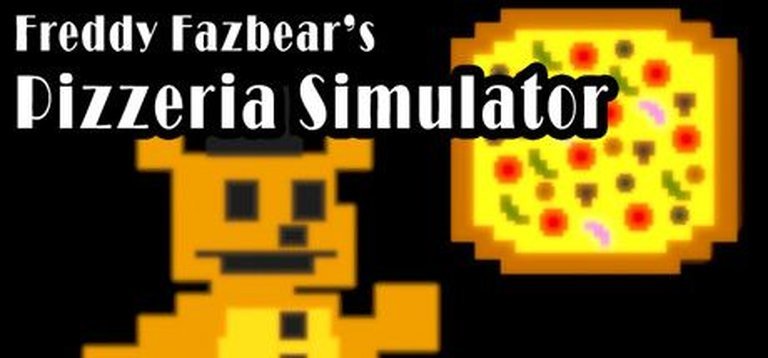
Freddy Fazbear’s Pizzeria Simulator is the seventh game in the Five Nights at Freddy’s series, diverging from typical horror gameplay by incorporating tycoon simulation elements. Players manage a pizzeria by purchasing supplies and furniture to attract customers during the day, while navigating office chores and avoiding animatronic attacks at night, with minigames revealing story details and multiple endings based on decisions.
Gameplay Videos
Where to Buy Freddy Fazbear’s Pizzeria Simulator
PC
Freddy Fazbear’s Pizzeria Simulator Free Download
Freddy Fazbear’s Pizzeria Simulator Mods
Freddy Fazbear’s Pizzeria Simulator Guides & Walkthroughs
Freddy Fazbear’s Pizzeria Simulator Reviews & Reception
goldplatedgames.com : it’s far more than that, and offers a clever new take on both horror and management sims by crossing wires between their key elements.
Freddy Fazbear’s Pizzeria Simulator: A Flawed, Fascinating Capstone to an Era
Introduction: The Gilded Cage of Fazbear Entertainment
To understand Freddy Fazbear’s Pizzeria Simulator (FFPS), one must first understand the paradox it embodies. Released in December 2017 as the seventh mainline entry in the Five Nights at Freddy’s (FNaF) series, it arrived not as a straightforward horror sequel but as a purported “pizzeria tycoon” spin-off—a genre departure so stark it initially seemed like creator Scott Cawthon’s final, whimsical joke on his audience. This was a franchise built on the紧张 confined spaces of a security office, now asking players to decorate a restaurant. Yet, beneath the cartoony 8-bit minigame and the cheerful shop interface lies the culmination of a sprawling, fan-deciphered narrative spanning decades of fictional history. FFPS is a game of profound contradictions: it is both a tedious management sim and a masterclass in thematic through-lines; a narrative heavyweight that crushes its own story under the weight of repetitive gameplay; and a free, accessible title that intentionally gates its deepest lore behind punishing difficulty. This review will argue that Freddy Fazbear’s Pizzeria Simulator is a fundamentally flawed yet indispensable artifact—the messy, ambitious, and ultimately tragic final act of Scott Cawthon’s original FNaF saga, a game whose mechanical dissonance is inextricably linked to its thematic purpose.
Development History & Context: From Cancellation to Catharsis
The road to FFPS was paved with misdirection, a hallmark of Cawthon’s marketing. In June 2017, a teaser for “FNaF 6” featuring Circus Baby appeared on ScottGames.com, only for Cawthon to announce days later that he had cancelled it, expressing fatigue with the horror formula and plans for a “pizzeria tycoon” game akin to the divisive FNaF World. This cancellation sparked skepticism, given Cawthon’s history of elaborate “cancellation” teases (most notably for FNaF 3). The developer’s own reflection, shared later on Reddit, admitted poor handling of the situation, acknowledging the community’s frustration.
For three months, the official sites were static or cryptic. A sequential “conversation” between the escaped animatronics—Baby, Ballora, Funtime Freddy, and Funtime Foxy—played out on the defunct FNaF World site, detailing Baby’s ejection from the amalgamated entity Ennard and her subsequent reassembly as “Scrap Baby.” This narrative breadcrumb trail was the true development update. In November 2017, low-resolution teasers depicting a cheerful Freddy Fazbear with a cake, then with children, and finally an 8-bit Freddy juggling pizzas, fueled speculation about a lighthearted spin-off.
The title Freddy Fazbear’s Pizzeria Simulator was revealed, and two days later, on December 4, 2017, it was spontaneously released as freeware on Steam and Game Jolt. Fans quickly realized this was not a simple tycoon game but the long-anticipated FNaF 6 in disguise. The development cycle was astonishingly short—estimated at around three weeks—explaining the game’s recycled assets, simplistic UI, and reliance on established mechanics. This rushed genesis directly informs the final product: a game bursting with narrative ambition but mechanically cobbled together from prior entries. The subsequent release of paid mobile ports (2019) and console ports (2020-2021) by Clickteam LLC USA, alongside the spinoff Ultimate Custom Night (2018)—itself born from a community poll between an “Endless Tycoon” and a custom night mode—cemented FFPS’s role as a pivotal, transitional title in the franchise’s ecosystem.
Narrative & Thematic Deep Dive: The End of the Cycle
FFPS operates as the chronological and thematic endpoint of the “original” FNaF saga (Games 1-4, Sister Location). Its plot is deceptively simple on the surface: the player is an unnamed franchisee of the reborn Fazbear Entertainment, tasked with managing a new pizzeria under the auspices of a mysterious “Cassette Man” and an AI “Tutorial Unit.” However, the core of the game is a trap. The player is, in fact, Michael Afton, the eldest son of series antagonist William Afton (Springtrap/Scraptrap), volunteering for a final, suicidal mission orchestrated by Henry Emily, co-founder of Fazbear Entertainment and father of Charlie (the Puppet’s host).
The narrative unfolds through environmental storytelling, cryptic cassette tapes from both the Cassette Man (Henry) and the Tutorial Unit (a remnant of the Sister Location facility), and, crucially, minigames. Unlike previous entries where minigames were obscure, here several are explicitly lore-revealing:
* “Fruity Maze”: Confirms the death of Susie, a child victim, and hints at the Puppet’s role.
* “Midnight Motorist”: Depicts a young Michael (or possibly Henry) driving away from a traumatic event, often interpreted as the night of the Bite of ’83.
* “Security Puppet”: Shows the Puppet giving life to the first set of murdered children (the FNaF 1 crew).
The gameplay loop—building a pizzeria, surviving nights with loose animatronics, and salvaging antique robots—is Michael’s quid pro quo with Henry. By purchasing risky items and salvaging the four key animatronics (Scrap Baby/Circus Baby, Molten Freddy/Ennard, Scraptrap/Springtrap/William Afton, and Lefty/containing the Puppet), Michael lures them all into one location. The “Completion Ending,” triggered by salvaging all four and maintaining low liability, reveals the truth: the entire pizzeria is a labyrinthine trap designed by Henry to contain and finally destroy all the remnant-infested animatronics and the malevolent spirits within them, including his own daughter (the Puppet) and William Afton.
Henry’s monologue during the conflagration is the series’ definitive thematic resolution:
“This is where your story ends. And to you, my brave volunteer… I am remaining as well. I am nearby. This place will not be remembered, and the memory of everything that started this can finally begin to fade away. As the agony of every tragedy should. And to you monsters trapped in the corridors, be still and give up your spirits. They don’t belong to you. For most of you, I believe there is peace… Although, for one of you, the deepest pit of Hell has opened to swallow you whole, so don’t keep the devil waiting, old friend.“
This ending reframes the entire series: the children’s spirits were never truly evil, just angry and lost; the true monster was William Afton, a man whose scientific curiosity and negligence birthed an endless cycle of death. Michael’s sacrifice (implied by his staying in the fire) and Henry’s provide closure. The other endings—Fired, Mediocrity, Insanity, Blacklisted, Bankruptcy, and the Lorekeeper (for finding all minigame secrets)—serve as ironic counterpoints, showing Michael failing in his duty or being dismissed for unrelated incompetence, highlighting that the true ending is a specific, earned narrative culmination.
Thematically, FFPS is about the cost of closure and the toxicity of legacy. The tycoon gameplay represents the sanitized, commercial facade of Fazbear Entertainment—the cheerful pizzeria that whitewashes the horror. The night shifts and salvages are the ugly, unavoidable truth lurking beneath. The player’s greed in the tycoon phase (buying cheap, risky items for profit) directly fuels the horror of the night phases, making the player complicit in their own torment and, by extension, complicit in the company’s historical sins. It’s a brilliant, if clunkily executed, thematic unity.
Gameplay Mechanics & Systems: A Hybrid Held Together by Duct Tape
FFPS structurally divorces itself from its predecessors by implementing three distinct gameplay loops, each corresponding to a “shift”:
1. The Tycoon Segment (Day Shift):
This is the game’s public face. Using a point-and-click interface, players purchase items from a catalog to fill their restaurant. Items have four stats: Atmosphere (fun), Safety (prevents lawsuits), Entertainment (attracts customers), and Liability Risk (increases danger). The strategic tension is clear: high-score items boost revenue but also raise the animatronics’ aggression later. Players must also manage lawsuits (random events draining funds) and accept sponsorships (immediate cash with late-night audio ad penalties). This section includes minigames within placed arcade cabinets, some purely for fun (like “Fruity Maze”) and others essential for the Lorekeeper ending. The segment ends with the restaurant ready for business.
Critique: This section is serviceable but shallow. The UI is crude, the placement mechanic is imprecise, and the consequences of your builds feel abstract until the night shift, creating a disconnect. The financial model is trivial on Normal difficulty, encouraging reckless spending that makes the subsequent horror phases artificially harder—a design choice that feels more punitive than strategic.
2. The Office Management Segment (Night Shift):
The classic FNaF formula returns, but heavily modified. The player sits in an office with a computer, two large vent openings (left and right), and a motion detector network. The goal is to complete a list of mundane tasks (print flyers, order supplies, clean vents) using the computer. Animatorronics (the four salvaged ones) will roam the building and attempt to enter the office via the vents.
The core resource is noise. The computer fan and running systems generate sound, which attracts animatronics. The player has three mutually exclusive tools:
* Motion Detectors: To track animatronic locations.
* Audio Lures: To temporarily draw an animatronic away from the office.
* Silent Ventilation: A quieter fan that reduces ambient noise but doesn’t lower temperature.
Additionally, accepted sponsorships trigger loud, unavoidable ads that blindside the player. The twist is that all four animatronics behave identically: they move towards the office when noise is high, can be stalled by staring at them in the vents with a flashlight, and are hindered by the silent ventilation. This homogenization is a major point of contention. It removes the unique puzzle of previous games (e.g., Foxy’s Rush, Freddy’s patience) for a generic, sound-based tension. The challenge escalates through RNG: animatronics can become “stuck” in vent loops or swarm both sides simultaneously, leading to moments of sheer, unfocused panic or frustrating cheapness.
Critique: This is the game’s most divisive element. Purists find it repetitive and less tactical, relying too much on audio cues and luck. Others, like some Steam reviewers, find it more genuinely stressful because strategies are less predictable. The tutorials are notoriously poor, leaving many players to discover the silent ventilation and audio lure mechanics through trial, error, and online guides.
3. The Salvage Segment (Between Shifts):
A unique and brilliant mini-game. One animatronic is found in an alley. The player must sit across a table from it, under a flickering light, and complete a checklist by observing its responses to audio cues. The catch: the animatronic only moves when the player looks down at their checklist. If it lunges, the player can use a taser (limited to three uses without devaluing the animatronic) to subdue it. Success yields a cash bonus; failure means the animatronic is now loose in the pizzeria for the next night. The player can also choose to discard it entirely, altering the narrative path.
Critique: This is FFPS’s strongest mechanical innovation. It perfectly encapsulates the game’s themes: you must intimately confront the grotesque “product” you are about to profit from, under extreme time pressure, with your only defense being a taser that devalues your prize. The tension is palpable, the sound design unnerving, and the stakes direct. It’s a mini-game with real narrative and gameplay consequence.
Progression & Endings: The game spans six days. Success is measured by salvaging all four key animatronics and maintaining a low liability rating (avoiding lawsuits). The seven endings are determined by these factors, with the “Completion Ending” providing the canonical conclusion. An “Insanity Ending” is unlocked by finding a hidden “Egg Baby” data archive, suggesting Henry’s plan was so extreme it could be perceived as madness—a meta-commentary on lore-obsessed fans.
Overall Mechanical Assessment: FFPS is a Frankenstein’s monster of mechanics. The tycoon and salvage segments are conceptually strong and thematically resonant. The office segment, while functional, is a regression in depth from the intricate, character-specific systems of FNaF 1-4 and Sister Location. Its primary virtue is that its difficulty is directly, intentionally tied to the player’s earlier greed—a smart design that unfortunately gets lost in the gameplay’s repetitive grind and opaque systems.
World-Building, Art & Sound: Contrast and Cohesion
The aesthetic of FFPS is a study in deliberate, jarring contrast.
- Tycoon Aesthetic: The pizzeria items are rendered in a bright, chunky, almost FNaF World-esque 3D style. Bright colors, smiling mascots like “Helpful” Helpy, and goofy animatronic bands (“Trash and the Gang,” “Rockstars Assemble”) create a veneer of child-friendly commercialism. This is the sanitized, corporate face of Fazbear Entertainment.
-
Horror Aesthetic: The animatronics you manage and evade are masterpieces of decrepit design. Scrap Baby is a terrifying, jittery construct of exposed endoskeleton and mismatched parts. Molten Freddy is a writhing mass of tangled wires, Funtime Freddy’s face fused into a screaming mask, dripping with corrosive fluid. Scraptrap is William Afton’s decayed corpse barely contained in a moldy, broken Spring Bonnie suit, a direct evolution of FNaF 3‘s Springtrap. Lefty is a simple, black-painted bear animatronic that hides the Puppet within—its horror is in its unassuming, “creepy but normal” appearance that suddenly sprouts a long, grasping tendril. These designs are universally praised as some of the series’ best, conveying weathered agony and predatory intent.
-
Sound Design: Leon Riskin’s score is a significant departure. The tycoon sections feature bouncy, repetitive casino-like tunes. The office and salvage segments use minimal, dread-filled ambient tracks—low drones, distorted music box melodies, and harsh electronic feedback. The sound design is the primary survival tool; the player must listen for vent scratchings, animatronic twitches, and the direction of movement. The salvage sequence’s audio cues are particularly effective: the monotone, distorted voice instructing you, the sudden mechanical whir when the animatronic shifts, the wet, guttural sounds of Molten Freddy. The jumpscares, while using familiar distorted screams, are often preceded by a stark, silent moment of realization—the player looking up from the checklist to see the animatronic right there.
-
Atmosphere & World-Building: The game’s genius lies in how these disparate art styles serve a unified world. The bright catalog items and the grim salvage objects come from the same corrupted universe. The minigames, with their retro 8-bit or 16-bit graphics, function as “archival footage” or memory fragments, their simple palettes evoking a tragic, lost childhood. The office itself is a return to the cramped, poorly-lit rooms of the first game, grounding the player in familiar, vulnerable space after the managerial overhead of the tycoon phase.
Reception & Legacy: A Divisive Pillar
Critical & Commercial Reception at Launch:
FFPS was met with a mixed-to-positive critical consensus. It received few formal reviews, but those that existed were largely favorable. TouchArcade (3.5/5) praised its hybrid gameplay as a “fun take” that avoided the series’ inertia. Rock Paper Shotgun noted its free release justified its “trick” of masquerading as a tycoon game. GameCrate called it an “absolute must-play” for fans, lauding its lore resolution. Conversely, Polish magazine CD-Action dismissed it as a “lame tycoon but a quite decent FNAF.” The most consistent praise was reserved for its narrative payoff; the most consistent criticism for its gameplay repetition and unintuitive UI.
Player Reception & Contemporary Standing:
Player reception, as aggregated on Steam and Metacritic, is overwhelmingly positive (Steam: “Very Positive” with ~93% of 20,000+ reviews). This positivity rests on several pillars:
1. It’s Free: The most generous “AAA-level” free horror game ever released.
2. Lore Closure: For a community hungry for answers after years of speculation, the Henry monologue and the revelation of Michael’s mission were seismic, emotionally satisfying events.
3. Strong Jumpscares & Atmosphere: Many cite it as one of the series’ scariest entries due to the unpredictable RNG and the personal dread of the salvage sequence.
4. Tycoon Charm: The pizzeria-building, despite its simplicity, is engaging and filled with dark humor.
However, the negative reviews highlight its flaws:
* Repetitive Office Gameplay: Many find the night shifts monotonous, relying on a repetitive listen-stare-click loop.
* Poor Tutorialization: The critical mechanics (silent vent, audio lure limits) are poorly explained, forcing players to external resources.
* RNG Frustration: Unpredictable animatronic pathing can lead to perceived “cheap” deaths.
* Underdeveloped Tycoon: The business sim is superficial, with the purchases feeling like a mere difficulty slider for the horror sections.
* Rushed Aesthetics: Some character designs (especially some of the “buyable” animatronics like the “Mediocre Melodies”) are considered low-effort.
Legacy & Influence:
FFPS’s legacy is dual-fold. First, as the narrative capstone of Cawthon’s original storyline. It conclusively resolves the fates of William Afton, the original child victims, Henry Emily, and Michael Afton. The “Completion Ending” is frequently hailed as one of gaming’s most impactful and poignant finales, providing a thematic “full circle” that the later games (Help Wanted, Security Breach) have deliberately moved away from.
Second, as a mechanical bridge. Its hybrid model directly inspired the structure of Five Nights at Freddy’s: Help Wanted (2019), which uses similar “job simulation” VR mini-games to frame its horror scenarios. More broadly, it demonstrated the franchise’s ability to experiment with genre while maintaining core identity—a boldness that paved the way for the open-world ambitions of Security Breach.
Its most direct progeny was Ultimate Custom Night (2018), a separate, non-canon custom night simulator featuring over 50 animatronics, born from the community poll after FFPS. This game became a beloved side attraction, offering pure, refined mechanics without the tycoon padding.
Conclusion: The Beautiful, Broken Bell of the FinalFreddy’s
Freddy Fazbear’s Pizzeria Simulator is not a perfect game. Its office management phase is repetitive, its tutorials are abysmal, its business simulation is wafer-thin, and its artistic consistency wavers. Yet, to dismiss it on these grounds is to miss its profound, almost Shakespearean, purpose. It is a game that understands its own narrative burden and attempts to embed that burden into its very mechanics.
The player’s journey from gleeful capitalist (buying cheap animatronics for profit) to horrified salvage worker (confronting the literal corpses of the past) to trapped victim (in the office) to, finally, willing sacrifice (in the fire) is a metaphor for the fan’s own relationship with the series. We consumed the lore, speculated on the timelines, demanded answers. FFPS asks: are we willing to confront the ugly, burning truth of the story we’ve helped build? The tycoon is the speculation—fun, profitable, but building a dangerous house of cards. The night shifts are the frustrating, granular work of piecing together clues. The salvage is the terrifying moment of facing the “monster” (the convoluted lore) head-on. And the true ending is the cathartic, destructive release.
In the history of video games, FFPS stands as a unique case study in authorial intent versus mechanical execution. Scott Cawthon, working under intense time pressure, prioritized story climax over gameplay polish. The result is a game where the thematic resonance consistently overshadows the gameplay friction. For historians, it is the undeniable end of an era—the final chapter of a homemade horror saga that captured the internet’s imagination. For players, it remains a flawed, fascinating, and deeply affecting experience, a game whose greatest strength is that its most memorable moments are not its scares, but its solemn, fiery farewell.
Final Verdict: 8/10 – A narratively monumental but mechanically uneven swan song. Its imperfections are the price of its ambition, and its ambition is what made the Five Nights at Freddy’s phenomenon worth remembering.