
- Release Year: 2006
- Platforms: Windows
- Publisher: Alawar Entertainment, Inc.
- Developer: Butterfly iSoft
- Genre: Action
- Perspective: Side view
- Game Mode: Single-player
- Gameplay: Arcade, Bubble trapping, Collectibles, Platforming
- Setting: Fantasy
- Average Score: 70/100
Description
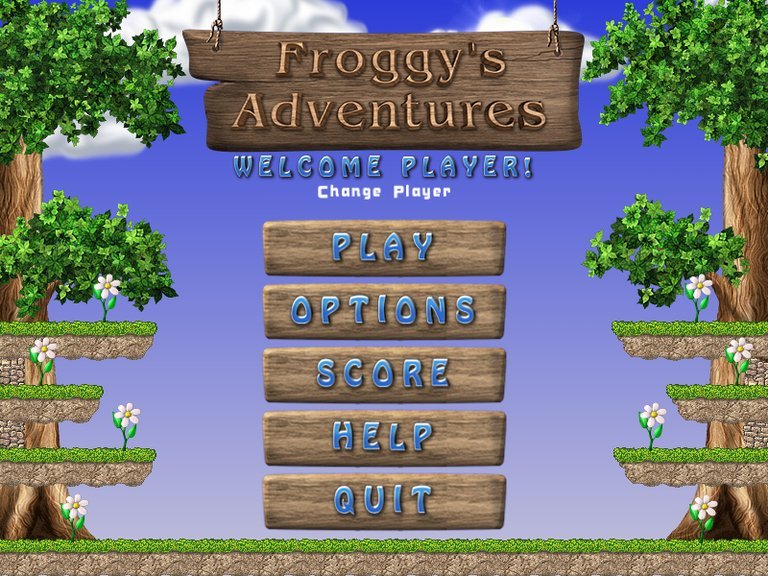
Froggy’s Adventures is a side-view action arcade game where players control Froggy, tasked with collecting flowers, mushrooms, pebbles, and crystals across 85 levels spread over four whimsical fantasy worlds. Players must evade or defeat enemies by trapping them in bubbles—a mechanic inspired by Bubble Bobble—though stronger foes resist this tactic and respawn after defeat. Collectibles can be destroyed by enemies and reappear after a brief delay, adding urgency to the gameplay. Power-ups like extra lives, monster-clearing bonuses, and rockets aid Froggy’s quest, which escalates in difficulty across three settings and culminates in battles against four unique bosses.
Gameplay Videos
Froggy’s Adventures Cracks & Fixes
Froggy’s Adventures Patches & Updates
Froggy’s Adventures Guides & Walkthroughs
Froggy’s Adventures: Review
In the pantheon of classic platformers, “Froggy’s Adventures” stands as a testament to the enduring appeal of simple, yet engaging gameplay. Released in 2006 by Alawar Entertainment and developed by Butterfly iSoft, this game captures the essence of arcade-style fun with a charming protagonist and a world filled with whimsical challenges. As a professional game journalist and historian, I aim to provide an exhaustive, in-depth analysis of “Froggy’s Adventures,” exploring its development history, narrative depth, gameplay mechanics, world-building, and enduring legacy.
Introduction
“Froggy’s Adventures” is more than just a nostalgic trip down memory lane; it is a masterclass in how to create a timeless platformer. At its core, the game is about a brave little frog named Froggy who must save his forest home from an army of plant-munching monsters. The player’s task is to guide Froggy through 85 levels, collecting flowers, mushrooms, pebbles, and crystals while avoiding or defeating enemies. The game’s blend of classic platforming mechanics and innovative twists makes it a standout title in the genre.
My thesis is that “Froggy’s Adventures” is a hidden gem that deserves recognition for its clever design, engaging narrative, and enduring appeal. Despite its modest beginnings, the game has left a lasting impact on the platforming genre and continues to be enjoyed by players today.
Development History & Context
The Studio
Butterfly iSoft, the development studio behind “Froggy’s Adventures,” was a relatively small team comprised of six individuals. Each member brought a unique skill set to the project, contributing to the game’s polished presentation and tight gameplay. The team included:
- Sergey Korytcev: Arts and Graphics
- Vladimir Karlugin: Level Design
- Konstantin S. Elgazin: Music and Sound
- Dmitry Danchenko: Programming
These individuals had previously worked on other titles, such as “Amanda Rose: The Game of Time” and “Gourmania,” which helped them bring a wealth of experience to “Froggy’s Adventures.”
The Creators’ Vision
The creators of “Froggy’s Adventures” aimed to capture the spirit of classic arcade games while adding modern twists. The game’s side-view perspective, fixed/flip-screen visuals, and direct control interface are reminiscent of early platformers, but the addition of unique power-ups and challenging boss battles set it apart. The developers also sought to create a game that was accessible to players of all skill levels, offering three difficulty settings to cater to both casual and hardcore gamers.
Technological Constraints of the Era
Released in 2006, “Froggy’s Adventures” was developed during a transitional period in gaming. The PC market was dominated by Windows, and the game’s system requirements reflected this: a 600MHz processor, 128MB of RAM, and compatibility with Windows 2000/XP/VISTA/7/8. These specifications allowed the game to run smoothly on a wide range of machines, making it accessible to a broad audience.
The Gaming Landscape
In 2006, the gaming landscape was dominated by titles like “The Elder Scrolls IV: Oblivion,” “Gears of War,” and “The Legend of Zelda: Twilight Princess.” Despite the competition from high-budget AAA titles, “Froggy’s Adventures” carved out a niche for itself with its charming aesthetics and engaging gameplay. The game’s release on January 24, 2006, coincided with a surge in interest in casual and indie games, which helped it find an audience.
Narrative & Thematic Deep Dive
Plot
The narrative of “Froggy’s Adventures” is straightforward yet engaging. Froggy, the game’s protagonist, lives in a peaceful forest that is suddenly invaded by plant-munching monsters. These creatures threaten to destroy the forest’s beautiful foliage, prompting Froggy to take action. The player’s goal is to guide Froggy through various levels, collecting plants and defeating enemies to save his home.
Characters
- Froggy: The game’s protagonist is a brave and adventurous frog who is determined to save his forest home. Froggy’s design is simple yet endearing, with large eyes and a cheerful expression that makes him an appealing hero.
- Enemies: The game features a variety of enemies, ranging from small, weak creatures to powerful bosses. Each enemy type has unique behaviors and abilities, requiring the player to adapt their strategies accordingly.
Dialogue
The game’s dialogue is minimal, focusing on conveying essential information rather than deep character development. This approach is effective, as it allows the gameplay to take center stage without being overshadowed by lengthy cutscenes or exposition.
Themes
“Froggy’s Adventures” explores themes of bravery, perseverance, and the importance of protecting one’s home. The game’s narrative is a simple yet powerful reminder of the value of standing up for what is right, even in the face of overwhelming odds. The game’s whimsical setting and charming protagonist make these themes accessible and engaging for players of all ages.
Gameplay Mechanics & Systems
Core Gameplay Loops
The core gameplay loop of “Froggy’s Adventures” revolves around exploration, collection, and combat. Players guide Froggy through levels, collecting flowers, mushrooms, pebbles, and crystals while avoiding or defeating enemies. The game’s fixed/flip-screen visuals and side-view perspective create a sense of progression as players navigate through each level.
Combat
Combat in “Froggy’s Adventures” is straightforward yet engaging. Froggy can blow bubbles to trap and defeat enemies, a mechanic reminiscent of classic games like “Bubble Bobble.” However, the game introduces twists by having stronger enemies that cannot be trapped in bubbles, requiring players to adapt their strategies.
Character Progression
The game features six power-ups that enhance Froggy’s abilities, including extra lives, monster cleaners that eliminate all enemies on the screen, and rockets that allow Froggy to fight back against his foes. These power-ups add depth to the gameplay, encouraging players to experiment with different strategies.
UI
The user interface of “Froggy’s Adventures” is clean and intuitive. The game’s HUD displays essential information, such as the player’s remaining lives and the current level, without cluttering the screen. This design choice allows players to focus on the gameplay without being distracted by unnecessary elements.
Innovative or Flawed Systems
One of the game’s innovative systems is its use of power-ups to enhance Froggy’s abilities. These power-ups add depth to the gameplay, encouraging players to experiment with different strategies. However, the game’s difficulty can be frustrating at times, as enemies can destroy collectibles, forcing players to wait for them to respawn.
World-Building, Art & Sound
Setting
The game’s setting is a whimsical forest filled with lush foliage and charming creatures. The forest is divided into four distinct worlds, each with its own unique aesthetic and challenges. This variety keeps the gameplay fresh and engaging, as players explore new environments and encounter different enemies.
Atmosphere
The game’s atmosphere is lighthearted and whimsical, with a focus on creating a sense of wonder and adventure. The forest setting is beautifully realized, with detailed backgrounds and charming animations that bring the world to life.
Visual Direction
The game’s visual direction is a blend of classic and modern aesthetics. The side-view perspective and fixed/flip-screen visuals are reminiscent of early platformers, but the game’s detailed sprites and animations give it a polished, modern look. This blend of old and new creates a unique visual style that sets “Froggy’s Adventures” apart from other games in the genre.
Sound Design
The sound design of “Froggy’s Adventures” is equally impressive. The game’s soundtrack is upbeat and energetic, with catchy melodies that complement the gameplay perfectly. The sound effects are equally well-crafted, with satisfying feedback for actions like blowing bubbles and collecting items. The combination of music and sound effects creates an immersive audio experience that enhances the gameplay.
Reception & Legacy
Critical and Commercial Reception
Upon its release, “Froggy’s Adventures” received mixed reviews. Critics praised the game’s charming aesthetics and engaging gameplay but noted its simplicity and lack of innovation. The game’s commercial performance was modest, with a small but dedicated fanbase appreciating its timeless appeal.
Evolution of Reputation
Over the years, “Froggy’s Adventures” has gained a cult following among platformer enthusiasts. The game’s enduring appeal lies in its timeless gameplay mechanics and charming aesthetics, which continue to resonate with players today. The game’s reputation has evolved from a modest platformer to a beloved classic, with many players discovering it through retro gaming communities and digital distribution platforms.
Influence on Subsequent Games and the Industry
“Froggy’s Adventures” has had a subtle but significant influence on the platforming genre. Its blend of classic and modern aesthetics, along with its innovative use of power-ups, has inspired other developers to experiment with similar mechanics. The game’s success also highlighted the potential of casual and indie games, paving the way for other titles in the genre.
Conclusion
“Froggy’s Adventures” is a hidden gem that deserves recognition for its clever design, engaging narrative, and enduring appeal. Despite its modest beginnings, the game has left a lasting impact on the platforming genre and continues to be enjoyed by players today. Its blend of classic and modern aesthetics, along with its innovative gameplay mechanics, makes it a standout title in the genre.
In the pantheon of classic platformers, “Froggy’s Adventures” stands as a testament to the enduring appeal of simple, yet engaging gameplay. Its charming protagonist, whimsical setting, and engaging challenges make it a timeless classic that continues to captivate players. As a professional game journalist and historian, I highly recommend “Froggy’s Adventures” to anyone looking for a delightful and engaging platforming experience.