
- Release Year: 2023
- Platforms: Nintendo Switch, PlayStation 4, PlayStation 5, Windows, Xbox One, Xbox Series
- Publisher: Forever Entertainment S. A.
- Developer: Forever Entertainment S. A., Storm Trident S.A.
- Genre: Role-playing, RPG, Strategy, Tactics
- Perspective: Diagonal-down
- Game Mode: Single-player
- Gameplay: Customization, Strategy, Turn-based
- Setting: Futuristic, Sci-fi
- Average Score: 64/100
Description
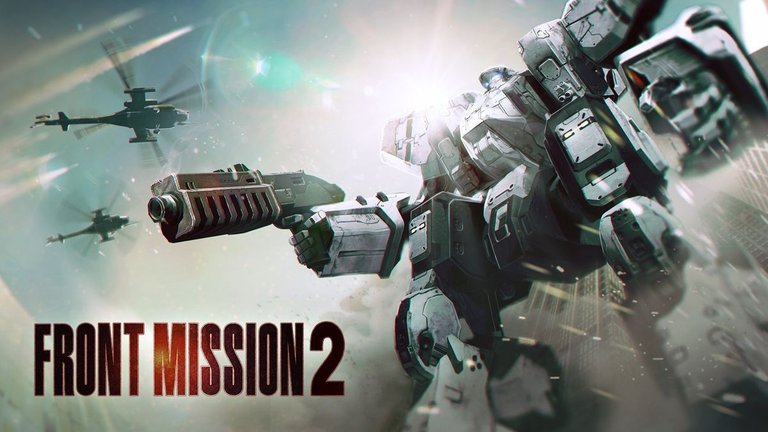
Front Mission 2: Remake is a tactical role-playing game set in a futuristic sci-fi world where players command giant mechs known as Wanzers in turn-based combat. As a modern remake of the 1997 classic, it retains the original’s strategic depth and anime-inspired art style while adding technical enhancements for contemporary platforms like Nintendo Switch, Windows, and PlayStation consoles. The narrative explores political intrigue and war through the lens of customizable robot warfare, offering both strategic gameplay and a story-driven experience.
Gameplay Videos
Where to Buy Front Mission 2: Remake
Front Mission 2: Remake Free Download
Front Mission 2: Remake Patches & Updates
Front Mission 2: Remake Mods
Front Mission 2: Remake Guides & Walkthroughs
Front Mission 2: Remake Reviews & Reception
metacritic.com (64/100): Although the first game received a more substantial upgrade, FRONT MISSION 2: Remake is still a must-have SRPG for fans of the genre and at its core; it remains the superior of the 2 titles despite some minor missteps with the update.
rpgsite.net : Something clearly went wrong here. Despite every addition to the Front Mission formula that has always made the second game a stronger experience, the remake developers have failed to deliver on something profoundly important for a game of this complexity: the localization.
waytoomany.games : Forever Entertainment, to their credit, seems fairly confident about this next game, as I’ve been getting targeted ads for it on Reddit for months now.
noisypixel.net : What initially appears to be an intriguing combat system with significant depth potential, an equipment menu featuring pages of damage numbers, linked units for support, terrain and flanking mechanics—all of it ends up feeling like a wasted opportunity due to a roll of the dice.
ign.com : Front Mission 2: Remake revives the classic sequel in the tactical Japanese RPG series. The game preserves the mature story, strategic turn-based combat, and Wanzer customization options that the original was renowned for, while updating the visuals and adding new features and enhancements.
Front Mission 2: Remake: Review
Introduction
Front Mission 2: Remake arrives as a long-awaited artifact, resurrecting a cult-classic tactical RPG from 1997 that never officially graced Western shores. Developed originally by G-Craft under Square’s stewardship and now reimagined by Storm Trident under publisher Forever Entertainment, this remake promises to bridge a 26-year cultural gap. At its core, it remains a sophisticated mecha-driven war story, but its execution is a study in compromise—preserving the original’s strategic brilliance while burdened by technical and narrative flaws. This review argues that while Front Mission 2: Remake is an essential experience for series enthusiasts and tactical RPG aficionados, it is a missed opportunity to elevate a masterpiece, constrained by budgetary limitations and a localization crisis that undermines its profound political and humanistic themes.
Development History & Context
The original Front Mission 2, released exclusively for the PlayStation in 1997, was the product of G-Craft—a studio later absorbed into Square’s Development Division 6. Director Toshiro Tsuchida, the series’ architect, oversaw its creation amid a turbulent period of console transition. As the Super Famicom era waned, Square leveraged the PlayStation’s 3D capabilities to deliver a more cinematic, grid-based tactical RPG than its predecessor. The game’s exclusivity to Japan stemmed from deliberate caution; Square’s PR manager Koichiro Sakamoto cited “situations and vocabulary” deemed culturally sensitive for Western audiences—a decision that cemented its status as an elusive legend among non-Japanese players.
The remake’s development by Storm Trident (known for Front Mission 1st: Remake) was announced in 2022, with Forever Entertainment targeting a 2023 release for the Nintendo Switch. A delay from June to October 2023 was framed as an effort to ensure “a polished and faithful remake,” though the final product reveals the constraints of a smaller studio. Operating within Unity, Storm Trident retained the original’s turn-based structure but modernized visuals and added features like a free camera and multi-language support. However, the project’s timeline and budget were evident in its inconsistent translation and stripped-down animations, reflecting the pressures of remastering a niche title without Square Enix’s full backing. This context is crucial: the remake is less a reimagining and more a preservation effort, warts and all.
Narrative & Thematic Deep Dive
Set in June 2102, twelve years after the events of Front Mission 1st, the plot unfolds in Alordesh—a fictional Southeast Asian nation analogous to Bangladesh and now a member of the Oceania Cooperative Union (OCU). The narrative is a masterclass in political fiction, dissecting the aftermath of economic exploitation and colonialism. Once a beneficiary of OCU industrialization during the Huffman conflicts, Alordesh descends into chaos post-war, culminating in a violent coup led by General Ven Mackarge. Players assume control of three OCU soldiers: Corporal Ash Faruk (a young idealist), Captain Thomas Norland (a pragmatic veteran), and intelligence officer Lisa Stanley (a strategist). Their intertwined perspectives—escaping rebels, rescuing POWs, and uncovering a conspiracy involving the mysterious “FENRIR” device—paint a tapestry of war’s futility.
Thematically, the game is unflinching in its critique of imperialism. The OCU’s “help” to Alordesh is revealed as economic subjugation, breeding resentment that erupts into revolution. Key scenes, like the siege of Dhaka or the betrayal of ally Saribash Labra (head of the transport firm Burg Transportation), underscore the moral ambiguity of conflict. Characters are archetypal—the stoic soldier, the maverick pilot—but their arcs avoid caricature. Ash’s disillusionment, Norland’s sacrifice, and Lisa’s determination humanize the broader struggle for sovereignty. Yet, the remake’s English translation—a patchwork of machine-translated dialogue, typos (“Comannder,” “Gary” for “Gray”), and incoherent tutorials—dampens this impact. Lines intended to resonate, like Amia’s explanation of elemental resistances (“Don’t let go just because it’s a counter-attack… Becouse it is a ‘Shock-resistance’ S, a fighting“), become unintentional comedies. This linguistic failure transforms a nuanced geopolitical drama into a fractured narrative, robbing players of the original’s thematic gravity.
Gameplay Mechanics & Systems
Front Mission 2: Remake’s gameplay is a double-edged sword. At its heart lies the Wanzer customization and turn-based combat systems, expanded brilliantly from the first game. Each Wanzer comprises modular parts (body, arms, legs), with separate health pools, allowing for tactical depth: crippling legs to immobilize foes or targeting weapons to disable threats. The Action Points (AP) system governs every move—walking, attacking, or using items consumes AP, which replenishes after each turn. Pilots earn proficiency and Honor Points for destroying enemies, unlocking passive skills (e.g., critical-hit boosts) and the game’s signature “Links” ability. Links enable two Wanzers to form a defensive bond, redirecting enemy attacks between them. This, paired with new mechanics like armor coatings (elemental resistances) and flanking bonuses, elevates combat beyond simple attrition.
Yet, the system is undermined by pervasive randomness. Players cannot target specific Wanzer parts; attacks hit limbs or body by RNG, leading to frustrating scenarios where a missile meant for an enemy’s rocket launcher instead severs an arm, leaving the bazooka intact. This lack of control, combined with hit rates as low as 60–70%, turns strategic planning into a coin flip. The Arena mode, while useful for testing builds, cannot compensate for this flaw. Additionally, the remake streamlines the original’s dynamic battle animations (e.g., Wanzers skating into position) into static, zoomed-out skirmishes, sacrificing cinematic flair for clarity. These issues are compounded by a cluttered UI and redundant menus, hampering the otherwise robust customization. The result is a system that rewards patience but punishes ambition, leaving combat feeling half-baked despite its theoretical depth.
World-Building, Art & Sound
Alordesh serves as a character in itself, blending decaying urban centers (Dhaka’s parliament) with overgrown jungles and war-torn villages. The world-building is bolstered by “The Network,” an in-game pseudo-Internet where players can access news, dossiers, and historical logs, enriching the lore without disrupting gameplay. This digital archive contextualizes the OCU’s rise and Alordesh’s descent, mirroring real-world themes of post-colonial fragmentation.
Visually, the remake is a mixed bag. Character portraits and Wanzer designs are crisp and detailed, with vibrant paint jobs reflecting personal style. Environments, however, suffer from a washed-out color palette and repetitive textures, creating a grim but occasionally monotonous atmosphere. The loss of the original’s dynamic battle animations—where Wanzers would elegantly maneuver before firing—strips combat of its kinetic energy. Instead, battles play out like a diorama, with the new free camera offering little compensation beyond cosmetic admiration.
Sound design fares better. Noriko Matsueda’s original soundtrack, remastered for the release, retains its haunting synth-rock melodies and electronic percussion, evoking the tension of war. Tracks like “Over the Clouds” underscore aerial combat, while “Desperate Struggle” amplifies claustrophobic urban fights. Yet, the absence of voice acting leaves dialogue flat, relying on text marred by translation errors. Sound effects—explosions, machine-gun fire, and Wanzer collisions—are authentic, though they grow repetitive over long missions. The art and sound collectively establish a mood of weary realism, but technical shortcomings prevent them from achieving the original’s immersive grandeur.
Reception & Legacy
Upon release, Front Mission 2: Remake garnered a mixed reception, reflected in a Metacritic score of 64/100. Critics praised its strategic depth and political narrative but lamented its technical flaws. RPGFan noted, “The exterior is old and rusty, but where it counts, the machine has the integrity to win the war,” acknowledging its core strengths. However, Nintendo Insider lamented a “disappointing remake,” calling the translation a “massive blemish,” while Touch Arcade criticized how it “mulches [the story’s] challenging plot.” Commercially, the game performed modestly, likely buoyed by the series’ niche cult following and the novelty of its first Western release.
The original Front Mission 2 was a commercial and critical triumph in Japan, selling 496,200 copies in 1997 and earning a “Gold Prize” from Sony for exceeding 500,000 sales. It is widely regarded as the series’ zenith for its mature storytelling and tactical innovations. The remake’s legacy, however, is one of preservation over reinvention. It fulfills a decades-long fan dream of an official localization but fails to modernize the experience meaningfully. Its reception has sparked debates about the ethics of remastering—whether faithfulness to the original should supersede contemporary expectations. For the industry, it underscores the risks of niche projects: while it ensures Front Mission’s survival, it also risks tarnishing its reputation. The upcoming Front Mission 3: Remake will be a litmus test for whether the series can overcome these hurdles.
Conclusion
Front Mission 2: Remake is a flawed masterpiece—a time capsule of 1990s tactical RPG ambition trapped in 2023’s technical constraints. It excels in its portrayal of war’s human cost, its intricate customization, and its strategic systems, but stumbles under the weight of a disastrous translation and uninspired modernization. For series loyalists, it is an essential, if bittersweet, journey into Alordesh’s revolution. For newcomers, it is a cautionary tale: a glimpse into a bygone era of design, one that values complexity over accessibility.
Ultimately, Front Mission 2: Remake occupies a curious space in gaming history. It is a valiant effort to resurrect a forgotten classic, but its execution is a testament to the challenges of remastering niche titles without the resources of a major publisher. While it fails to be the definitive version fans hoped for, it remains a vital artifact—a reminder of Front Mission’s legacy and a plea for a more respectful, comprehensive reimagining in the future. In the grand mech of things, it is a valiant, if imperfect, salvage operation.