
- Release Year: 2008
- Platforms: Windows
- Publisher: Alawar Entertainment, Inc.
- Developer: e-FunSoft Games
- Genre: Puzzle
- Perspective: Top-down
- Game Mode: Single-player
- Gameplay: Tile matching puzzle
- Setting: Fantasy
- Average Score: 80/100
Description
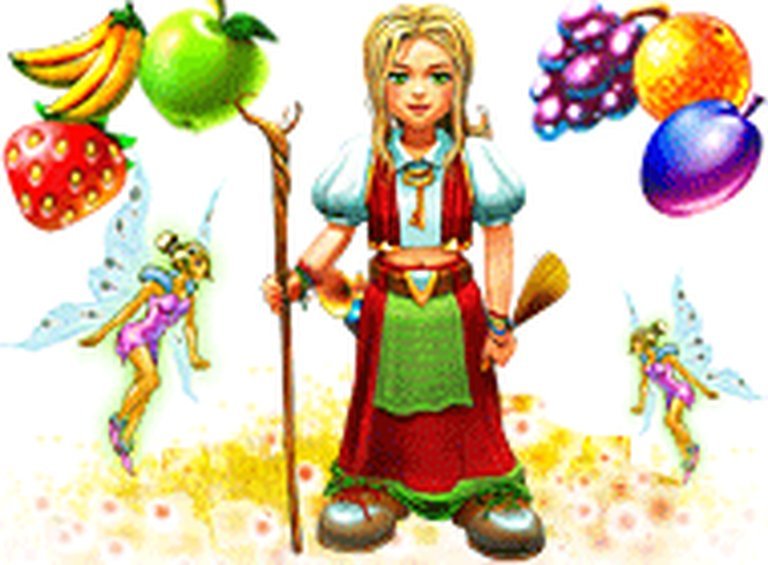
In Fruit Lockers 2: The Enchanting Islands, an evil sorceress has imprisoned the fairies’ fruit, and players must help by solving match-three puzzles through swapping lockers to reveal fruit and then matching three or more of the same fruit to clear them. The game features diverse level challenges—including collecting specific fruits, finding hidden flowers, clearing wire frames, battling bosses, and bonus stages—while earning money to decorate your own enchanted island with unique items and power-ups.
Gameplay Videos
Fruit Lockers 2: The Enchanting Islands Reviews & Reception
retro-replay.com : Visually, Fruit Lockers 2 is a treat.
Fruit Lockers 2: The Enchanting Islands: Review
Introduction
In the vibrant, chaotic ecosystem of casual gaming, where match-three puzzles reigned supreme in the late 2000s, Fruit Lockers 2: The Enchanting Islands emerges as a whimsical yet structurally ambitious entry. Released on July 26, 2008, by Alawar Entertainment and developed by e-FunSoft Games, this title represents the second installment in the Fruit Lockers series, refining the foundational mechanics of its 2005 predecessor while introducing layered gameplay innovations. At its core, the game promises a deceptively simple premise: rescue fairies’ imprisoned fruit by solving puzzles, then reinvest rewards into customizing your own enchanted island. Yet, beneath its candy-colored exterior lies a surprisingly intricate experience that balances strategic depth with accessible charm. This review argues that Fruit Lockers 2 succeeds not through radical reinvention but through meticulous polish, thematic cohesion, and a masterful fusion of puzzle-solving and creative expression—elements that elevate it beyond its genre contemporaries and cement its status as a hidden gem in casual gaming history.
Development History & Context
Fruit Lockers 2 emerged from the creative crucible of e-FunSoft Games, a modest Indonesian studio helmed by Agung Wijaya (project leader and programmer) and Laksmana Wijaya (game design). The 11-person team, including artists Andrey Burilov and composers Staffan Melin/Gwilym Wogan, operated within the constraints of mid-2000s Windows gaming, prioritizing accessibility over graphical extravagance. Their vision was clear: evolve the Fruit Lockers formula by adding a meta-layer of progression through island decoration, transforming repetitive gameplay into a tangible reward system. This ambition aligned perfectly with the burgeoning casual gaming market of 2008, where platforms like Alawar Entertainment specialized in shareware titles for mass audiences. Technologically, the game employed a fixed/flip-screen interface and point-and-click mechanics, eschewing 3D rendering for crisp, stylized 2D art—a pragmatic choice ensuring compatibility on low-to-mid-range PCs. The genre landscape at the time was saturated with titles like Bejeweled and Zuma, but e-FunSoft’s dual-layered locker-fruit mechanic offered a fresh twist, while its fairy-tale narrative provided thematic differentiation in a crowded field.
Narrative & Thematic Deep Dive
The narrative, though minimalist, serves as an effective emotional anchor. The evil sorceress—an unseen antagonist whose influence permeates the world—has imprisoned the fairies’ fruit within enchanted lockers, plunging the Enchanting Islands into a state of magical decay. The fairies, rendered as grateful, personified quest-givers, appeal directly to the player: aid us, and we’ll grant you your own island to decorate. This setup establishes a clear, altruistic motivation that transcends mere score-chasing. Dialogue, gleaned from interludes and boss battles, emphasizes warmth and camaraderie. The fairies express witty gratitude (“You’re a true hero of the islands!”), while the sorceress taunts during boss fights, her disembodied jeers (“Your pitiful efforts amuse me!”) adding a layer of playful villainy. Thematically, the game explores duality: imprisonment versus liberation (the lockers representing both a puzzle obstacle and a narrative prison), creativity versus destruction (matching fruits to clear boards versus building islands), and cooperation versus tyranny. The act of decorating your island becomes a metaphor for restoration, turning the player into a co-creator of the fairies’ lost paradise. Though light, this narrative thread provides consistent purpose, transforming abstract puzzles into acts of benevolence.
Gameplay Mechanics & Systems
At its heart, Fruit Lockers 2 deconstructs the match-three formula with a dual-layered mechanic: players first swap lockers to reveal hidden fruits, then match three or more identical fruits to clear them. This two-step process adds strategic depth, as opening lockers prematurely can disrupt combos. The game introduces five puzzle types that prevent repetition:
1. Meter Collection: Fill a progress bar by accumulating fruits.
2. Quota Challenges: Harvest specific quantities (e.g., 25 bananas, 30 strawberries).
3. Flower Hunts: Discover hidden flowers (daisies, passion flowers) within lockers.
4. Wire Frames: Clear magical barriers by matching underlying fruits.
5. Bonus Stages: Timed mini-games requiring players to click flying ladybugs.
Boss battles further diversify gameplay, pitting players against the sorceress’s minions by matching fruits to drop onto their heads—a mechanic that demands precision and rewards cascading matches. Power-ups and obstacles introduce asymmetrical tension:
– Aids: Magic Keys (open any locker), Fruit Collectors (gather all instances of a fruit), and Fruit Bombs (explode adjacent tiles).
– Hindrances: Giant spiders (lock fruits with webs), Worms (corrupt fruits temporarily), and Bubble Fruits (shift identities until locked in).
The UI is intuitive, with clear indicators for objectives and a robust economy where earned coins fund island decorations. Progression feels organic, as each solved puzzle unlocks cosmetic rewards, turning gameplay into a creative feedback loop. While the core loop remains familiar, the locker-fruit dynamic and environmental obstacles ensure sustained engagement, avoiding the monotony that plagues lesser puzzle titles.
World-Building, Art & Sound
The Enchanting Islands serve as a vibrant, immersive setting, blending fairy-tale aesthetics with playful environmental storytelling. Each island—from tropical lagoons to moss-draped grottos—uniquely embodies the fairies’ regained freedom, with unlockable decorations (fountains, wind chimes, flowering shrubs) reflecting player agency. The art direction prioritizes whimsy: lockers feature wood-grain textures and metallic hinges, fruits burst into sparkling confetti upon matching, and fairy-filled backdrops glow with pastel-hued skies and twinkling fireflies. Animations are fluid; locker spins, fruit explosions, and island placement transitions all respond with tactile satisfaction.
Sound design complements the visual enchantment. Staffan Melin and Gwilym Wogan’s soundtrack employs light orchestral melodies and harp plinks, evoking a sense of wonder without overwhelming concentration. SFX, from the clink of coins to the fizz of fruit bombs, provide satisfying auditory feedback. During boss battles, the sorceress’s cackles and the fairies’ cheers heighten dramatic tension. This cohesive audiovisual synergy transforms puzzle-solving into a sensory delight, making the game’s world feel alive and inviting.
Reception & Legacy
Fruit Lockers 2 launched with modest fanfare in the crowded casual market. Its critical reception was sparse but positive: GameXtazy awarded it 80%, praising its “fun, challenging, and downright addictive” gameplay. Commercially, as a shareware title, it likely found steady sales through Alawar’s digital storefronts, though exact figures remain elusive. Its legacy lies in its influence on the Fruit Lockers series, directly inspiring Fruit Lockers Reborn! (2016), which refined its island-decorating mechanics. Within the broader genre, it demonstrated how layered puzzles and narrative rewards could breathe new life into tired formulas. While it didn’t spawn imitators, its emphasis on player creativity (through island customization) predated trends seen in games like Animal Crossing and Stardew Valley. Today, it’s remembered as a cult favorite among puzzle enthusiasts—a testament to e-FunSoft’s ability to polish genre conventions into something uniquely charming.
Conclusion
Fruit Lockers 2: The Enchanting Islands stands as a testament to the power of thoughtful iteration within the casual gaming space. By infusing the match-three genre with a dual-layered mechanic, a cohesive fairy-tale narrative, and a rewarding customization system, e-FunSoft Games crafted an experience that is both accessible and deeply engaging. Its puzzles offer strategic depth without overwhelming complexity, its art and sound create an enchanting atmosphere, and its progression system transforms gameplay into a creative journey. While not revolutionary, its polish and thematic consistency elevate it above many peers. For players seeking a dose of whimsical escapism or a refined puzzle experience, Fruit Lockers 2 remains a delightful artifact of casual gaming’s golden age—a hidden gem that proves even the simplest concepts can shine with care and creativity. In the pantheon of match-three games, it earns its place not as a trendsetter but as a charming, well-executed masterpiece.