
- Release Year: 2006
- Platforms: PlayStation 2, PlayStation 3, Windows
- Publisher: Liquid Games, OG International Limited
- Developer: Aqua Pacific Ltd.
- Genre: Action, Gambling
- Perspective: 1st-person
- Game Mode: Single-player
- Gameplay: Slot machine simulation, Unlockable content
- Average Score: 40/100
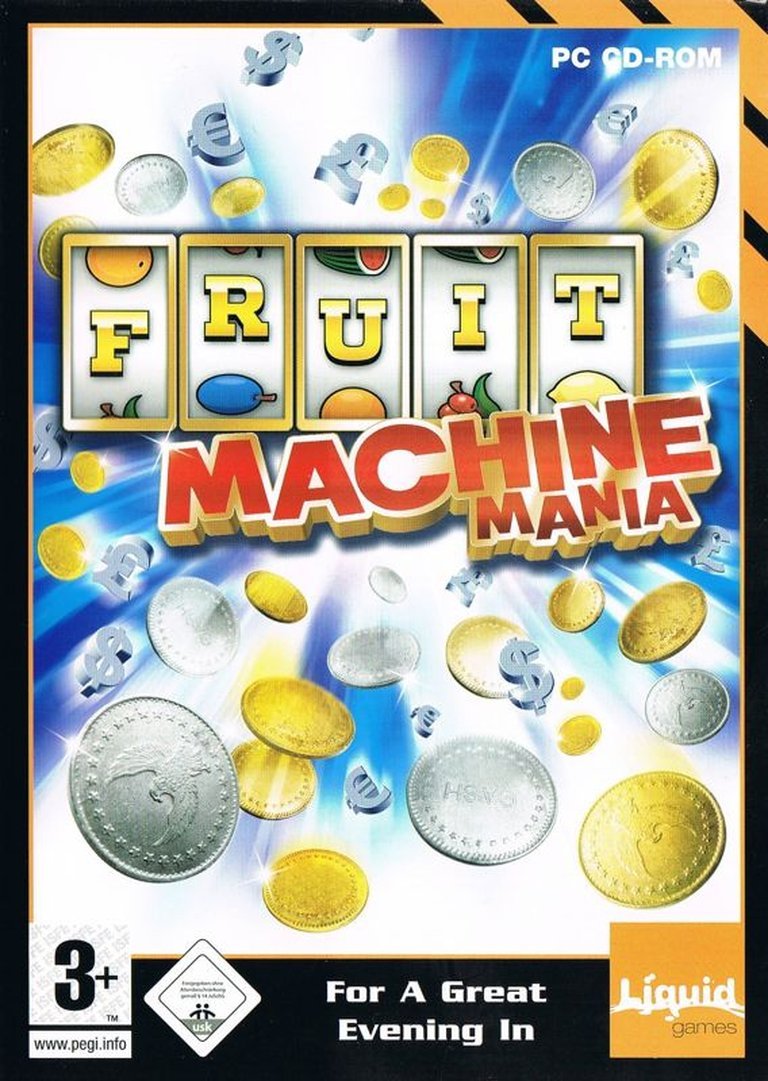
Description
Fruit Machine Mania is a solo slot machine simulator released in 2006, offering a keyboard-controlled gambling experience with six distinct slot machines, each featuring unique designs and gameplay mechanics. Players can unlock new machines and bonus games as they progress, blending classic casino action with light progression elements in a first-person perspective.
Gameplay Videos
Fruit Machine Mania Free Download
PlayStation 2
Fruit Machine Mania Mods
Fruit Machine Mania Reviews & Reception
mobygames.com (40/100): Players
Average score: 2.0 out of 5
gamesasylum.com : retailing at a measly tenner – or £5.99 if you shop at Morrisons – it represents good value for money.
Fruit Machine Mania Cheats & Codes
PC
Complete the ‘CASHnGRAB’, then attempt the ‘NUDGEPOT’. Hold Z until the ‘ONE’ symbol remains lit, then press X and release Z. Repeat this to accumulate 10 nudges.
| Code | Effect |
|---|---|
| Hold Z until the ‘ONE’ symbol remains lit, then press X and release Z | Accumulate 10 nudges |
PC (Unlocker)
Download and use the unlocker tool.
| Code | Effect |
|---|---|
| Unlocker tool | Unlocks all 6 Slot machines |
Fruit Machine Mania: A Spin Through the Annals of Digital Gambling Simulators
Introduction: The Curious Case of a Niche Simulator
In the vast, ever-expanding universe of video games, where epic narratives, photorealistic graphics, and complex mechanics often dominate the discourse, Fruit Machine Mania (2006) stands as a peculiar outlier—a digital homage to the humble British fruit machine. Developed by Aqua Pacific Ltd. and published by Liquid Games, this title is a slot machine simulator that strips away the monetary stakes of traditional gambling, instead offering a points-based, family-friendly take on the classic arcade experience. At first glance, it may seem like an oddity, a relic of a time when developers experimented with unconventional genres. Yet, beneath its simplistic premise lies a fascinating case study in game design, cultural adaptation, and the commercialization of nostalgia.
This review aims to dissect Fruit Machine Mania in exhaustive detail, exploring its development context, gameplay mechanics, artistic choices, and legacy. Was it a bold innovation, a misguided experiment, or merely a budget title capitalizing on a recognizable cultural icon? By the end of this analysis, we will determine whether Fruit Machine Mania deserves a place in the annals of gaming history—or if it’s better left as a footnote in the evolution of digital gambling simulators.
Development History & Context: The Birth of a Budget Curiosity
The Studio Behind the Spinning Reels
Aqua Pacific Ltd., the developer of Fruit Machine Mania, was a relatively obscure studio with a portfolio that leaned heavily toward casual and family-oriented games. Their catalog included titles like International Tennis Pro, Hansel & Gretel, and Carwash Tycoon—games that prioritized accessibility over depth. This background is crucial to understanding Fruit Machine Mania’s design philosophy. The studio was not attempting to revolutionize gaming but rather to create an affordable, easy-to-pick-up experience that could appeal to a broad audience.
The publisher, Liquid Games, was a budget-focused label known for releasing low-cost titles across multiple platforms. Their business model relied on volume and affordability, often repurposing simple concepts into marketable products. Fruit Machine Mania fit perfectly into this strategy, offering a recognizable premise (slot machines) at a bargain price (£9.99 at launch).
The Cultural & Technological Landscape of 2006
The mid-2000s were a transitional period for the gaming industry. The PlayStation 2 was in its twilight years, the Xbox 360 had just launched, and the Wii was on the horizon. Meanwhile, PC gaming was diversifying, with digital distribution platforms like Steam gaining traction. Amid this evolution, Fruit Machine Mania emerged as a throwback—a game that harkened back to the simplicity of arcade cabinets rather than embracing the complexity of modern titles.
Technologically, the game was constrained by its budget. It was entirely keyboard-controlled (on PC) and featured basic 3D rendering for its slot machines. The lack of advanced graphics or physics engines was not a limitation but a deliberate choice, aligning with the game’s accessible, no-frills ethos.
The Vision: A Gambling Game Without the Gambling
One of the most intriguing aspects of Fruit Machine Mania is its deliberate removal of real-world gambling mechanics. In the UK, fruit machines (or “one-armed bandits”) are a cultural staple, often found in pubs and arcades. However, they are also associated with addiction and financial risk. Liquid Games’ decision to strip away the monetary element was a bold move, repositioning the game as a family-friendly experience.
Kevin Hassall, Liquid Games’ Publishing Director, stated:
“The fruit machine is an entertainment icon in the UK, and we wanted to broaden the appeal. In keeping with the inclusive, family-friendly ethos of the Liquid brand, we’ve designed a fruit machine game that can be enjoyed by players of all ages.”
This approach was both a commercial strategy and a creative constraint. By eliminating real money, the game could avoid regulatory scrutiny and appeal to younger audiences. However, it also raised a fundamental question: Can a slot machine game be fun without the thrill of winning (or losing) real money?
Narrative & Thematic Deep Dive: The Illusion of Progression
The Absence of a Traditional Narrative
Fruit Machine Mania is not a story-driven game. There are no characters, no plot twists, and no overarching narrative. Instead, the “story” is one of progression—unlocking new machines, accumulating points, and chasing the elusive high score. This lack of narrative is not a flaw but a design choice, reinforcing the game’s arcade roots.
Themes: Nostalgia, Addiction, and the Psychology of Reward
While the game lacks explicit storytelling, it is steeped in thematic undertones:
-
Nostalgia for the Arcade Era
The fruit machine is a quintessentially British gaming artifact, evoking memories of dimly lit pubs and seaside arcades. Fruit Machine Mania taps into this nostalgia, offering a digital recreation of a physical experience. The inclusion of machines like Card Master (a card-based slot) and Sea Treasures (a nautical-themed variant) further enhances this retro appeal. -
The Psychology of Reward Systems
Even without real money, the game employs classic gambling psychology:- Variable Reward Schedules: Wins are unpredictable, creating a dopamine-driven feedback loop.
- Near-Miss Effect: The game frequently teases players with almost-wins, encouraging them to “try just one more spin.”
- Progression Unlocks: New machines are gated behind point thresholds, mimicking the “grind” of traditional gambling.
-
The Illusion of Skill
Unlike real slot machines, which are purely luck-based, Fruit Machine Mania introduces elements of player agency:- Bonus Games: Some machines allow players to influence outcomes via timed button presses.
- Hold Reels: Players can choose to freeze certain reels, creating a (false) sense of strategy.
These mechanics give the illusion of skill, making the game feel more interactive than its real-world counterparts.
The Ethical Dilemma: Gambling Mechanics Without the Stakes
The game’s most fascinating (and controversial) aspect is its use of gambling mechanics in a non-gambling context. By removing real money, the developers sidestepped ethical concerns about addiction. However, the core psychology remains intact—players are still chasing the next big win, albeit in a virtual currency.
This raises questions about the game’s target audience. Was it truly designed for families, or was it a gateway to real gambling? The lack of educational content or responsible gaming messages is notable, especially given the game’s PEGI 3+ rating.
Gameplay Mechanics & Systems: The Art of the Spin
Core Gameplay Loop: Spin, Win, Unlock, Repeat
At its heart, Fruit Machine Mania is a game about repetition and progression. The core loop is as follows:
- Start with 100 Credits: Players begin with a fixed number of turns.
- Choose a Machine: Initially, only Card Master is available.
- Spin the Reels: Players bet credits and pull the lever (or press a key).
- Win or Lose Points: Successful spins award points; unsuccessful ones deplete credits.
- Unlock New Machines: Accumulate enough points to access new slot variants.
- Trigger Bonus Games: Some machines offer mini-games to earn extra credits.
The Six Machines: Variety in Simplicity
The game’s primary selling point is its six distinct slot machines, each with unique themes and mechanics:
| Machine Name | Theme | Key Mechanics |
|---|---|---|
| Card Master | Classic Playing Cards | Single payline, simple card-based wins. |
| Sea Treasures | Underwater Adventure | Multiple paylines, nautical symbols. |
| World Travel | Global Tourism | Bonus rounds tied to “travel destinations.” |
| Lucky 7s | Traditional Slot | High-risk, high-reward payouts. |
| Fruit Frenzy | Classic Fruit Machine | Fast-paced, frequent small wins. |
| Diamond Dash | Gemstone Mining | Progressive jackpot mechanics. |
Each machine introduces slight variations in gameplay, such as:
– Multiple Paylines: Some machines allow wins across three lines instead of one.
– Hold Reels: Players can freeze one or more reels between spins.
– Bonus Mini-Games: Timed challenges (e.g., stopping a meter at the right moment) to earn extra credits.
Progression & Unlocks: The Carrot on a Stick
The game’s progression system is straightforward but effective:
– Point Thresholds: Each new machine requires more points than the last, creating a sense of escalating challenge.
– Credit Management: Players must balance risk and reward, deciding how many credits to bet per spin.
– Save System: Progress can be saved, allowing players to return to their credit stash later.
However, the lack of a true “ending” or final goal undermines long-term engagement. Once all machines are unlocked, the game devolves into a high-score chase—a common pitfall of arcade-style titles.
Flaws in the System: Where the Reels Fall Short
While Fruit Machine Mania is competent in its execution, several design choices hinder its appeal:
- Lack of Tutorials: The game provides no guidance on mechanics like bonus games or reel holds, leading to confusion.
- Repetitive Music: The soundtrack loops incessantly, becoming grating over extended play sessions.
- Limited Depth: Beyond unlocking machines, there is little to sustain interest. No multiplayer, no leaderboards, no customization.
- Questionable UI: The interface is functional but uninspired, with little visual feedback during spins.
World-Building, Art & Sound: The Aesthetics of the One-Armed Bandit
Visual Design: A Digital Arcade Cabinet
Fruit Machine Mania’s art direction is a love letter to physical slot machines. The 3D-rendered cabinets are detailed enough to evoke their real-world counterparts, with flashing lights, spinning reels, and thematic backdrops (e.g., underwater scenes for Sea Treasures). However, the visuals are decidedly low-budget, with simple textures and minimal animation.
Sound Design: The Symphony of the Slot
The audio experience is a mixed bag:
– Authentic Machine Sounds: The clinking of coins, the whirring of reels, and the ding-ding-ding of a win are faithfully recreated.
– Repetitive Music: The background tracks are generic and loop ad nauseam, lacking the dynamic energy of a real arcade.
– Minimal Voice Work: The game features no dialogue, relying instead on text prompts (e.g., “Bonus Game! Press X to Stop!”).
Atmosphere: The Loneliness of the Digital Gambler
Unlike a bustling arcade or pub, Fruit Machine Mania is a solitary experience. There are no NPCs, no ambient chatter, and no sense of place beyond the immediate machine. This isolation is both a strength and a weakness:
– Strength: It replicates the focused, almost meditative state of playing a real fruit machine.
– Weakness: It lacks the social energy that makes physical gambling so compelling.
Reception & Legacy: The Forgotten Spin
Critical & Commercial Reception: A Budget Title’s Fate
Fruit Machine Mania received little critical attention upon release. MobyGames lists an average player score of 2.0/5 (based on a single rating), while Metacritic has no critic reviews. The game’s budget pricing and niche appeal likely contributed to its obscurity.
Commercially, it was a minor blip—selling primarily to bargain hunters and casual gamers. Its £9.99 price point ensured it would not be a financial failure, but neither did it become a breakout hit.
Legacy: A Footnote in Gaming History
Fruit Machine Mania’s influence is negligible. It did not spawn sequels, inspire imitators, or leave a lasting mark on the industry. However, it serves as an interesting artifact for several reasons:
- Early Example of Gambling Simulators: It predates the modern wave of free-to-play mobile slot games (e.g., Slotomania).
- Family-Friendly Gambling: Its removal of real money was ahead of its time, foreshadowing the ethical debates around loot boxes and microtransactions.
- Cultural Preservation: It digitized a piece of British gaming culture, albeit in a simplified form.
Comparisons to Modern Slot Games
Today, digital slot machines are a billion-dollar industry, dominated by mobile apps with aggressive monetization. Fruit Machine Mania’s lack of real-money mechanics makes it a relic—a time capsule of a simpler, less exploitative era.
Conclusion: A Spin Worth Taking?
Fruit Machine Mania is not a great game by any conventional metric. It lacks depth, innovation, and polish. Yet, it is not without merit. As a budget-friendly, family-oriented take on a cultural icon, it succeeds in its modest ambitions. It is a game that knows its audience and delivers exactly what it promises: a no-frills, low-stakes slot machine experience.
Final Verdict: 5/10 – A Curio for Collectors
Pros:
✅ Faithful recreation of fruit machine mechanics.
✅ Varied machine designs add replayability.
✅ Family-friendly alternative to real gambling.
Cons:
❌ Repetitive gameplay with no long-term goals.
❌ Lack of tutorials and polished UI.
❌ Forgettable presentation and sound design.
Fruit Machine Mania is not a must-play, but it is a fascinating artifact—a snapshot of a time when developers experimented with unconventional genres. For historians, casual gamers, or those nostalgic for the arcade era, it offers a brief, if unremarkable, diversion. For everyone else, it remains what it always was: a budget spin on a classic concept.
Final Score: 5/10 – “A Niche Novelty.”