
- Release Year: 2023
- Platforms: PICO, Quest, Windows
- Publisher: Halfbrick Studios Pty Ltd
- Developer: Halfbrick Studios Pty Ltd
- Genre: Action
- Perspective: 1st-person
- Game Mode: Online Co-op, Single-player
- Gameplay: Motion control, Slicing
- VR Support: Yes
Description
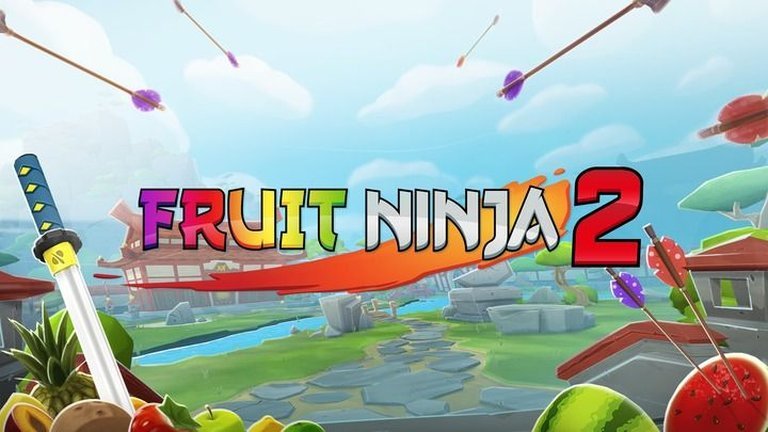
Fruit Ninja VR 2 is a virtual reality action game that brings the iconic fruit-slicing gameplay to immersive 3D environments. Using motion controllers, players slash flying fruit in first-person perspectives, exploring settings like a ninja dojo and archery areas, with features such as tutorials, Quick Play menus, and online multiplayer for up to two players.
Gameplay Videos
Where to Buy Fruit Ninja VR 2
PC
Fruit Ninja VR 2 Guides & Walkthroughs
Fruit Ninja VR 2: A Slicing, Dicing, and Socializing Tour de Force in Casual VR
Introduction: From Pocket-Sized Phenomenon to Immersive Empire
In the pantheon of mobile gaming, few titles are as instantly recognizable or conceptually pure as Fruit Ninja. Launched in 2010 by Halfbrick Studios, it distilled arcade action into a single, blissful mechanic: swipe to slice fruit, avoid bombs. Its success was stratospheric, spawning countless spin-offs, Kinect adaptions, and a cultural footprint that far outstripped its simple premise. Yet, the leap from capacitive touchscreens to the full six degrees of freedom of virtual reality presented a monumental challenge. How do you translate a game defined by a single, precise gesture into a spatial, embodied experience without losing its soul? Fruit Ninja VR 2, released in April 2023 after a substantial Early Access period, is Halfbrick’s answer to that question. It is not merely a port but a massive expansion, a complete reimagining that builds a vibrant, social, and surprisingly deep world—Fruitasia—around that core slicing loop. This review will argue that Fruit Ninja VR 2 stands as a landmark in accessible VR design, a masterclass in scaling a minimalist concept into a rich, systemic playground while navigating the unique physical and comfort constraints of the medium. Its legacy is twofold: as the definitive Fruit Ninja experience and as a blueprint for how to bridge casual mobile appeal with immersive VR depth.
Development History & Context: The VR Evolution of a Mobile Juggernaut
Halfbrick Studios, the Australian developer behind Fruit Ninja, Jetpack Joyride, and Dan the Man, has a history of extracting profound fun from deceptively simple mechanics. Their initial foray into VR, Fruit Ninja VR (2016), was a straightforward translation, proving the core mechanic worked in room-scale. By the time Fruit Ninja VR 2 entered Early Access in December 2021, the VR landscape had matured. Standalone headsets like the Meta Quest 2 dominated, prioritizing comfort, accessibility, and social features over raw PC power.
The development, as detailed in a post-mortem interview with lead gameplay programmer Liam Potter on GameAnalytics, was a continuous exercise in solving VR-specific problems. The team’s vision was clear: transform Fruit Ninja from a solitary time-killer into a living world to explore. This meant creating a “Social Hub,” designing distinct biomes for different game modes, and implementing a robust progression and weapon collection system—all while adhering to the stringent performance budgets of standalone VR. The technological constraint was paramount. As Potter notes, “Bad performance might not kill a game on PC, but if your game runs poorly in VR, you’ll make people physically ill.” This drove aggressive optimization, shader compilation during loading screens, and careful design of fruit trajectories to avoid motion sickness. The game was built in Unity, a common engine for VR, but the challenge was not graphical fidelity but felt performance and interaction fidelity.
The gaming landscape at launch was one of booming casual VR. Beat Saber had proven the appeal of rhythm-action in VR, and Superhot VR had mastering spatial combat. Fruit Ninja VR 2 entered this space not as a hardcore sim but as a charismatic, friendly, and content-rich alternative. Its release on multiple platforms (SteamVR, Quest, PICO) with cross-play from the start (added in patch 1.9.2) was a strategic move to capture the largest possible audience, recognizing that the VR community was still fragmented.
Narrative & Thematic Deep Dive: The Zen of Fruitasia
Fruit Ninja VR 2 possesses no traditional narrative with characters, dialogue, or a plot. Instead, it offers a profound theme and a setting: the pursuit of mastery within the serene, absurdist realm of Fruitasia. This is its narrative depth.
The Theme of Meditative Mastery: At its heart, the game is about achieving a state of “flow.” The act of slicing fruit—especially in Zen or Arcade modes with their endless waves and calming soundscapes—becomes a moving meditation. The narrative is the player’s personal journey from novice, fumbling with the Ninja Scroll (the game’s physical menu), to a master ninja who can conjure blade combos from muscle memory. The mission system, extensively reworked in the 1.10.1 “Mission Update,” provides explicit goals (“Slice 50 fruits in a single combo,” “Get a full combo in a Blade Challenge”), framing progression as a path of enlightenment. The “Challenge Mode Leaderboard,” showing the Top 50 ninjas with celebratory animations, creates a communal hierarchy of skill, turning solitary practice into a competitive spiritual quest.
The World of Fruitasia: The setting is a character in itself. It is not a grim, war-torn realm but a pastel-colored, perpetually sun-drenched archipelago of floating platforms, bamboo forests, and serene lagoons. The “Social Hub” is a central plaza where player avatars (customizable with various outfits, skins, and eye colors) mingle, practice on training poles, and launch into cannon barrels to different areas. This hub is the game’s “town square,” fostering a low-pressure social environment. Branching paths lead to distinct areas: the Classic Dojo (a simple platform), Gutsu’s Lagoon (a watery area for Zen mode), the Archery Path (a cliffside range for bow challenges), and the new Crossbow Area (a shadowy, fortress-like addition in update 1.10.0). Each locale is not just a backdrop but thematically reinforces its associated gameplay. The serene lagoon for Zen, the focused archery range for precision, the chaotic crossbow fortress for bombardment. This world-building through environment is subtle but effective, creating a cohesive, welcoming universe where the core activity feels perfectly at home.
Gameplay Mechanics & Systems: A Symphony of Slice
The genius of Fruit Ninja VR 2 lies in its layered gameplay architecture, built upon the immutable law: one motion controller = one blade (or bow).
Core Gameplay Loops: The foundation remains the three classic modes from the mobile original, each given a dedicated stage:
1. Classic Mode: Fruit flies from off-screen; slice all fruit to fill a time bar, avoid bombs. The tension is rhythmic and clear.
2. Zen Mode: Endless fruit, no bombs, no penalty. Pure, stress-free flow. Often played in the calm Gutsu’s Lagoon.
3. Arcade Mode: Fruits fly in preset patterns from cannons, with a frenzy banana that triggers a score multiplier shower. Tests pattern recognition and combo chaining.
Innovation 1: The Weapon Rack & Any Weapon, Any Mode. The most transformative system, introduced in update 1.10.1, is the removal of weapon restrictions. Originally, blades were for Classic/Arcade/Zen, bows for Archery Challenges, and sais for their own paths. The “Any Weapon, Any Mode” update shattered this. You can now wield a crossbow in Classic Mode or a sai in Arcade. This is revolutionary for a game with such a simple base action. It turns each weapon from a mode-specific tool into a distinct “playstyle.” A long, sweeping blade differs dramatically from the pinpoint, charged shots of a bow or the rapid, short-range stab of sais. This single design decision multiplies the game’s combinatorial possibilities, encouraging experimentation. Leaderboards now indicate the weapon used, introducing a new layer of meta-strategy.
Innovation 2: The Mission System & Progression. Update 1.10.1 also brought a “reworked mission system structure.” A panel on the Ninja Scroll presents over forty challenges, categorized by weapon and mode. These are not just “slice X fruit” but specific feats: “Achieve a rank of A or higher in all Blade Challenge levels,” “Slice 10 fruits with a single Bomb explosion.” Completing missions unlocks new cosmetic weapons (like the Holy Sai, Cookie Crossbow, or Butterfly Blade) and, crucially, provides direction. It combats the potential aimlessness of an open-world sandbox by giving players tangible goals that naturally guide them to explore all areas and weapon types. The integration with the “Ninja Scroll” UI is seamless.
Innovation 3: The Social Hub & Multiplayer Arena. The Social Hub is the game’s declarative statement that this is a shared, living space. Players can see each other’s avatars, use proximity voice chat, and join “Public and Private Lobbies.” The “Arena” likely refers to competitive multiplayer modes like Apple Head (a capture-the-flag style game where teams compete to slice an apple and bring it to their base). Patch notes detail extensive multiplayer fixes, showing Halfbrick’s commitment to a smooth shared experience—sync issues, ghosting, shield spawns were all meticulously addressed. This transforms Fruit Ninja from a solitary high-score chase into a social, occasionally competitive, party game.
Flaws & Friction Points: The game is not without its rough edges. The primary critique, echoed in the sole professional review from Gameplay (Benelux) (scoring 70/100 with the comment “Voor meer doorgewinterde VR-spelers zal Fruit Ninja VR 2… voornamelijk aanvoelen als meer van hetzelfde” / “For more seasoned VR players, Fruit Ninja VR 2 will mainly feel like more of the same”), highlights a potential lack of revolutionary innovation for VR veterans. The physics, while satisfying, are simpler than in physics-heavy titles. The world, while pretty, is not dense with complex interactions. The comfort options (Blink, Dash, Smooth locomotion) are essential and well-implemented, a direct response to the analytics that showed players dropping off due to motion sickness. The tutorial, overhauled multiple times (1.9.2, 1.10.2), remains a critical onboarding phase; its design—showing the play space, using audio cues—is a textbook case study in VR tutorial design as per Potter’s advice.
World-Building, Art & Sound: The Aesthetic of Fruitasia
Visual Direction: Fruit Ninja VR 2 embraces a bright, cartoonish, and overwhelmingly friendly aesthetic. It eschews photorealism for a clean, low-poly, saturated style that runs beautifully on standalone hardware. The world of Fruitasia is divided into distinct, thematically cohesive zones:
* The Social Hub & Dojo: Simple, instructive environments with clear sightlines.
* Gutsu’s Lagoon: A tranquil water world with lily pads and gentle waterfalls, enhanced by a new skybox in patch 1.10.1 that adds “more land features.”
* The Archery Path: A dramatic cliffside with靶场 (target ranges) and winding paths.
* The Crossbow Area: A darker, stone fortress with a cooler, more intense atmosphere, a deliberate contrast to the rest of Fruitasia.
The UI is diegetic, entirely embedded in the physical “Ninja Scroll”—a parchment-like tablet you pull from your belt. All menus, weapon racks (expanded in 1.10.1), and mission panels are here, creating immense immersion. The 1.10.1 update added new cosmetic weapons with distinct visual flair (pixel art blades, frosty bows), serving as the primary visual rewards loop.
Sound Design: The audio landscape is a crucial directional tool, as emphasized by Halfbrick’s developers. Fruit launches have distinct swooshes; bombs have a menacing hum; blade slices produce a crisp, satisfying shing that varies slightly by weapon. The music is adaptive and mood-based: calm, melodic loops for Zen; driving, rhythmic tracks for Arcade and Blade Challenges; tension-filled scores for Archery and Crossbow modes. The 1.9.2 patch notes mention “Rebalanced ambient audio” and “Rebalanced audio during gameplay,” indicating meticulous tuning. Sound is not just feedback but a primary navigation and emotional guide, fulfilling Potter’s dictum to use “audio clues to grab [the player’s] attention.”
Reception & Legacy: A Solid, Supportful Success
Critical & Commercial Reception: Official critical reception is minimal, represented solely by the 70/100 score from Gameplay (Benelux). The Dutch review’s sentiment—competent and enjoyable but failing to move the needle for VR connoisseurs—is likely indicative of a broader critical shrug. The game is seen as a exceptionally polished and generous expansion of a known quantity, not a paradigm-shifting VR title. Commercially, it appears stable. Steam user reviews are “Mostly Positive” (74% of 74 reviews at time of writing, with a Steambase Player Score of 74/100), with a price point that increased from $20 to $25 upon full release. The player count is modest but dedicated (7 collectors on MobyGames). Its success is less about blockbuster sales and more about establishing a sustainable, updated live service in the VR space.
Legacy & Influence:
1. The “Any Weapon, Any Mode” Precedent: This is its most significant design legacy. By decoupling tools from contexts, Halfbrick created a multi-tool sandbox. Future VR (and non-VR) games with distinct mechanics may look to this as a model for maximizing systemic depth from a limited moveset.
2. Diegetic UI as Standard: The Ninja Scroll is a masterclass in immersive menu design. It solves the unsolvable HUD problem in VR by making the menu a physical, interactive object in the world. This approach has been cited in developer talks and is now a common pattern in well-designed VR games.
3. Post-Launch Support as a Model: The patching history (from 1.0 in July 2022 through 1.10.2 in Nov 2023) is a masterclass in responsive, content-rich live service. Major updates added entire new areas, weapon types, mission systems, and quality-of-life features, all free. This builds immense goodwill and transforms a purchase into a platform.
4. Gateway VR Title: Like Beat Saber before it, Fruit Ninja VR 2 is a perfect first VR game. It’s intuitive, non-threatening, physically comfortable (with options), and immediately fun. It has likely introduced thousands to VR through the sheer power of its simple, satisfying core loop wrapped in a generous package.
Conclusion: The Masterpiece of Casual VR
Fruit Ninja VR 2 is not a game that aims to blow your mind with narrative complexity or graphical grandeur. Its ambition is different: to create the most complete, charming, and physically satisfying embodiment of a simple idea possible. It succeeds resoundingly. Through a relentless focus on player comfort, an inspired diegetic UI, a bold “any weapon” systemic philosophy, and a supportive, evolving live-service model, Halfbrick has built Fruitasia—a place you want to visit to slice some fruit.
Its place in video game history is secure as the definitive translation of a mobile classic into VR and a benchmark for accessible, deep, and socially-connected casual VR design. It proves that a game can be both instantly comprehensible and endlessly repayable, both a solitary zen garden and a bustling social hub. For the seasoned VR player, it may not redefine the medium. But for the medium itself, it provides a perfect template: take a simple, beloved mechanic, build a world around it that respects the player’s body and comfort, fill it with meaningful choices and rewards, and support it with unwavering commitment. In the ultimate metric of its genre, Fruit Ninja VR 2 is not just good—it is masterful. It is the fruit ninja’s journey from app to arena, and the journey is a delight.