
- Release Year: 1996
- Platforms: Windows 16-bit, Windows
- Publisher: Maxis Software Inc.
- Developer: Maxis Software Inc.
- Genre: Action
- Perspective: 3D
- Game Mode: Hotseat, Single-player
- Gameplay: Bonus games, Missions, Nudge mechanics, Pinball Simulation, Realistic Physics, Skillshots
- Setting: Comic book, Sci-fi
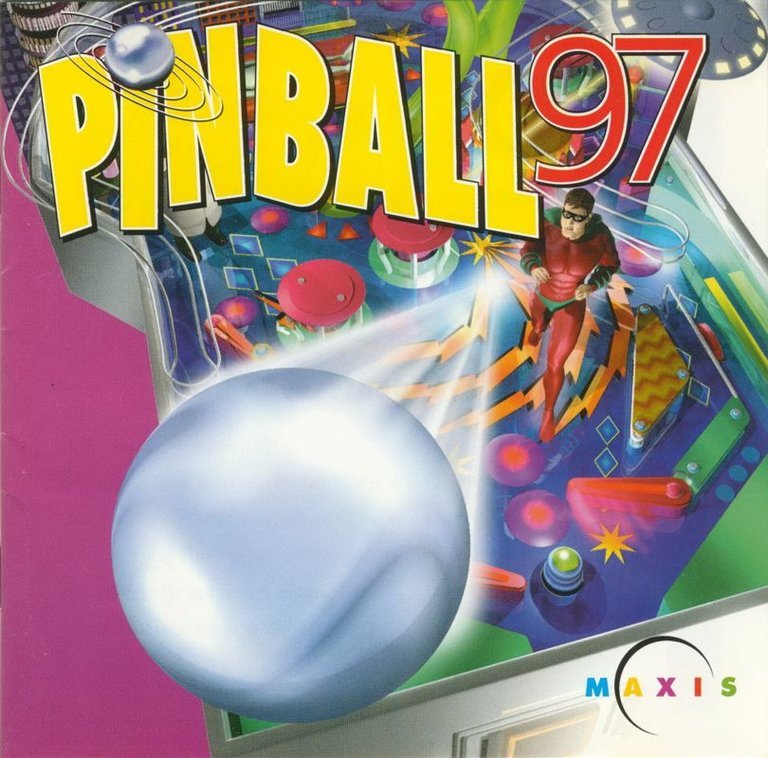
Description
Full Tilt! 2 Pinball is a 3D-tilted pinball simulation game developed by Maxis and released in 1996 for Windows. It features three distinct tables—Mad Scientist, Alien Daze, and Captain Hero—each with sci-fi and comic book themes, offering realistic ball physics, various missions, and the ability to play in windowed or fullscreen mode for an immersive pinball experience.
Gameplay Videos
Full Tilt! 2 Pinball Free Download
Full Tilt! 2 Pinball Patches & Updates
Full Tilt! 2 Pinball Guides & Walkthroughs
Full Tilt! 2 Pinball Reviews & Reception
mobygames.com : If you want a good computerized pinball game for your PC, this is a pretty good one to choose.
myabandonware.com : I love this game so much
lastbandit.com : Full Tilt! 2 is fun for a while but that’s about all it is.
Full Tilt! 2 Pinball: The Arcade Dream, Digitalized — A Definitive Historical Review
Introduction: The Silver Ball in the PC’s Court
In the mid-1990s, the personal computer was asserting itself not just as a tool for productivity but as a legitimate platform for entertainment. Within this burgeoning landscape, the pinball genre occupied a curious niche: a digital translation of a tactile, mechanical arcade pastime. Full Tilt! 2 Pinball (1996), known in Europe as Pinball 97, arrived as the sequel to the well-received Full Tilt! Pinball (1995). It was a product of a specific moment, developed by the newly minted Maxis South (the former Cinematronics studio) under the shadow of its predecessor’s massive cultural footprint—particularly the Space Cadet table’s ubiquity as 3D Pinball for Windows – Space Cadet. My thesis is this: Full Tilt! 2 Pinball is a fascinating, deeply flawed artifact of ambition. It represents a decisive pivot from the simulation-leaning design of its predecessor toward a more fantastical, arcade-centric experience, trading nuanced physical realism for heightened spectacle and thematic whimsy. While its execution was uneven and its innovations incremental, its legacy is paradoxically secured not by its own merits but by the colossal shadow of the table that preceded it, and by the dedicated community that has kept its digital flippers flipping for nearly three decades.
Development History & Context: From Cinematronics to Maxis South
The story of Full Tilt! 2 Pinball cannot be separated from the trajectory of its developer. The original Full Tilt! Pinball was created by Cinematronics, LLC, a small studio founded in 1994 by David Stafford, Mike Sandige, and Kevin Gliner. Their breakout came from a chance suggestion: after a proposed Doom port for Windows 95 was rejected, Microsoft’s Alex St. John reportedly asked, “Can’t we just get a game of pinball or something like that?” The team, with mere days to conceptualize, faxed a rudimentary table design to Microsoft, securing a deal that would birth 3D Pinball for Windows – Space Cadet. The core engine was a custom-built, data-driven physics simulation crafted by Sandige, a marvel of optimization for 1995 hardware (486 DX2/33, 8MB RAM). The game’s pre-rendered 3D graphics, created using TrueSpace and Adobe Photoshop, were state-of-the-art for a consumer PC title.
The success of the bundled Space Cadet table created a commercial opportunity. In 1996, Maxis—the simulation powerhouse behind SimCity—acquired Cinematronics, rebranding it as Maxis South. Full Tilt! 2 Pinball was the first major project from this new union. The development context is crucial: this was a sequel born of business synergy as much as creative drive. The team had a working engine and a proven formula, but the mandate was to expand, not reinvent. The technological constraints remained similar—targeting Windows 3.1 and Windows 95 on CD-ROM—but with slightly more headroom. The team (credited as 35 developers on MobyGames) reused and refined the core physics and rendering code, focusing energy on asset creation: new tables, new digital audio, and new visual themes. The shift from the original’s MIDI soundtrack to over 30 minutes of Red Book CD audio for the sequel is a direct response to criticisms of the first game’s sound, a clear indicator of the team listening to feedback within the limits of their medium.
Narrative & Thematic Deep Dive: Sci-Fi and Comic Book Camp
Pinball games are not narrative-driven in a traditional sense, but they thrive on thematic narrative—the implied story told through art, sound, and mechanical objectives. Where the original Full Tilt! presented a triptych of distinct genres (space opera, pirate adventure, high fantasy), the sequel coalesces around a unified, pulpy aesthetic: sci-fi and comic book adventure. This is not a subtle shift; it’s a declaration of intent to prioritize fun, camp, and immediate accessibility over the more “serious” simulations of the first installment.
The three tables construct miniature, interactive genre vignettes:
-
Mad Scientist: The narrative here is a love letter to classic Universal monster movies. The player is an assistant to a deranged genius (voiced with gleeful mania) attempting to assemble a Frankenstein-esque creature. Objectives involve shooting targets to collect “body parts” (brains, arms, legs) from special holes and conduits. The soundscape is filled with crackling electricity, bubbling lab tanks, and the scientist’s exhortations. The theme translates directly into mechanics: multiball might represent a “power surge,” and a key feature is a “mercury bath” that the ball can plunge into, altering its physics temporarily—a literal “mad science” experiment on the playfield.
-
Alien Daze: This table stages a retro-futuristic alien invasion scenario. The player takes on the role of a defender against little green men, with objectives centered on “abducting” humans (represented by targets that must be shot into a “carbonite” casing), creating “crop circles” via ramp shots, and disabling UFOs. The audio is dominated by theremin-like wails, laser blasts, and a rock ‘n’ roll soundtrack. The narrative is one of frantic action against an extraterrestrial threat, and the mechanics reflect this with fast, chaotic shots and targets that often require rapid-fire accuracy.
-
Captain Hero: The most explicitly comic-book-themed table casts the player as a superhero defending a generic “Metropolis”-like city from a roster of villains (Quake, Slime, Mystman, Mr. Pling, and even the Mad Scientist as a crossover). The core mechanic involves “repairing” damaged cityscapes (lighting up building targets) and battling villains in sequential “boss fight” modes. The voice work, which players and critics consistently highlight as hilarious, is key here. The titular hero’s catchphrase—”Watch out, @-Boy, or you’ll be up to your knees in EVIL!”—and the villains’ thick, cod-European accents (a playful jab at classic comic book dub voices) commit fully to a tone of earnest, silly heroics. The table’s layout, with its cityscape backdrop and prominent “skyscraper” ramps, visually reinforces this narrative.
The underlying theme unifying all three is playful power fantasy. Unlike the original’s Space Cadet (a training simulator) or Skulduggery (a treasure hunt), these tables are about enacting archetypal genre stories: creating life, fighting aliens, being a superhero. The progression is less about achieving a rank (Cadet to Admiral) and more about completing a series of episodic missions or “quests” that mirror plot beats. This narrative approach is shallower but more immediately gratifying, aligning the game with arcade sensibilities where the “story” is an excuse for exciting visual and auditory feedback.
Gameplay Mechanics & Systems: Ambitious Scale, Flawed Execution
The core pinball loop—launch ball, control with flippers, hit targets to score, avoid drains—remains unchanged. However, Full Tilt! 2 made several significant, and controversial, mechanical departures from its predecessor.
Table Design and Scale: The most immediately noticeable change is the enlarged playfield scale. Tables are now “twice as large,” with wider flippers and a larger ball. This was intended to create a more cinematic, detailed experience. However, this design choice created a fundamental tension. To accommodate the larger playfield elements within a fixed screen resolution (640×480, 800×600, 1024×768), the vertical play area was compressed. The result, as noted by the sharp-eyed critic at PC Player (Germany), is that “the table and ball physics really kind of spoil it.” The ball feels faster and more aggressive, bouncing with less delicate control, which clashes with the more spacious-but-compressed layout. This is particularly evident on Captain Hero, which critics like those at Power Play found to be a “spielerisches Leichtgewicht” (playful lightweight) due to this imbalance.
Physics and Nudging: The physics engine, inherited from the first game and built by Mike Sandige, was still lauded for its “realistic” foundation by many (“The physics is realistic and the games play like you’d imagine a real pinball game would play”). However, the sequel’s implementation exposed flaws. Critically, the nudging (table-tilting) system was nearly ineffective, according to the detailed review on Martin Mathis’s site. The thresholds for triggering a tilt warning were too high, making the mechanic almost pointless for strategic ball recovery, while the center ball save feature was unreliable during multiball chaos. This broke a key tension-and-release loop present in real pinball and in the original Full Tilt!.
Missions and Modes: Each table is built around a series of missions or modes, a concept inherited from the first game but expanded. These are accessed by targeting specific areas and often require sequential shooting. They are the primary driver of score and progression. For example, Mad Scientist‘s “Construct Monster” mode requires hitting body part targets in order; Alien Daze‘s “Abduction” mode has a time limit to trap humans. The system works in theory—providing structure and goals—but PC Action (Germany) noted that the bonus games (the multiball and jackpot modes) were particularly challenging and satisfying, a high point. The problem, as PC Player pointed out, is that the rules are obtuse. The digital manual (or lack thereof) and on-table text labels often fail to clearly explain the complex, overlapping objectives. This creates a barrier to entry that contradicts the game’s arcade-friendly surface.
UI and Presentation: The game supports windowed or fullscreen play, a notable feature for the era. The user interface—score, ball count, messages—is displayed as text in the margins around the 3D table. An option for “floating text labels” shows scores directly where hits occur. While functional, this system can clutter the screen on lower resolutions. The four-player hot-seat support is a standard but welcome feature for a party-style game.
Innovation vs. Deriviation: Here, the review consensus is damning. PC Action praised “new ideas,” but Power Play delivered the most scathing critique: the game “…nützt in keinster Weise die Möglichkeiten moderner Computerflipper aus” (does not use the possibilities of modern computer pinball in any way), contrasting it unfavorably with Sierra’s Ultimate Pinball series, which experimented with more radical 3D and simulation features. Full Tilt! 2 is, in essence, a content pack with a new skin and soundscape. The core engine and fundamental design philosophy are identical to the 1995 original. Its “new” ideas are almost exclusively thematic (the three new tables) and auditory (the CD-quality soundtracks). The gameplay loops, physics quirks, and even the tilt system feel like a slightly less polished iteration of a two-year-old design.
World-Building, Art & Sound: A Pulpy, Audio-Visual Tour de Force
If the gameplay systems of Full Tilt! 2 are its contested terrain, its art and sound design are its unequivocal triumphs.
Visual Direction: The tables are rendered in pre-rendered 3D, a technology that was aging by 1996 but still yielded impressive results in the hands of artists like John Frantz Jr. and Phil Shenk. The shift to a larger scale and lower perspective was meant to increase immersion, and to a degree, it succeeds. Details on the playfield are more discernible. The themes are rendered with a bold, cartoony clarity. Mad Scientist is a cluttered, sparking laboratory; Alien Daze a stark, neon-lit abduction site; Captain Hero a brightly colored cityscape under siege. The use of light and shadow in the pre-rendered assets creates a convincing depth that, while not truly 3D, sells the illusion of a physical table. The PCGamingWiki notes the game was limited to standard resolutions (640×480 to 1024×768), and on lower-end systems, PC Player reported “ball motion choppiness” at higher resolutions, a technical limitation that marred the visual fluidity for some.
Sound Design and Music: This is the department where Full Tilt! 2 Pinball most decisively improves on its predecessor and earns its highest praise. The move to digital Red Book CD audio is transformative. Each table gets a distinct, full-length soundtrack that dynamically reacts to play.
* Mad Scientist uses deep, throbbing bass tones and ominous orchestral stabs.
* Alien Daze thrives on driving rock ‘n’ roll riffs.
* Captain Hero features a swinging, big-band jazz track perfect for a crime-fighter’s escapade.
These are not generic MIDI loops; they are atmospheric and memorable. Furthermore, the voice acting, while sparse, is iconic. The cheesy, enthusiastic lines from Captain Hero and his villains (“You will beCRUSHED!”) are frequently cited by players as a source of charm and humor. The sound effects for flipper hits, ball launches, target impacts, and multiball sequences are crisp and satisfying, providing crucial audio feedback that partially compensates for any visual ambiguity. As Adrenaline Vault noted, these elements make the game “not only fun to play but also very addictive.”
Together, the art and sound create a cohesive, genre-specific atmosphere that the original’s more straight-laced themes lacked. The world feels alive with sonic and visual activity, pushing the game firmly into the “arcade” camp.
Reception & Legacy: A Sequel Overshadowed, Then Preserved
Critical Reception at Launch: Upon its October 31, 1996, release, Full Tilt! 2 Pinball received generally favorable but notably more polarized reviews than its predecessor. The aggregate score of 76% across 10 critic reviews (per MobyGames) is solid, but the range is telling.
* The positive reviews (Adrenaline Vault’s 90%, Fun Online’s 83%, PC Action‘s 80%) focused on the addictive gameplay, the fantastic audio/visual package, and the sheer fun of the three new tables. GameSpot’s 78% review captured the middle ground: “hoots and dings with the best of them,” acknowledging minor flaws.
* The negative and middling reviews (PC Joker‘s 62%, PC Player‘s 60%, Power Play‘s 70%) zeroed in on the same consistent criticisms: the lack of true innovation, the feeling that the tables were “spielerische Leichtgewichte” (playful lightweights) compared to more serious sims like Slam Tilt, the ineffective nudging, and the sometimes frustrating physics on the large-but-compressed tables. PC Player‘s preference for the Mad Scientist table over the others highlights a key point: the tables were not created equal, and the design consistency was shaky.
Commercial Performance & Bundling Effect: As a commercial CD-ROM product, it likely sold respectably within the niche pinball simulation market. However, its commercial destiny is inseparable from its predecessor. Full Tilt! Pinball‘s Space Cadet table had already been bundled with Microsoft Plus! 95, Windows NT 4.0, Windows 98, Windows Me, Windows 2000, and Windows XP. This meant that by late 1996, tens of millions of users had already played a version of this engine. Full Tilt! 2 Pinball, with its three entirely new tables, could not benefit from that kind of mandatory, system-level exposure. It was a product to be purchased, not a freebie.
Legacy and Cultural Footprint: The legacy of Full Tilt! 2 Pinball is a study in contrasts with its shadow.
1. The Space Cadet Singularity: Culturally, the Full Tilt! name lives and dies by Space Cadet. The Wikipedia entry and countless retrospectives are about that one table. Full Tilt! 2 Pinball has almost no standalone cultural recognition. It is a footnote mentioned only by dedicated fans or in comprehensive histories of the series.
2. Preservation and Revival: The massive effort to reverse-engineer and port 3D Pinball for Windows – Space Cadet (the GitHub project SpaceCadetPinball) is one of the most significant open-source preservation stories in gaming. This effort has brought the original table to Linux, macOS, Android, web browsers, and modern Windows. There is no comparable project for Full Tilt! 2 Pinball. Its absence from these discussions underscores its status as the “other” game.
3. Speedrunning and Nostalgia: While Space Cadet has a thriving speedrunning community, Full Tilt! 2 Pinball is remembered primarily through personal nostalgia for its specific tables and sounds. The comments on My Abandonware are filled with users rediscovering it on Windows 11, praising the Mad Scientist table, or reminiscing about the Captain Hero voices. This is a quieter, more personal form of legacy.
4. The End of an Era: Both the original and the sequel represent the end of a lineage. The PC pinball boom of the mid-90s (with titles from Sierra, Dynamix, and Maxis) dwindled by the late 90s. Full Tilt! 2 Pinball is one of the last major mainstream entries before the genre migrated to dedicated consoles (like Sonic Spinball) or became a niche for hardcore simulators (like Visual Pinball).
Conclusion: A Flawed but Fascinating Cul-de-Sac
Full Tilt! 2 Pinball is not a great game by the strictest metrics. Its physics, while competent, feel tuned for spectacle over precision. Its table designs prioritize thematic whimsy and visual busyness over the elegant, learnable geometries of the best physical or simulated pinball. Its nudging is broken. Its rules are opaque. By the standards set by its own predecessor or by contemporaries like Slam Tilt, it represents a step back towards arcade camp at the expense of simulation integrity.
And yet, to dismiss it is to miss its historical and experiential value. It is a perfect time capsule of 1996 PC gaming aesthetics: the bold colors, the CD audio shorts, the attempt to inject personality into a genre prone to sterility. Its three tables—especially Mad Scientist and the voiced schlock of Captain Hero—are undeniably charming. For the player who wants a quick, noisy, silly pinball fix with memorable sound bites, it delivers. It captures the feeling of a Saturday morning cartoon translated into a playable toy.
Its true historical position, however, is as a bridge and a divergence. It bridges the gap between the simulation-focused Full Tilt! Pinball and the purely arcade-oriented pinball games that would follow. It diverges from the path that made Space Cadet a legend, choosing a more fleeting, affective form of fun over enduring mechanical depth. In the pantheon of video games, it is not a king or even a prince. It is the eccentric, fun-loving uncle at the family reunion—flawed, a little brash, but responsible for some of the best stories and the catchiest tunes. For historians, it is an essential study in sequel design: when to refine and when to re-theme, and how the shadow of a bundled demo can eclipse a developer’s next creative step. Full Tilt! 2 Pinball may not have cemented its own legacy, but in its ambitious, messy attempt to be bigger, louder, and wilder, it perfectly encapsulates a specific, vibrant moment in PC gaming history.