
- Release Year: 2017
- Platforms: Windows
- Publisher: Yash Future Tech Solutions Pvt Ltd
- Developer: Yash Future Tech Solutions Pvt Ltd
- Genre: Action
- Perspective: Side view
- Game Mode: Single-player
- Gameplay: Platform
- Setting: Fantasy
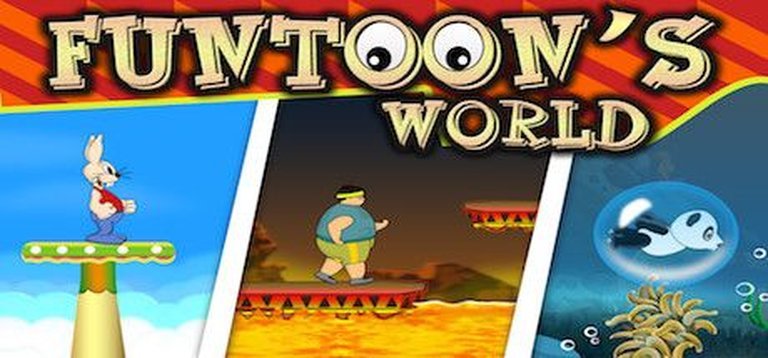
Description
Funtoon’s World is a 2D side-scrolling platformer set in a fantasy realm, where players embark on an adventurous journey through 25 exciting levels, battling diverse monsters, collecting coins, and striving for the highest scores in this action-packed indie game developed by Yash Future Tech Solutions Pvt Ltd.
Where to Buy Funtoon’s World
PC
Funtoon’s World Guides & Walkthroughs
Funtoon’s World: Review
Introduction
In the vast, often unforgiving sea of Steam’s indie platformers, Funtoon’s World emerges as a curious relic—a 2017 release that evokes the pixelated charm of 16-bit classics while stumbling under the weight of its own ambitions. Developed and published by the obscure Yash Future Tech Solutions Pvt Ltd, this side-scrolling action-platformer promised 25 levels of monster-slaying excitement, coin-hoarding highs, and character variety in a fantasy realm. Yet, as a game historian, I see it not just as a product of the indie boom but as a microcosm of Steam’s gold rush era: bold ideas hampered by execution. My thesis? Funtoon’s World is a heartfelt homage to retro platformers that captivates in short bursts but ultimately falters due to technical woes, progression frustrations, and unpolished design, cementing its place as an overlooked footnote rather than a timeless gem.
Development History & Context
Yash Future Tech Solutions Pvt Ltd, a small Indian studio with scant online footprint, single-handedly developed and published Funtoon’s World for PC via Steam on August 4, 2017. This was peak “indiepocalypse”—Steam’s algorithm flooded the platform with low-barrier releases, many from solo devs or tiny teams leveraging Unity or similar engines for quick 2D titles. Priced at a modest $4.99 (frequently discounted to $1.49), it targeted budget-conscious players nostalgic for Super Mario Bros. or Mega Man-style romps.
The studio’s vision, gleaned from the Steam ad blurb, centered on “amazing excitement” across diverse levels, with 8 playable characters, power-ups, and multilanguage support (10 tongues, from English to Simplified Chinese). Technological constraints were minimal—modern hardware handled its 2D scrolling effortlessly—but era-specific challenges loomed: poor QA testing, as evidenced by Steam forum gripes about crashes on startup, keyboard control quirks (arrows for movement, spacebar for firing), and bugs like unresponsive inputs. The 2017 gaming landscape brimmed with polished indies like Hollow Knight and Celeste, making Funtoon’s World‘s rough edges stark. Discussions hint at asset reuse or “1940s Bugs Bunny” aesthetics, suggesting a lean production prioritizing quantity (25 levels) over refinement, amid Steam’s relaxed approval process.
Narrative & Thematic Deep Dive
Funtoon’s World eschews deep storytelling for arcade purity, aligning with its fantasy-platformer roots. There’s no overt plot—players dive straight into a “Jungle World” (per achievements) and beyond, embodying one of 8 characters on a quest to vanquish monsters and hoard coins for high scores. The ad blurb frames it as an “amazing adventurous game,” implying a hero’s journey through peril-laden stages, but dialogue and lore are absent; MobyGames notes no credits beyond the studio, underscoring its minimalist approach.
Thematically, it explores classic tropes: heroism via power-ups and progression, the thrill of collection (coins as both score and potential unlocks), and survival against “different monsters.” Subtle undertones emerge in progression—Steam threads decry paying coins for stages instead of points, suggesting a greed mechanic mirroring real-world microtransactions, albeit in single-player form. Characters (unnamed in sources) likely embody archetypes (warrior, mage?), fostering light customization, but without cutscenes or voice acting, themes of perseverance and greed feel emergent rather than intentional. In extreme detail, this lack of narrative depth amplifies gameplay’s immediacy, evoking 1980s coin-ops where the “story” was your high score, yet it leaves players yearning for the emotional anchors of contemporaries like Ori and the Blind Forest.
Gameplay Mechanics & Systems
At its core, Funtoon’s World loops through tight platforming: side-view traversal, jumping, firing at foes, and coin collection across 25 levels grouped into worlds (e.g., Jungle World, with achievements for completing its first level at 81.7% unlock rate and full clear at 46.3%). Direct control shines on controllers (partial support noted), but keyboard woes—sticky arrows, finicky spacebar firing—plague navigation, per forum posts.
Core Loops: Run right, dodge hazards, shoot monsters, grab coins. Progression ties scores to unlocks, but controversy brews: players must “pay” coins for stages (not points), gating content behind grinding—a flawed system evoking mobile freemium traps. 8 characters offer variety (powers implied, like projectiles), enabling experimentation, while power-ups add temporary flair.
Combat & Progression: Simple shoot-’em-up platforming; no complex combos, but monster diversity keeps it fresh. Achievements (6 total) track milestones, with 94.92% average completion among 336 owners—short playtime (avg. 1h 3m) suggests bite-sized appeal, though bugs (e.g., “2 small bugs,” crashes) disrupt flow.
UI & Innovations/Flaws: Clean but basic HUD (score, coins, lives?). Multilanguage menus aid accessibility, family sharing/achievements boost replayability. Flaws dominate: progression paywalls frustrate, controls lag, no Steam Deck verification. Innovative? Character selection and coin economy nod to roguelites, but execution feels dated.
| Mechanic | Strengths | Weaknesses |
|---|---|---|
| Platforming | Responsive jumps in ideal runs | Input lag on keyboard |
| Combat | Varied monsters | Basic firing, no depth |
| Progression | 25 levels, 8 characters | Coin-paywall grind |
| Controls | Controller-friendly | Buggy keyboard defaults |
Overall, loops entertain briefly but crumble under polish deficits.
World-Building, Art & Sound
The fantasy setting unfolds via 2D scrolling stages—jungle biomes first, escalating to varied terrains (inferred from level count). Atmosphere evokes retro cartoons: Steam quips about “1940s Bugs Bunny” suggest bouncy, exaggerated sprites, colorful palettes, and fluid (if jittery) animations. Visual direction prioritizes vibrancy—lush greens, sparkling coins—fostering whimsy, though low-res assets scream budget indie.
World-building is level-based: no overworld hub, just sequential peril. Coins and monsters populate dynamic arenas, building tension through enemy waves and traps. Art contributes nostalgia, mimicking Warner Bros. loons in a “Funtoon’s” punny realm.
Sound design? Unmentioned, likely chiptune loops and basic SFX—pew-pew shots, coin dings, monster grunts. No voice work or orchestral swells; audio reinforces arcade vibes but lacks immersion. Together, elements craft a lighthearted escape, marred by translation errors (e.g., “extremely bad” German shop page), diluting cohesion.
Reception & Legacy
Launch reception was muted: No MobyGames or critic reviews; Steam user score hovers at 48/100 (Steambase), with 46.41% positive amid sparse feedback. Forums reveal ire—crashes, controls, coin unlocks, bugs—tempered by niche fans praising brevity. Ownership: 336 tracked players, 292 completions; demo (681120) mirrors this.
Commercially, $4.99 flopped in indie saturation, but sales via bundles persist. Reputation evolved little—added to MobyGames in 2022 as obscure entry, no patches noted. Influence? Negligible; no cited successors, though it echoes in low-fi platformers. As historian, it’s a cautionary artifact: Steam’s democratized publishing unearthed passion projects like Yash’s, but without rigor, they fade. No industry ripples, just a whisper in 309k+ MobyGames titles.
Conclusion
Funtoon’s World distills indie platforming’s highs—retro charm, quick highs, variety—into a flawed package plagued by bugs, grindy progression, and unrefined controls. Yash Future Tech’s earnest effort shines in its 25 levels and multilanguage reach, but it embodies 2017 Steam’s pitfalls: ambition sans polish. In video game history, it resides as a quirky obscurity—a playable curiosity for retro enthusiasts, not a must-play. Verdict: 4/10—worth a $1.49 sale for completionists, but skip unless you’re archiving indie’s underbelly. Its true legacy? Reminding us polish elevates homage to art.