
Description
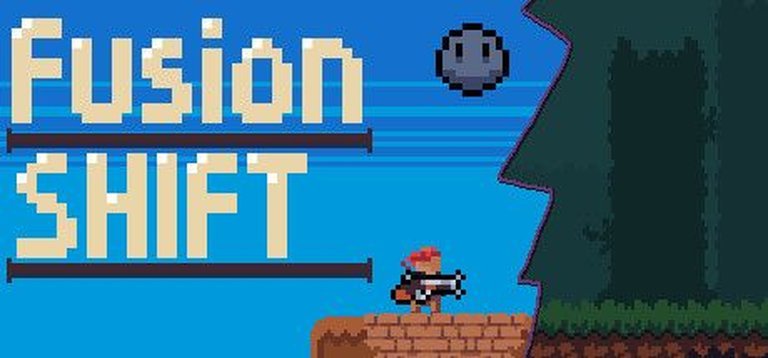
Fusion Shift is a 2D action-platformer where players take on the role of an alien predator with mind-control abilities, capable of possessing humans and using their weapons against others. Set in a sci-fi/fantasy world, the game features 27 levels across three distinct worlds, a gauntlet mode with escalating difficulty, and a hardcore mode for a single-life challenge. Players must strategically balance mind control, time manipulation, and environmental traps to achieve the best scores and defeat bosses.
Where to Buy Fusion Shift
PC
Fusion Shift Reviews & Reception
steambase.io (100/100): Fusion SHIFT has earned a Player Score of 100 / 100.
mobygames.com (58/100): Critics Average score: 58%.
Fusion Shift: A Flawed but Fascinating Experiment in Possession-Based Platforming
Introduction: The Premise That Promises More Than It Delivers
Fusion Shift (2020) is a game that thrives on a single, intoxicating idea: What if you played as an alien predator that could possess its enemies? It’s a premise ripe with potential—imagine the strategic depth of turning foes into temporary allies, the dark humor of forcing humans to slaughter each other, the chaotic ballet of a single entity orchestrating a massacre. And yet, despite its ambitious core, Fusion Shift stumbles in execution, leaving players with a game that is fun in bursts but ultimately undercooked.
Developed by solo creator halvardo13 using GameMaker, Fusion Shift is a 2D side-scrolling action-platformer that blends possession mechanics, time manipulation, and arcade-style scoring into a frenetic, if repetitive, experience. Released in May 2020 for Windows (and later ported to Nintendo Switch in 2023), it arrived in an era dominated by polished indie darlings like Celeste and Hollow Knight—games that perfected movement, storytelling, and replayability. Fusion Shift, by contrast, feels like a proof of concept that never quite evolves beyond its central gimmick.
This review will dissect Fusion Shift in exhaustive detail—its development history, narrative (or lack thereof), gameplay systems, artistic identity, reception, and legacy—to determine whether it’s a hidden gem or a missed opportunity.
Development History & Context: The Solo Dev’s Gambit
The Studio Behind the Game: halvardo13’s One-Person Army
Fusion Shift is the brainchild of halvardo13, a solo developer whose previous work includes smaller GameMaker projects. The game’s development was likely a passion project, built within the constraints of a single creator’s time and resources. This context is crucial—many of Fusion Shift’s rough edges (clunky AI, repetitive level design, minimal narrative) can be attributed to its indie origins.
The choice of GameMaker as the engine is telling. While capable of producing hits like Undertale and Hyper Light Drifter, GameMaker’s limitations in physics, AI, and optimization are evident in Fusion Shift’s occasionally janky controls and enemy behavior.
The Gaming Landscape in 2020: A Crowded Indie Scene
2020 was a golden year for indie games, with standout titles like:
– Hades (Supergiant Games) – A masterclass in roguelike progression.
– Ori and the Will of the Wisps (Moon Studios) – A Metroidvania with breathtaking visuals.
– Spiritfarer (Thunder Lotus) – A narrative-driven management sim.
– Carrion (Phobia Game Studio) – A reverse-horror game where you are the monster.
Fusion Shift entered this highly competitive space with a unique hook but lacking polish. Its $1.99 price tag (later discounted to as low as $0.99) suggests the developer was aware of its niche appeal—a budget experiment rather than a triple-A indie contender.
Technological Constraints: The Limits of Solo Development
The game’s 2D side-scrolling perspective and pixel-art aesthetic were likely chosen for development efficiency, but they also contribute to its retro charm. However, the enemy AI—a critical component of the possession mechanic—suffers from predictable patterns and occasional glitches, making some encounters feel more frustrating than strategic.
The time-stopping ability, while a neat addition, is underutilized, serving more as a panic button than a tactical tool. This underdevelopment hints at scope creep—a common issue in solo projects where ambition outpaces execution.
Narrative & Thematic Deep Dive: A Game Without a Story
The Plot (Or Lack Thereof): You Are the Monster
Fusion Shift’s narrative is almost nonexistent. The premise is simple:
– You are an alien predator from the far reaches of space.
– You can possess humans and force them to fight each other.
– Your goal? Eliminate all humans in each level.
There is no lore, no character development, no motivation beyond survival and destruction. This is not necessarily a flaw—games like Hotline Miami and Super Hot thrive on minimalist storytelling—but Fusion Shift fails to replace narrative depth with compelling gameplay variety.
Themes: Power, Control, and the Absurdity of Violence
Despite its lack of story, Fusion Shift accidentally stumbles into interesting themes:
1. The Illusion of Control – You think you’re in charge, but the enemy AI’s stupidity often undermines your plans.
2. The Banality of Evil – You’re an alien invader, but the game treats your genocide as mundane, almost comical.
3. Chaos as Gameplay – The joy comes from watching your possessed pawns flail helplessly, turning combat into dark slapstick.
However, these themes are never explored intentionally—they emerge accidentally from the game’s mechanical quirks.
Characters & Dialogue: The Silent Protagonist
- The Player Character – A floating alien blob with no personality.
- The Humans – Faceless, nameless enemies who exist only to be possessed or killed.
- Bosses – Each world has a boss fight, but they’re mechanically simple and narratively forgettable.
There is no dialogue, no cutscenes, no world-building. The game relies entirely on gameplay—which, as we’ll see, is both its strength and weakness.
Gameplay Mechanics & Systems: The Possession Fantasy, Flawed but Fun
Core Gameplay Loop: Possess, Kill, Repeat
Fusion Shift’s central mechanic is possession:
1. Approach an enemy (they must be close enough).
2. Press a button to take control of their body.
3. Use their weapons to kill other enemies.
4. Eject at any time to fling them into hazards or off ledges.
This loop is initially thrilling—there’s a perverse joy in forcing a soldier to shoot his own allies or tossing a possessed grunt into a spike pit. However, the novelty wears off quickly due to:
Combat & Enemy AI: Dumb as a Sack of Hammers
- Enemies have **no tactical awareness—they stand still, shoot in predictable patterns, and often ignore you until you’re right in front of them.
- Possessed enemies **struggle with pathfinding, getting stuck on geometry or failing to aim properly.
- Boss fights *devolve into *cheese strategies—most can be beaten by spamming possession and time-stop.
The time-stop ability is underwhelming—it freezes enemies in place but doesn’t allow for creative setups (e.g., repositioning enemies before unleashing chaos).
Progression & Level Design: Repetition Without Evolution
- 27 levels across 3 worlds—each with a similar structure:
- Kill all enemies in a linear or semi-open arena.
- Avoid environmental hazards (spikes, pits, turrets).
- Fight a boss at the end of each world.
- No new mechanics are introduced after the first few levels.
- No upgrades or unlocks—your alien blob remains static throughout.
Scoring & Replayability: The Gauntlet Mode
The game tries to encourage replayability through:
– Speedrunning – Each level tracks your best completion time.
– Gauntlet Mode – A randomized survival challenge where you fight waves of enemies until a portal appears.
– Hardcore Mode – One-life permadeath for masochists.
However, without meaningful progression or variety, these modes feel repetitive rather than rewarding.
UI & Controls: Functional but Uninspired
- Controls are simple (move, jump, possess, time-stop) but lack depth.
- The UI is minimalist—health, score, and timer are easy to read, but lacks flair.
- No customization options—no key rebinding, difficulty settings, or accessibility features.
World-Building, Art & Sound: Aesthetic Over Substance
Setting & Atmosphere: Three Forgettable Worlds
Fusion Shift takes place across three distinct worlds:
1. A futuristic military base (generic sci-fi corridors).
2. A tribal village (jungle aesthetics, but no cultural depth).
3. A pirate ship (because… why not?).
Each world is visually distinct but thematically shallow. There’s no lore, no environmental storytelling—just backdrops for combat.
Visual Design: Retro Pixel Art with Limited Animation
- Sprite work is competent but not exceptional.
- Animations are stiff—possessed enemies move awkwardly, and death animations lack impact.
- Backgrounds are static and uninspired, lacking the depth of games like Dead Cells or Blasphemous.
Sound Design & Music: The Silent Killer
- Sound effects are basic—gunshots, possession noises, and little else.
- Music is forgettable—a generic chiptune loop that fades into the background.
- No voice acting (understandable for a solo dev, but missed opportunity for atmosphere).
The lack of audio feedback makes combat feel weightless—killing enemies lacks satisfaction because there’s no crunch, no scream, no impact.
Reception & Legacy: A Game That Slipped Through the Cracks
Critical Reception: Mixed to Negative
- MobyGames Score: 58% (based on 1 critic review).
- Steam Reviews: 100% positive (but only 9 reviews—hardly representative).
- Metacritic: No critic scores (too niche for major outlets).
The only professional review (from eShopper Reviews) gave it a 58/100, praising its unique premise but criticizing:
– Dumb enemy AI.
– Lack of multiplayer (a missed opportunity for co-op possession chaos).
– Repetitive gameplay.
Commercial Performance: A Budget Curiosity
- Priced at $1.99 (often discounted to $0.99), it was clearly positioned as an impulse buy.
- No sales data is available, but its low visibility suggests it didn’t make waves.
- Nintendo Switch port (2023) failed to revive interest.
Legacy & Influence: A Footnote in Possession Mechanics
Fusion Shift didn’t inspire imitators, but it exists in a lineage of possession-based games, including:
– Messiah (2000) – A cult classic where you possess humans in a dystopian city.
– Carrion (2020) – A reverse-horror game where you play as the monster.
– The Last Door (2014) – A psychological horror game with possession elements.
However, Fusion Shift lacks the depth of these titles, making it more of a curiosity than a landmark.
Conclusion: A Flawed Experiment Worth a Dollar, But Not Much More
Fusion Shift is a game that should be better than it is. Its core mechanic—possession—is brilliant on paper, but poor execution, repetitive design, and lack of polish hold it back. It’s the kind of game that solo developers make to prove a concept, but never refine into something great.
Final Verdict: 6/10 – A Fun Distraction, Not a Masterpiece
✅ Pros:
– Unique possession mechanic that’s fun in short bursts.
– Cheap price ($1.99 or less) makes it a low-risk experiment.
– Gauntlet Mode adds some replayability.
❌ Cons:
– Dumb enemy AI ruins the strategy.
– Repetitive level design with no progression.
– No narrative, weak audio-visual presentation.
– Missed potential—could have been so much more with multiplayer, upgrades, or deeper mechanics.
Who Should Play It?
- Fans of possession mechanics who want something different.
- Speedrunners looking for a niche challenge.
- Budget gamers who enjoy short, experimental titles.
Who Should Avoid It?
- Players seeking deep storytelling or world-building.
- Those who dislike repetitive gameplay.
- Anyone expecting Carrion or Messiah levels of polish.
Final Thought: A Game That Deserves a Remake
Fusion Shift is not a bad game—it’s just an unfinished idea. With better AI, more mechanics, and a stronger artistic identity, it could have been a cult classic. As it stands, it’s a fascinating failure—one that proves how hard it is to make possession fun without proper resources and iteration.
If you see it on sale for a dollar, give it a shot. But don’t expect a revolution.
Score Breakdown:
– Gameplay: 6.5/10
– Narrative/Themes: 4/10
– Visuals/Sound: 5/10
– Replayability: 5.5/10
– Innovation: 7/10
– Overall: 6/10 – “Flawed but Interesting”
Fusion Shift is a game that will be forgotten, but not without leaving a mark—a reminder that even the best ideas need execution to shine.