
- Release Year: 2018
- Platforms: Windows
- Publisher: Silhouette Valley Games
- Developer: Silhouette Valley Games
- Genre: Puzzle
- Perspective: Diagonal-down
- Game Mode: Single-player
- Gameplay: Multiple endings, Time loop
- Setting: Contemporary
- Average Score: 88/100
Description
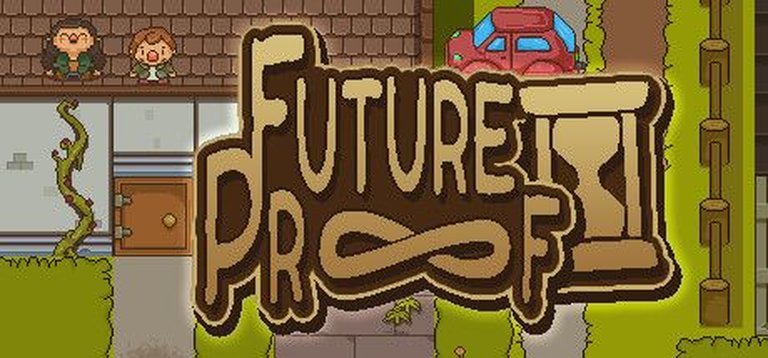
Future Proof is a 2D puzzle adventure game set in the contemporary town of Greensvale, where a meteorite is about to strike. Players take on the role of Sean, a teenage boy with the ability to go back in time upon death, trapped in a time loop. The goal is to either escape the impending doom or save the town, with the help of other survivors. The game features a variety of puzzles, multiple endings, and a visually appealing style inspired by 90’s cartoons and classic games like Earthbound.
Where to Buy Future Proof
PC
Future Proof Patches & Updates
Future Proof Guides & Walkthroughs
Future Proof Reviews & Reception
steambase.io (88/100): Very Positive
store.steampowered.com : Future proof is an excellent take on an old concept, complete with a multitude of secrets and good humor.
Future Proof: A Time-Twisting Puzzle Gem Buried in RPG Maker Limitations – An Exhaustive Retrospective
Introduction
Beneath the pixelated veneer of Future Proof lies one of indie gaming’s most fascinating paradoxes: a Groundhog Day-inspired mystery that dares to question whether clever design can transcend technical constraints. Released in 2018 by Silhouette Valley Games, this underdog project leveraged the humble RPG Maker engine to craft a strikingly ambitious time-loop narrative before the concept exploded via titles like Deathloop and The Forgotten City. This review contends that Future Proof remains a flawed but essential artifact of indie ingenuity—a game whose narrative ambition and thematic depth outshine its mechanical growing pains, cementing its cult status despite commercial obscurity.
Development History & Context
The Underdog Studio: Silhouette Valley Games—a micro-studio helmed by siblings Michael and Christina Dovigi—operated in the shadow of 2018’s indie boom. With credits split among 26 contributors (mostly part-time testers and plugin specialists like Yanfly and Galv), Future Proof embodies the scrappy ethos of RPG Maker auteurs. The engine, infamous for birthing amateur horror titles, was repurposed here for earnest puzzle-narrative fusion.
A Perfect Storm of Constraints: Developed alongside the Dovigis’ day jobs, Future Proof reflects the realities of indie crunch. The game’s compressed 12-minute time loop—a structural masterstroke—likely emerged from necessity, condensing scope without sacrificing complexity. Its release coincided with a surge in narrative experimentation (Return of the Obra Dinn, Night in the Woods), yet its $1.49 price point and lack of marketing relegated it to Steam’s algorithmic abyss.
Narrative & Thematic Deep Dive
The Loop Unspooled: Players embody Sean, a teen who awakens to Greensvale’s impending meteorite doom—and his newfound ability to reset time upon death. This macOS pared plot rapidly fractalizes into 14 endings (later expanded to 15), each dissecting themes of fatalism vs. agency. Will Sean save the town, or himself? Can he trust the eccentric stragglers—a paranoid conspiracy theorist, a guilt-ridden nurse—who hint at Greensvale’s occult underbelly?
Subverting Tropes, Embracing Ambiguity: Future Proof’s genius lies in weaving existential weight into absurdity. One ending reveals the meteorite as a government hologram; another implies Sean’s power stems from childhood trauma. The game interrogates choice itself—false binaries mock player autonomy, as when saving one character invariably dooms another. NPCs repeat canned dialogue loops, mirroring Sean’s entrapment, while environmental clues (e.g., a graffiti-strewn bunker) imply cycles preceding the protagonist.
Missed Potential: Characters suffer from RPG Maker’s limited expression—stiff sprites and abrupt text undercut emotional beats—but clever writing salvages depth. A standout subplot involves Rebecca, a wheelchair-bound artist whose paintings foreshadow endings, suggesting her awareness of the loop. Thematic echoes of Majora’s Mask and Umurangi Generation resonate, albeit without their polish.
Gameplay Mechanics & Systems
Time as a Puzzle: Future Proof’s core loop channels Outer Wilds naissance: Sean’s 12-minute cycle incentivizes experimental death (drowning, electrocution) to unlock paths. Memorizing town layouts and NPC routines becomes vital—e.g., timing a dash past a collapsing bridge before the meteor strikes. The “Thought System” logs clues à la Phoenix Wright, though its implementation is cursory (keywords auto-populate without player inference).
Jank and Jubilation: Gameplay oscillates between revelation and frustration. Physics-based puzzles (stacking boxes to reach rooftops) clash with RPG Maker’s rigid grid, while pixel-hunting for key items (a librarian’s misplaced card) tests patience. Steam forums reveal players soft-locking progress via unintuitive sequence breaks—a recurring critique. Yet moments of brilliance shine: diverting the meteor via radio tower sabotage demands cross-layered information across cycles, rewarding meticulous note-taking.
The Ending Conundrum: Achieving all endings requires staggering commitment—15+ hours of repetition—with uneven payoff. Endings range from poignant (Sean reconciling with his estranged father) to gag-filled (a Cowboy Bebop-esque “See You Space Boy…” tag). While laudably ambitious, the grind exposes the engine’s limitations; resetting erases progression, forcing manual log-keeping.
World-Building, Art & Sound
Greensvale: A Town Stuck in Time: The diorama-like map—a grid of quaint homes, a decaying mall, and eerie forests—evokes EarthBound’s suburban surrealism. Pixel art channels ‘90s cartoons (think Recess meets Over the Garden Wall), with vibrant foliage juxtaposing apocalyptic dread. Environmental storytelling excels: a boarded-up cinema screens Armageddon; graffiti warns “HEAVEN IS A LIE.”
Audio Dichotomies: The soundtrack, built from royalty-free tracks by Chris Zabriskie and Kevin MacLeod, elevates mood despite repetition. Zabriskie’s “I Am a Man Who Will Fight for Your Honor” underscores melancholy endings, while MacLeod’s upbeat “Local Forecast” accompanies exploration. Yet silent moments deafen—key reveals lack stingers, muffling emotional punches.
Reception & Legacy
A Quiet Launch, A Slow Burn: Upon release, Future Proof garnered minimal press—a lone positive review from Mind Your Own Gaming praised its “humor and secrets.” Its Steam footprint grew organically: “Very Positive” (88/100) from 74 reviews lauds its ambition, while critiques cite “obtuse puzzles” and “RPG Maker jank.” Player forums teem with theories dissending endings and hidden lore, akin to Undertale’s early cult following.
Ripples Through Indie Canons: While overlooked by mainstream outlets, Future Proof’s DNA surfaces in later indies. The time-loop-as-narrative-device anticipates Elsinore (2019), while its focus on community-wide trauma resonates with Night in the Woods. RPG Maker deviations like OMORI (2020) also owe debt to its engine-stretching experiments.
Preservation Paradox: Today, the game exists in archival limbo. MobyGames notes only 13 registered owners, and Silhouette Valley dissolved in 2021. Yet its $2.99 Steam price and frequent 50% sales sustain a trickle of new players, ensuring survival.
Conclusion
Future Proof is a time capsule of indie resilience—a game that weaponizes its limitations into thematic strengths. Its writing, daringly philosophical yet whimsical, compensates for creaky tech and pacing woes. For $1.49, it delivers more ingenuity per pixel than most AAA bloated with budget. While not every ending satisfies, and the grind tests goodwill, this remains essential for students of game storytelling. In an industry obsessed with “more,” Future Proof dares to ask: What if enough was enough? Its legacy—stranded between cult classic and forgotten oddity—is a testament to indie gaming’s boundless spirit. Play it before the meteor strikes.