
- Release Year: 2018
- Platforms: Nintendo Switch, PlayStation 4, Windows
- Publisher: Inti Creates Co., Ltd., PQube Ltd
- Developer: Inti Creates Co., Ltd.
- Genre: Compilation
- Perspective: First-person
- Game Mode: Single-player
- Average Score: 96/100
- Adult Content: Yes
Description
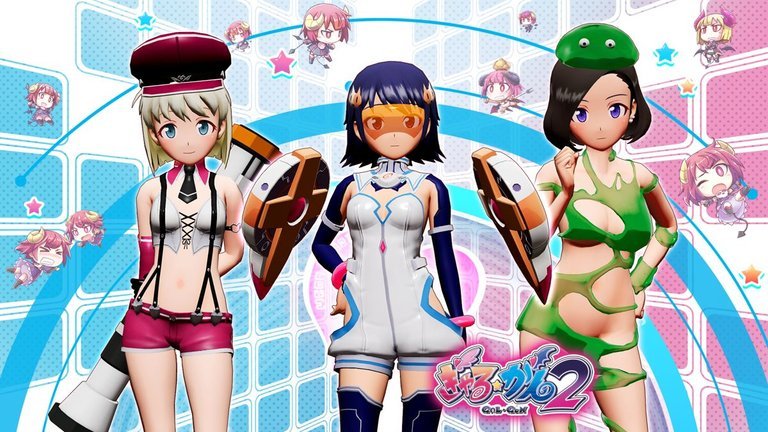
Gal★Gun 2: DLC Set 7 is a downloadable content pack for the 2018 rail shooter game Gal★Gun 2, developed by Inti Creates. This DLC set introduces three new costume packs—S-Class Demon Buster Suit Set, Sergeant Suspenders Set, and Slime Time Set—adding fresh outfits and visual customization options for players. Set in a playful, anime-inspired world where the protagonist must fend off amorous girls using a variety of weapons, the DLC enhances the game’s lighthearted, ecchi-themed gameplay with additional cosmetic content.
Gal★Gun 2: DLC Set 7 Reviews & Reception
nintendolife.com : A triumphant return to form for the series.
store.playstation.com (96.6/100): Average rating 4.83 stars out of five stars from 6 ratings
Gal★Gun 2: DLC Set 7 – A Microcosm of Fan Service and Mechanical Refinement
Introduction: The Art of the Add-On
In the pantheon of niche Japanese gaming, few franchises embrace their identity as unapologetically as Gal★Gun. A series that blends rail-shooting mechanics with bishōjo aesthetics, Gal★Gun 2 (2018) iterated on its predecessors by introducing full camera control, mission-based progression, and a more open-ended narrative structure. DLC Set 7, released on June 21, 2018, is a compact yet telling artifact of the game’s post-launch support—a trio of costume packs that, while superficially trivial, encapsulate the series’ core appeal: customization, fan service, and mechanical synergy.
This review dissects DLC Set 7 not merely as a collection of outfits but as a lens through which to examine Gal★Gun 2’s design philosophy, its place within the broader Gal★Gun legacy, and the cultural context of DLC in Japanese gaming. Through an analysis of its contents, reception, and underlying systems, we argue that DLC Set 7 is a microcosm of the franchise’s strengths and limitations—a celebration of its audience’s desires, yet also a reminder of its mechanical repetitiveness.
Development History & Context: The Evolution of a Niche
Inti Creates and the Gal★Gun Legacy
Developed by Inti Creates, a studio renowned for its work on Mega Man Zero, Azure Striker Gunvolt, and Blaster Master Zero, Gal★Gun 2 emerged from a fascinating creative crucible. The game’s genesis is tied to Gal★Gun VR (2017), a project so ambitious in scope that its developers opted to split its content into two releases. Gal★Gun 2 thus became a hybrid—a non-VR experience that retained VR’s innovations (e.g., the Demon Sweeper) while expanding upon them with new mechanics like Love Strike and full camera control.
The decision to title the game Gal★Gun 2—despite Double Peace (2016) existing as a spiritual successor—was deliberate. As producer Takuya Aizu explained, Double Peace was a rail shooter in the vein of the original Gal★Gun (2011), whereas Gal★Gun 2 represented a “next phase” for the series, abandoning fixed camera angles and linear progression in favor of mission-based gameplay and player agency.
Technological and Localization Challenges
The shift to Unreal Engine 4 allowed for more efficient development, with visual effects implemented at a rapid pace. However, the game’s localization—handled by PQube and refined by Matt Papa and Andrew Singleton—proved laborious. The process took nearly a year, with particular attention paid to preserving the game’s tonal balance between humor, fan service, and narrative coherence. Characters like Maria Natsuki, an American student who speaks broken English, required creative solutions to maintain her linguistic quirks in localization.
Crucially, Gal★Gun 2 was developed without regional censorship in mind. Aizu emphasized that the game was designed first and foremost for Japanese audiences, a stance that resonated with fans wary of Western localization trends. This commitment to creative integrity extended to the game’s DLC, which—like Set 7—focused on cosmetic enhancements rather than gameplay alterations.
The Gaming Landscape of 2018
Gal★Gun 2 launched into a market dominated by open-world epics (God of War, Red Dead Redemption 2) and competitive multiplayer titles (Fortnite, Overwatch). Yet, it carved a niche alongside other Japanese “otaku-targeted” games like Senran Kagura and Neptunia, catering to an audience that valued character customization, branching narratives, and replayability over mainstream appeal.
The game’s multiplatform release (PS4, Switch, PC) was strategic. The Nintendo Switch, in particular, became a haven for Japanese indie and niche titles post-Vita, and Gal★Gun 2 benefited from the system’s portability and motion controls, which enhanced its shooting mechanics.
Narrative & Thematic Deep Dive: A Thin Veneer of Plot
The Premise: Demons, Angels, and Unwanted Affection
Gal★Gun 2’s story is a lighthearted, self-aware romp that serves as little more than a framing device for its gameplay. The protagonist—a nameless second-year student at Sakurazaki Academy—is recruited by Risu, an angel from the Angel Ring Company (AR Co.), to exterminate demons possessing his classmates. The catch? The demons’ influence causes the girls to become obsessively infatuated with the protagonist, leading to a barrage of love letters, kisses, and physical advances that double as gameplay hazards.
The narrative is episodic, with the protagonist’s 20-day deadline to purge the academy of demons serving as the overarching structure. Side missions—often involving romantic subplots with characters like Nanako Tamasaki (childhood friend) and Chiru Kondo (gamer neighbor)—add depth but remain optional. The game’s multiple endings are determined by completing specific side quests, a departure from Double Peace’s route-based system.
Themes: Agency, Objectification, and Satire
Gal★Gun 2’s themes are deliberately superficial, yet they invite interpretation:
1. The Illusion of Agency: The protagonist is a passive participant in his own story, reacting to events rather than driving them. This mirrors the player’s role—while they have mechanical control, the narrative is predetermined.
2. Fan Service as Satire: The game’s overt sexualization is played for laughs, with characters like Kurona (the demonic antagonist) embodying exaggerated tropes of anime villains. The Demon Sweeper’s “Striphoria”—a mechanic that removes clothing—is framed as a gameplay tool rather than pure titillation.
3. The “Harem” as a Gameplay System: The game’s affection mechanics (e.g., giving snacks to characters) reduce romance to stat-building, a commentary on otaku culture’s commodification of relationships.
Characterization: Archetypes and Appeal
The cast of Gal★Gun 2 is a roster of archetypes, each designed to cater to specific fan preferences:
– Risu: The tsundere angel, whose professional demeanor masks her growing attachment to the protagonist.
– Nanako: The childhood friend, embodying wholesome romance.
– Chiru: The gamer girl, whose reclusive personality contrasts with her mechanical usefulness (she upgrades the protagonist’s gear).
– Kurona: The seductive demon, whose playful malice drives the conflict.
Returning characters like Shinobu and Maya Kamizono (from Double Peace) serve as fan service, though their roles are minimal, reinforcing the game’s focus on new experiences over continuity.
Gameplay Mechanics & Systems: The Core Loop
Shooting and Survival
At its heart, Gal★Gun 2 is a rail shooter with a twist: instead of enemies, the player fends off amorous schoolgirls using:
– Pheromone Shots: The primary weapon, which can be upgraded for damage and health.
– Ecstasy Shots: Critical hits that trigger euphoric reactions, temporarily incapacitating targets.
– Demon Sweeper: A vacuum-like tool that sucks up Mini Kuronas (demonic parasites) and, in Hyper Mode, removes clothing for a “Striphoria” bonus.
– Love Strike: A screen-clearing attack that replaces Double Peace’s Doki Doki Bomb, though it resets the player’s Streak (a combo multiplier).
The game’s mission structure introduces variety:
– Shooting Missions: Standard levels where the player advances while fending off girls.
– Defense Missions: Protecting NPCs from Mini Kurona swarms.
– Hunting Missions: Scavenger hunts with time limits.
– Doki-Doki Missions: Purification quests requiring the use of Doki Doki Mode (a returning mechanic from Gal★Gun).
– Boss Battles: Large-scale encounters with possessed characters or demonic entities.
Progression and Customization
- Affection System: Unlike Double Peace, affection is not tied to dialogue choices but to completing side quests and giving gifts.
- Upgrades: Chiru can enhance the Pheromone Goggles or Demon Sweeper using machine parts found in missions.
- New Game+: Allows players to retain upgrades, outfits, and progress, encouraging replayability.
The Role of DLC Set 7
DLC Set 7 consists of three costume packs:
1. S-Class Demon Buster Suit Set: A futuristic, combat-oriented outfit that emphasizes the protagonist’s role as a demon hunter.
2. Sergeant Suspenders Set: A military-inspired ensemble, playing into the disciplined yet alluring aesthetic common in anime.
3. Slime Time Set: A playful, gelatinous costume that leans into the game’s whimsical tone.
While these outfits do not alter gameplay, they reinforce the game’s customization focus, allowing players to tailor the experience to their preferences. The Slime Time Set, in particular, exemplifies the series’ self-aware humor, turning the protagonist into a living joke—a fitting metaphor for the game’s tongue-in-cheek approach to fan service.
World-Building, Art & Sound: Aesthetic Cohesion
Visual Design: The Illusion of Depth
Gal★Gun 2’s art style is vibrant and exaggerated, with character models designed to maximize appeal through:
– Expressive animations (e.g., blushing, stumbling, euphoric reactions).
– Dynamic lighting that emphasizes skin tones and fabric textures.
– Detailed environments (e.g., Sakurazaki Academy’s classrooms, gym, and rooftop), though these serve as backdrops rather than interactive spaces.
The Unreal Engine 4 upgrade allowed for smoother framerates and more detailed particle effects, particularly in the Demon Sweeper’s suction animations.
Sound Design: The Power of Voice
The game’s audio design is functional but unremarkable, with:
– Upbeat J-pop tracks (e.g., “Doki Doki Desire”) that reinforce the lighthearted tone.
– Voice acting that ranges from cute (Risu) to seductive (Kurona), with English localization preserving the original Japanese inflections.
– Sound effects that enhance immersion (e.g., the Demon Sweeper’s hum, the girls’ gasps when hit).
Atmosphere: A Playground of Fantasy
Gal★Gun 2’s world is a hyper-stylized high school, where the mundane (e.g., classrooms, hallways) becomes fantastical through the lens of demonic possession. The game’s humor—whether in Risu’s deadpan delivery or Chiru’s otaku rants—creates a consistent tone that softens the fan service’s edge.
Reception & Legacy: A Niche Celebrated
Critical Reception
Gal★Gun 2 received mixed-to-positive reviews, with critics praising its improved mechanics and humor while critiquing its repetitive gameplay and shallow narrative. Nintendo Life scored it 6/10, calling it “more of an excuse to live out a visual fantasy than a video game,” while Push Square gave it a 3/5, noting its appeal to fans but limited broader appeal.
DLC Set 7, like most of the game’s cosmetic DLC, was well-received by fans but ignored by critics, reflecting the disconnect between mainstream gaming journalism and otaku culture.
Commercial Performance
The game sold modestly, with the Switch version benefiting from the system’s Japanese indie-friendly ecosystem. The DLC bundles—priced at $5.99 each—were profitable due to the dedicated fanbase, though they did not significantly expand the game’s audience.
Legacy and Influence
Gal★Gun 2’s legacy lies in its refinement of the series’ formula:
– It abandoned the rail-shooter constraints of its predecessors, offering more player freedom.
– It streamlined the affection system, making romance optional rather than mandatory.
– It embraced DLC as a tool for customization, a trend that continued in Gal★Gun Returns (2021).
However, the game did not innovate beyond its niche, and its repetitive mission structure limited its long-term appeal.
Conclusion: A Love Letter to a Niche
Gal★Gun 2: DLC Set 7 is, in many ways, a perfect encapsulation of what the Gal★Gun series represents: a celebration of fan service, a refinement of simple mechanics, and an unapologetic embrace of its audience’s desires. The DLC itself is unremarkable—three costume packs that do little to alter the core experience—but it symbolizes the game’s strengths:
– Customization as a form of player expression.
– Humor as a buffer against criticism.
– Mechanical polish that elevates repetition into addictive gameplay.
Yet, it also highlights the series’ limitations:
– A narrative that is thin and service-oriented.
– Gameplay that, while fun in bursts, lacks depth.
– A reliance on fan service that alienates broader audiences.
Final Verdict: 7/10 – “A Polished, Niche Delight”
Gal★Gun 2: DLC Set 7 is not essential, but it is representative—a microcosm of a game that knows exactly what it is and who it’s for. For fans of the series, it’s a worthwhile addition; for everyone else, it’s a curiosity—a glimpse into a subculture that thrives on customization, humor, and unabashed indulgence.
In the grand tapestry of gaming history, Gal★Gun 2 will not be remembered as a masterpiece, but as a cult classic—a game that perfected its niche while never pretending to be more than what it was. And sometimes, in an industry obsessed with scale and ambition, that’s enough.