
- Release Year: 2022
- Platforms: Windows
- Publisher: Simutronics Corporation
- Developer: Simutronics Corporation
- Genre: Action
- Perspective: Behind view
- Game Mode: Single-player
- Gameplay: Shooter
- Setting: Futuristic, Post-apocalyptic, Sci-fi
- Average Score: 64/100
Description
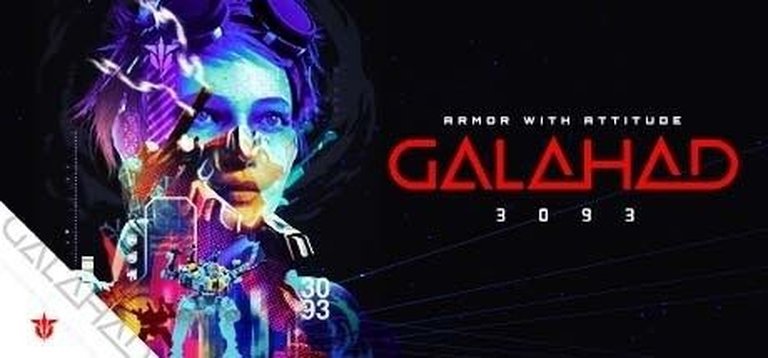
Galahad 3093 is a tactical hero-shooter set in a post-apocalyptic sci-fi world, blending elements of Overwatch and Rainbow Six Siege with mecha combat. Players pilot customizable Lance mechs, each with unique abilities, weapons, and modules, while choosing from eight distinct Knights (pilots) with specialized skills. The game features fast-paced, team-based battles in modes like team deathmatch and Base Assault, emphasizing strategy, teamwork, and deep customization with over 500 module options and 23 weapon systems.
Gameplay Videos
Where to Buy Galahad 3093
PC
Galahad 3093 Patches & Updates
Galahad 3093 Guides & Walkthroughs
Galahad 3093 Reviews & Reception
inverse.com : GALAHAD 3093 is the hero shooter we have been waiting for
opencritic.com (70/100): The attention to customizability and accessibility of Galahad 3093 showcased how a mech-shooting game does not need to prioritize great graphics over a game playable for everyone.
steambase.io (58/100): GALAHAD 3093 has earned a Player Score of 58 / 100.
player.one : Galahad 3093 is a hard game to recommend outright due to some glaring flaws here and there, but I’ve enjoyed my time with it overall.
Galahad 3093: A Bold but Flawed Fusion of Mechs and Hero Shooters
Introduction: The Rise and Fall of a Promising Contender
Galahad 3093 arrived in 2022 as a bold attempt to revitalize two struggling genres: the hero shooter and the mech combat game. Developed by Simutronics Corporation—a studio with a long history in online gaming—it promised a deep, customizable experience blending Overwatch-style hero abilities with Armored Core-inspired mech warfare. Early impressions were strong, with critics praising its depth and innovation. Yet, by 2025, the game had vanished from Steam, its servers shut down, and its community scattered.
This review examines Galahad 3093 in its entirety—its ambitious design, its mechanical brilliance, its fatal flaws, and its tragic demise. Was it a misunderstood masterpiece, or a cautionary tale of overambition?
Development History & Context: A Studio’s Vision and the Weight of Expectations
Simutronics’ Legacy and the Birth of Galahad 3093
Simutronics Corporation, founded in 1987, is best known for its text-based MUDs (Multi-User Dungeons) and later, MMORPGs like Hero’s Journey. The studio’s shift into a competitive mech shooter was unexpected but not entirely out of character—Simutronics has always favored deep, systems-driven gameplay.
In a 2021 interview with Shacknews, CEO David Whatley expressed frustration with modern gaming’s tendency to release unfinished products, emphasizing his studio’s commitment to polished experiences. Galahad 3093 was meant to be a return to form—a game where mechanics mattered more than flashy graphics.
The Gaming Landscape in 2022: A Genre in Decline
By the time Galahad 3093 entered Early Access in September 2022, the hero shooter bubble had burst. Overwatch 2 was struggling with monetization controversies, Apex Legends dominated the market, and mech games were a niche curiosity. The last major mech title, Armored Core VI: Fires of Rubicon, wouldn’t arrive until 2023.
Galahad 3093 positioned itself as a hybrid—a tactical, team-based shooter where players piloted highly customizable mechs called Lances, each controlled by a Knight (a hero with unique abilities). The fusion was ambitious, but the market was skeptical.
Technological Constraints and Early Access Struggles
Built in Unity, Galahad 3093 was not a graphical powerhouse, but its strength lay in its systems. However, Early Access revealed deep imbalances:
– Progression Wipes: Frequent resets of player progress alienated the beta community.
– Server Dependency: Despite AI opponents, the game required online connectivity, a decision that backfired when servers shut down.
– Overwhelming Complexity: With 500+ modules, 23 weapons, and 8 Knights, newcomers found the game impenetrable.
Simutronics worked closely with the community, but by 2024, updates slowed. By 2025, the game was delisted from Steam, its servers offline, and its future uncertain.
Narrative & Thematic Deep Dive: Arthurian Legend Meets Post-Apocalyptic Sci-Fi
A World of Fallen Knights and Mechanical Warriors
Galahad 3093’s lore is sparse but intriguing. Set in a dystopian future where humanity clings to survival, players take on the role of Knights—pilots who inherit the names and legacies of Arthurian figures. The game’s official description hints at a world where these warriors battle for territory in massive mech arenas, but the narrative is largely background dressing.
The Knights: Heroes with Personality (But Little Story)
Each Knight has a distinct ability and personality:
– Arthur: Calls orbital strikes with X-Calibur.
– Gwen: Deploys a protective Royal Dome.
– Kay: Leaves napalm trails with skim jets.
– Mordred: Teleports across the map.
While their designs are visually striking, their backstories are underdeveloped. The game prioritizes gameplay over narrative, leaving lore enthusiasts wanting.
Themes: Teamwork, Customization, and the Cost of War
The game’s core themes revolve around:
– Tactical Synergy: Success depends on team composition and coordination.
– Personalization: Players craft their ideal mech, reflecting their playstyle.
– Persistence vs. Accessibility: The steep learning curve rewards dedication but punishes casual players.
The post-apocalyptic setting is more aesthetic than narrative, serving as a backdrop for intense PvP battles rather than a driving force.
Gameplay Mechanics & Systems: A Double-Edged Sword of Depth and Frustration
Core Gameplay Loop: Mech Combat with Hero Shooter Flourishes
Galahad 3093’s gameplay is a mix of:
– Mech Mobility: Lances can boost, jet-jump, and strafe, allowing for vertical combat.
– Hero Abilities: Each Knight’s unique skill (e.g., Arthur’s orbital strike) adds strategic depth.
– Loadout Customization: Players mix weapons (miniguns, plasma cannons, rockets) with deployables (drones, mines) and modules (500+ options).
Combat: Fast, Fluid, and Forgiving
- Time-to-Kill (TTK): Slower than most shooters, allowing for comebacks.
- Movement: Light mechs feel agile, while heavy ones are tanky but sluggish.
- Team Play: Modes like Base Assault require destroying generators before capturing points, encouraging coordination.
Progression and Unlocks: A Grind Too Far?
The game’s deepest flaw was its progression system:
– Tiered Upgrades: Players unlock modules across five tiers, but Tier 5 was so overpowered that lower tiers felt meaningless.
– Frequent Wipes: Early Access resets frustrated players who had invested hours.
– Overwhelming Choices: With 500+ modules, optimization was daunting.
UI and Accessibility: A Barrier to Entry
The interface was functional but cluttered, and the lack of tutorials made the game hostile to newcomers. Veterans thrived, but casual players bounced off.
World-Building, Art & Sound: A Gritty, Functional Aesthetic
Visual Design: Industrial and Arthurian Fusion
- Mech Customization: Players could modify their Lance’s appearance, though options were limited.
- Maps: Arenas were vertical and destructible, with a mix of sci-fi and ruined Earth aesthetics.
- Art Style: Not cutting-edge, but serviceable—a deliberate choice to focus on gameplay.
Sound Design: The Roar of Battle
- Weapon Audio: Satisfyingly weighty, with distinct sounds for each gun.
- Voice Lines: Knights had personality, but dialogue was minimal.
- Music: Forgettable, but the combat soundtrack was appropriately intense.
Atmosphere: A Game That Felt Alive (When It Worked)
When matches were populated, Galahad 3093 delivered chaotic, exhilarating battles. The combination of mech mobility and hero abilities created dynamic, unpredictable fights.
Reception & Legacy: From Early Promise to Sudden Death
Critical Reception: Mixed but Optimistic
- Early Access (2022): Critics praised its depth and customization (Inverse called it “the hero shooter we’ve been waiting for”).
- Player Reviews: Steam ratings were Mixed (58/100), with veterans loving it and newcomers struggling.
- OpenCritic: Scores averaged around 7/10, with praise for its potential but criticism of its imbalance.
The Community’s Struggle and the Game’s Demise
By late 2024, signs of trouble emerged:
– Server Issues: Players reported downtime and matchmaking problems.
– Lack of Updates: Simutronics went silent.
– Delisting: By 2025, Galahad 3093 was removed from Steam, its servers shut down.
Why Did It Fail?
- Overambition: The sheer depth of systems alienated casual players.
- Server Dependency: A fatal mistake for a niche multiplayer game.
- Market Timing: Released when hero shooters were declining.
- Progression Wipes: Frustrated the core audience.
Legacy: A Cult Classic That Could Have Been
Galahad 3093 will be remembered as:
– A bold experiment in merging mechs and hero shooters.
– A warning about the dangers of Early Access mismanagement.
– A missed opportunity—had it launched in a different era, it might have thrived.
Conclusion: A Flawed Gem Lost to Time
Galahad 3093 was a game of contradictions:
✅ Brilliant Mechanics: Deep customization, fluid combat, and strategic teamplay.
❌ Fatal Flaws: Overwhelming complexity, poor accessibility, and server dependency.
Its demise was not due to a lack of quality, but a perfect storm of market trends, design missteps, and technical limitations. For those who mastered it, Galahad 3093 was a hidden masterpiece. For most, it was an impenetrable mess.
Final Verdict: 7.5/10 – A Tragic Near-Miss
Galahad 3093 deserved better. It was a game for the hardcore, by the hardcore—and in the end, that was its undoing. If Simutronics ever revisits this world, they should:
– Simplify progression without sacrificing depth.
– Add offline/co-op modes to reduce server dependency.
– Improve onboarding to welcome newcomers.
Until then, Galahad 3093 remains a cautionary tale—a game that dared to be different, only to be crushed by the weight of its own ambition.
Rest in peace, Knights. Your battle is over.