
- Release Year: 2018
- Platforms: Android, iPad, iPhone, Macintosh, Windows Apps, Windows, Xbox One
- Publisher: FX Games
- Developer: FX Games
- Genre: Strategy, Tactics
- Perspective: Top-down
- Game Mode: Online PVP
- Gameplay: Cards, Collectible card, Real-time strategy (RTS), Tiles, Trading
- Setting: Futuristic, Sci-fi
- Average Score: 60/100
Description
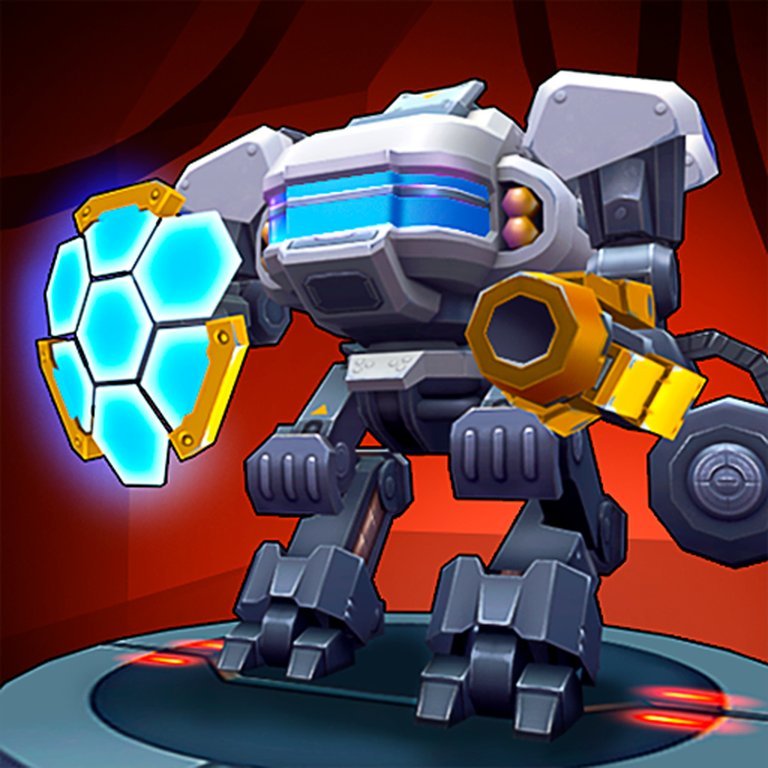
Galaxy Control: Arena is a sci-fi themed real-time multiplayer battle arena game where players collect and upgrade cards featuring space troops, perks, and defenses to engage in intense PvP battles. The objective involves destroying enemy Spacecruiser Towers while earning Fame, Stars, and glory, with features like forming Squads to share cards, building personalized Battle Decks, and progressing through multiple Arenas to dominate the galaxy.
Gameplay Videos
Galaxy Control: Arena Guides & Walkthroughs
Galaxy Control: Arena Reviews & Reception
metacritic.com (60/100): If you enjoy Drag-and-Drop strategy this FTP game will keep you gripped for a long time!
thexboxhub.com : watching paint dry is a better experience than playing Galaxy Control: Arena.
Galaxy Control: Arena: Review
1. Introduction
In the vast cosmos of mobile-to-console ports, few titles have plummeted as spectacularly as Galaxy Control: Arena. Developed by FX Games—a studio whose only prior notable work was the 2014 tower-defense hybrid Galaxy Control—this 2018 release promised to merge the studio’s sci-fi aesthetic with the explosive popularity of real-time multiplayer arena battles. Advertised as a “free-to-play, real-time PvP multiplayer online battle arena (MOBA)” where players “destroy enemy Spacecruiser Towers” to “control the Galaxy,” the game arrived with ambitious hooks: a card-based combat system, cross-platform play, and a robust progression framework. Yet, despite its pedigree and initial mobile traction, Galaxy Control: Arena ultimately collapses under the weight of its own derivative design, delivering an experience so devoid of engagement that watching paint dry, as one critic astutely noted, feels like a more stimulating alternative. This review dissects the game’s legacy as a cautionary tale of mobile ambition misfiring on console, exposing a hollow shell of a game that fails to innovate or entertain.
2. Development History & Context
FX Games’ vision for Galaxy Control: Arena was twofold: to capitalize on the burgeoning mobile MOBA genre (epitomized by Clash Royale) and to expand their existing Galaxy Control universe. Unveiled in 2018 for Android and iOS, the game leveraged Unity 3D for its visuals and Firebase for backend multiplayer services, ensuring cross-platform compatibility. The studio pitched it as a “full 3D space battle” experience, emphasizing card-driven strategy and community features like “Squad” formation for shared resources. However, the development context reveals critical constraints. As a mobile-first title, its design prioritized short, passive sessions over deep strategic play—a philosophy ill-suited for console audiences. The 2020 Xbox One port exemplified this disconnect: it retained the mobile UI (cursor-based navigation, energy timers) but lacked the tactile responsiveness of a traditional controller. This adaptation was symptomatic of a larger industry trend in the late 2010s, where studios hastily ported free-to-play mobile hits to consoles with minimal retooling, often ignoring the unique demands of those platforms. The result was a game that felt technologically dated upon its console debut, trapped between the fast-paced microtransactions of mobile and the immersive expectations of console gaming.
3. Narrative & Thematic Deep Dive
Galaxy Control: Arena exhibits a narrative so threadbare it borders on nonexistent. The game’s premise—a “sci-fi/futuristic” arena where commanders duel for galactic dominance—is reduced to a cosmetic backdrop for card battles. There are no named protagonists, no overarching plot, and no character development beyond what players project onto their generic “Hero” units. The dialogue is confined to repetitive, automated vocal cues from an unnamed female AI companion, who incessantly reminds players to open “Tech Containers” (crates) for card upgrades—a function that feels less like lore and more like a nagging monetization prompt. Thematically, the game fixates on conquest and competition but never explores deeper ideas like interstellar warfare, technological ethics, or the cost of imperial ambition. Its sci-fi trappings are purely ornamental; the “Spacecruiser Towers,” “troops,” and “perks” are indistinguishable from generic fantasy archetypes re-skinned with neon colors. Even the “Squad” system, intended to foster camaraderie, devolves into a transactional hub for card trading. In essence, Galaxy Control: Arena offers no narrative substance, relying instead on the mechanical thrill of competition—a gamble that fails when the core gameplay lacks tension or personality.
4. Gameplay Mechanics & Systems
The gameplay loop of Galaxy Control: Arena is a direct echo of Clash Royale, repackaged with a sci-fi veneer. Matches are 1v1 real-time battles where players deploy cards from a limited deck at the cost of regenerating “energy.” The objective is to destroy the opponent’s two towers and their Hero unit, each destruction awarding a “star”; the first to three stars wins. This foundation, theoretically sound, is undermined by execution flaws:
– Card Collection & Progression: Players earn “Tech Containers” and “Star Containers” post-match, which unlock new cards (troops, spells, defenses) or upgrades. However, progression is glacially paced, with rare high-tier cards locked behind excessive grinding or microtransactions. The system feels predatory, especially on consoles where waiting times for crate openings are exacerbated.
– Combat & Strategy: Battles devolve into tedious attrition. Units move at a snail’s pace across the map, and energy regeneration is so slow that matches become passive “waiting games,” as one critic lamented. Strategic depth is illusory; the meta revolves around spamming low-cost units or overpowered rare cards, with little counterplay beyond deck-building luck.
– UI & Controls: The Xbox port’s reliance on a sluggish cursor-based interface is its fatal flaw. Drag-and-drop unit deployment is “lengthy and awkward,” and menus require excessive scrolling. This design, optimized for touchscreens, makes every action feel like a chore.
– Monetization: The game is rife with pay-to-wait mechanics, where real-world currency (“gems”) can skip crate timers or buy energy boosts. This undermines the free-to-play promise, turning progression into a test of patience or wallet depth.
In sum, the systems create a hollow loop of repetition, where victories feel unearned and defeats feel arbitrary, stripped of the strategic satisfaction the genre promises.
5. World-Building, Art & Sound
Galaxy Control: Arena’s world-building is perfunctory at best. The “sci-fi/futuristic” setting is confined to generic space stations, nebulae backdrops, and robotic unit designs that lack distinctiveness. There are no factions, no lore, and no environmental storytelling—just a flat arena where battles unfold. The art direction epitomizes mediocrity: 3D models are blocky and uninspired, with “bland, tiny and flavorless animations” that render even epic clashes visually inert. Particle effects are sparse, and color palettes lean toward garish neon, failing to evoke the grandeur of space opera. Sound design fares no better. The FMOD-powered soundtrack is forgettable, a loop of generic synth beats that fails to build tension. Sound effects are muffled and repetitive, while the AI companion’s automated voice is universally derided as “annoying,” her robotic reminders breaking immersion at every turn. The combination of sterile visuals and aural blandness erases any potential for atmosphere, leaving players stranded in a universe devoid of wonder or menace.
6. Reception & Legacy
Upon its mobile debut, Galaxy Control: Arena garnered muted attention, dismissed as a Clash Royale clone with superficial sci-fi branding. Its Xbox One port in 2020, however, ignited a critical backlash. On Metacritic, user reviews were mixed but damning, with one player noting it was “more suited as a mobile game” due to its idle mechanics and “pay-to-wait” progression. TheXboxHub’s review was scathing, awarding it a metaphorical “black hole” rating and declaring watching paint dry a superior experience. Critics universally panned the port’s UI, pacing, and lack of polish, arguing it epitomized the pitfalls of mobile-to-console conversions. Commercially, the game faded into obscurity, overshadowed by genre titans like Clash Royale and Brawl Stars. Its legacy is one of failure: a cautionary study in how mobile monetization models and design philosophies clash with console expectations. While it briefly sustained a niche audience on mobile, its historical impact is nil—no subsequent titles cite it as an influence, and it remains a footnote in FX Games’ catalog. In the pantheon of gaming, Galaxy Control: Arena is remembered not for innovation, but for its spectacular misfire on consoles.
7. Conclusion
Galaxy Control: Arena is a monument to unfulfilled potential. As a mobile title, it offered a passable, if derivative, experience for casual players, buoyed by the addictive lure of card collection. Yet, its transition to console exposed its fundamental flaws: a shallow core loop, predatory monetization, and a design philosophy ill-suited for non-mobile platforms. The game’s lack of narrative depth, uninspired art, and frustrating controls conspire to create an experience that is not merely boring but actively antagonistic to engagement. While it succeeds technically as a cross-platform title using Unity and Firebase, it fails as entertainment—a black hole of tedium where strategy is sacrificed for passive waiting and visual flair is nonexistent. For historians, Galaxy Control: Arena serves as a stark reminder of the chasm between mobile and console gaming cultures. For players, it is a definitive warning: approach with caution, and perhaps keep a paintbrush handy. In the annals of video game history, this game will not be remembered as a masterpiece, but as a missed—a cautionary tale of ambition grounded by execution. Verdict: A cosmic failure, best left unexplored.