
- Release Year: 2019
- Platforms: Macintosh, Windows
- Publisher: Czech Games Edition s.r.o.
- Developer: Czech Games Edition s.r.o.
- Genre: Strategy, Tactics
- Perspective: Top-down
- Gameplay: Board game
- Setting: Futuristic, Sci-fi
- Average Score: 90/100
Description
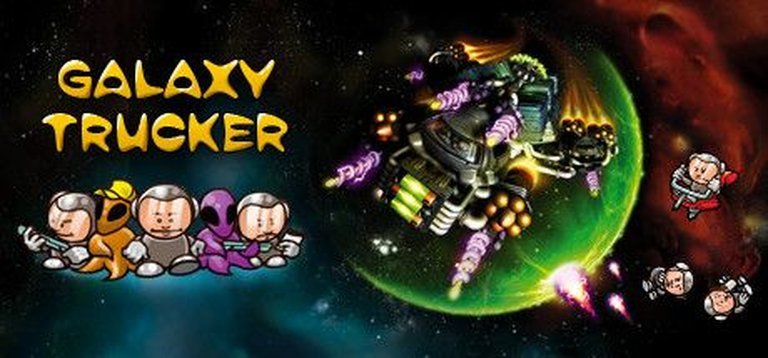
Galaxy Trucker: Extended Edition is a digital adaptation of the acclaimed sci-fi board game where players compete in real-time to build functional spacecraft from a shared pool of tiles, then navigate perilous space routes to transport cargo while dodging asteroids, pirates, and other hazards. Set in a humorous futuristic universe, the game captures the chaotic and strategic essence of the original, emphasizing quick thinking and risk management in the dangerous profession of space trucking.
Gameplay Videos
Where to Buy Galaxy Trucker: Extended Edition
Galaxy Trucker: Extended Edition Guides & Walkthroughs
Galaxy Trucker: Extended Edition Reviews & Reception
store.steampowered.com (90/100): Galaxy Trucker is hands-down the best adaptation of a board game to the digital format yet seen.
Galaxy Trucker: Extended Edition: A Definitive Analysis of a Digital Board Game Landmark
Introduction: The Junk-Fueled Journey to Greatness
In the vast, often-uncritical cosmos of video game adaptations, few titles burn as brightly—or as chaotically—as Galaxy Trucker: Extended Edition. It is the digital apotheosis of Vlaada Chvátil’s beloved 2007 board game, a title that transformed the simple act of cobbling together a spaceship from sewer pipes and gun turrets into a globally celebrated phenomenon. This review argues that Galaxy Trucker: Extended Edition is not merely a competent translation but a landmark achievement in interactive media, a masterclass in how to honor a physical game’s spirit while expanding its narrative, mechanical, and social horizons through the unique affordances of the digital platform. It stands as a testament to the vision of its creator and the dedication of its developer, Czech Games Edition (CGE), securing a permanent place in the pantheon of both board game and digital gaming history.
Development History & Context: From Czech Guildhall to Global Digital Frontier
The story begins not with a pixels, but with cardboard. In 2007, Czech designer Vlaada Chvátil, already a luminary in the board game world for titles like Space Alert and Dungeon Lords, released Galaxy Trucker through the boutique publisher Czech Games Edition. The game was an immediate critical darling, earning nominations and wins including the 2012 Ludoteca Ideale award and recommendations from the prestigious Spiel des Jahres jury. Its genius lay in its deceptively simple two-phase structure: a frantic, real-time (or turn-based) ship-building phase followed by a tense, card-driven voyage where your jury-rigged vessel faced meteor showers, pirate attacks, and slaver ambushes.
By the early 2010s, the digital board game market was nascent but promising. Studios were beginning to adapt classics, but many were simplistic ports or generic implementations. CGE, committed to “bringing great games to the international board game community,” saw the potential for Galaxy Trucker‘s chaotic, tactile gameplay to thrive on touchscreens and PCs. The first digital iteration, simply titled Galaxy Trucker, launched in 2014 on iOS and Android. It was a smash hit, named Game of the Year by Pocket Tactics and Games.cz, and praised as “the best digital adaptation of a board game yet.” This success created the mandate and foundation for the definitive version: Galaxy Trucker: Extended Edition.
Released on March 7, 2019, for Windows and macOS, the “Extended Edition” moniker signified its comprehensive nature. It was not a sequel but a consolidation and expansion, already including the major “Alien Technologies” expansion at no extra cost—a significant value proposition. Developed by CGE Digital, the studio arm of Czech Games Edition, the project navigated specific technological and design constraints. The core challenge was translating the physical act of rapidly slapping tiles together into satisfying digital interactions. Furthermore, they had to build robust online infrastructure for asynchronous and real-time multiplayer, a feature that would define the game’s longevity. The 2019 landscape was crowded with digital board games, but Extended Edition’s ambition to be the ultimate, all-in-one package set it apart.
Narrative & Thematic Deep Dive:Corporate Satire and the Glorious Absurdity of Space Hobohemia
While Galaxy Trucker is primarily a mechanics-driven game, its narrative framework is a masterstroke of satirical world-building that elevates the experience from a simple game to a persistent, humorous career simulation. The lore, drawn directly from Chvátil’s original conception and expanded in the digital campaign, presents a corporate dystopia of exquisite absurdity.
Galaxy Corporation Incorporated (GCI) is not a noble exploration outfit but a bankrupt construction firm that has pivotally turned to shipping its own prefabricated building materials to the galactic fringe. The player, a “trucker,” signs a contract not out of noble ambition but sheer desperation: “The players now must sign a contract and then gain access to Galaxy Corporation Incorporated Warehouse.” The theme is one of glorified, high-risk junk hauling. You are not a star captain; you are a desperate entrepreneur building a spacecraft from “sewer pipes” and discarded parts, hoping to scrape by or strike it rich. This subverts the romantic Star Trek/Star Wars fantasy at every turn. Your crew is a “xenologically diverse” assortment of aliens and humans, not a elite team, but a motley crew of individuals who, like you, are probably one bad paycheck away from begging “for money on the street.”
The campaign mode, highlighted by critics as the game’s secret weapon, operationalizes this theme into a narrative progression. As Vulture noted, it plays like “a short graphic novel you’ll play your way through many, many games over.” Missions have titles and objectives that flesh out this universe: “Beverage Truck” tasks you with delivering crates of soda, grounding the cosmic scale in mundane, relatable humor. The dialogue, text, and mission briefings consistently reinforce the tone of a blue-collar space opera, where the ultimate villain is not a dark lord but a malfunctioning engine or an inexorable meteor storm. The underlying themes are capitalism’s precariousness, the triumph of ingenuity over resources, and the joyful, communal suffering of shared risk. You are not saving the galaxy; you are trying to get a bonus for “prompt delivery” while your ship literally falls apart around you.
Gameplay Mechanics & Systems: The Two-Act Symphony of Chaos and Calculation
Galaxy Trucker’s brilliance is its bifurcated gameplay loop, a perfectly tense seesaw between calm construction and wild voyaging. The digital adaptation, Extended Edition, preserves this while offering crucial flexibility.
Phase 1: The Shipyard Scramble (Construction)
This is the game’s iconic heart. Players begin each round with a central pile of hexagonal tiles representing ship parts: engines, cannons, crew quarters, cargo holds, shield generators, and the all-important cockpit. In real-time mode, the pressure is visceral. An hourglass timer ticks down, and players frantically grab tiles, rotate them, and connect them to their growing, modular ship. Connections must match connectors (blue for crew/cargo, red for weapons, yellow for engines/special). The race is to build a functional, defensible vessel before the timer expires. The clever digital implementation allows faster players to “limit the time available,” a passive-aggressive corporate tactic that perfectly mirrors the game’s tone.
For those preferring the board game’s original feel, a turn-based mode is available, removing the time pressure and allowing for more deliberate, puzzle-like construction. This dual-mode approach is a masterstroke in accessibility, broadening the audience without compromising the original vision.
Phase 2: The Periphery Run (Flight)
Once ships are built (often looking like drunken assemblages of pipes and guns), the flight phase begins. This is a deterministic, card-driven journey. A shared deck of adventure cards is revealed one by one, presenting events like “Meteor Swarm,” “Smugglers’ Asteroid,” or “Abandoned Station.” Each card requires a specific ship capability (e.g., at least one engine to avoid being stranded, enough shields to deflect meteors, cannons to fight pirates). Success yields credits, goods, or special tiles; failure can mean losing ship parts (which must be repaired later, at cost), losing cargo, or even being forced to return to base, forfeiting the round’s earnings.
This phase is a relentless audit of your ship’s flawed architecture. That five-engine ship you built? If four are destroyed by meteors, you’re dead in the water. The tension is not in twitch skills but in risk assessment and contingency planning. The “Alien Technologies” expansion, seamlessly integrated, adds a layer of complexity with new part types (like the space catapult) and special mission cards, deepening the strategic well.
Meta-Systems: Campaign, Progression, and Multiplayer
Where the digital version transcends the physical is in its campaign structure. This isn’t just a series of games; it’s a career path with branching paths, special challenges, and unlockable unique ship parts. This provides a compelling long-term “quest” for the cosmic credits, giving context to each run.
The AI system is robust, featuring 12 distinct AI personalities with different playstyles (Aggressive, Defensive, Greedy, etc.). This allows for rich solo play. The multiplayer suite is comprehensive: local pass-and-play on one device, online real-time duels, and crucially, asynchronous play. You can start a game, build your ship, and your friend can complete their turn hours later, a feature essential for modern board game apps.
The scoring and settlement phase after each flight adds another strategic layer. Bonuses are awarded for the fastest ship (“Bonuses paid for prompt delivery”) and the “nicest” ship (based on linked parts). You must pay for repairs to lost tiles. The final tally of credits determines your standing, but survival itself is a victory in this high-stakes economic ecosystem.
World-Building, Art & Sound: A Cartoonish Canvas for Cosmic Calamity
The aesthetic of Galaxy Trucker is a perfect functional match for its tone. The visual style, derived from Radim Pech’s original board game art, is bright, cartoony, and intentionally crude. Ships are colorful assemblages of chunky, clearly delineated parts. The UI is clean and informative, with clear indicators for connectors and part functions. This “cute” and “colorful” presentation (as tagged by Steam users) sugarcoats the brutal mechanics, creating a delightful dissonance. Watching your lovingly built ship get pummeled into a cloud of debris is funny, not frustrating, because the art refuses to take itself seriously.
The sound design is equally characteristic. The clatter of tiles being placed during construction is satisfying and tactile. The flight phase is accompanied by jaunty, adventurous music that swells during danger and recedes after survival. Sound effects for lasers, explosions, and meteor impacts are punchy and comic. The narration, available in all seven supported languages (Czech, English, French, German, Spanish, Polish, Russian), delivers mission briefings and event cards with a dry, corporate enthusiasm that seals the game’s satirical core. Together, the art and sound build a world that feels playfully retro and deeply immersive, a universe where the laws of physics and corporate logic are equally bendable.
Reception & Legacy: From Board Game Darling to Digital Benchmark
The legacy of Galaxy Trucker is bifurcated but perfectly aligned. The original 2007 board game is a modern classic, with a list of nominations and awards spanning years and continents (Golden Geek nominations, Spiel der Spiele Hit, Japan Boardgame Prize). Its reputation is that of a brilliant, chaotic party-game-for-gamers.
The 2014 mobile app was a critical sensation. It holds an 87% on Metacritic and won “Game of the Year” from Pocket Tactics and Games.cz. The praise was unprecedented for a board game adaptation. As Pocket Gamer proclaimed, it was “hands-down the best adaptation of a board game to the digital format yet seen.” Reviewers consistently highlighted the campaign mode and the seamless implementation of both real-time and turn-based play as revolutionary.
Galaxy Trucker: Extended Edition (2019), building on this foundation, continues this legacy of acclaim. On Steam, it boasts a “Very Positive” rating with 89% of 207+ reviews being positive. Users praise its addictive nature, excellent multiplayer, and value (including the Alien Technologies expansion). Common themes in user reviews echo the critical consensus: it’s fast, funny, and endlessly replayable. Technical issues like AI pathfinding bugs or online connection requirements (noted in Steam discussions) are minor quibbles in the face of its overwhelming quality.
Its influence is profound. It set a new standard for what a digital board game could be, moving beyond static, virtual tabletops. It demonstrated that a digital adaptation could meaningfully add to the source material through narrative campaigns, robust online play, and quality-of-life features like autopilot. Games like Wingspan or Root‘s digital versions, while superb, operate in a world where the bar was raised by Galaxy Trucker. It proved that chaotic, real-time, physically expressive games could find a perfect home on digital platforms.
Conclusion: An Unshakable cornerstone
Galaxy Trucker: Extended Edition is a singular achievement. It is the rare adaptation that not only does justice to its source but expands its soul. Through a brilliantly preserved two-phase core, a sharp satirical narrative wrapped in a charmingly crude art style, and a suite of digital features (campaign, asynchronous multiplayer, included expansions) that feel essential rather than bolted-on, it creates an experience that is greater than the sum of its parts. It captures the desperate, hilarious, and triumphant spirit of being a spacefaring junk dealer with unparalleled fidelity. From the board game tables of 2007 to the Steam servers of 2019 and beyond, it has earned every accolade. For students of game design, it is a case study in faithful yet innovative adaptation. For players, it is simply one of the most fun, replayable, and brilliantly constructed strategy games available on any platform. Its place in video game history is not just secure; it is foundational.