
- Release Year: 2020
- Platforms: Linux, Macintosh, Nintendo Switch, Windows
- Publisher: JoyBits Ltd.
- Developer: Qplaze
- Genre: Action
- Perspective: Side view
- Game Mode: Single-player
- Gameplay: Arcade, Shooter, Space flight
- Setting: Futuristic, Sci-fi
- Average Score: 55/100
Description
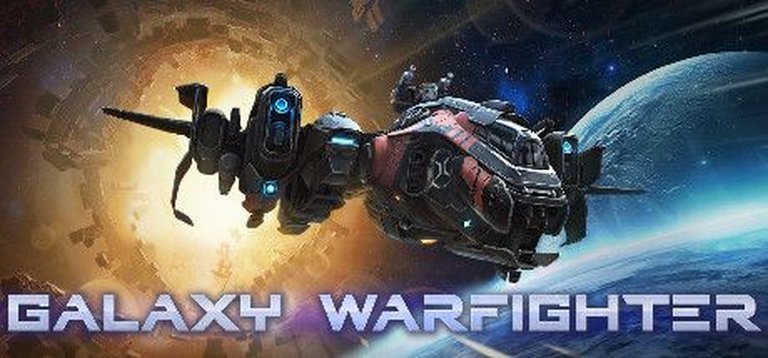
Galaxy Warfighter is a 2D scrolling space shooter set in a sci-fi universe, where players pilot a spacecraft through levels filled with enemies, upgrading their ship between runs to progress further. The game features arcade-style gameplay with direct controls, a side-view perspective, and vehicular space flight mechanics, offering a modern take on classic shoot ’em up action across multiple platforms including Windows, Mac, Linux, and Nintendo Switch.
Gameplay Videos
Where to Buy Galaxy Warfighter
PC
Galaxy Warfighter Cracks & Fixes
Galaxy Warfighter Reviews & Reception
metacritic.com (55/100): A paint by numbers entry into what’s becoming an inflated genre but the gameplay can still be fun despite feeling repetitive, especially late on.
indiegamewebsite.com : The core systems which continue to shine throughout the shoot em’ up genre do so here, with a satisfying whirl alongside a fair few niggles.
seafoamgaming.com : Galaxy Warfighter is an abysmal shooter. There’s hardly any variety, the game plays itself and it’s one of the most boring experiences I’ve ever had since the Wii U era.
opencritic.com (56/100): The game is interesting, but becomes to repetitive.
Galaxy Warfighter Cheats & Codes
Build ID: ca634037ff84ad42
| Code | Effect |
|---|---|
| Inf Health | Invincible |
Galaxy Warfighter: Review
Introduction
In the crowded cosmos of the shoot ’em up genre, where titans like Gradius and R-Type reign supreme, Galaxy Warfighter emerges as a curious anomaly. Developed by Ukrainian studio Qplaze—best known for mobile titles—and published by JoyBits Ltd., this 2020 debut marks the studio’s ambitious leap onto PC and Nintendo Switch. Promising a “modern take on an arcade shoot ’em up” with over 100 levels, it arrives amidst a resurgence of indie shmups. Yet, beneath its pixelated veneer lies a profound paradox: a game that simultaneously honors and betrays the genre’s core tenets. This review argues that Galaxy Warfighter’s fatal flaw is not its technical execution but its relentless monotony—a grinding loop of repetition amplified by its mobile DNA. While it captures fleeting moments of shmup euphoria, these moments are buried under a staggering lack of innovation, making it a cautionary tale of genre imitation without evolution.
Development History & Context
Qplaze’s transition from mobile to console is immediately evident in Galaxy Warfighter’s design. The studio, historically focused on free-to-play titles for iOS and Android, brings a mobile-first philosophy to its Steam and Switch debut. This context explains the game’s emphasis on progression through incremental upgrades (coins collected per level) and its forgiving, low-skill-entry mechanics—traits optimized for bite-sized play sessions. Technologically, the game is unremarkable: a 2D side-scroller with parallax scrolling backgrounds and sprite-based enemies, requiring minimal computational power. This simplicity allowed Qplaze to prioritize accessibility, but it also constrained depth.
The 2020 gaming landscape saw the shmup genre thrive on indie platforms, with titles like Blazing Chrome and Sine Mora pushing boundaries. However, this period also saw a saturation of “retro-inspired” games, often criticized for derivative gameplay. Galaxy Warfighter arrived amidst this debate, its $6.99 price point positioning it as an entry-level experience—a “shmup for beginners” as some critics noted. Yet, its development lacked genre veterans’ nuance, resulting in a game that feels more like a mobile port than a crafted console experience. This disconnect between Qplaze’s mobile roots and the expectations of PC/switch players would become a central point of contention.
Narrative & Thematic Deep Dive
Narrative is generously applied to Galaxy Warfighter. The game eschews storytelling in favor of minimalist context: an unspecified alien invasion, a lone pilot (“Hex,” per some sources), and a hundred-level quest to save Earth. Dialogue is nonexistent, and characters are reduced to archetypes—the faceless hero, the faceless horde. This absence extends to thematic depth, leaving only a shallow exploration of “good vs. evil.” The upgrade system—spending coins on health, shields, and weapons—implicitly taps into a theme of technological progress, but it’s never contextualized within a larger narrative framework.
What little thematic cohesion exists lies in the game’s atmosphere of cosmic solitude. Critics noted backgrounds evoking “a sense of loneliness and emptiness,” with desolate nebulae and distant planets creating a backdrop for isolation. Yet, this is undercut by the relentless action; the player’s screen is perpetually crowded with enemies, undermining the intended melancholy. Ultimately, Galaxy Warfighter sacrifices narrative cohesion for gameplay efficiency—a trade-off that leaves players emotionally detached. The result is a theme of survival without purpose, a hollow victory against faceless foes.
Gameplay Mechanics & Systems
The core gameplay loop deceptively mirrors classic shmups: pilot a spaceship, dodge enemy fire, destroy foes, and collect coins. However, its execution reveals a mobile-centric design philosophy. Autofire is mandatory by default, reducing the player’s role to ship movement only—a stark contrast to the precision demanded by genre staples. Manual firing is absent, stripping away the tactile satisfaction of rhythmic button presses. This simplification, intended for accessibility, inadvertently flattens the genre’s challenge.
Combat and Progression:
– Enemy Variety: Limited to a handful of sprites—standard fighters, bombers, and turrets—with predictable attack patterns. The promised “unpredictable strategies” from the Steam description rarely materialize.
– Boss Battles: Only four unique bosses, recycled every level with stat inflation. As Defunct Games noted, “sometimes you’ll run into the same boss two or three times in a row,” requiring identical tactics.
– Upgrade System: Coins enable incremental upgrades to health, shield, damage, drones, and two abilities: a weak wave attack and a time-freeze power. The latter is overpowered, allowing players to trivialize bosses by pausing time to target weak points.
– Difficulty Curve: Starts sluggishly (30 levels of minimal challenge), spikes arbitrarily around levels 40–60 (forcing repetitive grinding for upgrades), then plateaus as upgrades render the game trivial. Indie Game Website called this a “bumpy difficulty curve which halts your momentum.”
UI and Polish:
The interface is functional but barebones. An upgrade menu between levels lacks visual flair, and enemy hitboxes are inconsistent—critics noted instances of phantom hits or near-misses. The game’s length (100+ levels) exacerbates flaws, with Seafoam Gaming dropping out after 10 minutes, calling it “one of the most boring experiences I’ve ever had.”
World-Building, Art & Sound
Art Direction:
Galaxy Warfighter’s strongest asset is its pixel art. Backgrounds, described as “wonderful” and “lovingly-detailed,” feature deep purples, blues, and browns, with parallax scrolling creating a convincing sense of depth. Planets, asteroids, and nebulae evoke a classic sci-fi aesthetic, reminiscent of Gradius or R-Type. However, this beauty is fleeting. Assets are recycled relentlessly; players see the same backdrops and enemy designs within hours. As Finger Guns lamented, “there’s no unique selling point. It is as generic as its name suggests.”
Sound Design:
Audio is a missed opportunity. Sound effects are generic—”stock sound effects galore,” per Seafoam Gaming—lacking impact. The music is a single, repetitive track that plays across all levels, failing to escalate with intensity. This absence of dynamic audio underscores the game’s static nature. Even the special abilities feel underwhelming; the wave attack is described as “more like you’ve shone a laser into their eyes, rather than hit them with an arcing beam of death.”
World-Building:
The setting is a nebulous “sci-fi/futuristic” void. No factions, no lore, no distinct locations—just an endless series of battles against anonymous foes. The lack of environmental storytelling (e.g., derelict ships, alien ruins) leaves the galaxy feeling sterile. Even the home base, a recurring hub, is a static void. This minimalism reflects Qplaze’s mobile origins, where world-building is secondary to mechanics.
Reception & Legacy
At launch, Galaxy Warfighter received mixed-to-negative reviews, averaging 46% on MobyGames and 55% on Metacritic. Critics universally praised its accessibility but condemned its repetition. Video Chums (60%) called it “laidback” and “fun for newcomers,” while Worth Playing (40%) deemed it “dull” and “unimaginative” on PC. The Switch fared slightly better (51% player score), with eShopper Reviews (42%) acknowledging its “laid-back charm” but noting “better options” on the platform.
Key Critic Consensus:
– Repetition: The 100-level structure with recycled content was the most common complaint. Screen Rant noted players “will quickly come to realize they will be doing the same things over and over again.”
– Mobile Feel: Autofire and coin-based progression drew comparisons to iOS/Android titles. Defunct Games argued it “still feels like it belongs on a mobile device.”
– Pacing: A slow start and mid-game grind killed momentum. Indie Game Website stated it “takes too much time getting to the good stuff.”
Legacy:
Galaxy Warfighter left no discernible impact on the genre. It failed to influence subsequent shmups, and its reputation solidified as a cautionary example of shallow genre imitation. On Steam, it holds a “Mixed” user score (45%), with player reviews echoing critics’ boredom. The game’s legacy is defined by its mediocrity—a footnote in Qplaze’s catalog and a reminder that accessibility without innovation breeds tedium.
Conclusion
Galaxy Warfighter is a study in squandered potential. As a debut from a mobile-centric studio, it admirably captures the surface of classic shmups: pixel-perfect visuals, a satisfying upgrade system, and moments of pure, unadulterated action. Yet, these glimmers are extinguished by a foundational flaw: an obsession with repetition that betrays the genre’s spirit. The 100-level structure, recycled bosses, and static sound design transform what could have been a charming diversion into a chore.
Qplaze’s mobile DNA is both the game’s greatest strength (accessibility) and its greatest weakness (lack of depth). For genre newcomers seeking a stress-free entry, Galaxy Warfighter offers a forgiving on-ramp. But for veterans or anyone seeking challenge or originality, it is a galaxy-sized void of tedium. Ultimately, Galaxy Warfighter embodies the adage that “imitation is the sincerest form of flattery”—but only when it honors the source. Here, it is a hollow echo, a reminder that even the most lovingly crafted pixels cannot compensate for a soul. In the annals of shmup history, it will be remembered not as a contender, but as a casualty of ambition without execution.