
- Release Year: 1998
- Platforms: Windows
- Publisher: Learning Company, Inc., The
- Genre: Compilation
- Game Mode: Single-player
Description
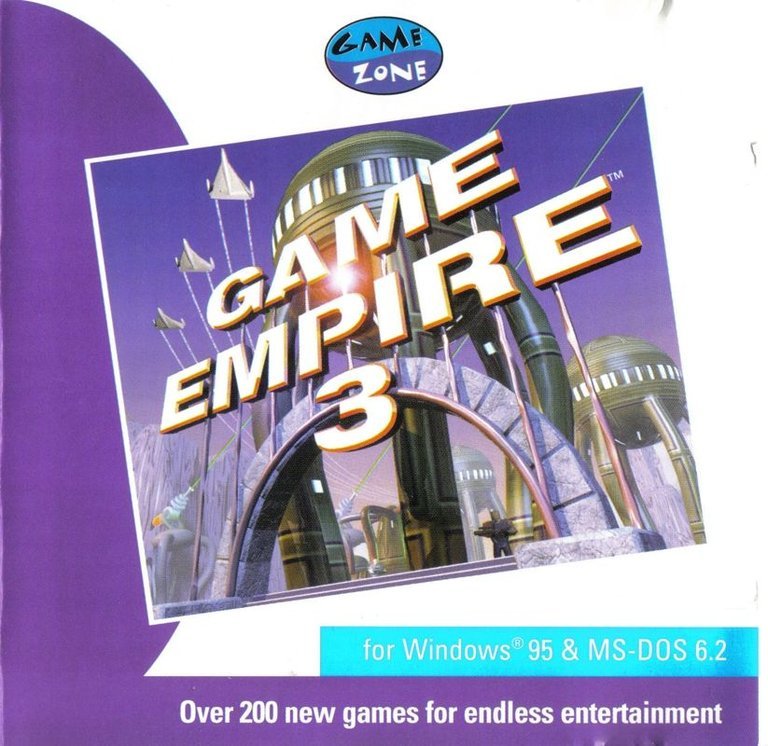
Game Empire 3 is a compilation released in 1998 for Windows, featuring over two hundred shareware games spanning multiple genres, including Adventure, Arcade, Board, Card, Casino, Kids, Mind, Sports, and Strategy. The collection offers flexible navigation options, allowing players to browse games by category, alphabetical listing, or scored rankings based on graphics, sound, and overall quality. Some games can be installed directly from the CD, while others run without installation, providing a diverse and accessible gaming experience.
Game Empire 3 Free Download
Game Empire 3 Cheats & Codes
PC
Press the ENTER key to open the console and enter the cheat code.
| Code | Effect |
|---|---|
| A RECENT STUDY INDICATED THAT 100% OF HERDABLES ARE OBESE | Fattens all animals on the map, generating more food from them. |
| GIVE ME LIBERTY OR GIVE ME COIN | Adds 10,000 coins. |
| MEDIUM RARE PLEASE | Adds 10,000 food. |
| Adds 10,000 wood. | |
| A WHOLE LOT OF LOVE | Adds 10,000 coins, food, and wood. |
| NOVA & ORION | Adds 10,000 experience points. |
| X MARKS THE SPOT | Reveals the entire map. |
| TUCK TUCK TUCK | Spawns The Tommynator monster truck. |
| YA GOTTA MAKE DO WITH WHAT YA GOT | Spawns a Mediocre Bombard. |
| SOOO GOOD | Displays comical text when units or buildings are killed. |
| SPEED ALWAYS WINS | Increases build, research, shipment, and gather rates by 100x. |
| THIS IS TOO HARD | Skips to the next scenario in the campaign. |
| WHERE’S THAT AXE? | Spawns George Crushington. |
| O CANADA 2005 | Spawns a Lazerbear. |
| DON’T KICK THE PITBULL | Spawns a Learicorn. |
| WE <3 FLUFFY!1! | Spawns Fluffy. |
| WUV WOO VOL.2 | Spawns a Flying Purple Tapir. |
| WEE OOH WEE OOH | Spawns a BigAndy monster truck. |
| COWHAX | Turns all living units on the map into cows. |
| RED POCKET | Spawns a Lion Dance Parade at the town center, gifting resources. |
| SAFARI | Spawns 12 random huntables. |
| ALL YOUR BASE ARE BELONG TO US <0-8> | Assumes control of the given player. |
| TROJAN COW | Spawns a Wood Cattle. |
| BLAH BLAH BLAH | Instantly makes the player victorious. |
| SHIVER ME TIMPERS! | Destroys all enemy boats on the map. |
| [NATURE IS CURED] | Gives 10,000 wood. |
| TRADE PLZ | Adds 10,000 export. |
| DING DING DING | Spawns a Monster Ice Cream Truck. |
| MUSTARD RELISH AND BURNING OIL | Spawns a Flaming Hot Dog Cart. |
| SOCIAL MEDIA | Adds 10,000 influence. |
| DEVASD | Gives 10,000 XP, 10,000 of every resource, fully reveals the map, grants a trickle of 400 XP, increases the speed of the player’s explorer unit to ten times its base speed, and increases build, research, shipment, and gather rates by 100 times for the player. Also spawns three Gatling Camels. |
| I SPIT ON YOU | Spawns a Gatling Camel. |
| MERCATOR | Reveals the entire map, while also removing the Fog of War effect. |
| FLYING DUTCHMAN | Enables all naval units to move on land. |
| GRANNY NANNY | Turns all villagers into Dahomey Amazons. |
| HONEY BADGER DON’T GIVE A | Spawns a Honey Badger. |
| I DON’T EXIST | Spawns a Penguin. |
| THE KING OF ALL BEASTS | Spawns two Guardian Lions. |
| VENIVIDIVINCI | Spawns Leonardo’s Tank. |
| FEELING WHELMED NOW? | Turns all living units and buildings on the map into Leonardo’s Tank. |
| RELEASE THE HOUNDS | Turns all units into Wolf Beasts. |
The Asian Dynasties
Press the ENTER key to open the console and enter the cheat code.
| Code | Effect |
|---|---|
| A WHOLE LOT OF LOVE | Adds 10,000 to each of all available resources. |
| DING DING DING | Spawns a Monster Ice Cream Truck. |
| MUSTARD RELISH AND BURNING OIL | Spawns a Flaming Hot Dog Cart. |
| TRADE PLZ | Adds 10,000 export. |
The African Royals
Press the ENTER key to open the console and enter the cheat code.
| Code | Effect |
|---|---|
| SOCIAL MEDIA | Adds 10,000 influence. |
| DEVASD | Gives 10,000 XP, 10,000 of every resource, fully reveals the map, grants a trickle of 400 XP, increases the speed of the player’s explorer unit to ten times its base speed, and increases build, research, shipment, and gather rates by 100 times for the player. Also spawns three Gatling Camels. |
| I SPIT ON YOU | Spawns a Gatling Camel. |
Knights of the Mediterranean
Press the ENTER key to open the console and enter the cheat code.
| Code | Effect |
|---|---|
| MERCATOR | Reveals the entire map, while also removing the Fog of War effect. |
| VENIVIDIVINCI | Spawns Leonardo’s Tank. |
| FEELING WHELMED NOW? | Turns all living units and buildings on the map into Leonardo’s Tank. |
| FLYING DUTCHMAN | Enables all naval units to move on land. |
| GRANNY NANNY | Turns all villagers into Dahomey Amazons. |
| HONEY BADGER DON’T GIVE A | Spawns a Honey Badger. |
| I DON’T EXIST | Spawns a Penguin. |
| THE KING OF ALL BEASTS | Spawns two Guardian Lions. |
| RELEASE THE HOUNDS | Turns all units into Wolf Beasts. |
Game Empire 3: A Time Capsule of Late ’90s Shareware Gaming
Introduction
In the annals of video game history, few artifacts capture the spirit of an era as vividly as Game Empire 3. Released in 1998 by The Learning Company (under the SoftKey banner), this compilation is more than just a collection of games—it is a digital time capsule, preserving the raw, unfiltered creativity of the late ’90s shareware scene. At a time when the gaming industry was hurtling toward the 3D revolution, Game Empire 3 stood as a testament to the enduring appeal of simple, accessible, and often experimental gameplay. This review will dissect the compilation’s significance, its place in gaming history, and why it remains a fascinating relic for historians and enthusiasts alike.
Development History & Context
The Rise of Shareware and SoftKey’s Role
The late 1990s were a transitional period for PC gaming. The industry was shifting from the dominance of DOS-based titles to the burgeoning Windows 95/98 ecosystem, and the shareware model was at its zenith. Shareware allowed independent developers to distribute their games freely, often with limited features, while encouraging users to pay for the full version. This model democratized game development, giving rise to a flood of creative, if sometimes rough-around-the-edges, titles.
SoftKey, later acquired by The Learning Company, was a major player in this landscape. The company specialized in compiling and distributing shareware collections, making it easier for consumers to discover new games without scouring the nascent internet or BBS boards. Game Empire 3 was the third installment in a series that began in 1995, with each volume offering an ever-expanding library of titles. By 1998, the series had become a staple for budget-conscious gamers and enthusiasts eager to sample a wide variety of genres.
Technological Constraints and the Gaming Landscape
Game Empire 3 was released on CD-ROM, a format that was rapidly becoming the standard for game distribution. The compilation included over 200 games, a feat made possible by the relatively small file sizes of DOS and early Windows titles. Many of these games were designed to run on modest hardware, often requiring little more than a 486 processor and a few megabytes of RAM. This accessibility was key to their appeal, as it allowed a broad audience to enjoy them without needing cutting-edge PCs.
The gaming landscape of 1998 was dominated by a few major trends:
– The rise of 3D accelerators and games like Quake II and Unreal, which pushed the boundaries of graphical fidelity.
– The continued popularity of classic genres like point-and-click adventures (Grim Fandango), real-time strategy (StarCraft), and CRPGs (Baldur’s Gate).
– The growing influence of the internet, which was beginning to change how games were distributed and played.
Against this backdrop, Game Empire 3 offered a counterpoint: a celebration of the simple, the experimental, and the often overlooked. It was a snapshot of a moment when indie development was thriving, unburdened by the pressures of AAA budgets or corporate oversight.
Narrative & Thematic Deep Dive
The Absence of a Unified Narrative
Unlike traditional games, Game Empire 3 does not have a single narrative or thematic throughline. Instead, it is a patchwork of stories, mechanics, and artistic visions, each game contributing its own unique flavor to the compilation. This lack of cohesion is not a flaw but rather a strength—it reflects the diversity and creativity of the shareware scene.
The games in Game Empire 3 can be broadly categorized into several themes:
1. Nostalgia and Retro Aesthetics: Many titles in the compilation are throwbacks to earlier eras of gaming, whether through their pixel art, chiptune music, or gameplay mechanics. Games like Pac-Rat and Xenon evoke the arcade and early PC gaming eras, offering a sense of nostalgia for players who grew up with these styles.
2. Experimental Gameplay: Shareware developers were often unconstrained by commercial expectations, leading to innovative and sometimes bizarre gameplay ideas. Titles like Freedom Hunter (with its glyph-based control system) and Gods and Warriors (a blend of RTS and FPS mechanics) showcase this experimental spirit.
3. Genre-Blending: The compilation includes games that defy easy categorization, mixing elements of strategy, adventure, and action in ways that were uncommon in mainstream titles. For example, Quest for Glory-inspired hybrids and Dungeon Master-like dungeon crawlers appear alongside more traditional fare.
4. Educational and Casual Appeal: Given The Learning Company’s involvement, it’s no surprise that Game Empire 3 includes a number of games aimed at younger or more casual audiences. Titles like Kid Icarus-inspired platformers and SimCity-like management games reflect this focus.
The Role of the Compiler
While the individual games in Game Empire 3 lack a unified narrative, the compilation itself tells a story—one of curation and preservation. The act of compiling these games was an editorial endeavor, reflecting the tastes and priorities of SoftKey’s team. The inclusion of certain genres over others, the organization of the games into categories (Adventure, Arcade, Board, etc.), and even the scoring system (which rated games on graphics, sound, and animation) all speak to the compiler’s vision.
The scoring system, in particular, is an interesting artifact. It attempts to quantify the quality of each game, offering players a way to navigate the overwhelming selection. However, these scores are inherently subjective and reflect the biases of the time. For example, games with more advanced graphics or sound might receive higher ratings, even if their gameplay was lackluster. This system also highlights the tension between accessibility and depth—a theme that would become increasingly relevant as gaming evolved.
Gameplay Mechanics & Systems
The Core Experience: A Buffet of Genres
Game Empire 3 is not a single game but a collection, and its gameplay mechanics are as varied as the titles it contains. However, several overarching systems and design philosophies emerge when examining the compilation as a whole.
-
Accessibility and Pick-Up-and-Play Design:
Many of the games in Game Empire 3 are designed to be easily accessible, with simple controls and straightforward mechanics. This was a necessity for shareware titles, which often needed to hook players quickly to encourage them to purchase the full version. Games like Ricochet (a Breakout clone) and Tetris-inspired puzzlers exemplify this design philosophy. -
Procedural and Randomized Elements:
Several titles in the compilation feature procedural generation, a technique that would later become a staple of indie games. For example, Rogue-like dungeon crawlers and Diablo-inspired action RPGs use randomized levels to increase replayability. This was a clever way to extend the lifespan of games that might otherwise be too short to justify a purchase. -
Hybrid and Experimental Mechanics:
The shareware scene was a hotbed of experimentation, and Game Empire 3 includes several games that blend genres in unusual ways. For instance:- Gods and Warriors combines real-time strategy with first-person shooter elements, a rare hybrid in the late ’90s.
- Freedom Hunter uses a glyph-based control system, where players draw shapes with the mouse to perform actions—a mechanic that predates modern gesture-based controls.
- Moru’s 3D Internet Chess attempts to bring multiplayer chess into the digital age, complete with 3D graphics and online play (a novelty at the time).
-
Modular and User-Generated Content:
Some games in the compilation include tools for players to create their own levels or modify existing ones. This was a precursor to the modding scenes that would later flourish around games like Half-Life and The Elder Scrolls. For example, Dungeon Craft-like tools allowed players to design their own dungeons, extending the life of the game beyond its original content.
UI and Navigation: The Compilation’s Framework
The user interface of Game Empire 3 is a study in late ’90s design aesthetics. The main menu is a straightforward affair, with options to browse games by category, name, or score. The category system is particularly notable, as it reflects the genres that were popular at the time:
– Adventure: Point-and-click and text-based adventures.
– Arcade: Fast-paced action games, often inspired by arcade classics.
– Board/Card/Casino: Digital adaptations of traditional games.
– Kids: Titles aimed at younger audiences, often with educational elements.
– Mind: Puzzle and strategy games.
– Sports: Simulations of real-world sports.
– Strategy: Turn-based and real-time strategy games.
The UI is functional but not particularly elegant, reflecting the utilitarian approach of many shareware compilations. However, it is effective in its simplicity, allowing players to quickly find and launch games without unnecessary frills.
Innovations and Flaws
Game Empire 3 is not without its innovations, but it also suffers from several flaws that are characteristic of the era.
Innovations:
– Diversity of Content: The sheer variety of games included in the compilation is impressive, offering something for nearly every taste.
– Scoring System: While subjective, the scoring system provides a useful way to navigate the vast library of titles.
– Hybrid Genres: The inclusion of experimental and genre-blending games showcases the creativity of the shareware scene.
Flaws:
– Quality Control: Not all games in the compilation are of equal quality. Some are rough prototypes or unfinished projects, reflecting the hit-or-miss nature of shareware.
– Technical Limitations: Many games are held back by the technical constraints of the time, with limited graphics, sound, and gameplay depth.
– Lack of Curation: While the diversity of content is a strength, it can also be overwhelming. The compilation does little to guide players toward the best titles, leaving them to sift through the chaff themselves.
World-Building, Art & Sound
The Aesthetic of Shareware
The visual and auditory design of the games in Game Empire 3 is a reflection of the shareware aesthetic—a mix of ambition and limitation. Many of the games feature pixel art, simple sprites, and rudimentary 3D graphics, all constrained by the hardware of the late ’90s. However, these limitations often led to creative solutions, such as the use of dithering to create the illusion of depth or the clever reuse of assets to maximize variety.
Some standout examples of artistic innovation include:
– Pac-Rat: A Pac-Man clone with a 3D-rendered title screen, showcasing early experiments with real-time 3D on 16-bit Windows.
– Xenon: A Scorched Earth-style artillery game with destructible terrain and a custom UI that emulated the Windows 95 aesthetic.
– Freedom Hunter: A game that used a unique glyph-drawing system for controls, paired with anime-inspired visuals.
The sound design is similarly varied, ranging from simple MIDI tracks to more ambitious chiptune compositions. Many games rely on repetitive loops or minimal sound effects, a limitation of the shareware model where audio was often an afterthought.
Atmosphere and Immersion
The atmosphere of Game Empire 3 is one of nostalgia and discovery. For players who experienced these games in the late ’90s, the compilation evokes memories of a time when gaming was less polished but no less magical. The lack of uniformity in art and sound design contributes to this atmosphere, as each game feels like a distinct artifact from a bygone era.
However, the compilation as a whole lacks a cohesive atmosphere. Unlike a curated anthology, Game Empire 3 is more akin to a digital flea market, where each game is a separate stall with its own wares. This can be both a strength and a weakness—while it offers variety, it also means that the experience can feel disjointed.
Reception & Legacy
Critical and Commercial Reception
Game Empire 3 was not a critical darling, nor was it intended to be. As a budget compilation, it was aimed at casual gamers and enthusiasts rather than critics. However, it found a niche audience among those who appreciated the diversity and accessibility of shareware games.
Commercially, the Game Empire series was successful enough to warrant multiple installments, indicating that there was a market for these kinds of compilations. The Learning Company’s involvement also lent the series a degree of legitimacy, as the company was known for its educational software.
Influence on Subsequent Games and the Industry
While Game Empire 3 itself did not directly influence the gaming industry, the shareware movement it represents had a profound impact. Many of the developers who cut their teeth on shareware titles would go on to work on major commercial projects, bringing with them the lessons they learned from the indie scene.
The compilation also foreshadowed several trends that would later become prominent:
– Indie Game Renaissance: The shareware model was a precursor to the modern indie game scene, where small teams create innovative titles outside the AAA ecosystem.
– Digital Distribution: Game Empire 3 was an early example of digital distribution, albeit on physical media. The rise of platforms like Steam and itch.io can be seen as a continuation of this trend.
– Game Preservation: The compilation serves as a form of game preservation, ensuring that these titles are not lost to time. This is a role that modern platforms like GOG and the Internet Archive continue to fulfill.
Evolution of Reputation
In the years since its release, Game Empire 3 has faded into obscurity, remembered primarily by those who experienced it firsthand. However, it has gained a cult following among retro gaming enthusiasts and historians, who appreciate it as a snapshot of a pivotal moment in gaming history.
The compilation’s reputation has also benefited from the broader nostalgia for the late ’90s and early 2000s. As gaming has become increasingly corporate and risk-averse, titles like those in Game Empire 3 are seen as a reminder of a time when creativity and experimentation were paramount.
Conclusion: A Historical Footnote with Lasting Charm
Game Empire 3 is not a masterpiece in the traditional sense. It is not a single, cohesive game but a sprawling, uneven collection of experiments, homages, and oddities. However, it is precisely this lack of polish and uniformity that makes it so fascinating. The compilation is a testament to the creativity and ingenuity of the shareware scene, a moment when gaming was still finding its footing and anything seemed possible.
For modern players, Game Empire 3 offers a glimpse into a bygone era—a time when games were made by passionate individuals rather than corporate committees, and when the line between player and developer was blurred. It is a reminder that gaming’s history is not just about the blockbuster titles but also about the countless small, weird, and wonderful games that paved the way.
In the grand tapestry of video game history, Game Empire 3 may be a minor thread, but it is one that deserves to be remembered. It is a time capsule, a museum exhibit, and a love letter to the spirit of indie gaming—all rolled into one. For historians, it is an invaluable resource; for enthusiasts, it is a treasure trove of nostalgia; and for the curious, it is a window into a world that has largely faded away.
Final Verdict: Game Empire 3 is not a game to be played for its individual merits but to be experienced as a historical artifact. It is a must-visit for retro gaming enthusiasts and historians, offering a unique perspective on the late ’90s shareware scene. While it may not stand up to modern standards of gameplay or presentation, its value lies in its role as a preservative of a pivotal moment in gaming history. 7/10 – A fascinating relic, warts and all.