
- Release Year: 2020
- Platforms: Windows
- Publisher: Snkl Studio
- Developer: Snkl Studio
- Genre: Puzzle
- Perspective: 1st-person Top-down
- Game Mode: Single-player
- Gameplay: Fixed, Flip-screen, Point and select
- Setting: Space
- Average Score: 77/100
Description
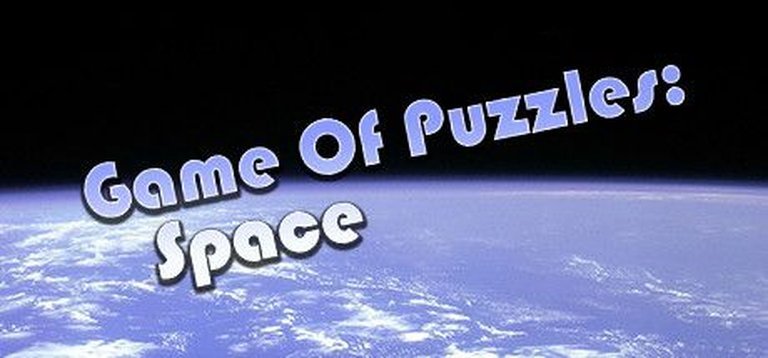
Game of Puzzles: Space is a relaxing puzzle game developed by Snkl Studio, released in 2020 for Windows as part of the Game of Puzzles series, featuring space-themed challenges in first-person and top-down perspectives with fixed flip-screen visuals and point-and-select mouse controls, where players assemble cosmic images of galaxies, planets, and stars in a serene solo experience.
Where to Buy Game of Puzzles: Space
PC
Game of Puzzles: Space Reviews & Reception
steambase.io (77/100): Mostly Positive (77/100 Player Score)
store.steampowered.com (78/100): Mostly Positive (78% of 32 user reviews)
Game of Puzzles: Space: Review
Introduction
In an era dominated by sprawling open-world epics and live-service behemoths, Game of Puzzles: Space (2020) emerges as a quiet reminder of gaming’s humble roots—a bite-sized digital jigsaw set against a cosmic backdrop, crafted for fleeting moments of zen rather than marathon sessions. Released amid the early throes of the 2020 COVID-19 lockdowns, when casual, low-stakes titles like Animal Crossing: New Horizons and Among Us exploded in popularity as pandemic pastimes, this Snkl Studio indie puzzle game distills the joy of assembly into its purest form. Players rotate fragmented space imagery—from nebulae to astronauts—to reconstruct serene tableaux across 50 levels. My thesis: While lacking the narrative depth or mechanical innovation of its contemporaries, Game of Puzzles: Space excels as an ultra-accessible, family-friendly diversion, embodying the indie ethos of affordability ($0.99) and simplicity in a year when gaming sought solace in the stars.
Development History & Context
Snkl Studio, a prolific Ukrainian indie outfit known for churning out budget-friendly puzzle and casual titles, developed and self-published Game of Puzzles: Space using the accessible Clickteam Fusion 2.5 engine—a tool favored by solo devs and small teams for its drag-and-drop simplicity, enabling rapid prototyping without AAA-level coding expertise. Launched on January 22, 2020, via Steam (App ID: 1218200), it arrived in a gaming landscape upended by global quarantines. The PCGamingWiki notes its modest specs (Windows 7 minimum, 1GB RAM, 512MB VRAM with DirectX 9), reflecting technological constraints of a solo/small-team effort rather than era-defining hardware demands.
Snkl’s vision was straightforward: extend their Game of Puzzles series (flanked by Furry in 2019 and Dinosaurs in 2020, with siblings like Animals, Nature, Dragons, and Slavic Mythology) into thematic variety. Space, evoking wonder amid earthly turmoil, fit perfectly—music by Erwarda Savitnaag provides ambient cosmic swells, enhancing the meditative rotate-and-place loop. The 2020 market boomed (Newzoo reported $177.8B global revenue, up 23%), favoring quick-play indies amid delays to giants like Cyberpunk 2077. Yet, Snkl’s output (bundled in massive Steam collections like the 34-game Snkl Studio Bundle) highlights a survival strategy: volume over polish, targeting impulse buys in a free-to-play saturated ecosystem.
Narrative & Thematic Deep Dive
Game of Puzzles: Space eschews traditional storytelling for pure abstraction, a deliberate minimalist choice aligning with its puzzle roots. There’s no plot, no characters, no dialogue—just evocative space imagery (galaxies, planets, satellites) begging reconstruction. This void is thematic gold: the “narrative” unfolds through player agency, mirroring humanity’s gaze into the cosmos as escapism. Each puzzle, scaling from 16 to 36 pieces, builds a silent ode to exploration, evoking Carl Sagan’s Cosmos more than any sci-fi epic.
Core Themes:
– Isolation and Wonder: Released during lockdowns, the top-down, fixed/flip-screen views simulate solitary stargazing—therapeutic amid 2020’s chaos.
– Completion as Catharsis: Rotating misaligned pieces to form wholes symbolizes piecing together fragmented realities, a subtle nod to pandemic-era resilience.
– Accessibility Over Ambition: No fail states or timers; success is inevitable, reinforcing themes of patience and universal appeal (“suitable for all ages”).
Lacking voiced protagonists or branching paths, it prioritizes tactile satisfaction. Dialogue? Absent. Yet, Steam Achievements (51 total, like “Puzzle Master” for completions) gamify progress, turning assembly into a personal epic. In a year of narrative heavyweights (The Last of Us Part II, Hades), this anti-story shines by omission—pure, unadorned puzzle poetry.
Gameplay Mechanics & Systems
At its core, Game of Puzzles: Space is a rotation-based jigsaw: mouse-driven point-and-select interface lets players grab, spin (90-degree increments), and slot pieces into a fixed grid. The loop is hypnotic—spot edges, align shapes, rotate until click—across 50 levels of escalating complexity (16-piece starters to 36-piece marathons). No tutorials needed; intuition rules.
Deconstructed Mechanics:
– Core Loop: Select → Rotate → Place → Repeat. Fixed/flip-screen prevents overwhelm, blending 1st-person intimacy (close-up drags) with top-down oversight.
– Progression: Linear levels unlock sequentially; no branching, but variable piece counts ensure ramp-up. Steam Achievements reward milestones (e.g., “First Puzzle” to “Space Explorer”).
– UI/Controls: Pristine minimalism—mouse-only, no keyboard bloat. Clean borders, subtle highlights guide placement; Steam Cloud syncs saves across sessions.
– Innovations/Flaws: Rotation mechanic innovates on static jigsaws (cf. Pixel Puzzles series), but lacks hints, randomization, or multiplayer. Flawed? Repetition post-30 levels; no undo risks frustration for precision purists. Yet, 1-player offline focus suits quick 5-10 minute bursts.
PCGamingWiki confirms robust support: 29 languages (English to Vietnamese), widescreen/4K compatibility, no HDR/V-Sync issues. Simple, yes—but flawlessly executed for its scope, evading the bloat of 2020’s bloated releases.
Strengths & Weaknesses List:
– Pros: Intuitive mouse controls, scalable difficulty, achievement-driven replayability.
– Cons: Linear structure limits longevity; no post-game modes (e.g., custom puzzles).
World-Building, Art & Sound
The “world” is a void of velvet black, punctuated by high-contrast space art: swirling nebulae in purples/blues, crisp astronaut silhouettes, starry clusters. Fixed/flip-screen visuals evoke flipbook astronomy books, with pixel-perfect pieces ensuring satisfying snaps. Art direction prioritizes clarity over flair—bold outlines, no clutter—building immersion through absence. Atmosphere? Serene, otherworldly; puzzles feel like charting constellations.
Sound design amplifies this: Erwarda Savitnaag’s royalty-free ambient tracks (ethereal synths, distant whooshes) loop unobtrusively, with crisp clicks and whooshes on placements. No voice/subtitles needed; subtle SFX (piece rotations, completions) heighten tactility. Middleware-free (per PCGamingWiki), it contributes to a cohesive, relaxing experience—perfect counterpoint to 2020’s cacophony (DOOM Eternal‘s metal vs. this cosmic hush).
These elements forge escapism: visuals invite awe, audio soothes, transforming a screen into a personal observatory.
Reception & Legacy
Launch reception was modestly warm: Steam’s “Mostly Positive” (78% of 32 reviews, 39 total including non-Steam) praises its chill vibe (“relaxing,” “family-friendly”) and value ($0.99, bundles at -50%). No MobyGames score/reviews; curators (7 on Steam) note its casual appeal. Commercially, it thrives in Snkl’s ecosystem—bundled with 4+ series entries or 34-game mega-packs—epitomizing itch.io/Steam’s microtransaction puzzle niche.
Critically overlooked amid 2020 heavyweights (Metacritic darlings like Hades at 93), its reputation endures as a “hidden gem” for casual seekers. Influence? Subtle: bolsters the jigsaw revival (Pixel Puzzles Ultimate: Space 2, 2019), inspiring low-fi indies in pandemic gaming’s casual surge. Snkl’s output (dozens of titles) cements its legacy as volume-driven preservation of accessible puzzling, influencing bundle culture over singular impact. In history’s annals, it’s a footnote to 2020’s $179.7B boom—proof indies fill voids left by giants.
Conclusion
Game of Puzzles: Space is no revolutionary opus, but a masterful minimalist triumph: 50 levels of rotatable bliss, wrapped in cosmic calm, for under a dollar. Its simple mechanics, evocative art/sound, and zero-pretension design make it an enduring casual staple—ideal for 2020’s locked-down world, and beyond. In video game history, it claims a niche as Snkl Studio’s stellar series entry: not a legend, but a reliable constellation for puzzle fans. Verdict: 8/10—essential for zen seekers, skippable for complexity chasers. Play it, piece it, escape.