
- Release Year: 2015
- Platforms: Android, Browser, iPad, iPhone, Windows
- Publisher: LL studio, spol. s r.o.
- Developer: LL studio, spol. s r.o.
- Genre: Adventure
- Perspective: Top-down
- Game Mode: Single-player
- Gameplay: Interactive fiction, Text adventure
- Setting: Fantasy
- Average Score: 40/100
Description
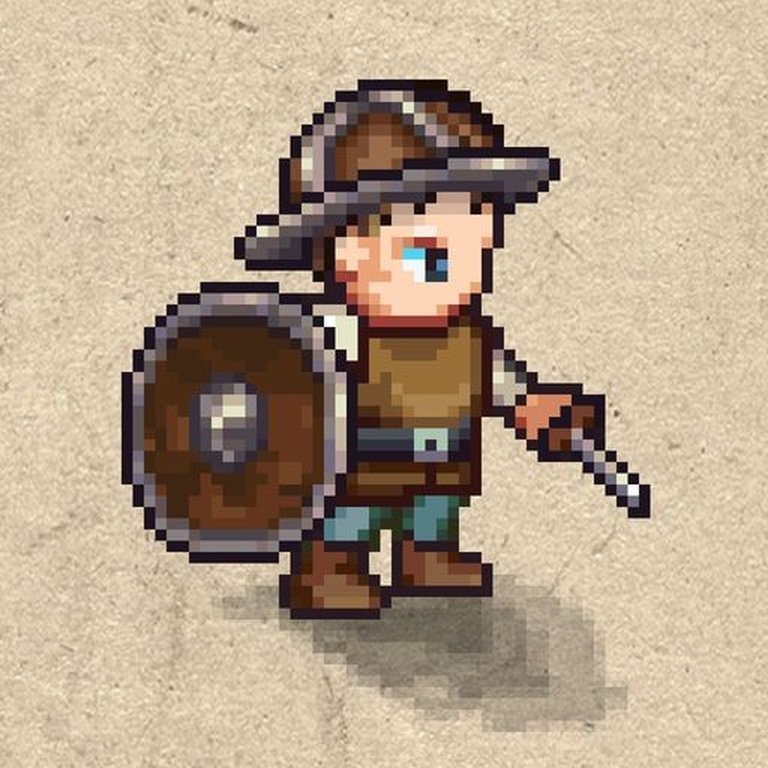
Gamebook: Pocket RPG is an interactive fantasy adventure that blends the charm of a classic gamebook with digital gameplay. Set in the perilous Land of Lanthir Lamath, ruled by wicked skeletons, players navigate through up to 100 pages of text-based exploration, battling monsters, discovering items, and uncovering magic. With simple rules and a top-down perspective, the game offers a choose-your-own-adventure experience, allowing players to move freely through rooms, make critical decisions, and immerse themselves in a thrilling, fantasy-driven narrative.
Gamebook: Pocket RPG Reviews & Reception
metacritic.com (40/100): Even the most diehard of gamebook fans is going to be hard-pressed to get much out of Gamebook: Pocket RPG.
hardcoredroid.com : I would call Gamebook Pocket RPG a graphic novel before calling it a game. There is no real interaction, no sense of the player’s decision having any consequence.
metacritic.com (40/100): Even the most diehard of gamebook fans is going to be hard-pressed to get much out of Gamebook: Pocket RPG.
Gamebook: Pocket RPG: A Half-Baked Love Letter to a Bygone Era
Introduction: The Illusion of Interactivity
Gamebook: Pocket RPG (2015) is a curious artifact—a digital adaptation of a printed gamebook that struggles to justify its existence as a video game. Developed by Slovakian studio LL studio, it attempts to blend the nostalgia of “choose your own adventure” books with the trappings of a fantasy RPG, but the result is a hollow, linear experience that feels more like a graphic novel than an interactive medium. While its pixel-art aesthetic and self-aware humor occasionally charm, the game’s lack of meaningful player agency, repetitive structure, and brevity make it a forgettable experiment in hybrid storytelling.
This review will dissect Gamebook: Pocket RPG from every angle—its development history, narrative structure, gameplay mechanics, and cultural significance—to determine whether it’s a clever homage or a missed opportunity.
Development History & Context: A Printed Game Forced Into Digital
The Studio and Its Vision
LL studio, a small Slovakian developer, conceived Gamebook: Pocket RPG as a dual-format project: a physical gamebook and a digital adaptation. The printed version, released in 2015, was a spiral-bound, pocket-sized book with 100 pages (80 of gameplay, 20 extras) featuring pixel-art illustrations and a branching narrative. The digital version, released simultaneously across Android, iOS, and Windows, was essentially a page-by-page recreation of the book, with touch controls replacing physical page-turning.
The studio’s intent was clear: to revive the gamebook format for modern audiences. However, their approach was overly literal. Unlike more ambitious adaptations (e.g., Joe Dever’s Lone Wolf series), Gamebook: Pocket RPG made no effort to enhance the experience with animations, sound, or deeper interactivity. The result is a digital product that feels like an afterthought—a “soulless version,” as the developers themselves admitted in their FAQ.
Technological Constraints and Market Trends
The mid-2010s saw a resurgence of interest in gamebooks, fueled by mobile apps and nostalgia for ’80s and ’90s interactive fiction. Titles like Lifeline (2015) and Choices: Stories You Play (2016) proved that text-based adventures could thrive in the digital age. However, Gamebook: Pocket RPG arrived at an awkward juncture: it was neither a fully realized game nor a compelling standalone book.
The game’s development was constrained by its origins. The printed version’s linear structure and static illustrations were directly ported to digital, leaving little room for innovation. The studio’s use of GameMaker Studio (a tool better suited for 2D platformers) further limited their ability to create a dynamic experience.
The Gaming Landscape in 2015
By 2015, mobile gaming was dominated by free-to-play titles with deep progression systems (Clash of Clans, Hearthstone). Gamebook: Pocket RPG, priced at $2.99, offered a 15-minute experience with no replayability—a hard sell in an era where players expected hours of content for their money. Its competition wasn’t just other gamebooks but the entire mobile RPG market, where even indie titles like Pocket RPG (2011) offered real-time combat and loot systems.
Narrative & Thematic Deep Dive: A Linear Adventure in Disguise
Plot and Structure
Gamebook: Pocket RPG casts players as an unnamed adventurer in the Land of Lanthir Lamath, a fantasy realm overrun by skeletons. The premise is simple: navigate dungeons, fight monsters, and uncover the secrets of the kingdom. The narrative unfolds through a series of static pages, each depicting a room, encounter, or event. Players “progress” by tapping page numbers (e.g., “Go to page 42”) to move through the story.
However, the game’s branching structure is an illusion. Most choices lead to the same outcomes, and the narrative is rigidly linear. For example:
– In one sequence, players enter a hallway with three exits. Choosing “right” leads to a skeleton encounter, but the game provides no way to fight—players must retreat and find a weapon elsewhere.
– Later, presenting a skeleton skull to guards grants passage, but the reasoning is arbitrary. There’s no logic to the world; it’s a series of disconnected vignettes.
Characters and Dialogue
The game’s characters are one-dimensional, existing only to deliver exposition or jokes. The skeletons, the primary antagonists, taunt players with lines like:
“Grr… Oh, you Rookie! Like clicking buttons? Bad cess to you, you slubberdegullian!”
The dialogue’s self-aware humor is the game’s strongest suit, poking fun at RPG tropes (e.g., “You found a sword! Now you can fight!”). However, the translation from Slovakian to English is uneven, leading to awkward phrasing and confusion. The tone oscillates between whimsical and nonsensical, undercutting any attempt at immersion.
Themes: A Meta-Commentary on RPGs
Gamebook: Pocket RPG doesn’t take itself seriously, and that’s its saving grace. It’s a parody of classic RPGs, mocking their repetitive structures and clichéd narratives. The game’s brevity and lack of depth reinforce this satire—it’s a joke about how little effort some games put into storytelling.
Yet, the satire feels toothless. Unlike The Stanley Parable (2013), which deconstructs player agency, Gamebook: Pocket RPG doesn’t challenge its audience. It’s content to be a shallow imitation of the games it mocks.
Gameplay Mechanics & Systems: The Illusion of Choice
Core Gameplay Loop
The game’s mechanics are stripped down to their bare essentials:
1. Navigation: Players tap page numbers to move between rooms.
2. Combat: Encounters are resolved with a single tap (e.g., “You fight the skeleton. You win.”).
3. Inventory: Items are collected automatically, with no management required.
There’s no skill system, no character progression, and no meaningful decisions. The “RPG” in the title is misleading—this is a visual novel with the interactivity of a PowerPoint presentation.
Combat and Progression
Combat is nonexistent. Players either win automatically or are forced to retreat. There’s no strategy, no risk, and no reward. The game’s description promises “magic” and “weapons,” but these are mere set dressing.
UI and Controls
The interface is minimalist: a static image, a block of text, and a list of page numbers to tap. The touch controls are responsive, but the experience is akin to reading a PDF. The lack of animations or sound effects makes the game feel inert.
Innovations and Flaws
The game’s only “innovation” is its hybrid format, but this is also its greatest flaw. By adhering so closely to the printed version, the developers sacrificed the potential of digital interactivity. Even simple additions—like animated transitions or sound effects—could have elevated the experience.
World-Building, Art & Sound: Aesthetic Over Substance
Setting and Atmosphere
The Land of Lanthir Lamath is a generic fantasy realm, populated by skeletons, dungeons, and forests. The world lacks depth, serving as little more than a backdrop for the game’s jokes. The pixel-art illustrations, while charming, are static and repetitive.
Visual Direction
The game’s art style is its strongest asset. The pixel-art scenes evoke classic RPGs like The Legend of Zelda (1986), and the character designs are expressive. However, the lack of animation robs the game of life. Even a simple flicker of torchlight would have added atmosphere.
Sound Design
There is none. The game is completely silent, a missed opportunity to enhance immersion. Even a basic soundtrack or sound effects (e.g., skeleton clattering, sword swings) would have made the world feel more alive.
Reception & Legacy: A Forgotten Experiment
Critical Reception
Gamebook: Pocket RPG received a lukewarm response. TouchArcade’s review (40/100) called it “hard-pressed to get much out of,” criticizing its lack of interactivity and brevity. Players on Hardcore Droid echoed these sentiments, noting that the game felt more like a book than a game.
Commercial Performance
The game’s sales figures are unknown, but its obscurity suggests it was a commercial failure. With no marketing push and a $2.99 price tag for a 15-minute experience, it struggled to find an audience.
Influence and Legacy
Gamebook: Pocket RPG had no discernible impact on the industry. It arrived too late to capitalize on the gamebook revival and offered too little to stand out. Its legacy is as a footnote—a curious experiment in hybrid storytelling that failed to innovate.
Conclusion: A Missed Opportunity
Gamebook: Pocket RPG is a well-intentioned but flawed experiment. Its self-aware humor and pixel-art charm are undercut by its lack of interactivity, brevity, and linear structure. As a digital adaptation of a printed gamebook, it fails to leverage the strengths of either medium.
Final Verdict: 4/10 – A forgettable curiosity, best experienced as a free demo.
While it’s not without charm, Gamebook: Pocket RPG is a reminder that not all nostalgia is worth reviving. The gamebook format deserves better—whether as a physical artifact or a fully realized digital experience. This half-baked hybrid satisfies neither.