
- Release Year: 2018
- Platforms: Windows
- Publisher: Raptor Claw Games
- Developer: Raptor Claw Games
- Genre: Simulation
- Perspective: Top-down
- Game Mode: Single-player
- Gameplay: Business simulation, Managerial
- Average Score: 81/100
Description
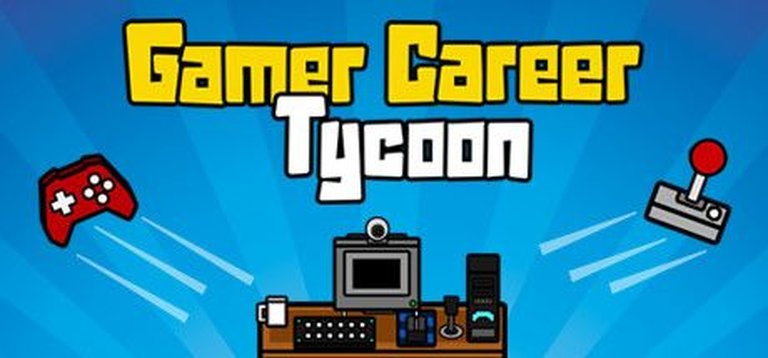
In ‘Gamer Career Tycoon’, you start as a humble gamer in the year 2000 and navigate through the world of esports and streaming. The game allows you to choose your path, whether it’s becoming a famous broadcaster or the best pro gamer. You’ll manage your gaming addiction, work, and recreational time while building your career and personal brand. With a customizable character system, you can tailor your attributes and perks to fit your playstyle, from a skilled aimer to a charismatic streamer.
Gameplay Videos
Where to Buy Gamer Career Tycoon
PC
Gamer Career Tycoon Guides & Walkthroughs
Gamer Career Tycoon: A Nostalgic Yet Flawed Dive into the Grind of Virtual Stardom
Introduction
In an era where streaming and esports dominate gaming culture, Gamer Career Tycoon (2018) arrived as a self-aware simulation of the very industry it inhabits. Developed by indie studio Raptor Claw Games, the title invites players to navigate the precarious balance between gaming obsession and real-world survival, offering a meta-commentary on the pursuit of viral fame. While its premise brims with potential, the game stumbles as both a managerial challenge and a narrative experience. This review argues that Gamer Career Tycoon is a charming but uneven experiment—one that captures the zeitgeist of gaming’s aspirational pipeline but falters under the weight of repetitive systems and unbalanced progression.
Development History & Context
The Indie Underdog Story
Raptor Claw Games, known for niche simulators like Boxing School and Gladiator School, positioned Gamer Career Tycoon as a love letter to gaming subcultures. Built in Unity and released on March 29, 2018, the game emerged during a boom in “meta” simulations—titles like Game Dev Tycoon and Youtubers Life capitalized on players’ fascination with behind-the-scenes creative processes. Yet Gamer Career Tycoon distinguished itself by focusing on the consumer rather than the creator, framing the player as a basement-dwelling aspirant rather than a corporate overlord.
A Product of Its Era
The game’s release coincided with the mainstream rise of Twitch and the professionalization of esports. However, its retro aesthetic (straddling early 2000s LAN party nostalgia and 2010s streaming hype) and modest technical scope—requiring only a DirectX 9-compatible GPU—reflected its indie limitations. Though ambitious in theme, its design echoed the “quantity over quality” approach of many low-budget simulations, prioritizing breadth of systems over depth.
Narrative & Thematic Deep Dive
A Satire of Gaming Hustle Culture
The game’s narrative is less a structured story than a series of vignettes lampooning gamer stereotypes. Players begin in 2000 as a broke enthusiast juggling part-time jobs and pixelated gaming marathons. The writing leans into absurdity: “Basement Dweller Mode” and tongue-in-cheek events like “StreamCon” mock the performative grind of content creation, while random pop-ups (“Your mom wants you to touch grass”) underscore the tension between virtual ambition and real-world responsibilities.
Characterization and Player Agency
Character creation lets players adopt archetypes like the “charismatic smoothtalker” or “skilled aimer,” but these traits rarely influence the narrative beyond stat bonuses. The lack of branching storylines or meaningful consequences for poor decisions (e.g., neglecting bills or sleep) undermines the promised RPG elements. Instead, the game’s true “story” emerges through its systemic grind—a cyclical climb from obscurity to stardom that mirrors the real-life monotony of algorithmic content chasing.
Gameplay Mechanics & Systems
The Dual Paths: Streamer vs. Esports Pro
At its core, Gamer Career Tycoon offers two career trajectories:
1. Streaming: Build a fanbase by selecting games to broadcast, optimizing stream quality, and managing viewer engagement.
2. Esports: Compete in ranked matches across eight genres (MOBA, FPS, etc.), attracting sponsors and joining teams.
While diverse on paper, these systems suffer from imbalance. Steam reviews and blogs like Gaming with Noobs note that streaming rapidly eclipses esports in profitability—by day 30, players often earn 20x more from subscriptions than tournament winnings. Esports contracts, meanwhile, feel superficial, reducing competitive play to menu navigation rather than skill-based gameplay.
Resource Management and Progression
Players juggle energy, money, and “research points” to upgrade gear, internet speed, and living conditions. However, the UI’s cluttered menus (a common critique in user reviews) complicate navigation, and late-game progression stalls as upgrades become prohibitively expensive without meaningful payoffs.
Innovation vs. tedium
The game’s most novel feature—letting players build and manage their own esports organizations—arrives too late to feel impactful. Reviews highlight minimal staff management and merch-selling mechanics, rendering this endgame content more decorative than strategic.
World-Building, Art & Sound
Aesthetic Ambition vs. Execution
The top-down, 2D art style evokes early The Sims titles, with chunky sprites and neon-lit gaming setups. While charming, environments lack interactivity, reducing the player’s apartment and StreamCon venues to static backdrops. The “retro” vibe is reinforced by a synth-heavy soundtrack praised in Steam tags, though tracks loop repetitively.
Atmosphere and Authenticity
Despite its simplicity, the game nails the atmosphere of early internet gaming culture—cringe usernames, dial-up references, and CRT monitor aesthetics. Yet its world feels frozen in time, never fully engaging with modern streaming’s complexities (e.g., algorithm manipulation or community toxicity).
Reception & Legacy
Critical and Commercial Performance
Gamer Career Tycoon garnered a “Mostly Positive” Steam rating (79% of 258 reviews), with players praising its humor and nostalgic appeal. However, the lack of professional critic reviews and a muted MobyGames presence underscore its niche status. Steambase.io estimates ~52,000 lifetime players, with a median playtime of 3.9 hours—suggesting many bounced off after initial novelty faded.
Industry Influence
While not a trailblazer, the game prefigured later titles like Streamer Life Simulator (2022) and The Quarry: A Content Creator’s Journey (2023), which expanded on its themes with deeper storytelling. Its legacy lies in its earnest, if flawed, attempt to simulate an industry often ignored by mainstream gaming narratives.
Conclusion
Gamer Career Tycoon is a paradoxical gem—a game about gaming that revels in its own absurdity yet struggles to transcend its mechanical shortcomings. Its best moments capture the Sisyphean hustle of digital fame, but unbalanced systems and shallow late-game content undermine its potential. For simulation enthusiasts, it remains a quirky time capsule of gaming’s aspirational era, albeit one best enjoyed in short bursts. In the pantheon of tycoon games, it’s neither a masterwork nor a disaster—simply a heartfelt, uneven ode to the grind we call “play.”
Final Verdict: A 7/10 experience—worth the $3.99 price tag for curious genre fans, but unlikely to ascend beyond cult status.