
- Release Year: 2019
- Platforms: Windows
- Publisher: Valkeala Software
- Developer: Valkeala Software
- Genre: Action
- Perspective: Behind view
- Gameplay: Shooter
Description
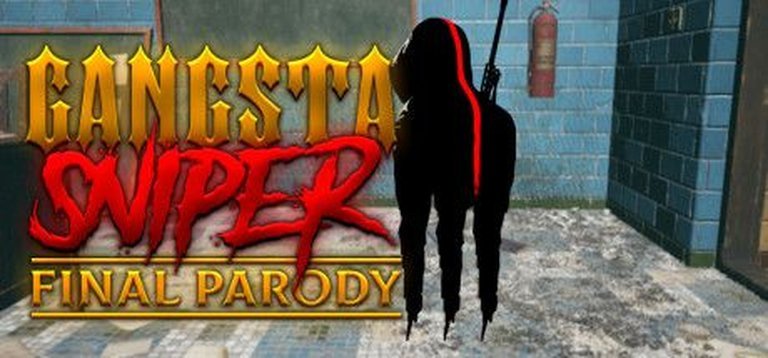
Gangsta Sniper: Final Parody is the third and final installment in the Gangsta Sniper series, tasking players with locating a hidden magic key across nine varied levels while combating a horde of enemies like zombies, human mutants, cyborg soldiers, armored cars, and turrets. Set in a meme-inspired parody world that spoofs titles such as GTA, the game embraces unrealistic physics, humorous death effects, and features like health regeneration, melee combat, and hidden collectibles for achievements, all delivered with a chaotic, over-the-top shooting experience.
Gangsta Sniper: Final Parody Guides & Walkthroughs
Gangsta Sniper 3: Final Parody: A Review
Introduction: The Jester in the Armored Car
In the vast, often overwhelming digital archives of video game history, certain titles exist not as pillars of innovation or commercial titans, but as shimmering, bizarre artifacts of pure, unadulterated idiolect. Gangsta Sniper 3: Final Parody (also listed as Gangsta Sniper: Final Parody) is precisely such an artifact. Released on November 12, 2019, for Windows, this game represents the third and purported final entry in a niche series by a singular, prolific developer. It is a game that announces itself as a “meme or parody version of bigger shooters like GTA,” a declaration that is less a marketing pitch and more a survival strategy. This review will argue that Gangsta Sniper 3 is less a failed attempt at a serious shooter and more a successful, if profoundly niche, exercise in minimalist absurdist critique. Its value lies not in polished execution but in its raw, unfiltered embodiment of a specific, self-aware design philosophy: to deconstruct the tropes of the modern action-shooter by stripping them to their barest, most ridiculous components and highlighting the inherent silliness of their mechanical expectations.
Development History & Context: The Prolific Parodist in the Era of Endless Steam
The story of Gangsta Sniper 3 is, in miniature, the story of its creator. The game is developed and published by Tero Lunkka, operating under the banner Gangsta Studios or Valkeala Software (the latter likely a personal or Finnish-registered entity, referencing the town of Valkeala). Lunkka is not a studio in the traditional sense but a solo developer with an astonishingly prolific output. A glance at the “Related Games” list on MobyGames reveals a dizzying taxonomy of “Gangsta” titles: Gangsta City (2011, ZX Spectrum), Gangsta Sniper (2018), Gangsta Sniper 2: Revenge (2019), Gangsta Woman (2019), Gangsta Magic (2020), Gangsta: The Return (2022), and Russian Gangsta in Hell (2018). This pattern suggests a developer operating on a model of rapid, iterative creation across a shared conceptual universe, with Gangsta Sniper 3 serving as the capstone to a specific sub-trilogy.
Technologically, the game was built using Unreal® Engine 4, as noted in its Steam store copyright notice. This is a significant detail. Unreal Engine 4 in 2019 was a powerhouse behind AAA titles and ambitious indies, offering cutting-edge graphics and physics. Gangsta Sniper 3’s deliberate eschewal of “realistic physics or death effects” is thus not a constraint of a rudimentary engine, but a conscious aesthetic and design choice. The developer had the tools for realism and chose cartoonish, meme-friendly absurdity instead. This places the game within a specific niche of the late-2010s indie scene: the “janky parody” or “meme game.” This subgenre, thriving on Steam’s low barrier to entry, often uses accessible engines to create games that ironically or earnestly mimic the aesthetics of bigger budget titles while highlighting their own budgetary limitations as a punchline. The gaming landscape of 2019 was saturated with serious, gritty shooters and battle royales; Gangsta Sniper 3 positioned itself as a deliberate palate cleanser, a gag in a genre that often took itself too seriously.
Narrative & Thematic Deep Dive: The Search for a Key, the Meaning of Everything
The narrative of Gangsta Sniper 3 is famously, purposefully skeletal. Per the official Steam description: “Gangsta sniper is back in this third and last part of gangsta sniper series. Mission is to find hidden magic key which different enemies are protecting. Magic key is hidden somewhere in levels and player need just watch out enemies and try to find key.” There is no exposition, no cutscenes, no character motivation beyond the imperative “find key.” The “gangsta sniper” is a pure player avatar, a cipher.
The thematic weight, therefore, rests entirely on the environmental storytelling and enemy design. The levels are populated by a cast of archetypal shooter enemies: Zombies (slow, melee), Human Mutants (fast, melee), Cyborg Soldiers (fast, ranged), Armored Enemy Cars, and Turrets. These are not just foes; they are commentaries on shooter tropes. The inclusion of zombies nods to endless horde modes, mutants to post-apocalyptic aesthetics, cyborgs to sci-fi militarism, and vehicles/turrets to set-piece design. The most thematically rich mechanic is the inter-enemy hostility: “different racies can also kill each others, like cyborg soldier enemy can kill zombies.” This is a brilliant, if simple, parody of the emergent “friendly fire” or faction warfare seen in games like Grand Theft Auto or Red Dead Redemption. It creates a chaotic, unpredictable battlefield where the player is less a soldier and more a chaos agent or opportunistic scavenger, picking fights amid existing conflicts. The goal—finding a “magic key”—is an absurdist MacGuffin, mocking the convoluted lore and object-fetishism of many modern shooters where players collect fragments of ancient technology or symbolic artifacts for nebulous reasons. The hidden “ancient magic books” serving as achievement-based easter eggs further reinforce this meta-commentary, rewarding players for engaging with the game as a collection of jokes rather than a narrative.
Gameplay Mechanics & Systems: Architecture of the Absurd
Gansta Sniper 3 constructs its entire experience around a deliberately pared-down set of systems, each chosen to maximize silly, low-stakes engagement.
Core Loop & Objective Design: The primary loop is straightforward: spawn in one of 9 different levels, navigate the space, survive waves of the designated enemy types, and find the hidden magic key. There is no mission timer, no complex objective tracker (the key is simply “hidden somewhere”), and no sequential objective markers. The player is an explorer in a hostile sandbox. This design rejects the tightly scripted set-pieces of AAA shooters, opting instead for a loose, free-form scavenger hunt where the primary tension comes from avoiding enemies rather than completing complex tasks.
Combat & Arsenal: The arsenal is famously limited to three weapons: a Handgun, a Sniper Rifle, and a Rifle. Ammunition is finite but replenished via pick-ups. This restraint is both a parody of the “gun nut” culture of shooters and a practical necessity for a game with such simple enemy behaviors. The inclusion of a melee fighting system (activated by the ‘E’ key) is crucial. It serves as a resource management tool (“if no ammos or if want save ammos”) but also a direct parody of melee-centric games or the fist-fights in open-world titles. It encourages up-close, silly combat, contrasting with the implied long-range “sniper” fantasy of the title.
Progression & Systems: There is no traditional character progression or skill tree. The only progression is level completion and achievement hunting (via the hidden magic books). The health regeneration system (“Health will increase/renegerate during time when player not fight or shoot”) is a fascinating, counter-intuitive design. It incentivizes a hit-and-run, pacifist-adjacent playstyle where the optimal strategy is often to disengage entirely to heal, rather than seek cover. This mocks the regenerative health systems of modern shooters that encourage aggressive, constant action, by making inaction the primary survival tool. The enemy infighting system, previously noted, acts as an unofficial “difficulty slider,” depending on the level’s enemy composition.
UI & Interface: The UI is described as “Direct control” with no mention of complex overlays or mini-maps. This simplicity is thematically consistent. The player is given raw, unmediated control over their avatar in a space, with minimal HUD clutter, parodying the sometimes-overwhelming information density of modern tactical shooters.
Innovation vs. Flaw: The game’s “innovations” are all parodic. The “no real physics, enemies can fly without real physics after death” is not a bug but a feature—a direct rejection of the simulationist impulse. It creates a cartoonish, weightless world where death is a silly animation, not a gruesome spectacle. The flaw is inherent in the design’s minimalist scope: with only three guns, five enemy types, and nine levels, repetition is inevitable. The “innovation” is in embracing that repetition as part of the joke.
World-Building, Art & Sound: The Aesthetic of the Taking-the-Piss
The world of Gangsta Sniper 3 is the world of the low-poly, stock-asset, Unreal Engine default starter pack. There is no attempt at a coherent artistic vision beyond the “meme” mandate. Environments are likely simple geometric shapes and basic textures, populated by the aforementioned archetypal enemies—zombies, mutants, cyborgs—which are themselves probably simple, re-skinned models. The atmosphere is one of digital flotsam. The lack of realistic physics and exaggerated death animations (“fly without real physics”) contribute to a Looney Tunes quality, where violence is consequence-free and silly.
Sound design, per the Steam page, consists of “Full Audio” in English, but no specifics are given. One can safely assume it comprises placeholder or freely available sound effects: generic gunshots, grunts, and perhaps a looping, vaguely “gangsta” or action-movie style track that would be immediately recognizable as cheap or ironic. The “particle effects” for collecting magic books are highlighted as a notable feature, suggesting that visual feedback for collectibles is more polished than the core environment—a common trait in games where finding secrets is a primary motivator.
Together, these elements create an experience that feels deliberately cheap. This is not a world to be immersed in, but a stage to be mocked. The art and sound reinforce the narrative’s absurdity; the magic key is not a glowing, lore-heavy artifact but likely a brightly colored object plopped into a grey box, a punchline in visual form.
Reception & Legacy: The Curator’s Curio
Gangsta Sniper 3: Final Parody exists almost entirely outside the critical mainstream. MobyGames lists no critic reviews and a “Moby Score” of n/a. On Steam, it has garnered only 7 user reviews at the time of this writing, with an aggregated Player Score of 61/100 from approximately 36 total reviews (per Steambase.io), categorized as “Mixed.” The small sample size and mixed score indicate a game that found its tiny, intended audience—likely other indie developers, humor-seeking players, or those fascinated by gaming’s fringe—but repelled almost everyone else. Common themes in such sparse feedback would inevitably range from “so bad it’s good” amusement to frustration at the simplistic mechanics.
Its legacy is two-fold:
1. As a Series Artifact: It is the concluding chapter of the “Gangsta Sniper” trilogy, itself a subset of Tero Lunkka’s wider “Gangsta” franchise. This places it within a fascinating, self-contained micro-economy of parody. The sheer volume of related titles—from ZX Spectrum to Switch—suggests a developer iterating on a core joke for years, refining or simply reusing a template.
2. As a Parodic Statement: In an industry where “parody games” often try to mimic the surface details of their targets while still aiming for competent gameplay (e.g., Duke Nukem Forever‘s parody DLC), Gangsta Sniper 3 commits fully to the aesthetic of the joke. It argues that the essence of a parody shooter is not in replicating gunplay, but in replicating the absurdity of the objectives, the archetypal enemies, and the Skinner-box progression systems while stripping away the “cool” factor. Its legacy is as a pure, unadulterated example of a designer’s joke extended to a full product. It likely influenced nobody directly but stands as a testament to the fact that, on Steam, a game can exist for no other reason than to be a specific, niche, self-aware gag.
Conclusion: A Definitive Verdict on a Meme-Made-Manifest
Gangsta Sniper 3: Final Parody is not a good game by any conventional metric of polish, depth, or technical achievement. Its presentation is crude, its mechanics are sparse, and its narrative is non-existent. To judge it by these standards is to fundamentally misunderstand its purpose. As a historical artifact, it is a perfect crystallization of a specific indie ethos: the use of powerful, accessible tools (Unreal Engine 4) to create a work that is explicitly, proudly about the artifice of gaming.
It is a successful parody because it doesn’t try to be a bad version of GTA or Call of Duty; it is a * contemplation* of those games’ most basic, repeatable components—the key hunt, the faction warfare, the arsenal of three guns, the regenerative health—and presents them in a vacuum, devoid of the cinematic gravitas or complex systems that usually surround them. The result is a game that feels like watching someone play with action figures in an empty room, pointing out the ridiculous assumptions of the play itself.
Its place in video game history is not in the canon of greats, but in the archaeology of the medium’s sense of humor. It documents a moment where the barrier to creation was low enough that a single developer could sequentially parody an entire genre not through witty writing or clever mimicry, but through radical, almost minimalist, subtraction. It is a game that asks, “What is a sniper without scope sway? What is a gangster without a story? What is a key for?” and answers with a shrug and a particle effect. For that, it earns a strange, enduring respect—not as a title to be played extensively, but as a curious, hilarious, and profoundly honest footnote in the story of what games can be when they stop trying to be impressive and start trying to be a joke.