
- Release Year: 2005
- Platforms: Windows
- Publisher: Big Fish Games, Inc
- Developer: FunPause
- Genre: Strategy, Tactics
- Perspective: Top-down
- Game Mode: Single-player
- Gameplay: Turn-based combat
- Setting: Fantasy
Description
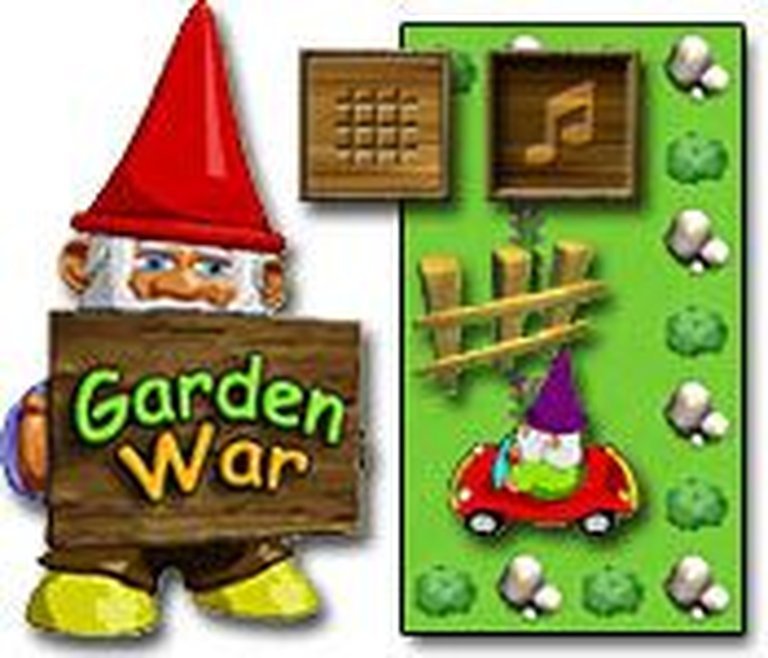
Garden War is a turn-based strategy game where flowers have declared war on garden dwarves. Players command an army of dwarves, including infantry, tanks, and amphibious units, each with unique movement and combat capabilities. The goal is to outmaneuver and destroy the enemy forces in a top-down, fantasy setting using tactical positioning and ranged attacks.
Where to Buy Garden War
PC
Garden War: A Forgotten Gem of Turn-Based Strategy
Introduction
In the vast landscape of video game history, certain titles slip through the cracks, overshadowed by their more illustrious contemporaries. Garden War, a turn-based strategy game released in 2005 by FunPause and published by Big Fish Games, is one such title. While it may not have the name recognition of Civilization or Advance Wars, Garden War offers a charming, if simplistic, take on the genre that deserves a closer look. This review aims to shed light on this overlooked game, exploring its development, gameplay, and legacy within the broader context of strategy gaming.
Development History & Context
Garden War emerged during a period when turn-based strategy games were experiencing a renaissance. Titles like Advance Wars: Dual Strike (2005) and Civilization IV (2005) dominated the landscape, but smaller studios were also experimenting with the genre. FunPause, a relatively obscure developer, sought to carve out a niche with Garden War, a game that blended whimsical aesthetics with straightforward tactical gameplay.
The game was developed by a small team of just three people: Emmanuel Marty (programming), Jerome Grandsire (graphics), and Andrzej Dobrowolski (music). This lean development team was a product of the era, where indie studios often operated with minimal resources. The game’s shareware business model, which allowed players to try a limited version before purchasing the full game, was also indicative of the early 2000s PC gaming scene.
Technologically, Garden War was constrained by the hardware of its time. The game’s top-down perspective and simple 2D graphics were a far cry from the 3D renderings of more mainstream titles. However, these limitations also allowed the game to run smoothly on lower-end PCs, making it accessible to a broader audience.
Narrative & Thematic Deep Dive
Garden War’s narrative is as straightforward as its gameplay. The premise is simple: the flowers have declared war on the garden dwarves, and it’s up to the player to lead their army to victory. There’s no complex lore or deep character development here—just a lighthearted, almost absurd conflict that serves as a backdrop for the tactical gameplay.
The game’s themes are similarly minimalistic. At its core, Garden War is about strategy and resource management, with a touch of whimsy thrown in. The dwarves, with their red hats and tiny tanks, are charming in their simplicity, and the flowers, while antagonistic, are more of a nuisance than a true threat. The game doesn’t take itself too seriously, and that’s part of its appeal.
Gameplay Mechanics & Systems
Garden War’s gameplay is a classic example of turn-based strategy. Players take turns moving their units across a grid-based map, engaging in combat with the enemy. The game features three unit types:
- Infantry: Dwarves in red hats on foot. These units have limited movement and attack range but are essential for early-game skirmishes.
- Tanks: Dwarves in red hats riding in little red cars. These units can travel farther and fire farther, making them ideal for mid-to-late-game combat.
- Amphibious Units: Dwarves in blue hats on foot. These units can cross water, adding a layer of tactical depth to the gameplay.
The objective is straightforward: destroy all enemy units before they destroy yours. The game’s simplicity is both its strength and its weakness. On one hand, it’s easy to pick up and play, making it accessible to casual gamers. On the other hand, the lack of depth may leave hardcore strategy fans wanting more.
The UI is functional but unremarkable. Players use the mouse to select and move units, and the game’s top-down perspective provides a clear view of the battlefield. However, the lack of more advanced features, such as fog of war or terrain effects, limits the game’s strategic complexity.
World-Building, Art & Sound
Garden War’s world is a whimsical garden setting, complete with flowers, dwarves, and tiny tanks. The art style is simple but charming, with bright colors and cartoonish designs that give the game a lighthearted feel. The sound design is equally unassuming, with a cheerful soundtrack that complements the game’s playful tone.
The game’s setting is more of a backdrop than a fully realized world. There’s no exploration or interaction with the environment beyond the battlefield, and the lack of a deeper narrative means that the world feels more like a stage than a living, breathing place. However, the game’s simplicity is part of its charm, and the bright, colorful visuals make it a pleasant experience overall.
Reception & Legacy
Garden War was released to little fanfare in 2005. The game’s lack of marketing and its shareware distribution model meant that it never achieved widespread recognition. Critical reception was similarly muted, with the game failing to make a significant impact on the strategy genre.
However, Garden War has developed a small but dedicated following over the years. Fans of the game appreciate its simplicity and charm, and it has become a cult classic among turn-based strategy enthusiasts. The game’s legacy is modest, but it serves as a reminder of the creativity and innovation that can emerge from small, independent studios.
Conclusion
Garden War is a game that defies easy categorization. It’s not a masterpiece of strategy gaming, nor is it a groundbreaking innovation in the genre. Instead, it’s a charming, straightforward turn-based strategy game that offers a pleasant, if unremarkable, experience. Its simplicity is both its greatest strength and its most significant limitation, making it a game that’s easy to pick up but equally easy to put down.
In the grand tapestry of video game history, Garden War is a minor footnote. It doesn’t have the name recognition of Civilization or the tactical depth of Advance Wars, but it carves out its own niche with its whimsical setting and straightforward gameplay. For fans of turn-based strategy games looking for something a little different, Garden War is worth a try. It may not be a classic, but it’s a reminder that sometimes, simplicity can be its own reward.
Final Verdict: 6.5/10 – A charming but forgettable turn-based strategy game that’s worth a look for fans of the genre.