
- Release Year: 2004
- Platforms: Windows
- Publisher: System Error
- Developer: System Error
- Genre: Adventure
- Perspective: 3rd-person
- Game Mode: Single-player
- Gameplay: Graphic adventure, Point-and-click, Puzzle elements
- Setting: Contemporary, Suburban
- Average Score: 79/100
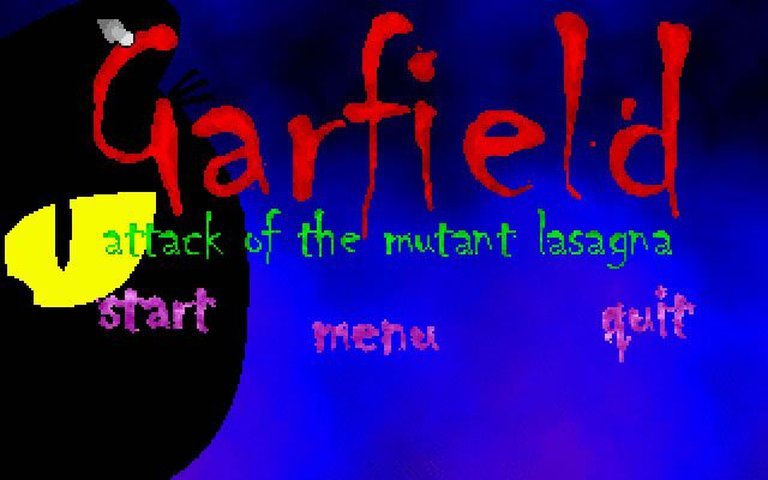
Description
Garfield: Attack of the Mutant Lasagna is a freeware fan-made point-and-click adventure game where Garfield’s routine is shattered by a chemical spill that mutates wheat into lasagna creatures, forcing him to embark on a quest across various town locations—including Jon’s house, a TV station, parks, and woods—to restore peace, all while interacting with familiar characters from the comics in a humorous, puzzle-filled experience that stays true to the original drawing style.
Gameplay Videos
Garfield: Attack of the Mutant Lasagna Guides & Walkthroughs
Garfield: Attack of the Mutant Lasagna Reviews & Reception
homeoftheunderdogs.net (83.6/100): Highly recommended!
myabandonware.com (94/100): Highly recommended!
squakenet.com : So, go ahead, give it a go, it won’t disappoint.
Garfield: Attack of the Mutant Lasagna: Review
Introduction: The Monday That Changed Everything
In the annals of video game history, few titles capture the volatile intersection of passionate fan creativity and stringent intellectual property law with the stark clarity of Garfield: Attack of the Mutant Lasagna. Released in March 2004, this freeware point-and-click adventure wasn’t just another tie-in; it was a meticulously crafted love letter to Jim Davis’s iconic comic strip, built by a dedicated fan using accessible tools. Its blistering four-day lifespan—terminated by a copyright infringement notice from PAWS Inc.—cements it as a cultural ghost, a “what could have been” that paradoxically achieved legendary status precisely because it was silenced. This review argues that Attack of the Mutant Lasagna stands as a landmark in fan-made game development, a testament to the power of the Adventure Game Studio (AGS) engine that achieved a level of polish, length, and comedic fidelity rivaling commercial releases of its era. Its legacy is dual: a brilliant, hilarious adventure game and a cautionary tale about the precarious existence of unlicensed works in a corporate-dominated media landscape.
Development History & Context: The AGS Renaissance and a Legal Guillotine
The Studio and Vision: The game was developed by “System Error,” an entity credited with both development and publishing, with the singular creative force behind the project listed as Kairus (responsible for artwork, scripting, graphics, and music). This points to a classic one-person or very small team effort, common in the early 2000s freeware and shareware scenes. The vision was explicitly to create a “commercial-sized” adventure game that was utterly faithful to the tone, characters, and humor of the original comics.
Technological Context: The AGS Engine: The choice of Adventure Game Studio (AGS) was pivotal. Launched in 1997, AGS democratized graphic adventure development by providing a robust, accessible framework for creating LucasArts-style point-and-click games without needing programming expertise. By 2004, AGS had fostered a vibrant community that produced high-quality fan games and original titles. Attack of the Mutant Lasagna exemplifies AGS’s potential: it features a full saving system, keyboard shortcuts, a verb interface, and original music and sound effects—features that elevated it above many amateur projects.
The Gaming Landscape: 2004 was a twilight period for the classic point-and-click genre. Major studios had largely moved on, but a passionate indie and fan community kept the format alive through tools like AGS. The game entered this scene as a polished, lengthy, and witty entry that could comfortably sit alongside the classics it emulated. Its release coincided with a growing online distribution ecosystem (via sites like Home of the Underdogs and Curly’s World of Freeware) that allowed such projects to find an audience.
The Legal Cloud: The game’s most defining historical context is its immediate legality. As noted in MobyGames’ trivia, “Only four days after the release, PAWS Inc., who holds the copyright over Jim Davis’ creations, forced System Error to take the game down.” This swift action is a textbook case of copyright enforcement in the digital age. The game’s subsequent archival on sites like the Internet Archive and Home of the Underdogs speaks to the preservationist efforts of the abandonware and fan communities, ensuring its survival despite its official erasure.
Narrative & Thematic Deep Dive: Lasagna, Laziness, and Latent Heroism
Plot Synopsis: The narrative is a perfect fusion of Garfield’s core concerns and classic B-movie sci-fi tropes. The inciting incident is the loss of a chemical container from “The Big Lab,” which spills radioactive material onto wheat crops. This transforms the wheat into “strange creatures”—sentient, hostile mutant food, primarily lasagna, that overrun the town. Garfield, rousted from his routine of eating and sleeping, must embark on a quest to save his town, his friends, and, most critically, his dinner. The journey takes him from his hometown to the Yuck TV station, a park, the outskirts, woods, alleys, and Jon’s house.
Character & Dialogue: The game’s greatest triumph is its character fidelity. Kairus ingeniously wove the entire familiar cast into the plot:
* Jon Arbuckle: The ever-suffering owner is a source of obliviousness and minor plot catalysts (e.g., grandmother-related quests).
* Odie: The simple-minded dog provides physical comedy and occasional, accidental assistance.
* Nermal: The smug “world’s cutest kitten” is a perfect irritant to Garfield, with dialogue dripping with manufactured innocence.
* Arlene: Garfield’s sometimes-girlfriend appears with her signature blend of flirtation and annoyance.
* Liz: The veterinarian is a voice of reason and possible romantic interest, handled with surprising subtlety.
* Guido: The streetwise stray mouse adds a new, dimension to Garfield’s world.
The dialogue is consistently praised as “well-written and… faithful to the spirit of the comic.” Garfield’s trademark sarcastic asides, delivered through thought bubbles and action descriptions, are abundant. The game captures his voice impeccably: a blend of lazy contempt, culinary obsession, and reluctant heroism.
Themes: The plot serves as a vehicle to explore foundational Garfield themes:
1. The Tyranny of Routine vs. Epic Necessity: The entire conflict forces Garfield to abandon his core identity (eating, sleeping, avoiding exertion) for a greater good. The humor springs from his extreme reluctance and the myriad ways he tries to work around the adventure.
2. Lasagna as Sacred Object: The threat isn’t just to the town; it’s to lasagna itself. The mutant lasagna is both the monster and the endangered resource, creating a bizarre existential crisis for the protagonist.
3. Satire of Corporate/Scientific Hubris: “The Big Lab” and the chemical spill parody the careless experimentation tropes of 1950s sci-fi, fitting neatly into the comic’s occasional jabs at modern life.
4. Suburban Alienation: The game’s locales—TV stations, parks, alleys, a grandmother’s house—map directly onto the comic’s setting, turning mundane Garfield environments into zones of paranormal activity.
Gameplay Mechanics & Systems: A Masterclass in Accessible Design
Core Loop & Interface: The game employs a classic third-person point-and-click interface via AGS. Moving the cursor to the bottom of the screen reveals the verb menu: Look, Use, Move, Pick Up, Talk, Give, etc. This interface is a direct descendant of Maniac Mansion and The Secret of Monkey Island, making it instantly familiar to adventure veterans. The sourcing notes the convenience of keyboard shortcuts, a quality-of-life feature that speeds up gameplay.
Puzzle Design: This is where the game distinguishes itself from many amateur projects. Reviews consistently highlight its puzzles as a strength:
* Logical & Integrated: They avoid “pixel hunts” and trial-and-error. Solutions are rooted in the game world’s logic and Garfield’s personality (e.g., using food to manipulate situations).
* Multi-Step & Layered: The example given—Garfield needing to disguise himself to enter a “no pets allowed” store—is emblematic. This requires a chain of reasoning: finding a disguise, sourcing materials, possibly tricking another character. These are “puzzles within puzzles.”
* Originality within Constraint: The premise provides unique puzzle opportunities: dealing with sentient, hostile food items, using lasagna as bait or a tool, navigating a town where everyday objects have been mutated.
Progression & Length: The game’s scope is its most frequently praised attribute. Described as “commercial-sized” and taking “about 15 hours to beat,” it features a large map with interconnected locations (Jon’s house, Yuck TV, woods, etc.). This substantial length, filled with “hilarious cut-scenes,” was Remarkable for a free fan project and contributed significantly to its reputation as a “complete” experience.
Systems: It includes a full saving/loading system, essential for such a long game. The use of 16-bit color and smooth animations (detailed below) enhances the overall presentation.
World-Building, Art & Sound: A Strip Come to Life
Visual Direction & Art Style: The game uses 16-bit color graphics that are exceptionally faithful to Jim Davis’s original comic strip style. The hand-drawn backgrounds capture the bold lines, exaggerated perspectives, and vibrant yet simple aesthetic of the source material. Character sprites are fluidly animated, with Garfield’s idle animations (stretching, yawning, scratching) perfectly encapsulating his lazy essence. Even minor characters like Nermal and Arlene receive distinct, expressive animation cycles. The “mutant” food creatures are designed with a tongue-in-cheek grotesquerie that balances menace with the game’s cartoonish tone.
Sound Design: The game features an original soundtrack and sound effects. The music is described as “catchy” and appropriately situational—lighthearted for exploration, tense for encounters with mutants. Sound effects are whimsical and memorable, from Garfield’s iconic stomach rumble to the squelching noises of mutant lasagna. This audio layer significantly boosts immersion and comedic timing.
World-Building Through Location: The choice of locations is key. It doesn’t just recreate Garfield’s living room; it expands his universe logically:
* Yuck TV: A parody of low-budget television, filled with puns and production chaos.
* The Park: A familiar comic setting turned eerie with mutant flora.
* The Alleys & Outskirts: Classic noir-tinged adventure game locations that fit Garfield’s nocturnal prowling.
* Jon’s House: The primary hub, filled with domestic traps and opportunities.
The atmosphere successfully balances the comic’s cozy familiarity with the adventure’s new, radioactively-tinged threats.
Reception & Legacy: A Critical Curio with a Cult Heart
Contemporary Reception (2004): Reception at launch was limited and mixed, hampered by its immediate removal.
* Critical: Only one critic review is recorded on MobyGames (from PlnéHry.cz/iDNES.cz hry), scoring it 60/100. The Czech review calls it “one of the best freely distributable adventures” and “strongly recommended” for those wanting a good laugh, suggesting quality but perhaps some polish issues.
* Player: Player ratings on MobyGames average 3.5/5 (from 5 ratings). Sites like Home of the Underdogs offer a glowing 8.36/10 (from 36 votes), praising it as a “great fanmade adventure,” “faithful to the spirit,” with “original puzzles” and “commercial-sized” length. My Abandonware users rated it 4.7/5 (10 votes).
Evolving Legacy: Its forced takedown ironically fueled its legend. It became a prized “abandonware” artifact, preserved on the Internet Archive and download sites. Reviews written years later (like those on My Abandonware and Retro Replay) consistently reaffirm its quality, highlighting its surprising depth and charm. Its mention in videos (e.g., “BrutalMoose”) brought it to new, retro-gaming audiences. It is now categorized on MobyGames under “Games involved in legal disputes” and “Garfield licensees,” serving as a permanent case study.
Influence & Place in History:
1. The AGS Fan-Game Peak: It represents a high-water mark for fan games using AGS, demonstrating the engine’s capability for a long, polished, original-feeling experience based on a major license.
2. A Cautionary Tale: Its legal fate is a standard reference point in discussions about copyright and fan labor. It shows the swift, uncompromising stance of IP holders like PAWS Inc., even for non-commercial, passion projects that arguably promote the brand.
3. Cult Status: Within the niche of “good Garfield games” (a category few remember), it is frequently the top-listed title. It outperforms many official, lesser Garfield games in terms of ambition and fan affection.
4. Preservation Paradox: Its illegal status means it exists in a liminal space—not officially recognized, but preserved and celebrated by communities that value game history beyond corporate-approved narratives.
Conclusion: The Ghost in the Archive
Garfield: Attack of the Mutant Lasagna is far more than its absurdist title suggests. It is a polished, hilarious, and ambitiously large point-and-click adventure that captures the essence of its source material with rare skill. Its puzzle design is thoughtful and integrated, its characters are pitch-perfect, and its world feels both authentically Garfield and creatively expanded. Technically, for a one-person AGS project, it is an impressive feat of scope and presentation.
However, its historical significance is inextricably tied to its premature death. The four-day lifespan is not a footnote; it is the central drama of its existence. It is a ghost—a fully-realized game that was officially “unmade.” This gives it a poignant, bittersweet aura. It exists as a testament to what dedicated fans can achieve with the right tools and love for the source material, and simultaneously as a stark reminder of the legal walls that can instantly crush such endeavors.
Final Verdict: In the history of video games, Garfield: Attack of the Mutant Lasagna is a crucial cult artifact. It is not a lost masterpiece of the mainstream canon, but it is undoubtedly a masterpiece of fan passion. For adventure game aficionados, it is a highly recommended, 15-hour romp filled with clever puzzles and authentic humor. For historians, it is an essential case study in the lifecycle of fan production, the capabilities of early-2000s indie tools, and the relentless enforcement of copyright. Its place is secure not on store shelves, but in the archives, forums, and memories of those who value the undying, if legally fraught, spirit of creative fandom. It is the lasagna that got away, but its aroma lingers in the history books.