
- Release Year: 2019
- Platforms: Nintendo Switch, Windows Apps, Windows, Xbox Cloud Gaming, Xbox One
- Publisher: Devolver Digital, Inc.
- Developer: Doinksoft
- Genre: Action, Metroidvania, Platform, Shooter
- Perspective: Side view
- Game Mode: Single-player
- Gameplay: Boss battles, Exploration, Metroidvania, Platform, Shooter
- Setting: Fantasy, Sci-fi
- Average Score: 83/100
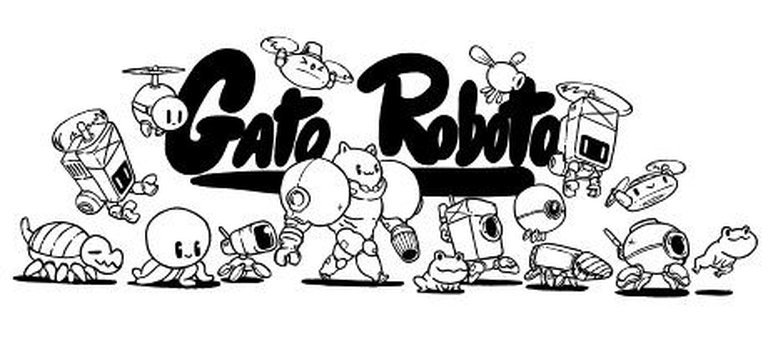
Description
Gato Roboto is a charming and fast-paced Metroidvania-style action game where players control Kiki, a brave cat piloting a powerful mech suit to explore a mysterious alien planet. With retro-inspired 2D side-scrolling gameplay, the game blends exploration, combat, and puzzle-solving in a whimsical sci-fi setting, offering a delightful mix of humor and challenge.
Gameplay Videos
Where to Buy Gato Roboto
Gato Roboto Free Download
PC
Gato Roboto Patches & Updates
Gato Roboto Mods
Gato Roboto Guides & Walkthroughs
Gato Roboto Reviews & Reception
metacritic.com (85/100): Gato Roboto accomplishes so much with so little. Even those it looks like a game that would be on the Atari 2600 or the big brick Gameboy, every aspect of Kiki’s world glows as bright as one of the best of the Metroidvania genre.
opencritic.com (78/100): With its heavy Metroid inspirations, Gato Roboto can feel derivative. However, it plays well and the world and combat encounters are well-designed.
frostilyte.ca (90/100): Gato Roboto is yet another retro inspired 2D platformer with a metroidvania flavour. You play as Kiki, the pet cat of a galactic solider that is marooned on a deserted research facility.
switchscores.com (79/100): Gato Roboto is a metroidvania for Nintendo Switch 1. Released on 30th May 2019, it was published by Devolver Digital.
Gato Roboto: A Purr-fect Homage to the Metroidvania Genre
Introduction
In the vast ocean of indie games, few titles manage to carve out a distinct identity while paying homage to the classics. Gato Roboto, developed by Doinksoft and published by Devolver Digital, is one such gem. Released on May 30, 2019, this game is a delightful blend of nostalgia and innovation, wrapping the beloved Metroidvania formula in a charming, minimalist package. At its core, Gato Roboto is a love letter to the golden age of 2D exploration games, but it’s also a testament to how a small, focused experience can leave a lasting impression.
The premise is as absurd as it is endearing: you play as Kiki, a cat stranded on an alien planet after her owner, Gary, crash-lands their spaceship. To survive and rescue Gary, Kiki must don a mech suit and navigate the treacherous depths of an abandoned research facility. The game’s title alone—Gato Roboto—hints at its playful tone, merging the Spanish word for “cat” with the Japanese term for “robot.” This fusion of cultures and ideas sets the stage for an adventure that is both familiar and refreshingly unique.
Gato Roboto is not just a game about a cat in a mech suit; it’s a carefully crafted experience that distills the essence of Metroidvanias into a tight, four-to-five-hour journey. It’s a game that understands the genre’s strengths and weaknesses, streamlining the former while mitigating the latter. In an era where many indie titles strive for complexity and scale, Gato Roboto stands out by embracing simplicity and focus. It’s a reminder that sometimes, less is more.
Development History & Context
The Studio and Creators’ Vision
Doinksoft, the studio behind Gato Roboto, is a small but ambitious indie developer known for its retro-inspired games. The team’s previous work includes Demon Throttle and Gunbrella, both of which share a similar aesthetic and design philosophy. Doinksoft’s games are characterized by their pixel-art visuals, tight gameplay mechanics, and a deep appreciation for classic gaming tropes. Gato Roboto is no exception, embodying the studio’s commitment to crafting experiences that feel both nostalgic and fresh.
The game’s development was driven by a desire to create a Metroidvania that was accessible yet challenging, compact yet rich in content. The creators wanted to capture the magic of Super Metroid and other classics while avoiding the pitfalls of excessive backtracking and convoluted level design. To achieve this, they structured Gato Roboto around a central hub with self-contained dungeons, each offering a unique set of challenges and upgrades. This approach allowed the game to maintain a sense of progression and discovery without overwhelming the player.
Technological Constraints and Aesthetic Choices
Gato Roboto was developed using GameMaker Studio, a popular engine among indie developers for its accessibility and flexibility. The choice of GameMaker allowed Doinksoft to focus on gameplay and design rather than grappling with complex technical hurdles. The game’s visual style is a deliberate throwback to the 1-bit monochrome graphics of early gaming consoles, evoking the aesthetic of titles like Metroid and Castlevania while adding a modern polish. This minimalist approach not only pays homage to the past but also ensures that the game runs smoothly on a variety of platforms, including the Nintendo Switch, Windows, and Xbox One.
The decision to use a monochrome palette was not just a stylistic choice but also a practical one. By limiting the color scheme, the developers could focus on clarity and readability, ensuring that players could easily distinguish between environmental elements and enemies. The game also includes unlockable color palettes, adding a layer of customization for those who prefer a more vibrant experience.
The Gaming Landscape at Release
Gato Roboto entered a crowded market in 2019, a year that saw the release of several high-profile Metroidvanias, including Hollow Knight: Silksong (though delayed) and Blasphemous. The genre was experiencing a renaissance, with indie developers revisiting and reimagining the classic formula. In this context, Gato Roboto had to differentiate itself, and it did so by embracing its quirky premise and streamlined design.
The game’s release on the Nintendo Switch was particularly strategic, as the platform had become a haven for indie titles. The Switch’s portability and accessibility made it an ideal home for Gato Roboto, allowing players to enjoy the game in short bursts or extended sessions. The game’s compact length and tight gameplay loop also made it a perfect fit for the platform’s audience, which often seeks out experiences that can be completed in a few hours.
Narrative & Thematic Deep Dive
Plot Overview
The story of Gato Roboto is deceptively simple but effectively executed. Kiki, a cat, and her owner Gary are traveling through space when Kiki accidentally steps on the ship’s controls, causing a crash landing on an alien planet. Gary is trapped in the wreckage, and Kiki must explore the planet’s abandoned research facility to find a way to rescue him. Along the way, she discovers a mech suit that allows her to traverse the facility’s dangerous environments and combat its hostile inhabitants.
As Kiki progresses, she uncovers voice logs that reveal the facility’s dark history. The logs detail the experiments of a mad scientist, Dr. Otto Heinrich, who was obsessed with transferring consciousness between bodies to save his dying dog, Barkley. The scientist’s experiments led to the facility’s downfall, and his consciousness now resides in the body of a rat, which serves as the game’s primary antagonist.
The narrative culminates in a confrontation with the scientist, who has transferred his consciousness into Gary’s body. Kiki must defeat him to free Gary and escape the planet. The ending is bittersweet, with Gary’s consciousness implied to have survived in the scientist’s former rat body, adding a layer of ambiguity and intrigue to the story.
Characters and Dialogue
Kiki is the game’s silent protagonist, communicating only through meows and expressive animations. Her lack of dialogue allows players to project their own interpretations onto her character, making her a relatable and endearing figure. Gary, Kiki’s owner, serves as the game’s Mission Control, providing guidance and commentary via radio. His dialogue is humorous and often sarcastic, adding a layer of levity to the game’s otherwise tense atmosphere.
The antagonist, Dr. Otto Heinrich, is a classic mad scientist archetype, driven by a twisted love for his dog. His motives are explored through voice logs scattered throughout the facility, which provide insight into his descent into madness. The logs also introduce other characters, such as Jimbo, the facility’s security guard, and Dr. Rebecca Brown, Heinrich’s assistant, who was transformed into a frog as part of his experiments.
The game’s dialogue is minimal but effective, relying on environmental storytelling and subtle cues to convey its narrative. The voice logs, in particular, are a highlight, offering a glimpse into the facility’s past and the fates of its inhabitants. The writing is sharp and often humorous, with a touch of dark comedy that complements the game’s tone.
Themes and Symbolism
Gato Roboto explores several themes, including the ethics of scientific experimentation, the consequences of obsession, and the bond between humans and animals. The game’s central conflict revolves around Dr. Heinrich’s attempts to save his dog through unethical means, raising questions about the limits of scientific inquiry and the moral responsibilities of researchers.
The relationship between Kiki and Gary is another key theme, highlighting the bond between pets and their owners. Kiki’s determination to rescue Gary, despite the dangers she faces, underscores the loyalty and love that define this relationship. The game also touches on themes of identity and transformation, as characters’ consciousnesses are transferred between bodies, blurring the lines between self and other.
The facility itself serves as a symbol of humanity’s hubris, a monument to scientific ambition that ultimately leads to ruin. The voice logs and environmental details paint a picture of a once-thriving research outpost now overrun by the consequences of its own experiments. This theme is reinforced by the game’s visual design, which emphasizes the facility’s decay and abandonment.
Gameplay Mechanics & Systems
Core Gameplay Loop
Gato Roboto is a Metroidvania at its core, featuring exploration, combat, and progression through the acquisition of new abilities. The game’s structure is divided into several self-contained dungeons, each connected to a central hub. This design allows for a focused and streamlined experience, avoiding the excessive backtracking that can plague the genre.
The player controls Kiki, who can explore the facility both inside and outside her mech suit. Outside the suit, Kiki is vulnerable and can only climb walls and fit through small gaps. Inside the suit, she gains access to a variety of abilities, including a gun, a double jump, and a dash. The suit also provides additional hit points, making combat more manageable.
The game’s progression is tied to the acquisition of new upgrades, which allow Kiki to access previously unreachable areas. These upgrades include movement abilities, such as the double jump and dash, as well as combat enhancements, like the rocket launcher. The upgrades are carefully placed throughout the facility, ensuring that players are constantly discovering new ways to traverse the environment.
Combat and Character Progression
Combat in Gato Roboto is straightforward but satisfying. Kiki’s mech suit is equipped with a gun that can be upgraded to fire more powerful projectiles. The suit also has a rocket launcher, which can be used to deal heavy damage to enemies and bosses. The combat is designed to be accessible, with a focus on precision and timing rather than complexity.
The game’s bosses are a highlight, offering challenging and creative encounters. Each boss has unique attack patterns and weaknesses, requiring players to adapt their strategies. The final boss, in particular, is a multi-phase battle that tests the player’s mastery of the game’s mechanics.
Character progression is tied to the acquisition of health upgrades and new abilities. Health upgrades increase the mech suit’s vitality, allowing Kiki to withstand more damage. New abilities, such as the double jump and dash, expand the player’s traversal options, opening up new areas to explore.
UI and Innovative Systems
The game’s user interface is minimalist and functional, with a heads-up display (HUD) that appears only when Kiki is inside the mech suit. The HUD provides essential information, such as health and ammunition, without cluttering the screen. The UI is designed to be intuitive, ensuring that players can focus on the gameplay without distraction.
One of the game’s most innovative systems is the ability to switch between Kiki and her mech suit. This mechanic allows for a variety of gameplay scenarios, from tight platforming sections to intense combat encounters. The suit can be obtained at save points, which also serve as checkpoints, allowing players to respawn with full health and ammunition.
The game also features sequence breaking, a technique that allows players to bypass intended progression paths. This is achieved through advanced movement techniques, such as rocket jumping, which can be used to reach areas before acquiring the necessary upgrades. Sequence breaking adds a layer of depth and replayability, rewarding skilled players with new challenges and discoveries.
World-Building, Art & Sound
Setting and Atmosphere
Gato Roboto is set in an abandoned research facility on an alien planet, a setting that is both familiar and intriguing. The facility is divided into several distinct areas, each with its own unique environment and challenges. The aqueducts, for example, are filled with water and algae, while the ventilation system is clogged with debris and fans.
The game’s atmosphere is enhanced by its visual design, which emphasizes the facility’s decay and abandonment. The environments are detailed and immersive, with small touches that reinforce the facility’s history. The voice logs scattered throughout the facility provide additional context, offering insights into the events that led to its downfall.
Visual Direction
The game’s visual style is a deliberate throwback to the 1-bit monochrome graphics of early gaming consoles. This minimalist approach ensures that the game is visually distinct and easy to read, with clear distinctions between environmental elements and enemies. The monochrome palette also adds a layer of nostalgia, evoking the aesthetic of classic Metroidvanias.
Despite its limited color scheme, Gato Roboto is visually rich, with detailed environments and expressive animations. The game’s pixel art is meticulously crafted, with a focus on clarity and readability. The unlockable color palettes add a layer of customization, allowing players to tailor the visual experience to their preferences.
Sound Design
The game’s sound design is a standout feature, with a soundtrack that complements the game’s atmosphere and tone. The music is minimalist and atmospheric, with quiet and foreboding tracks that underscore the facility’s eerie environment. The soundtrack changes dynamically, reflecting the player’s progress and the current tone of the game.
The sound effects are equally impressive, with a variety of audio cues that enhance the gameplay experience. The mech suit’s movements, for example, are accompanied by mechanical sounds that reinforce its robotic nature. The voice logs are also well-produced, with clear and expressive narration that brings the facility’s history to life.
Reception & Legacy
Critical Reception
Gato Roboto received generally favorable reviews from critics, with praise for its tight gameplay, charming visuals, and innovative design. The game’s Metascore on Metacritic is 79 for the PC version and 72 for the Switch version, indicating a positive but mixed reception. Critics highlighted the game’s streamlined approach to the Metroidvania genre, noting its focus on exploration and progression without excessive backtracking.
The game’s length was a point of contention, with some critics arguing that it was too short to fully develop its ideas. However, others praised the game’s compact design, noting that it avoided the padding and filler that can plague longer titles. The game’s difficulty was also a topic of discussion, with some critics finding it too easy, while others appreciated its accessibility.
Commercial Reception
Gato Roboto was a commercial success, selling well on all platforms. The game’s affordable price point and compact length made it an attractive option for players seeking a short but satisfying experience. The game’s release on the Nintendo Switch was particularly successful, with the platform’s audience embracing its retro-inspired design and charming premise.
Legacy and Influence
Gato Roboto has had a lasting impact on the indie gaming scene, inspiring other developers to embrace simplicity and focus in their designs. The game’s streamlined approach to the Metroidvania genre has been cited as a model for how to create a compact but rich experience. The game’s success has also helped to establish Doinksoft as a notable indie developer, with a reputation for crafting high-quality, retro-inspired games.
The game’s influence can be seen in subsequent titles, such as Gunbrella and Demon Throttle, which share a similar aesthetic and design philosophy. Gato Roboto has also been referenced in discussions about the future of the Metroidvania genre, with critics and developers alike praising its innovative approach to a classic formula.
Conclusion
Gato Roboto is a remarkable achievement, a game that manages to be both a loving homage to the past and a bold step forward for the Metroidvania genre. Its streamlined design, charming visuals, and innovative mechanics make it a standout title in a crowded market. The game’s compact length and accessible gameplay ensure that it is enjoyable for both newcomers and veterans of the genre.
While Gato Roboto may not be the longest or most complex Metroidvania, it is one of the most carefully crafted and satisfying. Its focus on exploration, progression, and discovery makes it a joy to play, and its charming premise and expressive visuals ensure that it leaves a lasting impression. In a world where many games strive for scale and complexity, Gato Roboto is a reminder that sometimes, less is more.
For fans of the genre, Gato Roboto is a must-play, a game that captures the magic of classic Metroidvanias while offering something fresh and unique. For newcomers, it is an accessible and enjoyable introduction to the genre, a game that is easy to pick up but difficult to put down. In the end, Gato Roboto is a testament to the power of simplicity and focus, a game that proves that a small, well-crafted experience can leave a big impact.
Final Verdict: 8.5/10 – A purr-fect homage to the Metroidvania genre, Gato Roboto is a charming, compact, and innovative experience that is not to be missed.