
- Release Year: 2021
- Platforms: Nintendo Switch, PlayStation 4, PlayStation 5, Windows, Xbox One, Xbox Series
- Publisher: Microids SA
- Developer: Eden Games S.A.S.
- Genre: Driving, Racing
- Perspective: Behind view
- Game Mode: Single-player
- Gameplay: Customization, Driving, Racing, Vehicle upgrades
- Average Score: 50/100
Description
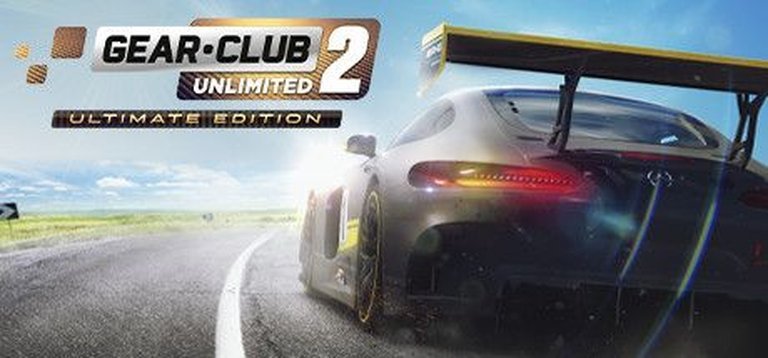
Gear.Club Unlimited 2: Ultimate Edition is a definitive racing compilation that unites all content from the original game alongside new features, allowing players to drive prestigious vehicles like legendary Porsche cars and iconic endurance racers such as the Ford GT40 MK I Gulf across diverse environments, including the official 24H Le Mans track. The game offers a mix of speed and endurance challenges, where players can embark on a Career mode to save their family racing team from bankruptcy by competing against charismatic drivers, all enhanced with remastered graphics and expansive gameplay.
Gameplay Videos
Where to Buy Gear.Club Unlimited 2: Ultimate Edition
Gear.Club Unlimited 2: Ultimate Edition Guides & Walkthroughs
Gear.Club Unlimited 2: Ultimate Edition Reviews & Reception
mkaugaming.com (50/100): Overall, Gear.Club Unlimited 2: Ultimate Edition is a decent port from the Nintendo Switch, but it really needs some fine-tuning.
Gear.Club Unlimited 2: Ultimate Edition: Review
Introduction
In the saturated landscape of racing games, few titles arrive with as much ambitious scope as Gear.Club Unlimited 2: Ultimate Edition. Released in December 2021 by publisher Microids and developed by Eden Games—a studio with a storied history in motorsports simulations—this compilation promised a definitive racing experience, bundling the base game with all DLC into a single, content-rich package. Advertised as a tour de force of licensed vehicles, diverse environments, and career-driven progression, it aimed to capture the thrill of high-speed competition on platforms ranging from Nintendo Switch to next-gen consoles. Yet, despite its impressive checklist of features, the game stumbled critically, earning a paltry 40% Metascore and lukewarm user reception. This review deconstructs Gear.Club Unlimited 2: Ultimate Edition not merely as a product, but as a cultural artifact of the late 2021 racing genre—a title that encapsulates both the aspirations and pitfalls of mid-budget arcade racers. Through rigorous analysis of its development, narrative, mechanics, artistry, and legacy, we will determine whether this “Ultimate Edition” truly delivers on its promise or remains a cautionary tale of unfulfilled potential.
Development History & Context
Eden Games, the French studio behind Gear.Club, entered the 2020s with a legacy rooted in technical prowess, having previously developed titles like Test Drive Unlimited 2. Their vision for the Gear.Club series was to blend accessible arcade racing with deep vehicle customization and expansive open worlds, targeting platforms from mobile to consoles. The “Ultimate Edition” emerged as a response to the fragmented release strategy of the original Gear.Club Unlimited 2 (2018), which saw content delivered piecemeal via DLC. This compilation aimed to consolidate everything into a single “definitive” package, boasting “remastered graphics” and all prior expansions. Technologically, however, the project was constrained by its origins as a Nintendo Switch title. The game was built on Unity, a versatile engine but one that struggled to deliver consistent performance on more powerful hardware. Released on December 2, 2021—amidst a gaming climate dominated by behemoths like Forza Horizon 5 and Gran Turismo 7—Gear.Club Unlimited 2: Ultimate Edition faced an uphill battle. Competitors set benchmarks for 4K/60fps fidelity and AI sophistication, while Eden Games grappled with optimizing a title designed for weaker hardware. The result was a product caught between ambitions: promising “more than 3,000 kilometers of track” and 50+ licensed vehicles but hamstrung by technical compromises that undermined its core promise of a premium racing experience.
Narrative & Thematic Deep Dive
The narrative of Gear.Club Unlimited 2: Ultimate Edition is functional yet perfunctory, prioritizing gameplay hooks over storytelling depth. In Career mode, players assume the role of a driver tasked with “saving the family racing team from bankruptcy,” a trope borrowed from classic racing sagas. This plot serves as a simple motivator, framing progression as a series of challenges against “charismatic drivers of various nationalities.” However, these rivals lack characterization; they exist as nameless obstacles rather than compelling antagonists. Dialogue is sparse and utilitarian, with no memorable exchanges or thematic exploration. The Porsche Series mode introduces a thematic pivot, emphasizing the “prestige” of German engineering through vehicles like the 911 930 Turbo, but this feels more like a marketing tie-in than a narrative thread. Similarly, the Endurance Championship mode, centered on the 24H Le Mans, attempts to evoke the drama of motorsport history but reduces it to a checklist of fuel/tire management tasks. Ultimately, the game’s themes—supremacy on the track, automotive excellence, and familial loyalty—are superficially treated. The narrative fails to create emotional investment, reducing the player’s journey to a mechanical loop of races and upgrades. As one critic noted, the gameplay is “incapable of conveying any emotion,” leaving the experience devoid of the narrative tension that elevates great racing games like Gran Turismo or Need for Speed.
Gameplay Mechanics & Systems
The core gameplay loop of Gear.Club Unlimited 2: Ultimate Edition revolves around three pillars: racing, vehicle collection, and club management. Yet, each pillar reveals critical flaws that erode the experience.
Racing Mechanics:
– Handling: The controls are the game’s most contentious failure. As the GameQuarter review lamented, “the light anraking of the joystick results in a haakse bocht (jerky turn),” forcing players to make minute adjustments to navigate corners. This sluggishness, combined with a non-functional handbrake that fails to provide satisfying drifts, creates a frustrating disconnect between input and action.
– AI and Difficulty: The AI is uniformly “not adjustable,” as noted by critics, making races easily winnable through brute force rather than skill. This removes any sense of progression or challenge, reducing events to predictable slogs.
– Damage System: A glaring omission is the lack of meaningful car damage. Collisions cause minor cosmetic scratches but no mechanical penalties, undermining the tension of high-speed competition and rewarding reckless driving.
Vehicle Collection and Progression:
– The garage system, praised by MKAU Gaming as “one of the few positive aspects,” allows players to acquire and upgrade over 50 licensed vehicles. Brands like Porsche and Ford are well-represented, but the progression feels shallow. Upgrades (engine, tires, etc.) offer minimal perceptible impact on handling, leading to a “one size fits all” feel where a Mini Cooper can inexplicably outpace a Mustang.
– Currency earned from races funds these upgrades, but the economic loop is repetitive, with little strategic depth beyond grinding for the next “prestigious” vehicle.
Club and Multiplayer Systems:
– Players can create clubs, recruit AI or human players, and compete on leaderboards. However, the online component is underdeveloped, with asynchronous multiplayer feeling tacked on. Split-screen support for up to four players offers local fun but is hampered by the same handling issues plaguing single-player.
UI and Technical Systems:
– The menu interface is cluttered and unintuitive, obscuring options behind nested submenus. Worse, technical glitches—cars “suddenly disappearing” or rendering in black, as described by GameQuarter—frequently disrupt races. Frame rate instability on PlayStation 5 and Xbox Series X|S further undermines performance, despite promises of 60fps targets.
These systems coalesce into a gameplay experience that is conceptually robust but mechanically inconsistent. The ambition of delivering “250 races” and diverse event types is admirable, but the execution—marred by poor controls, unbalanced AI, and technical hiccups—renders the loop more tedious than thrilling.
World-Building, Art & Sound
Gear.Club Unlimited 2: Ultimate Edition presents a world rich in variety but lacking in technical fidelity. The environments span “mountainside, nature park, desert, and coast,” offering diverse terrains that theoretically justify the game’s scale of 3,000 kilometers. However, this diversity is undermined by graphical inconsistencies. Vehicles, while “respectable” when static, suffer from pop-in, texture seams, and clipping during races—a stark contrast to the “remastered graphics” promised in marketing. Lighting is flat, with harsh shadows and inconsistent reflections failing to evoke the atmosphere of real-world locales like Le Mans. The art direction leans into a sanitized, “family-friendly” aesthetic (PEGI 3 rating), but this results in environments that feel sterile rather than immersive.
Sound design fares little better. Engine notes are authentic but lack the dynamic range of competitors, and tire screeches sound compressed. The soundtrack is forgettable ambient electronica that fails to escalate during key moments. Voice acting is minimal and stilted, with no memorable characters or dialogue. Despite supporting 12 languages, the localizations feel perfunctory, with subtitles offering no additional flavor.
The audiovisual presentation ultimately fails to compensate for the game’s mechanical flaws. While the variety of cars and tracks provides initial novelty, the technical shortcomings—stuttering frame rates, low-resolution textures, and aural flatness—prevent the world from feeling alive or engaging.
Reception & Legacy
Upon release, Gear.Club Unlimited 2: Ultimate Edition received a tepid reception that underscored its critical disconnect. On Metacritic, it scored a dismal 45 (based on one critic review), with The Games Machine calling it “incapable of conveying any emotion” due to “poor textures and unstable frame rates.” User reviews were equally divided, earning a “Mixed” 68% on Steam (345 reviews) and a “Generally Unfavorable” 4.5/10 on Metacritic. Positive comments, like PMG-Writer’s praise for the “revised graphics” and “many events,” were outliers, drowned by complaints about “infinitely boring” races and frame rate issues (HUHUT-AteszHun). Commercially, the game failed to make a significant impact, overshadowed by genre giants.
Its legacy is one of missed potential and technical caution. Eden Games’ reputation—once buoyed by Test Drive Unlimited—was dented, as The Games Machine lamented, “a pity, given the resume of the developer.” The game’s influence on the racing genre is negligible; it did not spawn imitators or redefine arcade racing. Instead, it serves as a case study in the perils of cross-platform optimization and the danger of prioritizing content quantity over quality. For players seeking a budget racing experience, the Ultimate Edition’s inclusion of all DLC offers value, but for genre enthusiasts, it remains a footnote—a title remembered for its flaws rather than its ambition.
Conclusion
Gear.Club Unlimited 2: Ultimate Edition encapsulates the paradox of mid-budget racing games: it boasts an impressive breadth of content yet falters in execution. The narrative is a functional afterthought, the gameplay systems are undermined by poor controls and AI, and the audiovisual presentation fails to compensate for technical shortcomings. While the garage customization and vehicle collection offer fleeting satisfaction, these positives are overshadowed by a core experience that feels dated and unrefined. In the annals of video game history, this title will not be remembered as a pioneer but as a cautionary tale—one where ambition collided with technical reality, resulting in a product that was, as GameQuarter succinctly put it, “het allemaal (net) niet” (just not quite it all). For racing aficionados, Gear.Club Unlimited 2: Ultimate Edition is a passable curiosity; for the discerning player, it is a missed opportunity that reinforces a timeless truth: in racing as in life, polish trumps promise every time.