
- Release Year: 2007
- Platforms: Windows
- Publisher: URSE Games
- Developer: URSE Games
- Genre: Action
- Perspective: Diagonal-down
- Game Mode: Single-player
- Gameplay: Breakout, Color matching, Directional Arrows, Paddle, Power-ups, Teleports
- Setting: Ancient, Egypt
Description
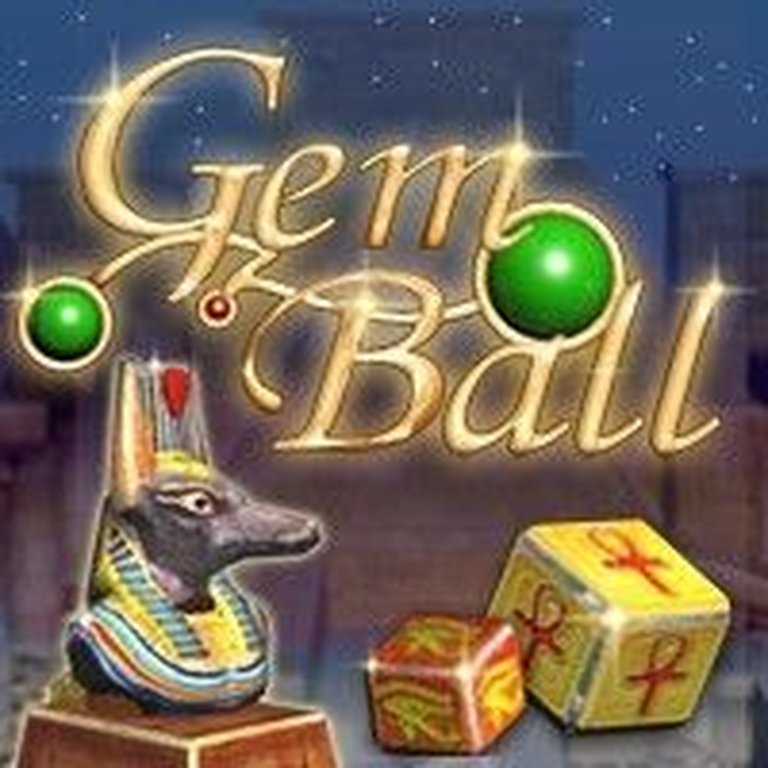
Gem Ball: Ancient Legends is an Egyptian-themed 3D Breakout game featuring two modes: Arcade, a classic brick-smashing experience, and Adventure, where players journey across Egypt to restore the lost gifts of the god Amon-Ra while uncovering mythological lore. The game introduces unique mechanics like color-coded bricks, teleporting sand whirlpools, directional arrow modifiers, and power-ups such as explosive balls, rainbow balls, and a devastating Megalaser to enhance chaotic brick-breaking gameplay.
Gameplay Videos
Gem Ball: Ancient Legends Free Download
Gem Ball: Ancient Legends Guides & Walkthroughs
Gem Ball: Ancient Legends: A Mythological Breakout Odyssey
Introduction
In a genre dominated by simplistic ball-and-paddle mechanics, Gem Ball: Ancient Legends (2007) emerges as a forgotten gem—a game that dared to reimagine the Breakout formula through the lens of Egyptian mythology and puzzle-driven innovation. Developed by URSE Games, this Windows-exclusive title blends arcade adrenaline with strategic depth, wrapping it in a vibrant 3D aesthetic. This review argues that Gem Ball: Ancient Legends is more than a relic of mid-2000s shareware: it is a bold experiment that elevated the brick-breaking genre with its thematic ambition and mechanical creativity, even if it stumbled under the weight of its own aspirations.
Development History & Context
A Small Studio’s Ambition
URSE Games, a Russian developer known for niche arcade titles, positioned Gem Ball as a bridge between casual gaming and cerebral challenges. Released in 2007, the game arrived during a resurgence of indie shareware titles distributed through platforms like Reflexive Arcade. URSE’s vision was clear: transcend the “mindless ball-bouncing” stereotype by integrating puzzle mechanics and an educational narrative.
Technological Constraints & Innovations
Built for mid-2000s hardware, Gem Ball leveraged rudimentary 3D graphics to create dynamic, multi-angle playfields—a stark contrast to the flat 2D grids of classics like Arkanoid. While its visuals were far from cutting-edge, URSE’s use of rotating camera angles and particle effects for power-ups (e.g., the “Explosive Ball” lava animation) demonstrated a commitment to immersion. The game’s modest system requirements (550 MHz CPU, 128 MB RAM) ensured accessibility but limited its technical ambition.
Narrative & Thematic Deep Dive
Mythology as a Gameplay Framework
Gem Ball’s Adventure mode tasks players with restoring the lost gifts of Amon-Ra, the Egyptian sun god. Each of the 150 levels is framed as a step toward recovering divine artifacts, accompanied by mythological tidbits. While the narrative is sparse—delivered through brief text interludes—it provides contextual grounding, transforming brick-breaking into a quest for cultural enlightenment.
Themes of Order vs. Chaos
The game’s mechanics thematically mirror Egyptian cosmology: players impose order (destroying chaotic brick formations) to restore cosmic balance (Amon-Ra’s gifts). This duality is reinforced by level designs that evoke temple ruins and desert landscapes, where every shattered brick feels like a step toward divine reconciliation.
Gameplay Mechanics & Systems
Core Loop: Strategy Meets Reflexes
Gem Ball features two modes:
1. Arcade: Traditional Breakout action across 150 levels.
2. Adventure: A campaign with progression gates and mythos-driven unlocks.
The game’s genius lies in its color-coded brick system: bricks can only be destroyed if the ball matches their hue, forcing players to maneuver through directional arrows that alter the ball’s color and trajectory. This adds a tactical layer absent in most brick-breakers.
Power-Ups & Pitfalls
- Rainbow Ball: Shatters any brick, rewarding aggressive play.
- Megalaser: A narrative-justified “mercy” tool that obliterates remaining bricks when the player nears victory.
- Anvil Power-Downs: Punishing hazards that exemplify the game’s occasional unfair difficulty spikes.
Innovations & Flaws
The ball-duplication machine and sand whirlpools (teleportation portals) introduce chaotic unpredictability, while door bricks (requiring timed strikes) demand precision. However, the UI’s fixed perspective sometimes obscures critical elements, and the Adventure mode’s difficulty curve can feel abrupt.
World-Building, Art & Sound
Aesthetic Charm Over Technical Prowess
Gem Ball’s 3D environments are brimming with Egyptian motifs—hieroglyphic bricks, sandstone backdrops, and golden artifacts. While textures are low-resolution by modern standards, the art direction excels in clarity and color contrast, ensuring gameplay readability. The multiple-angle camera system dynamically shifts to highlight level geometry, enhancing immersion.
Sound Design: Hypnotic Repetition
The soundtrack blends ambient synths with traditional Middle Eastern instruments, avoiding the grating loops common to arcade titles. Sound effects—such as the crisp clink of shattered bricks—are satisfyingly tactile, though the lack of voice acting leaves the narrative feeling undercooked.
Reception & Legacy
A Niche Cult Classic
Upon release, Gem Ball garnered little critical attention but found an audience among Breakout enthusiasts. User reviews praised its “amazing gameplay” (DeviantArt) and “strategic depth” (FileForum), though its $19.95 price tag was deemed steep for a shareware title.
Influence on the Genre
While Gem Ball never achieved mainstream success, its DNA is visible in later indie hybrids like Shatter (2009), which similarly married brick-breaking with power-up management. Its educational slant also presaged games like Assassin’s Creed: Discovery Tour, proving that historical themes could enhance arcade experiences.
Conclusion
Gem Ball: Ancient Legends is a paradoxical masterpiece—a game that transcends its genre’s limitations through sheer creativity but remains shackled by technical and budgetary constraints. Its fusion of Egyptian mythology, strategic brick-breaking, and educational intent marks it as a visionary, if flawed, experiment. For genre historians and patient players alike, Gem Ball stands as a testament to URSE Games’ willingness to reimagine the familiar, earning its place as a cult curiosity in the pantheon of arcade oddities.
Final Verdict: A diamond-in-the-rough for arcade purists, Gem Ball: Ancient Legends is best remembered as a bold, if imperfect, attempt to elevate brick-breaking into an art form.