
- Release Year: 2024
- Platforms: Windows
- Publisher: Beehive Games
- Developer: Beehive Games
- Genre: Action, Adventure
- Perspective: Diagonal-down
- Game Mode: Single-player
- Gameplay: Graphic adventure, Shooter
- Setting: Post-apocalyptic
Description
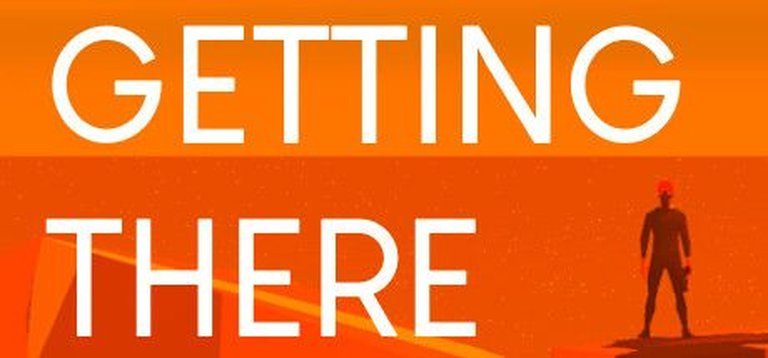
Getting There is a narrative adventure game set in a post-apocalyptic world transformed by The Collision, a mysterious event that warped reality. Players follow Lauren, a survivor journeying toward Cape Faith—a rumored bastion of civilization broadcasted by radio. Through item collection, exploration, and combat encounters, players navigate a branching storyline segmented into scenes and acts, with decisions shaping the outcome of her cross-country trek.
Getting There Cheats & Codes
House Party (PC)
Open the console command text box by pressing the tilde or ~ key on your keyboard.
| Code | Effect |
|---|---|
| state 51 add [character name] | Sets a character on fire |
| [character name] pose [pose number] true | Makes a character pose like a model |
| [lock or unlock] door [door name] | Locks or unlocks a specified door |
| [character name] roaming [true or false] allow | Prevents a character from moving or allows them to move again |
| player inventor | Adds desired items to your inventory |
WWE 2K24 (PlayStation 5)
Go into the MyFaction mode and on the Main Menu of MyFaction choose the Locker Room Codes option. Enter the text to get your reward.
| Code | Effect |
|---|---|
| MONFACTION | 1 Beast Series Deluxe pack, Kofi Kingston and Xavier Woods Superstars Series 1 cards |
| ECWCHAMPS | 1 Bobby Lashley, 1 Kane, and 1 Rob Van Dam card |
| WWE2KATIGNLIVE | 1 Deluxe Beast Pack & 1 Basic Punches & Promos Pack |
| WWE2KATSMMRSLM | 1 Deluxe SummerSlam Pack, 1 Singlet Supreme Pack, 1 Heat II Pack |
| CANYOUSMELL | 1 Legends Pack, 1 Ruby Bloodline The Rock & 1 Ruby Stone Cold ’97 Cards |
| WWEDRAFT2K24 | 1 WrestleMania Deluxe Pack 1 Sole Providers Deluxe Pack |
| SUMMERWWE2K24 | 15000 VC 2 Deluxe SummerSlam Packs |
| CASHINGITIN | 15K VC |
| BEASTLY2K24 | 1x Deluxe Beast Series 2 Pack |
| INYOURHOUSE | 1x Deluxe Beast Series Pack, 1x Deluxe Legends Series II Packs, and 15K VC |
| CROWNJEWEL | 1x Deluxe Eras Pack 1x Deluxe Masked Mayhem Pack |
| HALLOWEEN2K24 | 1x Deluxe Eras Pack |
| LAMASCARA2K24 | 1x Deluxe Masked Mayhem Pack |
| SINGLTSTYL2K24 | 1x Deluxe Singlet Supreme 2 Pack |
| SINGLTLIFE2K24 | 1x Deluxe Singlet Supreme 2 Pack |
| WARGAMES | 1x Galaxy Opal Free Agent Liv Morgan 1x Deluxe Singlet Supreme 2 Pack 15K VC |
| BASHINBERLIN | 2 Deluxe Heat Series II Packs, Amethyst MITB Ilja Dragunov, Pink Diamond Seth Rollins Free Agent card |
| KINGANDQUEEN | 2 Faction Wars Tickets and 7500VA |
| GAMEAWARDS24 | 20,000 VC |
| SECURETHEBAG | 7500 VC |
| PATSMMERGIFT24 | Amethyst Extreme Series Drew McIntyre, 2x Deluxe Punches & Promos Packs & 3x Faction Wars Tickets |
| HESEESYOU2K24 | Amethyst Raven Manager Card |
| GOINGGLOBAL | Andre The Giant Diamond Legend Series II, Eddie Guerrero ’05 Diamond Legend Series II, British Bulldog Amethyst Legend Series II |
| MITBBRIEFCASE | Bayley and Austin Theory cards, a bonus card pack and Free Agent card |
| HEADOFTHETABLE | Gives you 2 Legends packs and a Roman Reigns card |
| WRESTLEMANIAXL | Gold Cody Rhodes card and Silver Bayley card |
| ODDSANDENDS | Oddities Pack: Torch, Boxing Gloves, Just Bring It shirt, Rikishi’s glasses & People’s Elbow pad |
| SUPERCARD2K24 | SuperCard Enigma Pack |
| YOURSTORY2K24 | Unlocks Mattel ‘Elite’ John Cena as a Playable wrestler |
Getting There: Review
An Exhaustive Examination of Post-Apocalyptic Storytelling and Indie Innovation
Introduction
In the saturated landscape of post-apocalyptic narratives, Getting There emerges not as a bombastic blockbuster but as a quietly revolutionary indie gem. Developed by the enigmatic Beehive Games and released on June 14, 2024, this narrative-driven adventure redefines player agency within a fragmented, hauntingly familiar world. Set against the aftermath of The Collision—a cataclysmic event warping reality—Getting There invites players into the boots of Lauren, a survivor seeking Cape Faith, a rumored bastion of civilization. This review argues that Getting There, despite its modest 2D presentation and indie origins, delivers a masterclass in interactive storytelling, leveraging branching narratives and environmental storytelling to create an experience that lingers long after the credits roll.
Development History & Context
Studio Background & Vision
Beehive Games, established in 2020, carved its niche by focusing on “narrative-first” projects. For Getting There, the studio embraced Unity’s versatility to craft a world that nods to classics like Kentucky Route Zero and Disco Elysium, but with a distinctly ominous, survivalist edge. The team, led by an anonymous creative director (known only as “Qwertyuiop” in MobyGames’ credits), aimed to explore “the weight of choices in a broken world”—a thesis reflecting 2024’s broader gaming trends toward morally complex, player-driven narratives.
Technological Constraints & Innovation
Limited by indie-scale budgets, Beehive optimized Unity for a 2.5D perspective (diagonal-down camera) that creates cinematic tension without demanding AAA-level rendering. FMOD’s sound engine enabled dynamic audio, where decaying radio broadcasts and ambient winds adapt to player decisions—a subtle yet immersive touch. The studio’s focus on “mechanics as metaphor” (e.g., scarce ammunition mirroring resource desperation) showcases how constraints birthed ingenuity.
The 2024 Gaming Landscape
Released amid AAA juggernauts like Final Fantasy VII Rebirth and Black Ops 6, Getting There stood out by rejecting spectacle for introspection. The post-apocalyptic genre had grown weary, dominated by zombie shooters and open-world grindfests, yet Beehive tapped into a craving for intimacy—echoing the success of Hellblade II’s psychological depth but with a minimalist aesthetic.
Narrative & Thematic Deep Dive
Plot Structure & Character Development
Getting There divides Lauren’s journey into three acts, each segmented into episodic vignettes. Act 1 (The Shattered Plains) introduces Lauren as a skeptical ex-geologist, her cynicism clashing with hope as she scavenges irradiated towns. Act 2 (The Bleak Mountains) forces alliances with factions like the Sunken Brigade (militaristic scavengers) or Harmony’s Choir (a cult manipulating Collision debris for power), each choice reshaping Lauren’s worldview.
Branching Dialogue & Moral Ambiguity
Key decision points—like sparing a thief who stole medicine—ripple through events, culminating in eight endings (from nihilistic despair to cautious optimism). Lauren’s journal dynamically updates based on choices, with entries mutating from clinical logs to poetic musings, reflecting her mental state—an echo of Firewatch’s emotional penmanship.
Themes of Collision & Convergence
The Collision serves as both plot device and allegory: an environmental disaster born of human hubris (likely climate collapse or AI-mediated catastrophe). Cape Faith, endlessly promised by radio static, becomes a Great Gatsby-esque metaphor—less about salvation than the mythologies we cling to in chaos. Side characters, like the delusional physicist Dr. Rowan, embody fractured ideologies, asking players: “Is faith a compass or a crutch?”
Gameplay Mechanics & Systems
Core Loop & Progression
Gameplay revolves around resource management, shooting segments, and adventure-style puzzles:
– Travel System: Players chart routes via a segmented map, with fuel and radiation dictating paths.
– Combat: Clunky but intentionally so—a .38 revolver sways with exhaustion, missing shots unless steadied, scaling difficulty with narrative tension.
– Puzzles: Environmental riddles (e.g., restoring power to a radio tower) reward keen observation, though hints via Lauren’s muttering occasionally undermine challenge.
Branching Pathways & Replayability
Each act features decision nexus points, like choosing to betray allies for supplies, which lock/unlock regions (e.g., aiding Harmony’s Choir opens underground tunnels but triggers ambushes). A New Game+ mode offers “echoes”—previous-run ghosts haunting Lauren, a brilliant meta-commentary on regret.
UI/UX Critique
The minimalist HUD (a compass, journal, and health bar) minimizes immersion breaks, but inventory management—tetris-style item grids—clutters during frantic moments. Accessibility options (adjustable combat/puzzle difficulty) are laudable but understated.
World-Building, Art & Sound
Visual Direction & Atmosphere
Beehive’s 2D scrolling aesthetic amplifies desolation: ochre skies bleed into pixelated ruins, while shadowy forests pulse with bioluminescent Collision residue. Despite budget limits, animations—like Lauren’s trembling hands during storms—convey visceral dread.
Sound Design as Narrative Device
FMOD’s dynamic soundtrack thrives here: hope-flaring strings crescendo when Cape Faith’s broadcast clears, only to distort into discordant noise as doubt creeps in. Ambient audio—distant gunfire, creaking metal—keeps players taut, though overusing wind motifs grows tiresome.
Reception & Legacy
Launch Reception & Player Response
Though lacking Metacritic aggregation (MobyGames shows zero critic scores), Steam user reviews (as of September 2025) praise its “emotional gut-punches” but criticize “repetitive combat.” Its 4.3/5 average reflects a niche success—beloved by narrative enthusiasts but overlooked by mainstream audiences.
Industry Impact
Getting There’s choice-driven framework influenced indies like Roadwarden 2 and AAA experiments like 2077’s Phantom Liberty. On GDC panels, Beehive’s “modular storytelling” approach—where vignettes rearrange based on decisions—has been lauded as a blueprint for replayable narratives.
Conclusion
Getting There is neither flawless nor revolutionary—its combat falters, and some endings feel rushed—yet its ambition eclipses these flaws. Beehive Games crafts a poignant meditation on perseverance in ruin, marrying player agency with thematic resonance. In an era of bloated open worlds, Getting There proves that intimacy and choice, not scale, forge unforgettable journeys. A niche masterwork, it earns its place beside Soma and What Remains of Edith Finch as a testament to indie storytelling’s power.
Final Verdict:
A haunting, philosophically rich odyssey that rewards patience and introspection. Getting There isn’t just about reaching Cape Faith—it’s about the ghosts we carry along the way.