
- Release Year: 2001
- Platforms: Windows
- Genre: Action
- Perspective: Side view
- Game Mode: Single-player
- Gameplay: Arcade, Shooter
- Setting: Futuristic, Sci-fi
- Average Score: 55/100
Description
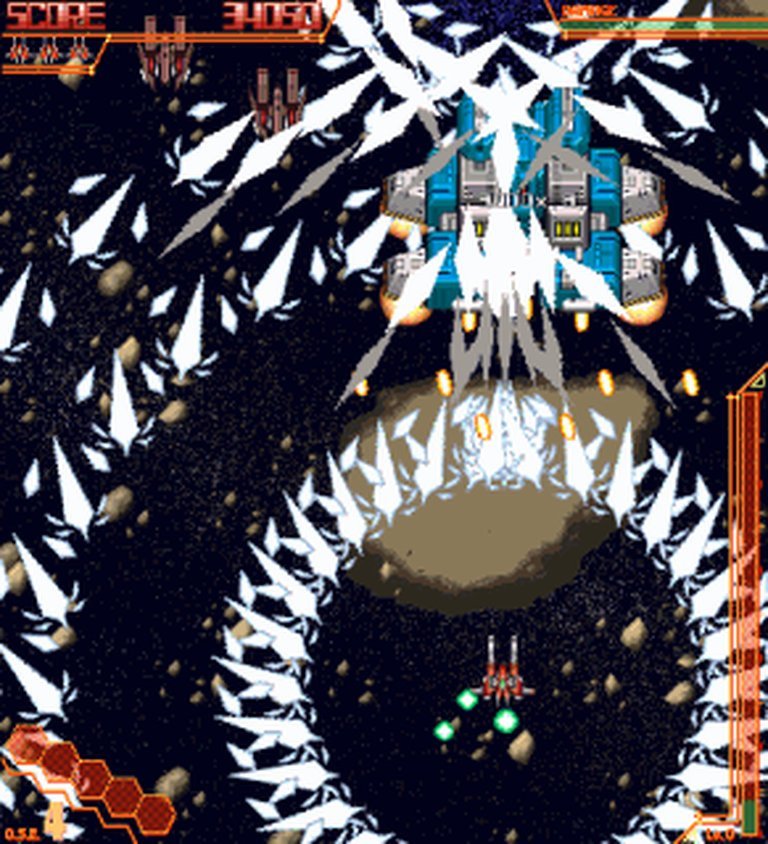
GFID Advanced Place: Project φ is a free, Japanese vertical shooter released in 2001 for Windows, adhering closely to the classic arcade shooter formula. Players control a small spaceship navigating upward through waves of enemies, dodging projectiles and using bombs (triggered by the X key) to clear the screen. The game features intense boss battles at the end of each stage, set in a sci-fi/futuristic universe, and follows traditional side-view gameplay with simple controls (Z to shoot).
GFID Advanced Place: Project φ Reviews & Reception
vgtimes.com (55/100): An arcade game with a mixture of action and shooter.
GFID Advanced Place: Project φ: A Forgotten Gem of the Vertical Shooter Genre
Introduction: The Lost Legacy of a Japanese Shooter
In the vast ocean of video game history, some titles emerge as towering monuments, while others fade into obscurity, remembered only by a handful of dedicated enthusiasts. GFID Advanced Place: Project φ (2001) is one such game—a free, Japanese vertical shooter that, despite its modest origins, embodies the purity of the shoot ’em up (STG) genre. Developed by the anonymous creator known only as RRRQ, this game is a testament to the passion of indie developers in the early 2000s, a time when the internet was still a burgeoning frontier for game distribution. While it may not have the name recognition of Ikaruga or Radiant Silvergun, Project φ deserves a place in the annals of shooter history for its adherence to genre conventions, its technical polish, and its role as a harbinger of the freeware STG movement.
This review will dissect GFID Advanced Place: Project φ in exhaustive detail, exploring its development context, gameplay mechanics, artistic design, and its quiet but enduring legacy. By the end, we will determine whether this obscure title is a hidden masterpiece or merely a footnote in the evolution of the vertical shooter.
Development History & Context: The Birth of a Freeware Shooter
The Studio and the Creator: RRRQ’s Vision
GFID Advanced Place: Project φ was developed by RRRQ, an anonymous Japanese programmer whose identity remains shrouded in mystery. Little is known about RRRQ beyond their contributions to the early 2000s freeware scene, but their work on Project φ reflects a deep understanding of the vertical shooter genre. The game was released in 2001, a period when the internet was becoming a viable platform for independent game distribution. Websites like Vector (a Japanese software repository) and Home of the Underdogs served as hubs for freeware and shareware titles, allowing developers like RRRQ to bypass traditional publishing channels and reach a global audience.
RRRQ’s blog, Fifth Inertia, served as the primary distribution point for Project φ, alongside other experimental software. The game was marketed as a “hardcore vertical shooter” (硬派な縦スクロールシューティング), emphasizing its adherence to the genre’s core mechanics while promising intense, high-score-driven gameplay. Notably, Project φ was released as a demo, with only Area 1 fully playable. Areas 2 and beyond were listed as “under development,” though no further updates materialized. This incomplete state has only added to the game’s mystique, leaving players to wonder what might have been.
Technological Constraints and the Early 2000s PC Landscape
Project φ was built for Windows 95/98, a time when PC gaming was transitioning from 2D sprites to 3D acceleration. Despite this shift, RRRQ opted for a pure 2D approach, leveraging DirectX 2 and Visual Basic 6 runtime for its rendering. This decision was likely influenced by several factors:
- Hardware Limitations: Many Japanese PC users in the early 2000s still relied on older hardware, making 2D games more accessible.
- Genre Tradition: Vertical shooters had thrived in 2D since the arcade era, and RRRQ’s design philosophy prioritized gameplay over graphical innovation.
- Development Efficiency: A solo developer working with limited resources would find 2D sprite-based design far more manageable than 3D modeling.
The game’s 1.40 MB download size (as listed on Old-Games.com) reflects its lightweight nature, making it easy to distribute even on the dial-up connections of the era. This efficiency was crucial for freeware titles, which relied on word-of-mouth and niche communities for visibility.
The Gaming Landscape in 2001: A Golden Age for Shooters
The early 2000s were a renaissance period for the shooter genre, particularly in Japan. Arcades were still a dominant force, with titles like Ikaruga (2001) and DoDonPachi DaiOuJou (2002) pushing the boundaries of bullet-hell mechanics. On consoles, the Dreamcast and PlayStation 2 hosted a plethora of STGs, while PC shooters like Cave’s DonPachi and Espgaluda ports found audiences among hardcore fans.
Project φ entered this landscape as a freeware alternative, offering a no-cost entry point for players who couldn’t access arcades or afford imported console games. Its release coincided with the rise of doujin games (independent Japanese games), a movement that would later produce iconic titles like Touhou Project. While Project φ lacks the cultural impact of Touhou, it shares the same DIY ethos, proving that passion and precision could rival commercial products.
Narrative & Thematic Deep Dive: Minimalism in a Sea of Bullets
Plot and Setting: A Sci-Fi Shell for Pure Gameplay
GFID Advanced Place: Project φ adheres to the minimalist storytelling typical of classic shooters. There is no elaborate lore, no cinematic cutscenes—just a spaceship, an onslaught of enemies, and a mission to survive. The game’s title itself is cryptic: “GFID Advanced Place” suggests a futuristic setting, while “Project φ” (phi, the 21st letter of the Greek alphabet) hints at experimentation or a classified initiative. However, these elements serve as little more than window dressing.
The sci-fi/futuristic setting is conveyed through:
– Enemy Design: Mechanical drones, alien-like crafts, and colossal bosses dominate the screen.
– Visual Aesthetic: The game employs a cybernetic color palette, with neon blues, purples, and metallic grays defining its look.
– Sound Design: Synth-heavy tracks and electronic sound effects reinforce the otherworldly atmosphere.
Yet, the narrative is intentional in its absence. Like Galaga or R-Type, Project φ prioritizes gameplay over story, using its setting as a backdrop for mechanical mastery. This approach is not a flaw but a design philosophy—one that respects the player’s time and focuses on the core experience.
Characters and Dialogue: The Silent Protagonist
The player controls a small, agile spaceship, a cipher with no name, no backstory, and no voice. This anonymity is a deliberate choice, allowing players to project themselves into the role of the lone pilot battling against insurmountable odds. The enemies, too, are faceless adversaries, their designs functional rather than expressive.
The lack of dialogue or text further strips the game of narrative fat, reinforcing its arcade roots. The only “communication” comes from:
– Sound Cues: The Z key’s rapid-fire blasts, the X key’s bomb detonation, and the enemy’s death cries.
– Visual Feedback: Explosions, score tallies, and the ominous appearance of boss enemies.
In this sense, Project φ is a pure interaction between player and system, unburdened by exposition.
Themes: The Loneliness of the Shooter Pilot
While Project φ lacks explicit themes, its structure evokes several implicit ideas:
1. Isolation and Survival: The player is alone against waves of enemies, mirroring the solitude of space exploration.
2. Skill and Mastery: The game’s difficulty curve demands precision, rewarding players who hone their reflexes.
3. Futility and Perseverance: Like Sisyphus rolling his boulder, the player repeats stages to chase high scores, embracing the cyclical nature of arcade gameplay.
These themes are not unique to Project φ—they are inherent to the shooter genre—but the game’s stripped-down presentation makes them feel more pronounced. There are no distractions, no side quests, just the raw challenge of survival.
Gameplay Mechanics & Systems: The Anatomy of a Vertical Shooter
Core Gameplay Loop: Ascend or Perish
GFID Advanced Place: Project φ follows the vertical shooter (or “vertical scroll shooter”) template to the letter:
– The player’s ship automatically scrolls upward, navigating a fixed screen space.
– Enemies spawn in patterns, firing projectiles that must be dodged.
– The player shoots with the Z key and deploys bombs with the X key.
– Power-ups (e.g., speed boosts, spread shots) appear sporadically.
– Each stage culminates in a boss battle, requiring memorization and precision.
This loop is deliberately repetitive, designed for score-chasing and pattern recognition. The game’s difficulty ramps up quickly, with later waves introducing dense bullet patterns (danmaku) that test the player’s reflexes.
Combat and Movement: The Dance of Dodging
The game’s movement system is simple but effective:
– The ship moves in eight directions, with pixel-perfect precision required to navigate tight gaps.
– Hitbox size is small, allowing skilled players to weave between bullets.
– Speed can be adjusted via power-ups, altering the player’s evasion capabilities.
The shooting mechanics are equally straightforward:
– The Z key fires a rapid, narrow shot, ideal for focused damage.
– The X key triggers a screen-clearing bomb, essential for emergencies.
This simplicity is the game’s greatest strength—it distills the shooter experience to its essence, removing unnecessary complexity.
Character Progression: The Illusion of Growth
Project φ lacks traditional RPG-style progression. Instead, growth comes from:
– Score Multipliers: Chaining kills increases the player’s score, encouraging aggressive play.
– Power-Ups: Temporary upgrades (e.g., wider shots, faster movement) provide short-term advantages.
– Player Skill: The only permanent progression is the player’s mastery of patterns and reflex improvement.
This design philosophy aligns with arcade traditions, where high scores—not unlockables—are the ultimate goal.
UI and Feedback: Clarity in Chaos
The game’s UI is minimalist but functional:
– Score Display: Top-left corner, tracking the player’s performance.
– Bomb Counter: Indicates remaining bomb stock.
– Health Bar: A simple meter that depletes upon hits.
The sound design provides critical feedback:
– Enemy Death Sounds: Confirm successful hits.
– Bomb Explosion: A satisfying ka-boom that clears the screen.
– Boss Alert: A distinct audio cue signals the arrival of a major enemy.
This auditory and visual clarity is essential in a genre where split-second decisions determine survival.
Innovations and Flaws: A Mixed Legacy
Innovations:
– Bomb Mechanics: The bomb’s large radius makes it a powerful tool, rewarding strategic use.
– Enemy Variety: Despite its demo status, Project φ features diverse enemy types, from small drones to massive bosses.
– Smooth Animation: The 2D sprites are detailed and fluid, a testament to RRRQ’s technical skill.
Flaws:
– Incomplete State: The game’s single-stage demo leaves players wanting more.
– Lack of Options: No difficulty settings or control customization limit accessibility.
– No Save System: True to arcade roots, but frustrating for modern players.
World-Building, Art & Sound: Crafting a Cybernetic Battleground
Setting and Atmosphere: A Neon Nightmare
Project φ’s world is a cybernetic hellscape, where the player’s ship navigates through:
– Mechanical Corridors: Tight, claustrophobic passages filled with turrets.
– Open Space: Vast, star-filled voids where enemies swarm.
– Boss Arenas: Massive, screen-filling adversaries that dominate the battlefield.
The color palette is dominated by:
– Electric Blues: Representing energy fields and futuristic tech.
– Metallic Grays: For the cold, industrial feel of the enemy ships.
– Vibrant Purples: Adding a surreal, otherworldly touch.
This aesthetic creates a sense of urgency, reinforcing the game’s high-stakes combat.
Visual Design: Sprites and Animation
Despite its 2D limitations, Project φ boasts:
– Detailed Sprites: Enemy designs are distinct and readable, even in chaotic moments.
– Smooth Animation: Ships and projectiles move fluidly, avoiding the choppy feel of lesser shooters.
– Particle Effects: Explosions and bullet trails add visual feedback, enhancing immersion.
The boss designs are particularly impressive, with some filling over half the screen and firing devastating beam attacks. These encounters are visually intimidating, living up to the game’s promise of “hardcore” gameplay.
Sound Design: The Symphony of Destruction
The game’s audio is a minimalist masterpiece:
– Synth-Heavy Soundtrack: A pulsing, electronic score accompanies the action, heightening tension.
– Sound Effects: Each shot, explosion, and enemy death is crisp and distinct, ensuring clarity.
– Boss Music: A shift in tempo signals the arrival of major enemies, adding dramatic weight.
While the soundtrack lacks the memorability of Gradius or R-Type, it fulfills its role as functional atmosphere, never overpowering the gameplay.
Reception & Legacy: The Quiet Impact of a Freeware Shooter
Critical and Commercial Reception: A Niche Following
GFID Advanced Place: Project φ received little mainstream attention upon release. As a freeware title, it lacked the marketing push of commercial games, relying instead on word-of-mouth and niche communities. Reviews were scarce, but the few that existed (such as those on Old-Games.com and Golden Age of Games) praised its:
– Polished gameplay.
– Impressive boss designs.
– Smooth animation.
However, its incomplete state and lack of updates prevented it from achieving wider recognition. Sites like MobyGames list it as “collected by 2 players”, indicating its obscurity.
Evolution of Reputation: A Cult Classic in the Making?
Over time, Project φ has gained a modest cult following, particularly among:
– Shooter Enthusiasts: Players who appreciate pure, unadulterated STG gameplay.
– Freeware Historians: Those who document the early 2000s indie scene.
– Retro Gamers: Collectors who seek out obscure gems.
While it will never rival Ikaruga or DoDonPachi in popularity, its adherence to genre fundamentals ensures its place as a respectable entry in the vertical shooter canon.
Influence on Subsequent Games: The Doujin Shooter Movement
Project φ’s greatest legacy lies in its role as a precursor to the doujin shooter boom of the mid-2000s. Games like:
– Touhou Project (2003–present).
– Jamestown (2011).
– Crimzon Clover (2011).
…all owe a debt to freeware shooters like Project φ, which proved that independent developers could craft experiences rivaling commercial titles. While RRRQ’s game may not have directly inspired these titles, it contributed to the cultural shift that made indie shooters viable.
Conclusion: A Flawed but Fascinating Relic
GFID Advanced Place: Project φ is not a masterpiece—it is too incomplete, too niche, and too derivative to earn that title. However, it is a remarkable artifact of its time, a game that embodies the spirit of the vertical shooter with precision and passion. Its strengths lie in:
– Tight, responsive gameplay.
– Impressive boss encounters.
– Aesthetic cohesion.
Its weaknesses—incomplete development, lack of options, and obscurity—prevent it from reaching the heights of genre greats. Yet, for those who seek pure, unfiltered shooter action, Project φ delivers in spades.
Final Verdict: 7.5/10 – A Hidden Gem Worth Unearthing
GFID Advanced Place: Project φ is a time capsule of early 2000s freeware gaming, a testament to the power of solo development, and a love letter to the vertical shooter genre. While it may never achieve mainstream acclaim, it deserves recognition as a cult classic—a game that, despite its flaws, captures the essence of what makes shooters great.
For shooter aficionados, it is a must-play curiosity.
For casual gamers, it is a brutal but rewarding challenge.
For game historians, it is a fascinating relic of a bygone era.
In the grand tapestry of video game history, GFID Advanced Place: Project φ is a small but shining thread—one that reminds us that greatness can emerge from the most unexpected places.
Where to Play:
– Vector Archive (Japanese): Download Link
– Old-Games.com: GFID Advance Place: Project Zero
– RRRQ’s Blog (Archived): Fifth Inertia (Note: May require Wayback Machine)
Final Thought:
“In a genre defined by precision and chaos, GFID Advanced Place: Project φ stands as a testament to the power of simplicity—proof that sometimes, all you need is a ship, a gun, and a screen full of bullets.”