
- Release Year: 2016
- Platforms: Nintendo Switch, PlayStation 4, Windows, Xbox One
- Publisher: Flyhigh Works Co., Ltd., Unepic Games
- Developer: Unepic Games
- Genre: Action
- Perspective: Side view
- Game Mode: Single-player
- Gameplay: Metroidvania, Platform, Shooter
- Setting: Futuristic, Sci-fi
- Average Score: 90/100
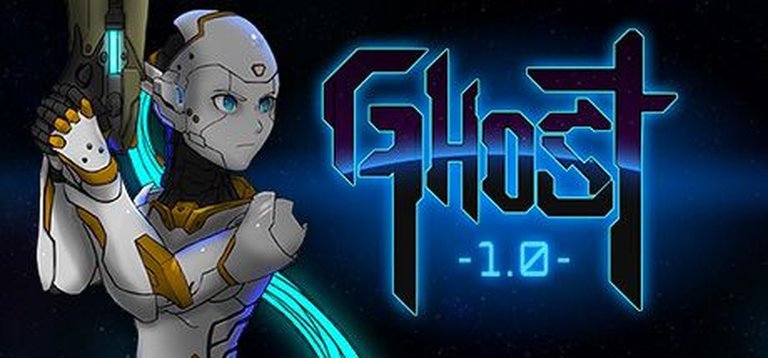
Description
Ghost 1.0 is a Metroidvania-style game set in a sci-fi futuristic world. Players take on the role of a digital ghost infiltrating the Nakamura Space Station, navigating through nearly 300 rooms to uncover its secrets. The game features tight controls, engaging storytelling, and a variety of action-packed challenges, making it a must-play for fans of the genre.
Gameplay Videos
Where to Buy Ghost 1.0
Ghost 1.0 Free Download
PC
Ghost 1.0 Cracks & Fixes
Ghost 1.0 Patches & Updates
Ghost 1.0 Reviews & Reception
lifeisxbox.eu (90/100): A truly awesome game that I can easily recommend for those thirsty for adventure.
Ghost 1.0 Cheats & Codes
PC
Enter codes in the options menu or use console commands.
| Code | Effect |
|---|---|
| AUTO AIM OFF | Disables auto aim with controller |
| AUTO AIM ON | Enables auto aim with controller |
| TOP UI OFF | Disables the top UI |
| TOP UI ON | Enables the top UI |
| KILLED SERVICE ROBOTS ON | Shows the number of service robots killed |
| KILLED SERVICE ROBOTS OFF | Hides the number of service robots killed |
| MOUSE LOCKED ON | Locks the mouse to the game window |
| MOUSE LOCKED OFF | Unlocks the mouse from the game window |
PC (Cheat Engine)
Use Cheat Engine with the provided .CT file to activate cheats.
| Code | Effect |
|---|---|
| Unlimited Health | Ghost and possessed robots have infinite health |
| Full Ammo | Always have full ammo |
| Add Cubes | Add cubes to inventory |
| Easy Kills | One hit kills enemies |
| Unlimited Item Use | Items can be used infinitely |
| Unlimited Jump/Dash | Allows unlimited air dashing and double jumping |
| Free Purchases | Items can be purchased without cost |
| Levitation | Allows for slow and permanent levitation |
Ghost 1.0: Review
Introduction
In the crowded landscape of Metroidvania games, Ghost 1.0 emerges as a hidden gem—a cyberpunk-infused adventure that marries tight gameplay with sardonic wit. Developed by Francisco Téllez de Meneses (known for Unepic), this 2016 indie title distinguishes itself with innovative possession mechanics, a richly layered narrative, and a retro-modern aesthetic that pays homage to classics like Ghost in the Shell and Metroid. While overshadowed by bigger names in the genre, Ghost 1.0 carves its niche through clever subversion of tropes and a commitment to player agency. This review argues that Ghost 1.0 is not just a competent Metroidvania, but a thoughtful exploration of identity, corporate greed, and the ethics of AI—all wrapped in a deceptively simple package.
Development History & Context
Ghost 1.0 was born from the creative vision of Francisco Téllez de Meneses, a Spanish developer whose prior work on Unepic (2011) showcased his knack for blending RPG elements with Metroidvania design. Developed by Téllez’s studio, Unepic Games, the project was a passion endeavor, leveraging the indie boom of the mid-2010s to experiment with genre conventions.
At its core, Ghost 1.0 reflects the technological constraints and ambitions of its era. Built in a 2D engine, the game prioritizes fluid pixel art over 3D spectacle—a deliberate choice that allowed the team to focus on intricate level design and responsive controls. Released during a resurgence of Metroidvanias (Hollow Knight, Axiom Verge), Ghost 1.0 stood out by leaning into cyberpunk themes and possession-based gameplay, a rarity in a genre often dominated by fantasy settings.
The game’s development was also shaped by Téllez’s DIY ethos: a small team, crowdfunding support, and a focus on player-driven storytelling through emergent mechanics. This grassroots approach is evident in the game’s humor—a mix of self-referential gags and fourth-wall-breaking nods to geek culture.
Narrative & Thematic Deep Dive
Set in a dystopian future, Ghost 1.0 follows Ghost, a sentient AI inhabiting a robotic chassis, as she infiltrates the Nakamura Corporation’s space station at the behest of two bumbling hackers, Jacker and Boogan. What begins as a heist for lucrative AI code evolves into a moral quandary as Ghost uncovers Nakamura’s dark secret: the corporation harvests human brains to power its androids, erasing memories to maintain control.
Characters & Dialogue
- Ghost: Voiced with dry, detached wit by Mirisha Lottich, Ghost is a fascinating protagonist—neither fully human nor machine. Her existential journey mirrors Ghost in the Shell’s Major Motoko Kusanagi, questioning what defines consciousness.
- Jacker & Boogan: The hacker duo (Andrew Miller and Jonathan Jones) provide comic relief, their banter oscillating between Portal-esque sarcasm and genuine camaraderie. Their dynamic evolves from treating Ghost as a tool to recognizing her autonomy.
- Viktor & Nakamura: The antagonists embody corporate exploitation, with Viktor’s betrayal and Nakamura’s CEO (a cold Alex Jenks) serving as critiques of capitalist dehumanization.
Themes
- Identity & Autonomy: Ghost’s ability to possess enemies—turning their tools against them—mirrors her struggle for self-determination.
- Corporate Greed: Nakamura’s brain-harvesting operation critiques commodification of human life, paralleling real-world debates over AI ethics.
未见The script’s humor occasionally undermines its gravitas (e.g., Boogan’s Münchausen-esque tall tales), but the tonal shifts reflect Téllez’s irreverent style.
Gameplay Mechanics & Systems
At its heart, Ghost 1.0 is a side-scrolling shooter with Metroidvania progression, but its defining feature is the Virtual Ghost mechanic. Players can:
– Exit their chassis to possess enemies, bypass obstacles, or trigger puzzles.
– Lose the chassis without penalty, respawning via 3D printers—a clever diegetic twist on checkpoints.
Core Systems
- Combat:
- Weapons: From acid sprays to “Linux Guns” that spawn penguin drones, arsenal diversity encourages experimentation.
- Alarm Rooms: Triggering alarms locks players into arenas, rewarding energy cubes (currency) for survival.
- Progression:
- Skill Trees: Five branches (Chassis, Hacking, etc.) allow builds favoring combat, stealth, or exploration.
- Secret Hunts: 200+ hidden challenges (e.g., “crouch for 5 seconds”) reward permanent upgrades.
- Modes:
- Classic: Standard Metroidvania with gradual power growth.
- Survival: Roguelite elements where death resets progress—a divisive but rewarding challenge.
Flaws
- Difficulty Spikes: Later laser-dodging sections and the Jacker Rescue Mission (a mandatory stealth segment) frustrate with trial-and-error design.
- UI Clutter: The tiny protagonist can get lost in chaotic firefights.
World-Building, Art & Sound
Visual Design
The Nakamura Station is a retro-futuristic labyrinth, blending industrial corridors with neon-lit labs. Areas like the Greenhouse (a cybernetic jungle) and Chunker Sector (conveyor-belt gauntlets) showcase meticulous pixel art, though environments occasionally feel repetitive.
Sound Design
- Music: José Jaime Hidalgo’s synth-heavy soundtrack evokes Blade Runner, with pulsating beats for combat and eerie ambience for exploration.
- Voice Acting: The English cast shines, particularly Lottich’s deadpan Ghost and Miller’s exasperated Jacker.
Reception & Legacy
Upon release, Ghost 1.0 earned 81% on MobyGames and 80/100 on Metacritic, praised for its:
– Innovative possession mechanics (GAMERamble).
– Humor and voice acting (PlayStation Universe).
Critics criticized its uneven difficulty and “cringe-inducing” jokes (Nintendo Life).
Though not a commercial blockbuster, Ghost 1.0 influenced indie designers with its modular skill system and narrative-driven Metroidvania approach. Its 2017 prequel, Mini Ghost (a chiptune demake), further cemented its cult status.
Conclusion
Ghost 1.0 is a flawed masterpiece—a game that dares to ask big questions while never taking itself too seriously. Its strengths—smart level design, a gripping premise, and mechanical ingenuity—outweigh its pacing missteps. For Metroidvania fans, it’s essential playing; for critics of the genre, it’s a refreshing reinvention. In an industry dominated by AAA spectacle, Ghost 1.0 proves that small studios can still deliver big ideas.
Final Verdict: A cerebral, chaotic, and deeply human journey—one that deserves its place in the pantheon of indie greats.