
- Release Year: 2016
- Platforms: Android, iPad, iPhone, Macintosh, Nintendo Switch, PlayStation 4, Windows, Xbox One
- Publisher: Immanitas Entertainment GmbH, Raven Studios Co. Ltd., Totalconsole LLC.
- Developer: Raven Studios Co. Ltd.
- Genre: Action, Puzzle
- Perspective: Side view
- Game Mode: Single-player
- Gameplay: Platform, Puzzle
- Setting: Fantasy
- Average Score: 45/100
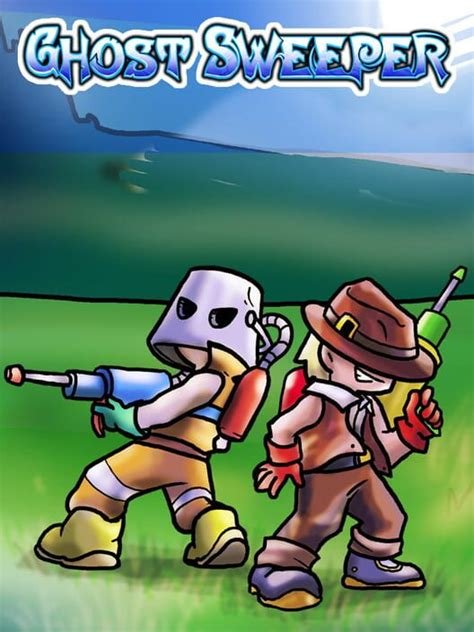
Description
Ghost Sweeper is a vibrant fantasy-themed platformer and puzzle game where players navigate side-scrolling levels to eliminate supernatural threats. Developed by 7 Raven Studios Co. Ltd. using the GameMaker engine, it offers retro-inspired 2D gameplay with direct controls across multiple platforms. Despite its colorful aesthetics and potential, the game is hampered by repetitive mechanics and a lack of depth, making it better suited for short, casual play sessions rather than extended adventures.
Where to Buy Ghost Sweeper
PC
Ghost Sweeper Patches & Updates
Ghost Sweeper Mods
Ghost Sweeper Guides & Walkthroughs
Ghost Sweeper Reviews & Reception
metacritic.com (50/100): Failing to ever deliver a properly good platforming experience, and coming complete with far too much clunkiness to allow for decent tactics and strategy, Ghost Sweeper on Xbox One falls far short of what is expected of a game in this time period.
metacritic.com (33/100): Honestly, I can’t figure out why anyone would want to buy Ghost Sweeper. There’s really no point to playing them if they do as little as Ghost Sweeper does to build on their inspirations.
metacritic.com (20/100): With minor changes to this, there could have been some kind of charm that a lot of people could like. But we’re left with an unmemorable game that was free on the Apple store, minus in-app purchases.
opencritic.com (60/100): It’s hard for me to be too hard on Ghost Sweeper since it’s priced at just $5, but there are better uses for that money. It felt a tad too clunky to be very enjoyable.
opencritic.com : Ghost Sweeper is a cute little title packed with a variety of puzzle-style levels to challenge both your quick-thinking and strategy planning skills. How wrong I was to think it might get repetitive.
opencritic.com (60/100): While not quite as good as Bubble Bobble 4 Friends, Ghost Sweeper is a fun little puzzle-platformer that’s well worth the modest $5 asking price.
opencritic.com (53/100): Ghost Sweeper is a fun puzzle and platform game in which we will have to finish with the plans of the dark lord.
opencritic.com (40/100): Compared to modern day puzzle platformers though, Ghost Sweeper feels like a relic from the past that needed more of a refresh than simply updated visuals.
Ghost Sweeper: Review
Introduction
In the ever-expanding pantheon of retro-inspired puzzle-platformers, Ghost Sweeper emerges as a vibrant yet enigmatic entry. Devised by the Italian indie studio 7 Raven Studios and first unleashed upon mobile platforms in 2016, this title promises a whimsical blend of ghost-hunting action and cerebral puzzle-solving, all wrapped in a charmingly cartoonish aesthetic. Yet, beneath its colourful veneer lies a game that embodies both the strengths and limitations of its chosen genre. This review delves into the intricate tapestry of Ghost Sweeper, dissecting its development narrative, thematic underpinnings, mechanical depth, and cultural resonance to determine its rightful place in video game history. Our thesis is that while Ghost Sweeper successfully captures the nostalgic essence of classic 8-bit and 16-bit puzzle-platformers—particularly evoking the spirit of titles like Solomon’s Key—its execution is hampered by repetitive design, shallow mechanics, and a failure to innovate beyond its inspirations, rendering it a competent yet forgettable footnote in the indie landscape.
Development History & Context
Ghost Sweeper stands as a testament to the capabilities of small-scale indie development in the mid-2010s, born from the creative crucible of 7 Raven Studios Co. Ltd. Founded by CEO Francesco Marra, the studio operated with a lean team of just four core contributors across the game’s lifecycle: Marra himself served as both CEO and an additional programmer, Alberto Dolci handled the bulk of the programming, Fabiola Allegrione was the principal artist, and Simone Cicconi composed the music and sound effects. This compact structure, while a common feature of indie studios, places Ghost Sweeper within a lineage of games developed under significant resource constraints.
Technologically, the game was built using the accessible GameMaker engine, a choice that democratized development but inherently defined the scope of its ambition. GameMaker, renowned for its user-friendly drag-and-drop interface and scripting capabilities, allowed 7 Raven Studios to rapidly prototype and deploy the game across multiple platforms—an astute business decision in an era where mobile-to-console porting was becoming increasingly lucrative. The initial release on iOS and iPad in May 2016, followed by Windows and Macintosh later that year, demonstrated the studio’s intent to capture the broadest possible audience. This was later expanded to Android (2018), and then to major consoles: Nintendo Switch, Xbox One, and PlayStation 4 (2020-2021). This staggered rollout reflects the evolution of the gaming market in the late 2010s, where indie titles often began their lives on mobile storefronts before seeking legitimacy through console releases.
The game’s genesis must be contextualized within the prevailing gaming climate of 2016. The indie boom was still in full swing, with platforms like Steam and the App Store providing unprecedented access for small teams. The puzzle-platformer genre, revitalized by critical darlings like Braid (2008) and LIMBO (2010), was a fertile ground for experimentation. However, the market was also becoming saturated with retro-styled titles, making genuine innovation a challenge. 7 Raven Studios’ vision, as articulated on their official website, was to create a “fun” and “stylized” experience focused on “action and puzzle” gameplay, aiming for accessibility while nodding to classic arcade sensibilities. This vision was explicitly pitched as a “modern twist” on archaic concepts, yet the final product reveals a cautious approach—one that prioritized familiarity over risk. The studio’s previous works, such as Heathcliff!: Frantic Foto and Monkey Madness: Island Escape, suggest a focus on lightweight, family-friendly mobile titles, positioning Ghost Sweeper as a more ambitious but still budget-conscious effort. The technological constraints of GameMaker and the team’s size meant that while the core gameplay loop was functional, it lacked the polish or depth of larger-budget contemporaries, a tension that would come to define the game’s reception.
Narrative & Thematic Deep Dive
Ghost Sweeper‘s narrative is a masterclass in minimalist storytelling, deliberately crafted as a simple framework upon which its gameplay could hang. The premise, outlined in the Steam store description and the 7 Raven Studios website, is a fantasy archetype distilled to its essence: “After many centuries the dark lord is resurrected from his ashes, coming back to his castle… and cursing the lands all around!” This resurgence unleashes a chaotic tide of ghosts, undead, and “weird creatures,” plunging the realm into despair and forcing its inhabitants to flee. Into this breach stride the “Ghost Sweepers”—a cadre of heroes tasked with banishing the spectral menace and confronting the malevolent dark lord. The plot unfolds across eight distinct zones, from the “Dark forest” to the “Evil Lord Lair,” with each world acting as a thematic chapter in the overarching quest to restore peace.
Characterization is intentionally sparse and functional. The player selects one of several “Ghost Sweeper” warriors, though the source material provides no detailed backstories or personality traits for them. Their identities are purely mechanical, representing different playstyles suited to specific challenges—a nod to character selection in classic beat ’em ups or platformers. The antagonists, however, receive a touch of personality through their design and behaviour. The “crazy army of darkness” includes “rounded ghosts, laughing pumpkins, creaking skeletons,” each rendered in a stylized, cartoonish manner. This enemy roster prioritizes visual whimsy over narrative depth, with their designs evoking a Halloween funhouse rather than a genuine threat. The dark lord, the sole named antagonist, remains an enigmatic figure, his motivation (reigning over a cursed land) and personality (presumably tyrannical) unexplored beyond the clichéd premise of a classic fantasy villain.
Dialogue is virtually non-existent. The game communicates its narrative through environmental storytelling and visual cues—haunted villages, crumbling graveyards, and the oppressive atmosphere of the cursed lands. This silence is a deliberate choice, aligning with the retro influences that eschew complex narratives in favour of pure gameplay. However, it results in a world that feels emotionally distant, lacking the gravitas or charm that might elevate the conflict beyond a simple fetch-and-destroy mission.
Thematically, Ghost Sweeper operates on two parallel tracks: the familiar binary of good versus evil, and a more nuanced, underlying thread about adaptability and strategy. The core theme is the restoration of order—chaos unleashed by a dark force must be countered by heroic intervention. This is classic fantasy, rendered with a lighthearted touch that avoids the grimness of modern dark fantasy. The more interesting theme emerges from the gameplay itself: the constant encouragement to choose between “agility and quickness” or “plan a perfect strategy.” This presents the player with a philosophical choice: confront evil head-on with brute force (action) or outmanoeuvre it with cunning (puzzles). The game’s title, “Ghost Sweeper,” reinforces this, framing the conflict not as a war but as a “sweeping”—a cleaning up, a containment of unruly spirits. This framing, combined with the goofy enemy designs, lends the entire experience a comedic, almost satirical edge, suggesting that even the most dire threats can be handled with a playful, non-serious attitude. Ultimately, the narrative serves as a vehicle for the gameplay loop—a backdrop for platforming and puzzle-solving—rather than a compelling story in its own right.
Gameplay Mechanics & Systems
The core gameplay loop of Ghost Sweeper is a deceptively simple fusion of action and puzzle-solving, executed within a side-scrolling 2D platformer framework. As a “Ghost Sweeper,” the player navigates linearly structured levels across eight distinct worlds, each containing eight primary stages alongside numerous hidden levels unlocked by finding secrets. The fundamental objective is to reach the end of each level, defeating or avoiding enemies and solving environmental puzzles along the way. The game emphasizes player choice, explicitly encouraging two distinct approaches: aggressive action-oriented play (“agility and quickness”) or strategic, puzzle-focused evasion (“plan a perfect strategy and avoid any risk”).
Combat and Action: The action elements are intentionally rudimentary. The player character possesses basic movement (running, jumping) and a simple attack, likely a melee strike or a projectile used to dispatch or temporarily disable the game’s colourful roster of foes: ghosts, pumpkins, skeletons, and other spectral entities. However, critical reviews consistently highlight the combat’s shallowness and clunkiness. TheXboxHub (2020) notes the game “fails to ever deliver a properly good platforming experience, and coming complete with far too much clunkiness to allow for decent tactics and strategy.” Similarly, ThisGenGaming’s Justin Oneil (2022) criticizes the “unresponsive controls,” while FingerGuns’ Sean Davies (2020) describes the mechanics as “recreated with a spit shine for modern TV’s” but feeling like a “relic from the past.” This suggests that while the controls are functional, they lack the precision and responsiveness expected of modern platformers, hampering the action-oriented playstyle and making direct confrontation feel unrewarding or frustrating.
Puzzle Mechanics: The puzzle elements constitute the game’s primary design pillar and its most significant point of comparison to its inspirations, particularly Solomon’s Key. Puzzles typically involve interacting with the environment by creating or manipulating blocks to access new areas, trap enemies, or solve spatial challenges. The Steam store description and official website boast of “game-play that mixes action and puzzles,” and the feature list highlights “8 Different Worlds and 1 Hidden Mystery World” with “Many Hidden Levels.” Critics like TechStomper acknowledge the “adorable little puzzle-platformer” nature but question its depth. Movies Games and Tech (2021) laments that the game “plateaus early on. Repetitive gameplay and a lack of depth hold it back.” Gaming Age’s damning review (2020) questions the very existence of such a title when the original Solomon’s Key is freely available, arguing the game “does as little as Ghost Sweeper does to build on their inspirations, there’s really no point to playing them.” This points to a core flaw: the puzzles, while present, are often simple, predictable, and lack the escalating complexity or ingenious design that defines the genre’s classics. The reliance on block manipulation, while evocative of retro titles, feels underdeveloped and frequently repetitive across its 64+ levels (8 worlds x 8 levels + secrets + hidden world).
Character Progression and Systems: A key feature touted by the developers is the ability to “Choose the ‘Ghost Sweeper’ who fit more with your style,” suggesting distinct character archetypes with unique abilities or stat specializations. However, the provided sources offer no specifics on these characters or their differences beyond this concept. This lack of detail is mirrored by the progression system, which revolves around collecting “treasures” found within levels and using them to purchase “useful items In the shop.” The 7 Raven Studios website confirms this, stating “Discover hidden treasures and use them to buy useful items in the shop!” While this adds a meta-layer of progression, the actual impact of these items on gameplay depth is unclear from the sources. Critics like Area Xbox’s Sebastian Vega Romero (2020) and XBLA Fans (2020) imply the experience remains fundamentally shallow, with the shop likely offering minor upgrades or power-ups rather than transformative changes to the core loop.
UI and Innovation: The user interface is straightforward, featuring a level select screen, character selection (if multiple are truly distinct), and a shop menu. The perspective is classic side-scrolling, with “Direct control” and “2D scrolling” visuals as listed on MobyGames. In terms of innovation, Ghost Sweeper offers precious little. Its core block-manipulation puzzles are a direct homage, not a reinvention. The “mix of action and puzzle” is a genre staple, not a novel concept. Even the promise of “many secret levels” feels like a standard feature in this genre rather than a groundbreaking mechanic. The game’s greatest “innovation” is perhaps its aesthetic presentation—a vibrant, cartoonish style—but this serves to polish existing ideas rather than introduce new ones. The systems, while functional, lack the emergent complexity or surprising depth that characterizes truly innovative titles. The result is a gameplay experience that is mechanically sound on a basic level but ultimately feels dated and underwhelming, constrained by its retro inspiration and the limitations of its development scope.
World-Building, Art & Sound
Ghost Sweeper excels in establishing a cohesive and charmingly realized world, primarily through its distinctive visual style and atmospheric sound design, even if its narrative depth remains minimal. The game’s setting, a realm cursed by a resurrected dark lord, is not just a backdrop but a character in itself, brought to life through meticulous environmental design and a unified artistic vision.
World-Building and Atmosphere: The game unfolds across eight meticulously themed zones, each offering a distinct slice of the cursed landscape. As detailed on the 7 Raven Studios website and Steam store, players traverse the “Dark forest,” “haunted villages,” “graveyards,” and finally penetrate the “Evil Lord Lair.” Each zone is designed with a specific mood and environmental logic. The Dark Forest evokes a sense of eerie, overgrown mystery; haunted villages imply abandoned human dwellings now infested by spirits; graveyards are macabre and foreboding; and the Evil Lord Lair represents the corrupted heart of the curse, likely featuring more imposing architecture and spectral grandeur. This environmental storytelling is complemented by the game’s implicit lore—the dark lord’s resurrection and the subsequent curse provide a unifying explanation for the proliferation of ghosts and the state of the world. The atmosphere is consistently one of playful spookiness rather than genuine horror. The “crazy army of darkness” and the “most fun army of darkness ever seen” described by the developers ensure that even the most unsettling locations are infused with a lighthearted, almost cartoonish energy. This tonal consistency is crucial, creating a world that is engaging and accessible without being intimidating, perfectly suited for its target audience of casual players and genre enthusiasts.
Art Direction and Visuals: The art style is arguably Ghost Sweeper‘s most significant strength and a defining characteristic. The game employs a vibrant, stylized cartoon aesthetic, described by critics as “colourful,” “cute,” and “adorable.” Fabiola Allegrone’s character and environmental art eschews realism in favour of bold outlines, exaggerated proportions, and a bright, saturated colour palette. Ghosts are depicted as round, semi-translucent blobs; pumpkins sport mischievous grins; and skeletons are lanky and comically creaking. This approach, while simple, is highly effective. It imbues the enemies with personality and charm, reducing any potential threat to a source of amusement. The environments are equally expressive, featuring intricate details like crumbling tombstones in graveyards, glowing mushrooms in the forest, and foreboding but whimsical architecture in the dark lord’s domain. The “cartoon graphics with many fun details” promised by the developer are consistently delivered, creating a visually distinct and memorable experience. The 2D scrolling perspective is handled cleanly, with parallax layers adding depth to the foregrounds and backgrounds. Even the player characters, the “Ghost Sweepers,” while not detailed in the sources, are designed to fit this cohesive cartoon universe. This strong, unified visual identity gives the game a timeless quality, ensuring it stands out despite its retro-inspired gameplay. The art successfully sells the game’s premise and tone, making the act of “sweeping” ghosts an inherently visually pleasing endeavour.
Sound Design and Music: Simone Cicconi’s audio work complements the visuals perfectly, creating an immersive soundscape that reinforces the game’s whimsical and adventurous tone. The music is upbeat, melodic, and reminiscent of classic 8-bit and 16-bit chiptune tunes, with a modern polish. Each zone likely features its own musical theme, subtly enhancing the atmosphere—perhaps a jaunty, folksy tune for the forest, a more dissonant, spooky melody for the graveyards, and a grand, orchestral piece for the final confrontation with the dark lord. This dynamic use of music helps to differentiate the worlds and guide the player’s emotional experience. Sound effects are equally well-crafted and purposeful. The “creaking skeletons” would presumably emit appropriate bone-rattling sounds, while the “laughing pumpkins” would have distinct, chuckling audio cues. Actions like jumping, attacking, and collecting treasures would have satisfying, game-boy style bleeps and bloops. The official website highlights “Musics and SFX” as a key credit, indicating a focus on audio quality. This attention to sound design elevates the gameplay experience, providing crucial feedback and enhancing the sense of presence within the game’s world. While not groundbreaking, the audio is competently and charmingly executed, working in harmony with the art to create a cohesive and enjoyable sensory package that belies the game’s budget origins.
Reception & Legacy
The reception of Ghost Sweeper since its initial release in 2016 has been a study in contrast, reflecting the divergent expectations of its core audience—mobile casual players versus console-seeking enthusiasts—and the inherent limitations of its design. Its legacy remains modest, positioning it as a niche curiosity rather than a genre-defining title.
Launch Reception and Critical Consensus: Upon its mobile debut, Ghost Sweeper likely found a receptive audience among casual players drawn to its accessible gameplay and charming aesthetic. However, its transition to PC and consoles, particularly between 2020 and 2021, subjected it to a more critical and discerning gaze, resulting in largely negative or mixed reviews. Critic scores aggregated on platforms like Metacritic and OpenCritic paint a bleak picture. On Metacritic, the Xbox One version sits at a dismal 34 out of 100, based on three reviews: TheXboxHub (50), Gaming Age (33), and XBLA Fans (20). OpenCritic fares slightly better, placing it in the 20th percentile, with scores ranging from a generous 6/10 (ThisGenGaming) to a harsh 4/10 (FingerGuns). The common thread across these critiques is profound disappointment rooted in unfulfilled potential. Movies Games and Tech (2021) encapsulates the core criticism: it’s “a colourful but simple platform title” with “potential to be fantastic” that sadly “plateaus early on,” marred by “Repetitive gameplay and a lack of depth.” Gaming Age (2020) was even more dismissive, questioning the game’s very existence alongside freely available classics like Solomon’s Key. Even the more positive reviews, like Hey Poor Player’s 3/5 (2020), acknowledge it as only “a fun little puzzle-platformer” suitable for a “modest $5 asking price,” implying it’s a budget title offering modest value. The user reviews on Steam present a slightly rosier picture, with 82% of 23 reviews being positive at the time of writing. However, these positive comments often emphasize its casual, “adorable” nature and suitability for short, mobile-style sessions, rather than praising its depth or longevity. TechStomper (2020) astutely noted it “works best when played in short bursts” and “has no business dwelling among its console peers,” highlighting the disconnect between its mobile origins and console presentation.
Evolution of Reputation and Influence: Ghost Sweeper‘s reputation has solidified around its identity as a competent but ultimately forgettable retro-clone. It is rarely discussed in the broader context of influential puzzle-platformers, overshadowed by titans like Super Mario Bros. (1985), Solomon’s Key (1986), Braid (2008), and Celeste (2018). Its influence on subsequent games is negligible; it doesn’t introduce mechanics or design philosophies that other developers have built upon. Instead, it serves as a cautionary tale in the era of mobile-to-console porting, demonstrating the challenges in translating a simple, often free-to-play (or low-cost) mobile experience to a market expecting greater depth, polish, and value. The game’s legacy is intrinsically tied to its development roots—a small team leveraging accessible tools (GameMaker) to create a product that was technically adequate but creatively and mechanically thin. It occupies a peculiar space: fondly remembered by a small subset of players who enjoyed its charm during a casual session, but largely forgotten by critics and the wider gaming community. It exemplifies the “mid-tier indie trap”—games that are competently made but lack a unique hook or the polish to compete with AAA or even standout indie titles. Its multi-platform release ensured a degree of visibility, but its inability to transcend its limitations meant it never achieved cult status or significant commercial success beyond the initial mobile push. In essence, Ghost Sweeper is remembered not for what it innovated, but as a representative example of a specific type of mid-2010s indie development: ambitious in scope but limited in execution, nostalgic in spirit but derivative in execution.
Conclusion
Ghost Sweeper emerges from our exhaustive analysis as a curate’s egg of a video game—possessing undeniable charm and competent execution in certain areas, yet consistently undermined by fundamental design flaws and a lack of creative ambition. Its legacy is one of pleasant mediocrity within the crowded field of retro-inspired puzzle-platformers. The game’s greatest strengths lie in its vibrant, stylized art direction and its cohesive, whimsical world-building. Fabiola Allegrone’s visuals create a memorable and engaging realm of haunted forests, ghostly villages, and skeletal foes, all rendered with a charming cartoon flair that transcends the limitations of its budget. Simone Cicconi’s soundtrack and sound effects further enhance this atmosphere, providing a fittingly upbeat and adventurous audio backdrop that complements the visuals perfectly. These elements succeed in creating an experience that is consistently pleasant to look at and listen to.
However, these strengths are consistently overshadowed by the game’s mechanical shortcomings. The core gameplay loop, blending simple action with block-manipulation puzzles, feels shallow and repetitive. As multiple critics noted, the puzzles lack the depth and ingenuity of the genre’s classics, often devolving into predictable tasks, while the action suffers from clunky controls and a lack of satisfying feedback. The promise of character variety and strategic depth remains largely unfulfilled, with the progression system offering minor upgrades rather than transformative changes. While the game successfully evokes the spirit of titles like Solomon’s Key, it fails to capture their brilliance or lasting appeal, instead feeling like a pale imitation—a collection of ideas executed without the necessary polish, innovation, or staying power.
In the grand tapestry of video game history, Ghost Sweeper does not earn a prominent thread. It is not a landmark title that redefined its genre, nor is it a deeply flawed masterpiece that sparks passionate debate. Instead, it occupies a modest space: a competent, if unremarkable, indie product that exemplifies both the opportunities and pitfalls of small-scale development in the mid-2010s. It serves as a functional, if forgettable, entry for players seeking a lighthearted, casual platforming experience reminiscent of mobile gaming, but it offers little to intrigue seasoned players or genre enthusiasts seeking depth or challenge. Its multi-platform journey from mobile app to console store shelves highlights an industry trend, yet its ultimate reception—a mix of casual appreciation and critical dismissal—underscores the difficulty in transcending one’s origins. Ghost Sweeper is, in the final analysis, a game best experienced as a brief, diverting curiosity—a pleasant ghostly jaunt rather than a haunting masterpiece. It stands as a reminder of the fine line between nostalgic homage and creative stagnation, firmly landing on the side of the latter.