
- Release Year: 2016
- Platforms: Windows
- Publisher: Forever Entertainment S. A.
- Developer: Ark House
- Genre: Adventure
- Perspective: Side view
- Game Mode: Single-player
- Gameplay: Platform, Puzzle elements
- Setting: Fantasy
Description
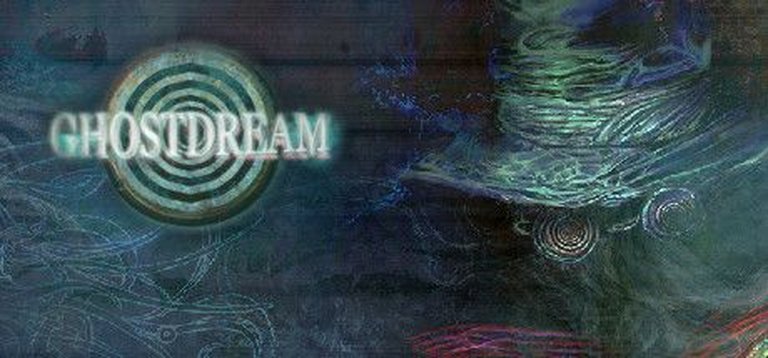
Ghostdream is a retro-style point-and-click adventure game set in a dark fantasy world where the protagonist, Reader, navigates ‘ghost-dreams’ after death. With a focus on exploration and puzzle-solving across over 55 animated locations, Reader encounters ghosts, demons, and gods while chasing a narrative fully voiced with 16,000+ words, all in a unique 2D side-scrolling aesthetic.
Gameplay Videos
Where to Buy Ghostdream
PC
Ghostdream Patches & Updates
Ghostdream Guides & Walkthroughs
Ghostdream: A Review
Introduction: The Liminal Allure of a Solo Developer’s Vision
In the vast, overcrowded ecosystem of digital storefronts, some titles exist as spectral presences—known to a handful, discussed in niche forums, and defined more by the aura of their creation than by widespread play. Ghostdream is one such title. Released in 2016 by the singular entity Ark House, this point-and-click adventure game purports to explore the metaphysical purgatory between death and the “Other Side.” Its core premise—that ghosts can only contact the living through “half-dreams” or “ghost-dreams,” and that getting stuck transforms one into a demon—is immediately evocative, promising a narrative steeped in melancholy, mystery, and existential dread. However, as developer Arkhouse himself wryly notes in his blog, the game is a “mixed bag” and a “pleasant disaster.” This review will argue that Ghostdream is a fascinating, deeply flawed artifact of uncompromising solo indie development. Its value lies not in polished execution but in the raw, unfiltered expression of a specific personal vision, making it a curious case study in ambition versus accessibility, and a testament to the creative possibilities—and profound challenges—of the one-person project.
Development History & Context: The Solitary Architect of Ghostdream
Ghostdream emerges from a specific, almost obsolete, development context. It was created entirely by a single individual, known as Arkhouse, who took on every role: concept, writing, coding, graphics, music, and voice acting. This hyper-solo development model was facilitated by Adventure Game Studio (AGS), a free, community-driven engine that democratized point-and-click adventure creation in the 2000s and 2010s. AGS allowed developers to focus on narrative and art without deep programming knowledge, but it also imposed technical limitations typical of the engine—limited resolution, specific audio handling, and a reliance on 2D sprites and backgrounds.
The game’s release in October 2016 places it in a transitional period for adventure games. The genre was experiencing a modest renaissance via narrative-driven titles from studios like Telltale Games (The Walking Dead) and Campo Santo (Firewatch), but these were largely polished, commercially-backed productions. Ghostdream stood in stark contrast: a no-budget, Windows-exclusive, digitally distributed title on Steam and Humble Bundle, with a humble price point and minimal marketing. Its publisher, Forever Entertainment S. A., is a small Polish company known for localizing and publishing niche indie titles, suggesting a distribution deal aimed at getting the game onto major platforms without a significant marketing push.
The technological constraints are evident in the system requirements (a 900 MHz processor, 256 MB RAM, DirectX 9.0c), which are benign even for 2016 but speak to a project built for compatibility over spectacle. The game’s “retro-style” aesthetic is not merely an artistic choice but likely a practical necessity born from the limitations of a solo artist working with AGS tools. In this landscape, Ghostdream is a pure passion project—a game made because its creator felt compelled to tell this specific story, with little regard for market trends or player expectations beyond a core audience of AGS enthusiasts and adventure game aficionados.
Narrative & Thematic Deep Dive: A Philosophy of Forgetting and Stagnation
The narrative of Ghostdream is its most explicitly articulated component, detailed at length in the official Steam description and developer blog. It is a story not of horror, but of existential melancholy and cognitive dissonance.
Core Premise & Protagonist: The protagonist is simply named Reader. His identity is defined by a single, haunting memory fragment: “himself reading a book.” This amnesia is universal; most ghosts and demons in this “world between worlds” remember nothing of their past lives except minor, often arbitrary, details. Reader’s companion is Writer, described as his “natural companion,” a symbiotic figure who seems to represent narrative impulse or the act of recording memory itself. Their goal is to reach the “Other Side,” the true afterlife, a journey fraught with the peril of becoming trapped—a state that transforms a ghost into a “demon,” defined as a “painful and useless existence.”
Key Characters & Relationships: Reader encounters a pantheon of spectral beings: other Ghosts, Demons, Holy Spirits, and Gods. The most significant figure is Singer, who is explicitly “neither Ghost, nor Demon.” She represents a tangible, living connection—or perhaps an anomaly in this system of the dead. The developer notes, “At some point she becomes important to Reader. Realizing this won’t stop him though.” This suggests Singer is an emotional anchor for Reader, a reason to move forward that exists outside the abstract goal of “moving on.” Her status as an outsider hints at themes of purity, presence, or perhaps the corrupting influence of the living world on the liminal space of the ghostdream.
Subversion of Expectations: The developer makes a crucial aesthetic声明: “The world of Ghostdream should be scary, but it is not – it is just dark. The story should be sad since all the characters are more or less dead, but it is not, because they normally remember nothing.” This is the game’s central thematic paradox. The horror of death is replaced by the banality and confusion of forgetting. The sadness is muted by a collective amnesia that strips characters of the specific grief for their own lives. The dread is not of punishment, but of stagnation—of being a demon, a state of “painful and useless existence.” The ultimate fear is notHell, but purgatory without purpose or memory. Reader’s personal tragedy is that he is already stuck (“My personal ‘problematic part’ is that I am already stuck here”), making his journey less about escape and more about finding meaning or purpose within the trap itself.
Thematic Synthesis: Ghostdream functions as an allegory for unfinished narratives. Characters are defined by single, incomplete memories (a book, an unknown song). The gameplay, requiring exploration to piece together context, mirrors the process of reconstructing a shattered self. The “half-dream” state suggests a liminal psychology—neither fully conscious of the living world nor fully at peace in death. The game asks: What is identity without memory? What is motivation without a past? Reader’s quest may be fundamentally futile, a Sisyphean effort to impose narrative coherence on a state of being designed for oblivion.
Gameplay Mechanics & Systems: Exploration as Puzzle, Puzzle as Metaphor
Ghostdream adheres to the classic point-and-click template but with a deliberate, almost ascetic, design philosophy that reveals its thematic intent.
Core Loop & Interface: The game uses a standard point-and-select interface. The cursor likely changes contextually (walk, look, interact, talk). The Steam page lists “standard adventure actions (like get here, talk there, press this, press that…)” suggesting a verb palette or context-sensitive clicks. The interface is described as “retro-style,” implying a fidelity to 1990s LucasArts or Sierra adventures.
Puzzle Design: The “Myst-Style” Enigma: The most defining—and according to community discussion, the most divisive—feature is the puzzle design. The Steam description states the 8 Major Puzzles are “more or less Myst style: no items required, exploration of the whole accessible area is a must.” This is a critical statement. Instead of inventory-based puzzles (combine key with lock), these are environmental and observational puzzles. The Steam community guide and discussions reveal their nature:
* Card/Button Sequences: Several puzzles (ACT I, ACT V, ACT VI) involve finding cards with symbol sequences and inputting them via buttons. These are arbitrary codes to decipher.
* The “7 Lights” Hunt (ACT III): This is a classic pixel-hunt within a town map. The player must find 7 hidden lights in various rooms. The guide notes this was a major stumbling block: “How exactly do you ‘find’ the hidden lights?… it isn’t necessary to go to a certain place, it won’t be mentioned.” This suggests extreme obscurity.
* Spatial Navigation (ACT VII): The finale involves clicking on specific coordinates (“point shown here (4,3)”) on a minimalist interface, a test of precise attention to a possibly cryptic map.
Philosophy of Design: These puzzles are not about logical deduction (use the bucket on the fire) but about thorough, obsessive exploration and pattern recognition. They demand the player scrutinize every screen, click every hotspot, and correlate symbols across disconnected areas. This directly mirrors the game’s theme: the ghosts’ fragmented memories are the “puzzles” of their existence. To progress, you must scour the environment (the ghostdream) for clues (the lights, the cards) that make no inherent sense but are the rules of this world. The difficulty is not in cleverness but in attention and perseverance. As one Steam user quipped, the puzzles are “hidden behind professional cryptography,” highlighting their opaque, code-like nature.
Progression & Structure: The game is divided into 7 Acts, as seen in the walkthrough. Progression is nonlinear within each act’s accessible area but gated by the completion of its major puzzle. The “exploration of the whole accessible area is a must” principle means the player cannot skip rooms or contexts; they must engage with the entire space of a given chapter, absorbing its ambient details (the minor memories of ghosts) to solve its central enigma.
Flaws & Innovations: The puzzles are almost certainly obtuse and frustrating for many players, as indicated by the need for community guides and comments about “fiddly pixel hunts.” This is a major flaw in accessibility. However, it can be seen as a stubbornly consistent, if flawed, integration of theme and mechanic. The game does not just tell you about the struggle of fragmented existence; it makes you experience a form of it through its obscure, memory-dependent puzzles. The innovation is one of total aesthetic unity, where even the user experience is an expression of the core idea, albeit at the cost of playability.
World-Building, Art & Sound: Atmospheric Coherence Over Cosmetic Detail
Ghostdream’s presentation is its other major pillar, built with the clear constraints of a solo artist.
Visual Direction & Art Style: The game features 55+ entirely animated locations (rooms) and 14+ characters (per ModDB). The art style is 2D, side-view, and scrolling. The developer’s description—”the world… is just dark”—is key. The aesthetic is likely noir-inspired or monochromatic, emphasizing shadow, silhouette, and mood over color and detail. The emphasis on “entirely animated” locations suggests a labor-intensive approach where backgrounds may have subtle movements (flickering lights, drifting fog), creating a living, dreamlike atmosphere. The existence of a 60-page art book (included or sold separately) strongly indicates that the visual world was meticulously planned and is a significant source of pride for the developer. This book likely contains concept art, environmental sketches, and a puzzle guide, serving as both an art compendium and a manual for the game’s opaque logic.
Sound Design & Music: The 20+ songs OST points to a fully realized aural experience. Given the themes, the music is likely ambient, melancholic, and perhaps incorporating minimalist piano, synthesizer pads, or dissonant tones to evoke the “half-dream” state. The game is fully voiced (16,000+ words), which is a monumental task for a solo dev. This suggests a focus on atmospheric delivery—the tone of voice likely matters more than theatrical performance, contributing to the detached, ethereal feel. The sound design probably prioritizes environmental cues (echoes, distant sounds) to enhance the sense of a vast, empty, in-between space.
Atmosphere & Coherence: The greatest strength of the presentation is its tonal consistency. Every element—the dark, sparse visuals; the ambient, somber soundtrack; the soft, possibly monotonous voice acting; the slow, deliberate pace of exploration—works together to create a unified atmosphere of lonely contemplation. It avoids jump scares or melodrama, cultivating a slow-burn sense of isolation and philosophical weight. The world feels less like a traditional game environment and more like a manifestation of a psychological or spiritual state. This coherence is impressive for a solo project and is likely the source of its “artistic” acclaim among its small fanbase.
Reception & Legacy: The “Pleasant Disaster” and Its Cult Curiosity
Ghostdream exists on the extreme fringes of commercial and critical recognition.
Launch Reception: At launch in October 2016, it received virtually no mainstream coverage. No critic reviews are aggregated on Metacritic. Its primary “reviews” are user reviews on Steam, where it holds a “Mixed” rating (67% positive from 64 reviews as of various 2025-2026 data points). This indicates a polarized but small audience. Positive reviews likely praise its unique atmosphere, sincere storytelling, and impressive solo-effort scope. Negative reviews almost certainly cite the obtuse puzzles, slow pacing, and potentially rough production values (voice acting, UI).
Community & Discourse: The Steam community is minimal (50 discussions, mostly about coupons and launch glitches). The most substantive discussion occurs on the Adventure Game Studio forums, where it was announced as a “Completed Game.” This placement confirms its primary identity as a labor-of-love project for the AGS community rather than a broad indie title. The developer’s own web blog (arkhousetelegraph.blogspot.com) is the richest source, offering post-mortems and self-deprecating commentary that frames the game as an exercise in personal expression.
Evolution of Reputation: Its reputation has not evolved significantly; it remains a deeply niche title. The developer’s characterization of it as a “pleasant disaster” and an “it’s so bad it’s good” kind of game sets the expected tone for anyone who discovers it. It is not being rediscovered as a lost classic but is occasionally mentioned in threads about obscure AGS games or solo-developed adventures. A Let’s Play by Italian YouTuber “L’uomocosafacose” (now MoonErMicino) in 2023-2025 indicates a tiny but persistent curiosity from content creators seeking unique, discussed material.
Influence & Legacy: Ghostdream has had no discernible influence on the broader industry. Its design choices—obscure environmental puzzles, minimalist noir aesthetic—do not appear to have been adopted by larger studios. Its legacy is that of a curio, a digital folk art piece. It represents the extreme end of the auteur theory in games: a single person’s complete, unfiltered vision, with all the idiosyncrasies and lack of compromise that entails. In this sense, it is historically valuable as a document of indie development ethos in the mid-2010s, showcasing what was possible with free tools, personal drive, and a Steam Direct submission, but also the limitations in reach and polish when commercial pressures are entirely absent.
Conclusion: A Spectral Artifact for the Archivally Inclined
Ghostdream is not a “good” game by conventional metrics. Its puzzles are needlessly obtuse, its pacing is glacial, its production values are uneven, and its player base is microscopic. It received a “Mixed” Steam rating largely because it commits the cardinal sin of being difficult without being satisfyingly clever. Yet, to dismiss it entirely is to miss its peculiar, haunting value.
As a historical artifact, it is a perfect encapsulation of the solo AGS adventure. It demonstrates the engine’s potential for personal, atmospheric storytelling but also its tendency toward obscurity and homogeneity. Its narrative, while derivative in premise (limbo-like afterlife), is executed with a philosophical rigor that is rare in games of its budget and scale. The total integration of theme into mechanics—making the player engage in the same kind of obsessive, pattern-deficient “memory hunting” as its ghostly protagonists—is a bold, if punishing, design choice.
Its place in video game history is not among the classics that shaped genres or moved culture. Instead, it belongs in the cabinet of curiosities—the shelf of games that are fascinating precisely because they are failures of communication, born from a singular vision too personal to be widely accessible. It is a game for the game journalist and historian who seeks to understand the full spectrum of creation, from multi-million dollar blockbusters to the quiet, desperate, and beautiful projects made in solitude. Ghostdream is a ghost in the machine of the industry: present in the database, audible in its faint hum, but ultimately trapped in its own half-dream, waiting for a player with the patience—and the philosophical inclination—to piece together its fragments and, perhaps, tell it it’s okay. For that specific player, it might be a masterpiece. For everyone else, it remains a poignant, perplexing, and deeply human “pleasant disaster.”