
- Release Year: 2020
- Platforms: Luna, Nintendo Switch, PlayStation 4, PlayStation 5, PlayStation Now, Windows, Xbox One
- Publisher: 505 Games S.p.A., All in! Games Sp.z o.o., H2 Interactive Co., Ltd.
- Developer: One More Level S.A., Slipgate Ironworks ApS
- Genre: Action
- Perspective: 1st-person
- Game Mode: Single-player
- Gameplay: Platform
- Setting: Cyberpunk, dark sci-fi, Post-apocalyptic
- Average Score: 81/100
Description
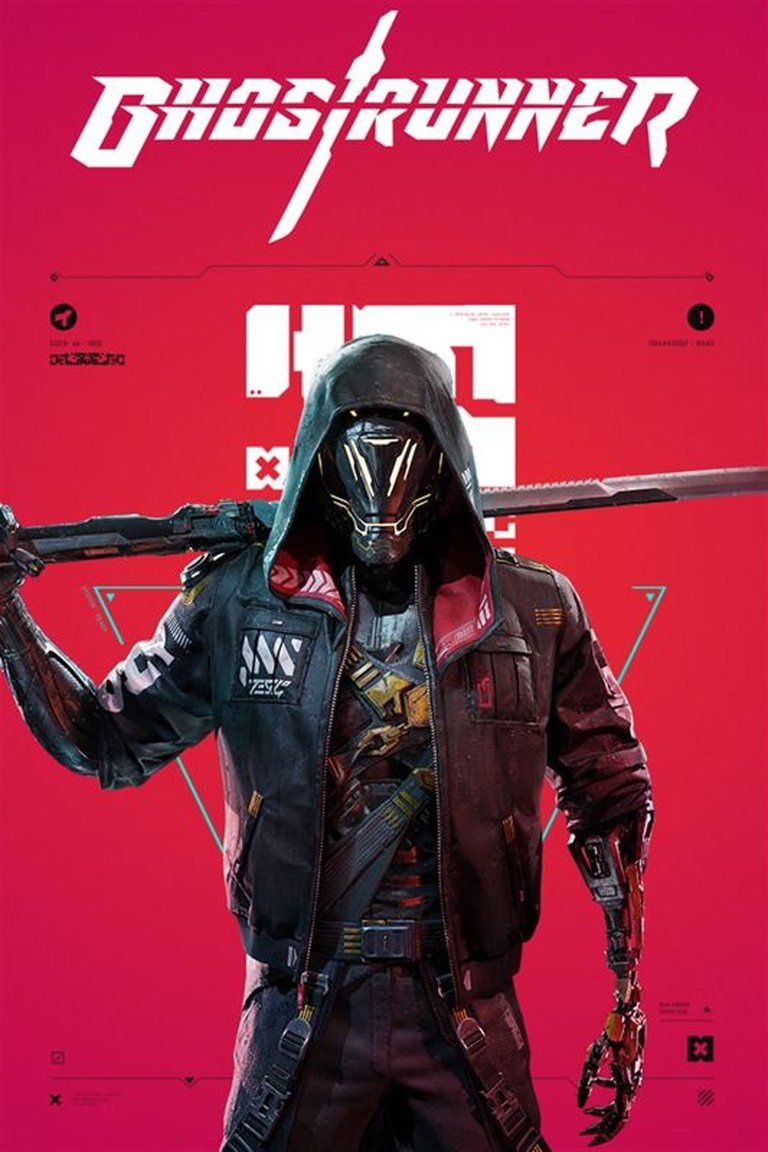
Ghostrunner is a single-player first-person action platformer set in the cyberpunk, post-apocalyptic world of Dharma Tower, a massive megastructure housing humanity’s survivors after a global catastrophe. Players control the cybernetically enhanced Ghostrunner, who awakens with fragmented memories and is guided by the Architect AI, tasked with ascending the tower to overthrow the oppressive Keymaster and reveal the truth about their origins, using precise katana strikes, wall-running, dashing, and time-slowing abilities in a one-hit-kill combat system.
Gameplay Videos
Where to Buy Ghostrunner
Ghostrunner Free Download
Ghostrunner Cracks & Fixes
Ghostrunner Mods
Ghostrunner Guides & Walkthroughs
Ghostrunner Reviews & Reception
metacritic.com (81/100): Ghostrunner is a very pleasant surprise for anyone who likes to keep gameplay at the center of their experience.
ign.com : Ghostrunner stands out by being 100% committed to delivering that fantasy of becoming a super fast and deadly assassin.
imdb.com : The gameplay is so good. It’s like a mixture of Mirror’s Edge and Dishonored and the movement is so smooth and satisfying.
corerunner.substack.com : One of the best games of the 2020s if you can handle it.
Ghostrunner Cheats & Codes
PC
Pause the game by pressing the ‘Esc’ key. Go to the ‘Extras’ menu. Select ‘Cheats’ and then enter the available cheat codes.
| Code | Effect |
|---|---|
| GODMODE | God Mode – become invincible and cannot be killed by enemies or environmental hazards |
| UNLIMITEDAMMO | Unlimited Ammo – never run out of bullets |
| UNLOCKALL | Unlock All Levels and Weapons – access all levels and weapons |
| INFINITEDASH | Infinite Dash – unlimited dash ability |
| FASTENEMIES | Fast Enemies – increase the speed of all enemies |
| SLOWMO | Slow Motion – slow down time |
| SUPERJUMP | Super Jump – jump higher than usual |
| ENABLEALLCOLLECTIBLES | Enable All Collectibles – unlocks every collectible instantly |
| DISABLEAI | Disable AI – makes enemies inactive |
| NOFALLDAMAGE | No Fall Damage – eliminates fall damage |
Ghostrunner: Review
Introduction
Imagine hurtling through a neon-drenched dystopia, your monomolecular katana slicing through cybernetic foes in a blur of wall-runs, mid-air dashes, and bullet-time deflections—only for a single stray projectile to obliterate you in an instant, resetting the symphony of death to its opening note. This is Ghostrunner, a 2020 cyberpunk action-platformer that doesn’t just challenge players; it demands mastery, punishing imperfection while rewarding precision with euphoric highs. Developed by Poland’s One More Level and released amid a wave of genre giants like Cyberpunk 2077, Ghostrunner carved its niche as a spiritual successor to Mirror’s Edge fused with Hotline Miami‘s lethal rhythm. Its legacy endures not as a blockbuster, but as a cult precision slasher that birthed a sequel and sold over 2.5 million units. Thesis: Ghostrunner stands as a pinnacle of unforgiving, momentum-driven design in first-person platformers, blending cyberpunk aesthetics with surgical gameplay loops that elevate trial-and-error into high art, cementing its place as an essential evolution of the genre despite its brevity and brutality.
Development History & Context
Ghostrunner emerged from Warsaw-based One More Level, a studio founded in 2013 by industry veterans including Head of Studio Szymon Bryła, Game Director Radosław Ratusznik, and Art Director Wojciech Wilk. With just 32 developers—a modest team by AAA standards—they partnered with Danish co-developer Slipgate Ironworks (known for ports like Rise of the Triad) and 3D Realms (producers of classics like Duke Nukem) for production finesse. Publishers 505 Games and All in! Games handled global rollout, securing a multi-platform launch on Unreal Engine 4, which enabled RTX ray-tracing support and fluid 60 FPS performance on PC.
Announced at Gamescom 2019 with a trailer evoking Titanfall meets Dishonored, the game tapped into a cyberpunk renaissance pre-Cyberpunk 2077‘s delay. A May 2020 Steam demo hooked players with its katana-wielding parkour, drawing Mirror’s Edge comparisons from outlets like PC Gamer. Launched October 27, 2020, on Windows, PS4, and Xbox One (Switch November 10), it arrived in a landscape dominated by open-world epics and battle royales. Technological constraints of last-gen consoles tested the team—Switch ports suffered aliasing and frame drops—but PC’s DLSS and ray-tracing showcased its visual ambition. Key credits like Lead Programmer Grzegorz Greger and Composer Daniel Deluxe (whose synthwave soundtrack became iconic) infused punk ethos into a $30 indie package. Post-launch, 505 Games acquired IP rights, greenlighting DLC (e.g., Project Hel prequel in 2022) and Ghostrunner II (2023), proving its commercial viability amid a post-apocalyptic gaming surge.
Studio Vision and Era Constraints
One More Level envisioned a “cyberpunk DOOM”—fast, lethal, replayable—eschewing AAA bloat for tight 5-8 hour campaigns. Era constraints like Unreal Engine 4’s optimization demands shaped its linear levels, avoiding sprawling worlds to prioritize rhythm. The 2020 landscape, shadowed by Doom Eternal‘s glory kills and Hades‘ roguelite loops, positioned Ghostrunner as a hardcore antidote, its one-hit-kill system amplifying tension in an accessibility-focused industry.
Narrative & Thematic Deep Dive
Ghostrunner‘s story unfolds in Dharma Tower, humanity’s last arcology after “the Burst”—a cataclysm rendering Earth uninhabitable with radioactive dust. Players embody the titular Ghostrunner (later “Jack”), a cybernetically enhanced ninja awakening amnesiac, guided by the Architect (digital remnant of founder Adam) to topple Keymaster Mara, who usurped control via coup. Fragmented via audio logs, Cybervoid cyberspace dives, and terse comms, the plot reveals a Big Bad Ensemble: Mara’s transhumanist tyranny (fusing humans into Outside-adapted horrors) versus the Architect’s manipulative utilitarianism (mind-controlling citizens via Atma implants).
Plot Breakdown and Characters
- Act 1: Awakening and Ascent – Jack repairs post-Mara’s dismemberment, aided by Climber rebel Zoe. He restarts failing air filters, defying Architect’s pragmatism, hinting at emergent free will.
- Act 2: Revelations – Battles TOM (T-073-M security drone) and Hel (Mara’s crude Ghostrunner knockoff). Cybervoid hacks expose Architect’s lies; Jack hacks enemies via neural implants.
- Act 3: Betrayals – Mara unveils her “evolution” via forced cyberization; Architect attempts mind-erasure in cyberspace climax. Jack destroys both, reclaiming agency as Zoe narrates bittersweet freedom.
Characters shine through minimalism: Architect (cynical Exposition Fairy, voice of cold logic); Zoe (empathetic Morality Pet, humanizing Jack); Mara (mad scientist with tentacles, evolution zealot); Hel (Project Hel DLC expands her rogue psyche). Dialogue is sparse, Deadpan Snarker quips underscoring themes.
Themes: Control, Humanity, and Cyberpunk Critique
Ghostrunner interrogates free will vs. determinism: Jack, engineered from cells as a “tool,” evolves sentience via Climber mods, rejecting Architect’s subjugation and Mara’s dehumanization. Cyberpunk tropes subverted—Dharma’s vertical segregation (poor below, elite in neon spires) mirrors Blade Runner, but one-hit lethality equates player/foe fragility, critiquing augmentation’s soul-eroding cost. Post-apocalyptic hope tempers despair: Jack’s finger-twitch epilogue signals rebirth. Narrative serves gameplay—predictable arcs propel momentum—yet audiologs enrich world-building, elevating pulp to philosophical punch.
Gameplay Mechanics & Systems
At its core, Ghostrunner is a symphony of momentum: one-hit-kill katana demands flawless execution amid platforming gauntlets. Core loop—traverse, engage, die, refine—blends Mirror’s Edge fluidity with Hotline Miami rhythm, levels as “elaborate mazes” per reviews.
Core Loops and Movement
- Traversal Arsenal: Wall-run, slide, grapple-hook, air-dash. Chain into “Advanced Movement Technique” (dash-cancel-slide) for speed bursts; vents propel upward.
- Combat Precision: Enemies (Keys: gunners, shield-bearers; ninjas: parry-masters; drones: homing) mirror lethality. Redirect bullets, hack shields, Overlord mind-control.
- Sensory Boost: Mid-air slow-mo for dodges/deflections—upgrades extend duration.
Progression and UI
Upgrades via collectible modules slot into a Tetris-grid (e.g., extended dash, Surge sword-beams)—Inventory Management Puzzle balancing space/energy regen. UI is minimalist: HUD-optional death/time counters fuel speedrunning. Flaws: uneven spikes (e.g., sniper ambushes), checkpoint rigidity (no mid-quit saves).
| Mechanic | Strengths | Weaknesses |
|---|---|---|
| One-Hit-Kill | Heightens tension, forces mastery | Frustrating “unfair” deaths (e.g., unseen bullets) |
| Upgrades | Replayable builds, passive regen | Late unlocks limit first runs |
| Bosses | Arena platforming (TOM’s lasers) | Repetitive phases, Tactical Suicide Boss vibes |
Innovations like Cybervoid puzzles (time-slow fans) and New Game+ (remixed hazards) ensure depth; Hardcore Mode shuffles enemies for masochists.
World-Building, Art & Sound
Dharma Tower looms as a Skyscraper City arcology—grimy underbelly to neon elite spires, air-vents filtering doom outside. Levels evolve: industrial ducts, blood-soaked labs, cyberspace voids. Visuals stun via Unreal 4: ray-traced reflections on puddles, dynamic blood-splatter cams. PS5 haptics enhance immersion.
Sound Design elevates: Daniel Deluxe’s synthwave pulses with action—fading during platforming, surging in combat—praised as “thumping score” syncing “dance rave marathon.” VO (e.g., Architect’s snark) and enemy chatter build dread; gore SFX visceral.
Atmosphere amplifies tension: Always-night vibes (rare blue skies tease hope), holographic banners (“EVOLUTION”), jars of fused humans. Art contributes to flow-state zen, cyberpunk grime/neon evoking Blade Runner in motion.
Reception & Legacy
Critics adored (Metacritic: PC 81/100, PS4/Xbox 76/100; OpenCritic 82% recommend): Rapid Reviews UK (100%) hailed “sleek parkour”; Hooked Gamers (100%) its “everything excellence”; IGN (8/10) speedrunner dream. Consensus: “Brutal but fun” (Rock Paper Shotgun), Mirror’s Edge with “good combat” (TheSixthAxis). Dings: Short (5-8 hours), frustration (Edge 5/10), Switch tech woes (73/100).
Players averaged 3.4/5 (MobyGames), loving highs but cursing deaths. Commercial hit: 600K by 2021, 2.5M+ by 2023. Influence: Revived first-person parkour; Ghostrunner II (2023, 82/100) iterates with bike combat; Project Hel DLC explores antagonists. Echoes in Neon White, speedrun metas; cult status for precision fans, bridging indie/AAA.
Critical Evolution
Launch: “GOTY contender” (Way Too Many Games). Retrospective: Enduring for mastery joy (Shacknews), influencing cyberpunk indies amid Cyberpunk 2077 shadow.
Conclusion
Ghostrunner distills cyberpunk fury into pixel-perfect parkour-slasher bliss, its Dharma ascent a gauntlet forging gods from repeated failures. Development ingenuity overcame constraints; narrative probes agency amid visceral mechanics; art/sound propel immersion. Reception affirms its triumphs over flaws, legacy as genre-redefiner secure—sequel cements franchise. Verdict: Essential 9/10 hall-of-famer. For precision pilgrims, it’s transcendence; casuals, beware. In video game history, Ghostrunner etches: die free, run eternal.