
- Release Year: 2023
- Platforms: Macintosh, Windows
- Publisher: Studio Unagi
- Developer: Studio Unagi
- Genre: Adventure
- Perspective: 1st-person
- Game Mode: Single-player
- Gameplay: Visual novel
- Setting: Futuristic, Japan, Modern
- Average Score: 92/100
Description
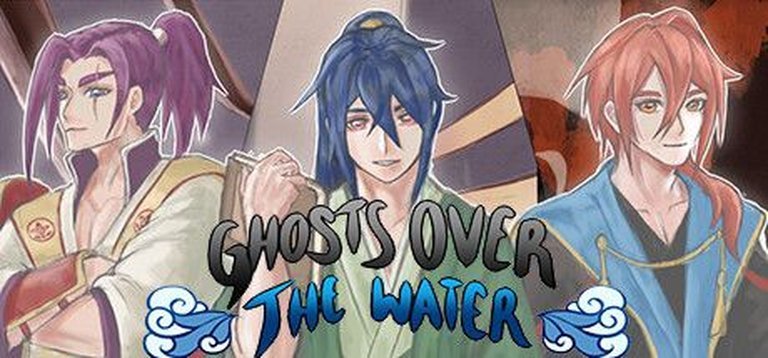
Ghosts Over the Water: Changing the Tides of Japan’s Future is a strategy-based, multi-route historical visual novel set in a modern/futuristic Japan. Developed by Studio Unagi and designed by undergraduate students from Yale University and the University of Texas, Austin, the game immerses players in a fast-paced narrative filled with difficult decisions. With its anime/manga-inspired art style and dynamic storytelling, players navigate complex political and historical scenarios, shaping Japan’s future through their choices.
Where to Buy Ghosts Over the Water: Changing the Tides of Japan’s Future
PC
Ghosts Over the Water: Changing the Tides of Japan’s Future Guides & Walkthroughs
Ghosts Over the Water: Changing the Tides of Japan’s Future Reviews & Reception
store.steampowered.com (92/100): An engaging strategy-based, multi-route historical visual novel.
utjapanlab.com : A country’s fate, in your hands.
studiounagi.itch.io : The fate of Japan lies with you.
mobygames.com : A historical, immersive strategy game built upon a familiar and accessible visual novel framework.
Ghosts Over the Water: Changing the Tides of Japan’s Future: A Masterclass in Historical Narrative and Player Agency
Introduction: A Game That Redefines Historical Storytelling
Ghosts Over the Water: Changing the Tides of Japan’s Future is not just a visual novel—it is a bold reimagining of how games can engage with history, politics, and the weight of individual choice. Developed by Studio Unagi, a team of four undergraduate students from Yale University and the University of Texas at Austin, this game is a testament to the power of academic passion meeting creative ambition. Released on March 31, 2023, it transports players to the tumultuous summer of 1853, when Commodore Matthew C. Perry’s fleet arrived in Edo Bay, shattering Japan’s centuries-long isolation. Through the eyes of Tsumaki Naoharu, a young samurai navigating the treacherous waters of Tokugawa politics, players are thrust into a world where every decision carries the potential to alter the course of a nation.
This review will dissect Ghosts Over the Water in exhaustive detail, exploring its development, narrative depth, gameplay mechanics, artistic vision, and lasting impact. What emerges is a game that is as much a historical simulation as it is a meditation on the fragility of power, the clash of ideologies, and the human cost of progress.
Development History & Context: The Birth of a Passion Project
The Studio Behind the Vision
Studio Unagi is a rare breed in the gaming industry—a collective of students whose work is deeply intertwined with academic research. The team’s collaboration with the University of Texas at Austin’s JapanLab and the Epoch Games Initiative provided them with access to historical expertise and resources that most indie developers could only dream of. This partnership ensured that Ghosts Over the Water is not merely a work of fiction but a meticulously researched exploration of a pivotal moment in Japanese history.
The game’s development was driven by a desire to make history accessible and engaging. The team’s academic background allowed them to craft a narrative that balances historical accuracy with compelling storytelling, a feat that many commercial studios struggle to achieve. The result is a game that feels both authentic and immersive, a rare combination in the visual novel genre.
Technological Constraints and Creative Solutions
Ghosts Over the Water was built using Unity, a choice that reflects the team’s need for a flexible and accessible engine. While Unity is often associated with larger, more complex games, Studio Unagi leveraged its capabilities to create a visually striking and mechanically sound experience. The game’s hand-drawn art, inspired by traditional anime and manga styles, is a testament to the team’s artistic vision, despite the limitations of their budget and experience.
One of the most notable aspects of the game’s development is its commitment to accessibility. The game is free to play, a decision that reflects the team’s desire to reach as wide an audience as possible. This approach is particularly commendable given the game’s educational value, making it a valuable resource for both casual players and history enthusiasts.
The Gaming Landscape at Launch
Ghosts Over the Water entered a market dominated by commercial visual novels and narrative-driven games. However, its unique blend of historical accuracy, player agency, and academic rigor set it apart from its peers. The game’s release in 2023 coincided with a growing interest in historically themed games, a trend that has seen titles like Assassin’s Creed and Total War explore real-world events with varying degrees of success. What makes Ghosts Over the Water stand out is its unwavering commitment to historical fidelity, a quality that resonates deeply with players who crave authenticity in their gaming experiences.
Narrative & Thematic Deep Dive: A Story of Choices and Consequences
The Plot: A Nation at a Crossroads
The game’s narrative is set in the summer of 1853, a time when Japan’s isolationist policies were being challenged by the arrival of Commodore Perry’s fleet. Players assume the role of Tsumaki Naoharu, a young samurai tasked with gathering intelligence on the various factions vying for influence in the Tokugawa shogunate. The story is divided into three character-specific routes, each offering a unique perspective on the political and social upheaval of the time.
The game’s central conflict revolves around Japan’s response to Perry’s demands for trade and concessions. This seemingly simple question—whether to open Japan’s borders or maintain its isolation—is anything but straightforward. The game explores the complexities of this decision through the eyes of Naoharu, who must navigate the treacherous waters of Tokugawa politics while grappling with his own personal ambitions and moral dilemmas.
Characters: Historical Figures Brought to Life
The game’s cast is a who’s who of historical figures, each representing a different faction and ideology. The three main characters—Ii Naosuke, Yoshida Shoin, and Tokugawa Yoshinobu—serve as the primary lenses through which players experience the story. Each character embodies a distinct viewpoint on Japan’s future, from the conservative isolationism of Naosuke to the reformist ideals of Shoin.
The game’s supporting cast is equally impressive, featuring over 15 historically based characters who shape Naoharu’s journey. These characters are not mere caricatures but fully realized individuals with their own motivations, fears, and aspirations. The dialogue is rich and nuanced, reflecting the team’s deep understanding of the historical context and the complexities of human nature.
Themes: Power, Progress, and the Human Cost of Change
At its core, Ghosts Over the Water is a meditation on the nature of power and the consequences of change. The game explores the tension between tradition and progress, a theme that is as relevant today as it was in 1853. Through Naoharu’s journey, players are forced to confront the moral ambiguities of political decision-making, the weight of historical legacy, and the personal cost of ambition.
The game’s narrative is also a powerful exploration of the human experience. Naoharu’s struggles—his desire for recognition, his fear of failure, and his quest for meaning—are universal themes that resonate with players on a deeply personal level. The game’s multiple endings, each reflecting a different path for Japan and Naoharu, underscore the idea that history is not a predetermined script but a series of choices with far-reaching consequences.
Gameplay Mechanics & Systems: A Masterclass in Player Agency
Core Gameplay Loop: Dialogue and Decision-Making
Ghosts Over the Water is, at its heart, a visual novel, and its gameplay revolves around dialogue choices and decision-making. Players navigate Naoharu’s journey through a series of conversations, each presenting them with choices that shape the story’s outcome. The game’s branching narrative is one of its strongest features, offering seven distinct endings that reflect the consequences of the player’s decisions.
The game’s interface is intuitive and accessible, with a menu-driven system that allows players to easily navigate the story. The use of the left mouse button to advance text and make choices is a simple but effective design choice, ensuring that the gameplay remains focused on the narrative. The inclusion of keyboard shortcuts for saving, loading, and accessing options further enhances the game’s accessibility.
Combat and Character Progression: A Focus on Narrative
Unlike many visual novels, Ghosts Over the Water does not feature traditional combat mechanics. Instead, the game’s progression is tied to Naoharu’s political maneuvering and the relationships he builds with other characters. This focus on narrative and character development is a refreshing departure from the action-oriented gameplay of many modern titles, allowing players to fully immerse themselves in the story.
The game’s lack of traditional combat is not a weakness but a strength. By eschewing battle mechanics, the game is able to focus on what truly matters: the story and the characters. This approach is particularly effective given the game’s historical setting, where political intrigue and diplomatic maneuvering were often more important than brute force.
Innovative Systems: The Weight of Choice
One of the game’s most innovative features is its emphasis on the consequences of player choices. Unlike many visual novels, where decisions often feel superficial, Ghosts Over the Water ensures that every choice has a tangible impact on the story. This is achieved through a combination of branching narrative paths and a system that tracks the player’s relationships with other characters.
The game’s multiple endings are a testament to this design philosophy. Each ending reflects a different path for Japan and Naoharu, underscoring the idea that history is shaped by the choices of individuals. This emphasis on player agency is one of the game’s greatest strengths, making it a deeply personal and engaging experience.
World-Building, Art & Sound: A Feast for the Senses
Setting and Atmosphere: Edo Japan in Turmoil
The game’s setting is a meticulously crafted recreation of Edo Japan, a world on the brink of profound change. The game’s art style, inspired by traditional anime and manga, is a perfect fit for the story, capturing the beauty and complexity of the period. The hand-drawn backgrounds and character designs are rich in detail, immersing players in a world that feels both authentic and alive.
The game’s atmosphere is further enhanced by its sound design. The soundtrack, featuring over 35 songs, is a blend of traditional Japanese music and original compositions, each carefully chosen to reflect the mood and tone of the story. The voice acting, while limited, is well-executed, adding depth and emotion to the characters.
Visual Direction: A Blend of Tradition and Innovation
The game’s visual direction is a standout feature, blending traditional anime aesthetics with modern design sensibilities. The character art, created by Eric Doddy, is particularly impressive, capturing the nuances of each character’s personality and emotions. The use of full-screen CGs (computer graphics) for key moments in the story is a nice touch, adding a cinematic quality to the experience.
The game’s UI (user interface) is clean and intuitive, ensuring that players can focus on the story without being distracted by cluttered menus or confusing controls. The decision to enable full-screen mode by default is a smart one, as it enhances the game’s immersive qualities. However, the game’s warning about a bug that affects the UI when exiting full-screen mode is a minor but notable flaw.
Sound Design: A Symphony of Emotion
The game’s soundtrack is a masterclass in atmospheric design, featuring a mix of traditional Japanese instruments and modern compositions. The music is used to great effect, enhancing the emotional impact of key moments in the story. The sound effects, from the rustling of leaves to the distant sounds of Edo’s bustling streets, further immerse players in the game’s world.
The game’s voice acting, while limited to certain scenes, is well-executed and adds depth to the characters. The decision to include full audio for the interface and subtitles in English ensures that the game is accessible to a wide audience, including those who may not be familiar with Japanese.
Reception & Legacy: A Game That Resonates
Critical and Commercial Reception
Ghosts Over the Water has been met with overwhelmingly positive reception from players and critics alike. On Steam, the game boasts a 92% positive rating based on 13 user reviews, a testament to its quality and appeal. Players have praised the game’s narrative depth, historical accuracy, and emotional resonance, with many highlighting its educational value as a standout feature.
The game’s commercial success is equally impressive, particularly given its status as a free-to-play title. Its availability on multiple platforms, including Windows and macOS, has ensured that it has reached a wide audience, further cementing its reputation as a must-play experience for fans of visual novels and historical games.
Influence on the Industry
Ghosts Over the Water is a game that defies easy categorization. It is at once a visual novel, a historical simulation, and an educational tool, a combination that has resonated deeply with players. Its success has demonstrated the potential for games to engage with history in a meaningful and accessible way, a lesson that other developers would do well to heed.
The game’s emphasis on player agency and branching narratives has also had an impact on the visual novel genre. By proving that choices can have real consequences, Ghosts Over the Water has set a new standard for narrative-driven games, one that prioritizes depth and complexity over superficial interactivity.
Evolution of Reputation
Since its release, Ghosts Over the Water has continued to garner praise and recognition. Its inclusion in academic discussions and its use as a teaching tool in history courses are testaments to its enduring relevance. The game’s reputation as a masterclass in historical storytelling has only grown over time, solidifying its place as a modern classic.
Conclusion: A Landmark in Historical Gaming
Ghosts Over the Water: Changing the Tides of Japan’s Future is a game that transcends its genre. It is a work of art, a historical simulation, and a deeply personal journey, all rolled into one. Studio Unagi’s commitment to historical accuracy, narrative depth, and player agency has resulted in a game that is as educational as it is entertaining, a rare feat in the world of video games.
The game’s legacy is one of innovation and excellence. It has redefined what a visual novel can be, proving that games can engage with history in a way that is both accessible and profound. For players who crave authenticity, depth, and emotional resonance, Ghosts Over the Water is an essential experience, a game that will linger in the mind long after the final credits roll.
Final Verdict: 9.5/10 – A Masterpiece of Historical Storytelling
Ghosts Over the Water is not just a game—it is a journey through time, a meditation on the nature of power, and a testament to the enduring power of choice. It is a must-play for anyone who believes that games can be more than just entertainment, that they can be a window into the past and a mirror to the present.