
- Release Year: 2020
- Platforms: Linux, Macintosh, Nintendo Switch, Windows, Xbox One, Xbox Series
- Publisher: Rogue Games, Inc.
- Developer: Ransacked Studios, LLC
- Genre: Action
- Perspective: Side view
- Game Mode: Single-player
- Gameplay: Platform, Shooter
- Setting: Fantasy
- Average Score: 93/100
Description
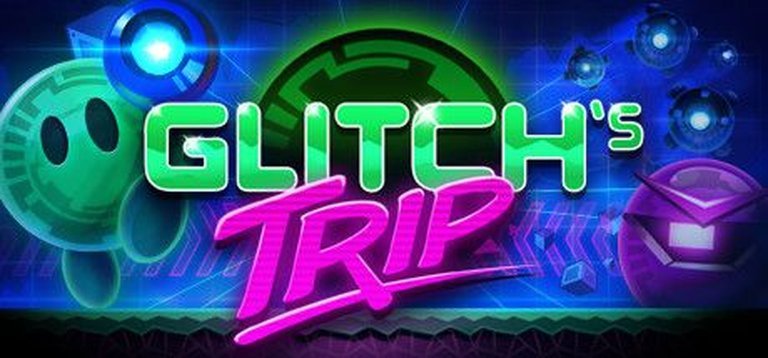
Glitch’s Trip is an action-platformer set in the fantasy world of planet Verdo, where the hero Glitch must traverse four unique moons to investigate and stop the siphoning of life-giving Moon Juice by giant breweries, preventing his home planet’s demise. With 100 handcrafted levels, over 40 hazards, and 16 enemies, the game offers a challenging yet charming experience through 2D side-scrolling gameplay, featuring Glitch’s intangibility ability and adjustable difficulty settings.
Gameplay Videos
Where to Buy Glitch’s Trip
PC
Glitch’s Trip Cracks & Fixes
Glitch’s Trip Reviews & Reception
metacritic.com (90/100): cute and charming you will keep coming back for more
opencritic.com (90/100): cute and charming you will keep coming back for more
store.steampowered.com (100/100): This is such a cool concept for a game.
Glitch’s Trip: A Vibrant, Glitch-Fueled Triumph of Indie Platforming
In the vast and often overcrowded landscape of indie 2D platformers, where titles like Super Meat Boy and Celeste have set towering benchmarks for precision and challenge, a game must possess a truly distinctive core mechanic to carve out its own legacy. Glitch’s Trip (2020), from the small but ambitious Ransacked Studios, achieves this with a brilliantly simple yet profoundly malleable central conceil: the power to become intangible and manipulate the very fabric of each level. It is a game that wears its “trippy” aesthetic on its sleeve, but beneath the vibrant, hallucinogenic surface lies a rigorously designed, frequently punishing, and ultimately rewarding test of twitch reflexes and environmental puzzle-solving. This review posits that Glitch’s Trip is a significant, if modest, entry in the hardcore platformer canon—a game whose innovative “glitch” mechanic and robust level editor grant it a lasting, niche vitality that belies its modest commercial footprint.
Development History & Context: A Small Studio’s Grand Vision
Glitch’s Trip emerged from Ransacked Studios, a micro-independent developer whose very name hints at a scrappy, resourceful ethos. The studio’s history is not extensive in the public record, but the game’s development trajectory is clearly visible through its multi-platform rollout and sustained post-launch support. Initially appearing in a playable state on itch.io in 2018 as an Early Access title with a承诺 of 75 levels, the game underwent a roughly two-year period of refinement before its official 1.0 launch on August 26, 2020, for Windows, Linux, and macOS. Publisher Rogue Games, Inc. handled the console ports, bringing the title to Nintendo Switch (2020), Xbox One (2021), and Xbox Series X/S (2021).
This timeline places Glitch’s Trip squarely in the late-2010s/early-2020s indie boom, a period saturated with precision platformers. The technological constraints were those of a small team utilizing the accessible Unity engine—a double-edged sword. On one hand, Unity’s flexibility allowed for the game’s signature visual effects (the glitch distortion, environmental toggling) and a relatively straightforward porting process to consoles. On the other, the limitations of a small indie budget are evident in the game’s aesthetic: while charming and cohesive, it lacks the hand-illustrated polish of a Celeste or the cinematic flair of a Playdead title, instead opting for a bold, geometric, and deliberately “retro” pixel-art style. The gaming landscape of 2020 was dominated by a nostalgia for challenging, “retro-styled” games, and Glitch’s Trip entered this arena with a clear understanding of its niche: a fast-paced, twin-stick shooter-platformer hybrid that prioritized quick, repetitive play sessions and player-driven challenge through its level editor.
Narrative & Thematic Deep Dive: Moon Juice, Addiction, and Planetary Survival
The narrative of Glitch’s Trip is delivered with a charming, almost perfunctory simplicity that contrasts with the gravity of its stakes. The protagonist, Glitch, is a “gooey green ball of space alien” (as described on the official Ransacked Studios site) who witnesses a catastrophic event: the moons of his home planet, Verdo, are being drained of their “life-giving Moon Juice” by giant breweries operated by “four intergalactic tyrants.” The Moon Juice is revealed to be “the secret ingredient” and “the life force of the planet,” making its theft an act of生态 suicidal proportions for Verdo.
This premise operates on a clever, thinly veiled allegorical level. The Moon Juice is explicitly called “one of the tastiest elixirs in the galaxy” and is “highly addictive.” The tyrants, whose backstories are unlocked by liberating each moon, were themselves “corrupted by Moon Juice many years ago.” This frames the conflict not as a simple good-versus-evil, but as a cyclical tragedy of addiction and exploitation. The tyrants are not mustache-twirling villains but fallen beings enslaved by the very substance they now hoard and distribute—a potent metaphor for resource addiction and the corrupting nature of easy, hedonistic fulfillment.
However, the game’s delivery of this theme is minimalist. Dialogue is sparse, mostly relegated to brief introductory and concluding cutscenes for each world. Glitch himself is a silent protagonist, his personality expressed only through his agile, desperate movements and cute, blob-like design. The story serves primarily as a motivational framework for the gameplay—a “planet’s last hope” justification for traversing 100 lethal levels. Its strength lies not in narrative complexity but in its conceptual cohesion: every hazard, every enemy, every environmental puzzle ties back to this core idea of a world being systematically drained of its vitality. The “trippy,” surreal environments of the four moons (described as “extravagant” and with “trippy themes”) visually represent this corrupted, unstable state of Verdo, making the player’s journey feel like a descent into the addict’s distorted reality.
Gameplay Mechanics & Systems: The Art of the Intangible
Where Glitch’s Trip truly distinguishes itself is in its core gameplay loop and the Glitch mechanic, which functions as the game’s central narrative and mechanical metaphor.
Core Loop & Controls: The game is a twin-stick shooter-platformer. The left stick (or keyboard) controls Glitch’s movement and jumping, while the right stick (or mouse) aims and fires his projectile weapon. This control scheme is standard for the genre but becomes the foundation for the game’s depth. Levels are typically single-screen or short, scrolling chambers with a clear exit. The goal is always simple: navigate from the entrance to the exit while eliminating enemies and avoiding hazards. The genius is in the how.
The Glitch Mechanic: By pressing and holding a dedicated button (default RT/R2 on a controller, or a keyboard key), Glitch enters a “glitched” state. Visually, he becomes semi-transparent and emits a digital distortion effect. Mechanically, this state does two critical things:
1. Invulnerability: Glitch is completely intangible and unharmed by all contact with enemies, hazards (spikes, lava, lasers), and even the environment itself. This allows for daring shortcuts through lethal traps.
2. Environmental Manipulation: While glitched, certain blocks and hazards change state. The most common implementation is a toggle system. As described in the official blurb, players can use this to “toggle hidden blocks, flip gravity, or make areas weightless.” For example, a solid green block might become passable (or disappear) while glitched, revealing a hidden path, while a previously harmless purple block might solidify into a deadly spike. This transforms every level into a dynamic puzzle where the player must carefully time their glitch activation to manipulate the space around them.
This mechanic is revolutionary in its simplicity and elegance. It’s not a separate “power-up” but a persistent, fundamental tool. It creates a unique rhythm: observe the environment, identify the glitch-triggered changes, plan a route that incorporates brief periods of invulnerability to pass through one state and exploit another. It turns defensive evasion into an offensive, world-altering strategy.
Enemies, Hazards, and Progression: The game’s challenge is built from a vast array of obstacles. The Steam store page lists “over 40 unique hazards and 16 killer enemies,” and this variety is felt. Hazards include classic platformer threats (spikes, lava, bottomless pits) alongside more inventive ones like “gravity wells” that pull Glitch in, “snipers” with predictable but deadly firing patterns, “explosive platforms,” and “charging brutes.” Enemies range from stationary turrets to fast-moving chasers, all requiring either precise shooting or clever use of the glitch to bypass.
Progression is level-based, with 100 handcrafted levels divided across four themed moons (e.g., one is described as “Space Rave,” another as “Twisted Temple”). Completing levels unlocks the next, culminating in an “epic boss” fight for each moon. The bosses are larger-scale encounters that require mastery of the glitch mechanic to defeat, often by manipulating their attack patterns or environmental hazards against them.
Difficulty & Accessibility: The game explicitly offers “3 standards of difficulty,” allowing players to choose a more forgiving experience or a brutal “challenge mode.” This is a crucial design decision that acknowledges the steep learning curve. The instant respawns and fast load times (a explicitly stated feature) are non-negotiable in this genre, and Glitch’s Trip implements them flawlessly, maintaining a punishing but never frustrating pace of retry.
Flaws & Input Issues: The most significant critical critique of the gameplay comes from the Complete Xbox review, which notes “minor latency/input issues,” specifically that “pressing the jumping doesn’t always respond in time” and that the default mapping of jump to the left trigger (LT/L2) is “cumbersome.” This is a serious charge for a precision platformer. The review notes the ability to re-map controls mitigates this, but the default scheme suggests a design misstep—a potential mismatch between control scheme and the tight response times the game demands. This latency can feel like a fundamental betrayal in a game where a single frame of delay means death.
World-Building, Art & Sound: A Cohesive, Synesthetic Trip
The presentation of Glitch’s Trip is its most universally praised aspect and is integral to its identity. The world of Verdo’s moons is a masterclass in cohesive, thematic level design through art and sound.
Visual Direction: The game employs a bold, saturated 2D pixel-art style. Environments are “extravagant” and “trippy,” with each moon boasting a distinct, hallucinatory theme. One might feature neon-lit rave aesthetics with pulsating backgrounds, another a desecrated temple with twisting, impossible geometry. The color palette is relentlessly vibrant, creating a stark, appealing contrast with the dark, deadly hazards. Glitch himself is an expressive, simple character whose animations (a wobbly idle, a desperate scramble) convey personality. The visual “glitch” effect is not just a mechanic but an aesthetic event—the screen distorts, colors invert, and blocks flicker, making the player’s most powerful tool a feast for the eyes.
Sound Design & Music: The audio experience is described as a “killer soundtrack” that is “relaxing lo-fi-like” but also with “a creepy vibe.” This is a perfect summation. The music often features smooth, downtempo electronic beats that create a hypnotic, almost trance-like state during repeated attempts at a level. Yet, this chillness is undercut by the urgent, retro-styled sound effects (shooting, explosions, Glitch’s vocalized “eep!” on death) and the ominous, droning ambient tracks in certain worlds. This juxtaposition—chill tunes over brutal gameplay—creates a unique cognitive dissonance that enhances the “trip” metaphor. It feels like navigating a danger-filled dreamscape. The soundtrack’s availability on Bandcamp, as noted on the official site, also signals the developers’ pride in this component as a standalone artistic piece.
Together, the art and sound build a world that is logically absurd (moons harvested for juice) but emotionally coherent—a beautiful, addictive, and deadly place that perfectly reflects its thematic core.
Reception & Legacy: A Cult Classic in the Making
Glitch’s Trip never achieved mainstream breakout success, but it has cultivated a dedicated, positive niche following.
Critical Reception: Professional coverage was limited but positive. Metacritic and OpenCritic show a paucity of critic reviews, but those that exist are favorable. GameGrin awarded a 9/10, praising its “beautiful looking” aesthetics and “tons of replayability.” TheXboxHub called it “a brilliant platformer… any fan of hardcore platformers will relish the challenge.” Nindie Spotlight gave it a 7.2/10, noting its deceptive difficulty. The Complete Xbox review was more measured, awarding 70% while citing the control latency as a significant flaw. The overall critical consensus identifies a clever, beautiful, and challenging game hampered by minor technical control issues.
Community & Commercial Reception: Steam user reviews tell a clearer story: 83% positive from 30 reviews as of the latest data. Phrases like “A must try for hardcore gamers” and “This is such a cool concept for a game” are common. The game’s “Collected By” stat on MobyGames (5 players) is microscopic, indicating very low overall commercial visibility. However, its presence on multiple platforms (PC, Switch, Xbox) and its robust in-game level editor with Steam Workshop support are its saving graces. This feature has fostered a small but active community creating and sharing custom levels, extending the game’s lifespan far beyond its 100 official stages. The “Difficulty” and “Great Soundtrack” user tags on Steam accurately capture its appeal.
Legacy and Influence: It is too early to speak of a major industry-wide influence for Glitch’s Trip. Its mechanic—temporary intangibility to alter the environment—is unique but has not been widely adopted. Its legacy is more likely to be cultic and combinatorial. It stands as a prime example of a “one great idea” executed with focus and style. It contributes to the rich tapestry of the “masocore” platformer subgenre by offering a distinct mechanical twist on the formula established by Super Meat Boy (fast restarts, precise jumps) and VVVVVV (gravity manipulation). Its lasting importance will be as a beloved footnote for players who seek out challenging indie platformers—a game remembered for its hypnotic aesthetic and that brilliant, deceptively simple glitch button.
Conclusion: A Flawed Gem Worthy of the Trip
Glitch’s Trip is not a perfect game. The reported input latency on certain control schemes is a serious black mark for a title that demands pixel-perfect precision. Its narrative is slender, its protagonist a blank slate, and its commercial impact negligible. Yet, to dismiss it on these grounds would be to miss its substantial, innovative heart.
At its core, Glitch’s Trip is a triumph of mechanical design. The Glitch ability is a masterpiece of player agency, transforming a standard platformer into a dynamic puzzle-box where the player holds the key to rewriting the rules of each room, if only for a few seconds. This is supported by a staggering variety of hazards and enemies, a commendable 100-level count (with more via Workshop), and a difficulty curve that, while brutal, feels fair through its instant restarts and clear cause-and-effect.
Coupled with this stellar design is a presentation that is both intensely personal and thematically resonant. The “trippy” art and the lo-fi/creepy soundtrack don’t just look and sound cool; they embody the game’s themes of addiction, distortion, and fighting through a corrupted reality. It is a game that is impossible to confuse with any other.
For the hardcore platforming enthusiast willing to potentially re-map controls to mitigate input issues, Glitch’s Trip is an essential experience. It represents the best of indie game development: a small team with a singular, powerful vision executing it with flair and offering tools to keep its community engaged long after the credits roll. Its protagonist’s journey to save his planet from a juicy, intoxicating doom mirrors the player’s own struggle against the game’s deliciously difficult stages. You will die frequently, you will likely curse at the screen, but you will also feel a profound sense of mastery when you use a glitch not just to survive, but to reshape your path to victory. That is the mark of a great platformer, and Glitch’s Trip earns its place in the pantheon of clever, cultish challengers.
Final Verdict: 8/10 – A vibrant, mechanically innovative, and deeply challenging platformer held back by minor control flaws. Its unique “glitch” mechanic and robust community tools secure its status as a hidden gem for Genre devotees.