
- Release Year: 2021
- Platforms: Nintendo Switch, PlayStation 4, Windows, Xbox One, Xbox Series
- Publisher: ChiliDog Interactive LLC, HugePixel
- Developer: HugePixel
- Genre: Action
- Perspective: Diagonal-down
- Setting: Fantasy
- Average Score: 58/100
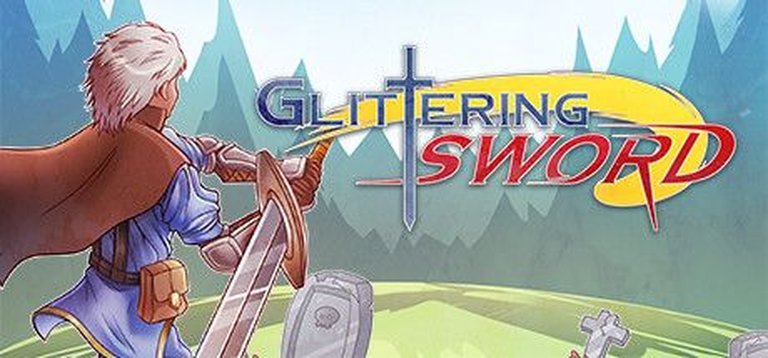
Description
Glittering Sword is an old-school action puzzle RPG set in a fantasy world, where a pixelated hero embarks on a quest to rescue his true love from an evil wizard. Inspired by classic titles, it features Sokoban-style puzzle elements, five chapters with increasing difficulty, and gameplay that combines combat, trap avoidance, and environmental puzzles across woodland and magical settings.
Gameplay Videos
Where to Buy Glittering Sword
PC
Glittering Sword Guides & Walkthroughs
Glittering Sword Reviews & Reception
metacritic.com (30/100): The game never advances beyond the same simplistic puzzles and stale combat.
twobeardgaming.wordpress.com : Plenty of video games will catch on to references to some gamings past greats, but in the end, feels more forced than natural.
gameravenreview.com (78/100): Glittering Sword offers a variety of challenges that will test your skills and leave you wanting more.
Glittering Sword: A Precise, Nostalgic, but Ultimately Shallow Homage to a Bygone Era
Introduction: The Allure of the Pixelated Past
In an era where video game preservation and retro revival have become cultural touchstones, Glittering Sword arrives not as a groundbreaking innovation but as a deliberate, meticulously crafted love letter to the 16-bit action-adventure classics of the early 1990s. Released in February 2021 by the small indie studio HugePixel and publisher ChiliDog Interactive, the game seeks to capture the essence of titles like The Legend of Zelda: A Link to the Past and Ghosts ‘n Goblins through a distilled, puzzle-focused lens. Its thesis is simple: strip away the sprawling worlds and complex RPG mechanics of its inspirations, and focus on the core loop of exploration, combat, and environmental puzzle-solving within tightly contained, fixed-screen stages. This review will argue that while Glittering Sword succeeds admirably in evoking nostalgic aesthetics and delivering a balanced, bite-sized challenge, it is fundamentally limited by its minimalist design philosophy. It is a game that understands the feeling of classic adventure games but often misses the substance—the world-building, narrative depth, and systemic complexity—that made those progenitors enduring classics. As a historical artifact, it is a fascinating case study in modern retro development, but as a standalone experience, it remains a charming but fleeting diversion.
Development History & Context: The Indie Retro Pipeline
Studio Vision & Constraints: HugePixel, the sole developer, represents the modern paradigm of the micro-studio, leveraging accessible tools to realize a specific nostalgic vision. The game was built in GameMaker, a popular engine for 2D indie titles due to its relatively low barrier to entry and robust toolset for pixel-art games. This choice speaks to a development ethos focused on artistic authenticity over technical spectacle. The “technological constraints” were self-imposed: a fixed, diagonal-down perspective and flip-screen level transitions directly mimic the hardware limitations of the SNES and Sega Mega Drive/Genesis eras. This was not a limitation of budget, but a deliberate aesthetic and design choice to evoke a specific era.
The 2021 Indie Landscape: Glittering Sword entered a crowded market for retro-inspired indie games. The late 2010s and early 2020s saw a surge in such titles (Shovel Knight, Blade Strangers, River City Girls), but the “puzzle-action” subgenre with a top-down, fixed-screen view was narrower. Its closest cousin in spirit was arguably Bleak Sword (2019), a similarly minimalist, swipe-based action game for mobile. Glittering Sword differentiated itself by explicitly blending *Sokoban-style block-pushing and environmental puzzle logic* with real-time combat on a single screen. The publisher, ChiliDog Interactive, has a history of porting and publishing niche indie titles, positioning the game for a multi-platform release (PC, Switch, PS4, Xbox One/Series) from day one—a common modern strategy to maximize reach for a low-budget project.
Release & Pricing: Launched on February 4-5, 2021, across all major platforms at a consistent $5.99 / £4.19 price point. This “budget premium” pricing ($5-$10) is the sweet spot for short, curated indie experiences, signaling confidence in its quality-as-nostalgia while managing player expectations for length. The Steam Store description, which forms the official “ad blurb,” explicitly markets it as a “fantasy adventure set in a cozy world with Sokoban-style puzzles,” immediately defining its core hybrid identity.
Narrative & Thematic Deep Dive: The Praxis of the Featureless
Glittering Sword‘s narrative is not merely minimalist; it is archetypal to the point of abstraction, functioning more as a gameplay premise than a story.
Plot Structure: The entire plot is delivered in a single, wordless introductory cutscene: a hero and his “one true love” (a woman in a pink dress) are together in a meadow when an evil wizard in a tall hat and robe materializes, zaps the woman with a purple beam, and vanishes. The hero, now alone, must journey through five distinct themed chapters (Woodland, Caves, etc.) to reach the wizard’s stronghold. There is no dialogue, no text boxes, no voice acting, and no narrative exposition beyond this. The only “story” progression is the visual change in environments and the culminating boss fights.
Character Design as Anti-Design: The choice to render all humanoid characters—the hero, the damsel, the wizard—with completely featureless faces (blank ovals for heads with no eyes, nose, or mouth) is profound. It is a rejection of character portraiture in favor of pure function. The hero is not “Link” or “Arthur”; he is an avatar of action. The princess is not a person but a McGuffin. The wizard is not a character but a force of antagonism. This aligns perfectly with the game’s design philosophy: the player’s emotional investment is meant to come from the act of playing—the satisfaction of solving a puzzle or dodging a trap—not from narrative empathy. It is a direct echo of early NES/arcade games where story was a single sentence in the manual.
Themes: The only discernible themes are the most fundamental of hero’s journey archetypes: Love as Motivation, Evil as Obstacle, and Perseverance as Virtue. The “cozy world” mentioned in the ad blurb is ironically juxtaposed with the relentless, lethal precision of the traps. The theme is not explored; it is simply the set dressing for challenge. Where games like A Link to the Past used dungeons to tell environmental stories (the Desert Palace’s ancient machinery, the Swamp Palace’s decay), Glittering Sword‘s environments are purely topological puzzles. A forest screen is not a “forest” with ecology; it is a “screen” with trees (obstacles), spiders (enemies), and pink diamonds (keys). The “fantasy” setting is a skin for the game mechanics, not a lived-in world.
Gameplay Mechanics & Systems: Precision Over Progression
The core gameplay loop is a masterclass in tight, iterative design, for better and for worse.
Core Loop & Level Structure: Each level is a single, static screen viewed from a fixed diagonal-down perspective. The objective is always to clear the screen of enemies, collect all pink diamonds (which deactivate magical barriers), locate and use keys to unlock chests or gates, and finally exit through the unlocked gateway. This creates a clear, repeatable cycle: Enter Screen > Observe Layout > Formulate Plan > Execute (Combat/Movement/Puzzle) > Clear Screen > Proceed. The five chapters are each a series of these screens culminating in a boss fight.
Puzzle Integration (The Sokoban DNA): The “Sokoban-style” element is the game’s defining innovation within its retro frame. The pink diamonds are the classic Sokoban goal items, but their collection is complicated by enemies and real-time traps. The puzzles are not about pushing boxes in sequence, but about sequencing actions in time and space. Do you kill the wolf first to clear a path, or grab the diamond before it blocks your route? The puzzles are cerebral but constrained, solvable through observation and pattern recognition within the immutable screen layout.
Combat: Simple, Fatal, and Flawed: Combat is brutally simple: one button for a short-range sword swing (horizontal and vertical arcs only), one button for a ranged “blue flame” projectile (consumes a blue magic resource from potions), and a dash for evasion. The cardinal flaw, universally noted by critics, is the four-directional movement with eight-directional attack restrictions. The hero can only attack horizontally and vertically. In a top-down view with enemies that move diagonally, this creates constant, frustrating misses. An enemy standing at a 45-degree angle to you is literally unhittable unless you reposition perfectly. This turns combat from a test of skill into a test of patience and positioning against AI that often feels arbitrarily placed to exploit this blind spot. Enemy variety (spiders, wolves, bees, bats, werewolves, stationary plants) is present but superficial; all share the same “stun-on-hit” behavior, making them “an inconvenience” rather than a tactical challenge (Game Raven).
Traps & Environmental Hazards: This is where the game’s difficulty and satisfaction primarily derive. Traps include:
* Spike Pits & Stalagmites: Rhythm-based (rising/falling) or triggered by pressure plates.
* Projectile Emitters: Arrow traps, crystal shooters, and magical beams that fire in set patterns.
* Movement Hazards: Circular saws (mentioned in the Movies Games & Tech review), rolling boulders, and teleporting portals.
The genius is their integration. You must dodge traps while chasing enemies or collecting diamonds. A later-stage mechanic involves “magical beings” (wisp-like enemies) that cause stalagmites to erupt, creating dynamic, multi-layered threats. Death is almost always instantaneous and cheap-seeming, resetting the screen. This high-stakes, trial-and-error learning is pure 90s arcade design, rewarding memory over reflexes alone.
Progression & Economy: Progression is strictly linear chapter-by-chapter. The only meta-progression occurs within a playthrough via chests found on some screens, which contain either health potions or blue magic potions. Coins dropped by enemies and chests are used at vendor NPCs that appear on certain screens to purchase these potions. There is no permanent upgrade system, no new sword, no increased health or magic capacity. Your “character build” for an entire run is determined by which potions you buy. This reinforces the puzzle-like nature: a screen with two chests might offer a health or magic choice, altering your approach for subsequent screens. However, the lack of a New Game+ or any persistent rewards is a significant, frequently cited flaw that guts long-term replay value. Achievements are “easy” (Daniel Waite’s review notes unlocking all in ~3 hours), further highlighting the lack of endgame content.
User Interface & Controls: The UI is minimal, retro-appropriate (pixelated hearts for health, blue bar for magic). The control scheme is simple but the aforementioned diagonal attack issue is a fundamental design flaw that permeates the entire experience. On the positive side, the dash mechanic is responsive and crucial for avoiding traps, and the fixed screen ensures all information is always visible, a key advantage over scrolling adventures.
World-Building, Art & Sound: Cozy Aesthetics, Uneven Execution
Visual Design & Art Direction: The game’s most universally praised element. The “bright colours and garish tones” (Movies Games & Tech) and “highly detailed cartoon art style” (Game Raven) successfully evoke a “fairy tale-esque world” (Two Beard Gaming). The 5 chapters have distinct palettes: sunny meadows, gloomy caves, etc. The sprite work is “cutesy” and “lovingly rendered,” with “imperfections” that add charm. The bosses, while “fragile re-skins” (Game Raven), are visually distinct and fit the retro mold. The fixed-screen format means each diorama is a carefully composed piece of 2D art. However, some critics note a “cluttered” screen can obscure hazards (3rd-strike), and the overall visual consistency can’t mask the repetitive environmental language (every forest screen looks like every other forest screen).
Sound Design & Music: A major strength. The soundtrack is described as “delightful,” “wholesome synthesised,” and atmospheric, with tracks that shift from “jovial” to “Sombre” (Movies Games & Tech) or use “piano, percussion, and various folk instruments” (Game Raven). It successfully “alters the atmosphere” and is the primary carrier of the game’s emotional tone—the “cozy” vs. “foreboding” feel of different areas. The sound effects, however, are a point of contention. While some find them “brilliant” and “chuckle”-inducing (slaying sheep), others, like Two Beard Gaming, call them “tacked on and rushed,” feeling dissonant against the higher-quality music. The trap sounds are praised for being distinct and informative (Game Raven), but the combat hit sounds are often described as weak or generic.
Atmosphere & Cohesion: The combination of the “soft” color palette, bouncy animations, and melodic music creates a deliberately disarming atmosphere. The game feels “cozy” and “whimsical” even while killing you with spikes. This dissonance—a cheerful world that is lethally precise—is the game’s core atmospheric identity. It successfully mirrors the often-absurd difficulty of its 16-bit predecessors, where a bright, happy overworld could hide a dungeon of instant-death pits.
Reception & Legacy: Niche Praise, Mainstream Silence
Critical Reception at Launch: Reception was mixed-to-positive but muted. Scores ranged from 6.5/10 (Movies Games & Tech) to 7.8/10 (Game Raven) to 7.0/10 (3rd-strike). Metacritic shows a “tbd” metascore with only one critic review listed (TheXboxHub, negative, 30/100), suggesting very limited coverage from major outlets. Common praises were the art, music, and core puzzle/action balance. Common criticisms were the repetitive gameplay loop, shallow story, weak combat (specifically diagonal hit detection), and lack of replay value. TheXboxHub’s scathing review called it “disappointing,” noting it “never advances beyond the same simplistic puzzles and stale combat.”
Commercial & User Reception: Steam data (via Steambase) shows a Player Score of 67/100 (“Mixed”) from 15 reviews at the time of writing. This aligns with the critical consensus: players who value pure, tight puzzle-action and retro aesthetics are satisfied; those seeking deeper mechanics or narrative are disappointed. It has been “Collected By” only 2 players on MobyGames, indicating very low visibility in game preservation circles.
Legacy & Influence: As of 2025, Glittering Sword has no discernible legacy in the broader industry. It is too recent and too niche to have influenced major titles. Its influence is contained within the specific subculture of retro indie puzzle-adventure games. It serves as a modern example of the “single-screen puzzle-action” genre that includes games like Sokobond (chemistry puzzles) or Turtle Rock (action-puzzle). Its most significant contribution is as a data point: a game that proves the commercial viability of a deliberately small scope. With a ~3-hour completion time and a $6 price tag, it offers a complete, if shallow, experience with no filler. In this, it prefigures the growing trend of “short-form” premium indies (Ender Lilies, Rabi-Ribi being longer examples) that prioritize density over duration.
Comparison to Contemporaries: Unlike the mechanically rich Bleak Sword (which focused on upgradeable combat) or the expansive Dungeons of Dreadrock (which built on puzzle logic with narrative), Glittering Sword is more conservative. It is closer to a Zelda “dungeon” extracted and turned into a full game. Its closest relative in design philosophy might be the Mystery Dungeon games’ individual floors, but without the roguelike progression.
Conclusion: A Flawed Gem for the Dedicated Nostalgist
Glittering Sword is a game of exquisite contradictions. It is a love letter written in the correct vocabulary—the pixel art, the chiptune-inspired music, the screen-by-screen progression—but with a sparse and simplistic message. It understands that the magic of 16-bit adventures lay in the tight coupling of player input and game response, the “one-more-try” addictiveness of a well-crafted puzzle, and the visual charm of a colorful world. Where it fails is in mistaking this coupling for the entirety of the experience, neglecting the world-building, narrative hints, and mechanical sophistication that gave those classic games their lasting depth.
Its place in video game history is not as a landmark, but as a perfect capsule. It is the ideal game to play in a single evening, with a controller in hand and a willingness to embrace its dated, even frustrating, combat controls. It is a testament to the enduring appeal of its foundational genre, and a clear warning of what happens when that foundation is not expanded upon. For the historian, it is an instructive example of modern retro development’s strengths (focus, aesthetic coherence, tight design) and potential pitfalls (confusing homage with content, under-developing core mechanics). For the player, it is a recommended experience only if you actively seek the feel of a 1991 action-adventure and can stomach its repetitive structure and narrative void. It is, ultimately, a glittering sword: shiny, sharp in brief moments, but too fragile and simple to be a weapon for the ages. Its value lies entirely in the precision of its nostalgia and the purity of its puzzle-box challenges, making it a 7/10—a good game, but a minor one.