
- Release Year: 1998
- Platforms: Antstream, Browser, Nintendo 64, Nintendo Switch, PlayStation 4, PlayStation 5, PlayStation, Windows, Xbox One, Xbox Series
- Publisher: Hasbro Interactive, Inc., Piko Interactive LLC, QUByte Interactive Ltda.
- Developer: Interactive Studios Ltd.
- Genre: Action
- Perspective: 3rd-person
- Game Mode: Single-player
- Gameplay: Platform, Puzzle
- Setting: Fantasy
- Average Score: 59/100
Description
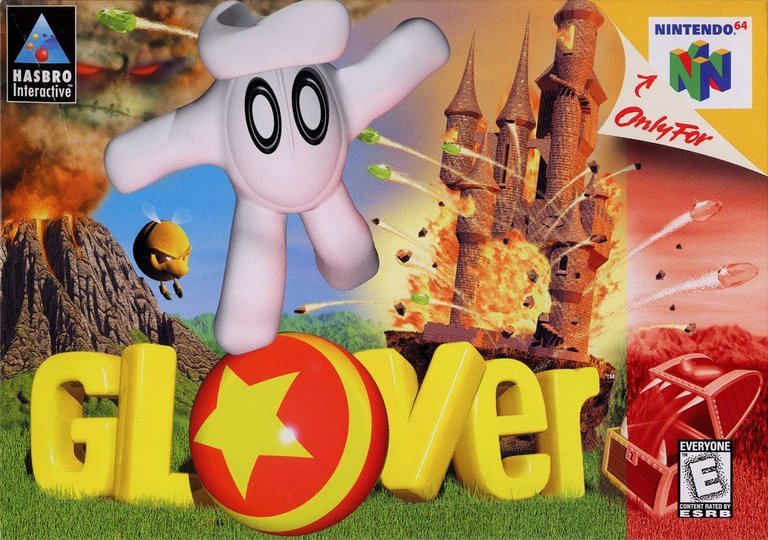
In the whimsical world of Glover, a mischievous glove comes to life after an explosion in a wizard’s potion lab. One glove becomes evil and seeks to take over the castle, while the other, known as Glover, must retrieve seven magical crystals scattered across the land to restore balance. Players control Glover, navigating through various challenges and puzzles to return the crystals to the castle and thwart the evil glove’s plans.
Gameplay Videos
Where to Buy Glover
Glover Free Download
Nintendo 64
PC
PlayStation
Glover Mods
Glover Guides & Walkthroughs
Glover Reviews & Reception
ign.com (83/100): Walking gloves and bouncing balls make for an odd but enjoyable combination.
metacritic.com (44/100): Glover returns with very little fanfare and sadly, it’s not going to win a new audience with a lackluster remastering.
gamecritics.com (50/100): I can respect the publisher for releasing a straightforward and no-nonsense port of Glover, as fans and purists will probably enjoy having the original experience preserved on modern consoles.
Glover Cheats & Codes
Nintendo 64 (N64)
Pause the game and enter the following C-button sequences.
| Code | Effect |
|---|---|
| C-Down, C-Down, C-Up, C-Down, C-Down, C-Left, C-Right, C-Down | Big Ball |
| C-Up, C-Left, C-Left, C-Up, C-Right, C-Left, C-Down, C-Up | Call Ball |
| C-Right, C-Down, C-Right, C-Down, C-Up, C-Up, C-Right, C-Left | Camera Rotate Left |
| C-Left, C-Right, C-Up, C-Up, C-Down, C-Right, C-Down, C-Right | Camera Rotate Right |
| C-Left, C-Right, C-Left, C-Right, C-Up, C-Down, C-Right, C-Right | Control Ball |
| C-Up, C-Left, C-Left, C-Left, C-Left, C-Up, C-Right, C-Up | Death Spell (press R to cast) |
| C-Down, C-Down, C-Right, C-Left, C-Up, C-Up, C-Down, C-Left | Find Checkpoints |
| C-Down, C-Down, C-Down, C-Left, C-Left, C-Down, C-Right, C-Left | Hercules Mode |
| C-Up, C-Up, C-Up, C-Up, C-Up, C-Right, C-Down, C-Right | Infinite Lives |
| C-Right, C-Right, C-Down, C-Right, C-Right, C-Right, C-Up, C-Left | Infinite Power |
| C-Up, C-Up, C-Up, C-Up, C-Up, C-Right, C-Down, C-Right | Locate Garibs |
| C-Left, C-Left, C-Up, C-Left, C-Right, C-Up, C-Up, C-Up | Low Gravity |
| C-Up, C-Right, C-Right, C-Down, C-Left, C-Down, C-Up, C-Right | Open Portals/All Levels |
| C-Up, C-Down, C-Up, C-Down, C-Up, C-Down, C-Left, C-Up | Power Ball |
| C-Left, C-Left, C-Right, C-Up, C-Right, C-Left, C-Down, C-Down | Speed Up Glover |
| C-Down, C-Down, C-Down, C-Down, C-Down, C-Down, C-Down, C-Down | Disable All Cheats |
| C-Left, C-Down, C-Up, C-Right, C-Left, C-Left, C-Down, C-Down | Enemy Ball |
| C-Left, C-Right, C-Left, C-Right, C-Left, C-Right, C-Left, C-Right | Fish Eye |
| C-Up, C-Right, C-Down, C-Right, C-Up, C-Left, C-Left, C-Up | Froggy |
| C-Down, C-Right, C-Down, C-Up, C-Left, C-Down, C-Left, C-Up | Mad Garibs |
PlayStation (PS)
Pause the game and press the following button sequences.
| Code | Effect |
|---|---|
| R1, R1, R1, L1, L1, L2, L1, L2 | Cheat Menu |
| R2, R2, L2, L1, R1, R1, R2, L1 | Checkpoint Select |
| L2, L2, L2, L2, L2, L2, L2, L2 | Disable All Cheats |
| L2, L2, R2, L2, L2, L2, R1, L1 | Infinite Health |
| R1, R1, R1, R1, R1, L2, R2, L2 | Infinite Lives |
| X, Circle, X, X, Triangle, Square, X | Last Level |
PC
Pause the game and enter the following directional key sequences (U: Up, D: Down, L: Left, R: Right).
| Code | Effect |
|---|---|
| Y, R, D, R, Y, L, L, Y | Play as Froggy |
| Y, Y, Y, Y, Y, R, D, R | Infinite Lives |
| R, R, D, R, R, R, Y, L | Infinite Energy |
| Y, Y, Y, L, L, R, L, R | Level Select |
| D, Y, R, R, D, L, R, R | Bonus Levels |
| D, D, R, L, Y, Y, D, L | Find Check Points |
| Y, R, R, D, L, D, Y, R | Open Portals |
| D, D, L, Y, Y, Y, R, D | Open All Levels |
| D, D, D, L, L, D, R, L | Big Glove |
| L, R, Y, Y, D, R, D, R | Tilt Camera Right |
| R, D, R, D, Y, Y, R, L | Tilt Camera Left |
| L, R, L, R, L, R, L, R | Fish Eye Lens |
| L, Y, R, D, L, Y, L, L | Locate Garibs |
| D, R, D, Y, L, D, L, Y | Mad Garibs |
| Y, L, L, L, L, Y, R, Y | Death Spell |
| D, L, D, D, L, D, Y, L | Frog Spell |
| L, L, R, Y, R, L, D, D | Speed Up |
| L, L, Y, L, R, Y, Y, Y | Low Gravity |
| D, D, Y, D, D, L, R, D | Big Ball |
| Y, D, Y, D, Y, D, L, Y | Power Ball |
| L, D, Y, R, L, L, D, D | Enemy Ball |
| D, D, L, L, Y, Y, D, Y | Invisible Ball |
| Y, L, L, Y, R, L, D, Y | Summon Ball |
| L, R, L, R, Y, D, R, R | Control The Ball |
| D (8x) | Disable All Cheats |
Glover: An In-Depth Retrospective of the Quirkiest Glove in Gaming History
Introduction: A Glove’s Tale of Triumph and Frustration
In the pantheon of late-’90s 3D platformers—a golden age defined by Mario 64 and Banjo-Kazooie—Glover stands out as an oddball experiment bursting with creativity and marred by technical growing pains. Developed by UK-based Interactive Studios (later Blitz Games) and published by Hasbro Interactive in 1998, Glover earned a reputation as a love-it-or-hate-it cult classic. Its premise—a sentient glove navigating surreal worlds by manipulating a sentient ball—is emblematic of the era’s risk-taking spirit. Yet, beneath its whimsical exterior lay a game grappling with the limitations of its hardware and the pitfalls of publisher overreach. This review examines Glover‘s legacy as a flawed but fascinating artifact of gaming’s transition into 3D, dissecting its innovative mechanics, divisive execution, and enduring cult status.
Development History & Context: A Perfect Storm of Ambition and Missteps
Studio Vision and Technological Constraints
Interactive Studios, a fledgling British developer, sought to capitalize on the N64/PlayStation platformer boom with a game that subverted genre norms. Led by Darren Wood and Richard Albon, the team envisioned a physics-driven puzzle-platformer where the player controlled not a mascot, but a glove tasked with shepherding a ball through obstacle-laden worlds. The concept was born from a desire to merge Marble Madness-style precision with Super Mario 64‘s exploratory freedom.
However, the studio faced significant hurdles:
– Hardware Limitations: The N64’s constrained memory (4MB RAM) necessitated low-resolution textures and sparse environments, while the PlayStation version suffered from frame rate dips and pop-in.
– Control Schemes: Mapping complex ball-manipulation mechanics (slapping, dribbling, rolling) to analog sticks proved challenging, leading to imprecise inputs.
– Publisher Pressures: Hasbro Interactive, then venturing into video games, pushed for multi-platform releases (N64, PC, PlayStation), stretching the team thin. The rushed PlayStation port, outsourced to another studio, became infamous for broken cameras and glitches.
The Nintendo Near-Miss
In a tantalizing “what-if,” Shigeru Miyamoto reportedly suggested rebranding Glover as a Mario spin-off titled Mario’s Glove. Talks collapsed due to Hasbro’s reluctance to cede creative control—a decision that might have altered the game’s commercial fate.
Cancelled Dreams: The Ghost of Glover 2
Despite selling 150,000 N64 copies (a modest success for a third-party title), Hasbro’s decision to over-manufacture cartridges by 300,000 units led to financial losses. This mismanagement doomed the sequel, Glover 2, which was 85% complete for N64 and Dreamcast. Prototype footage reveals ambitious additions, including multiplayer modes and enhanced physics—a tragic casualty of corporate missteps.
Narrative & Thematic Deep Dive: A Lighthearted Battle of Good vs. Evil
The Plot
Glover’s story is charmingly absurd: A wizard’s botched potion experiment turns him to stone, scatters seven life-giving crystals across themed worlds, and transforms his gloves into rival protagonists: the heroic Glover (right hand) and the villainous Cross-Stitch (left hand, corrupted by toxic sludge). The narrative is told through minimalistic cutscenes, with the PlayStation version adding FMV sequences that reframe Cross-Stitch’s origins as deliberately malicious.
Symbolism and Tone
Beneath the silliness lies a subtle Cain and Abel allegory: Glover and Cross-Stitch represent dualism—cooperation vs. domination. The crystals symbolize harmony, their absence rendering the Crystal Kingdom a desolate wasteland. Mr. Tip, a talking hat serving as Glover’s guide, injects playful wit (“Don’t lose your head!”) but underscores the game’s refusal to take itself seriously—a stark contrast to darker platformers like Conker’s Bad Fur Day.
Gameplay Mechanics & Systems: Innovation Hampered by Execution
The Ball as Protagonist
Glover’s core innovation lies in its ball mechanics. The player manipulates a morphing orb that can shift between:
– Rubber Ball: Standard form, bouncy and versatile.
– Bowling Ball: Heavy, destroys obstacles but sinks in water.
– Crystal: Fragile but doubles collectible points.
– Ball Bearing: Magnetic, ideal for precision.
This system enables creative puzzle-solving:
– Physics-Based Challenges: Launching the ball across gaps, using rebounds to hit switches.
– Risk/Reward: The crystal form’s fragility punishes careless play but rewards skilled navigation.
Flaws and Frustrations
- Camera Issues: Fixed angles and erratic tracking led to leaps of faith (N64 Magazine: “The camera often fights you”).
- Control Clunkiness: Sluggish turning and oversensitive inputs made precise ball-handling a chore (EGM: “More luck than judgment”).
- Brutal Difficulty Spikes: The Atlantis bonus stage (a Frogger homage) and Prehistoric’s lava chase demanded pixel-perfect accuracy.
Progression and Extras
- Garib Cards: Collectibles named after a studio in-joke (a mistranslated bug report). Finding all unlocked bonus levels, though few rewards awaited 100% completers.
- Cheat Codes: Included “Power Ball” (hyper-bouncy) and enemy-themed variants, adding replayability but little balance.
World-Building, Art & Sound: A Burst of ‘90s Creativity
Visual Design
Glover’s six worlds channel Saturday-morning cartoon vibes:
1. Atlantis: Sunken ruins with bipedal sharks.
2. Carnival: A neon nightmare of clown bosses and bee enemies.
3. Pirates: Tropical islands guarded by sword-wielding monkeys.
4. Fortress of Fear: Gothic castles with Frankenstein bosses.
5. Prehistoric: Volcanoes and T-Rex encounters.
6. Out of This World: Robot-filled space stations.
While N64 textures were muddy and PlayStation models jagged, the art direction—spearheaded by Joff Scarcliffe—leaned into surrealism, with bold colors and exaggerated proportions.
Soundtrack and Atmosphere
Composers Rob Lord and Paul Weir crafted an electric, mood-shifting score: carnival tunes brimming with calliope whimsy, haunting synth for Fortress of Fear, and upbeat rhythms for Atlantis. Though limited by MIDI constraints, the music elevated the game’s personality, earning praise from IGN: “Matches the levels perfectly.”
Reception & Legacy: From Commercial Misfire to Cult Curiosity
Initial Reception
- Nintendo 64: Averaged 72% (GameFan: “Fantastic… if you’ve got patience”). Critics lauded originality but bemoaned controls.
- PlayStation: Scored 31% (GameSpot: “Lost its soul”). The port’s technical flaws overshadowed its potential.
- PC: Mixed reviews, with PC Zone noting its “kiddie charm” but “console-clunky” design.
Modern Re-Evaluation
The 2022 remaster (Steam/GOG) and 2025 console re-releases sparked renewed debate:
– Nostalgia vs. Reality: Digitally Downloaded called it “a B-tier platformer lacking modern polish,” while Nindie Spotlight noted its “charm buried under dated design.”
– Accessibility Woes: The lack of camera/control updates in ports drew ire (TheSixthAxis: “Frustrating relic”).
Cultural Impact
Despite its flaws, Glover influenced later titles:
– Physics-Driven Gameplay: Prefigured Super Monkey Ball and Marble It Up!.
– Anti-Hero Quirk: Paved the way for Oddworld’s Abe and Untitled Goose Game’s chaos.
It remains a staple of “so bad it’s good” discourse, celebrated for its audacity in an era of mascot saturation.
Conclusion: A Glove That Doesn’t Quite Fit
Glover is a paradox: a bold experiment shackled by its era’s limitations and publisher missteps. Its ball-manipulation mechanics were ahead of their time, yet undermined by clunky controls and camera woes. The narrative’s whimsy and visual creativity shine brightest in the N64 original, while later ports serve as cautionary tales about preservation without refinement.
For historians, Glover epitomizes the late-’90s platformer boom—a time when developers took wild swings, for better or worse. For modern players, its re-releases offer a fascinating, if frustrating, museum piece. While not the masterpiece it aspired to be, Glover’s legacy endures as a testament to gaming’s unbridled imagination—a four-fingered underdog still begging for a second chance.
Final Verdict: A 6.4/10 experience (MobyScore)—flawed yet unforgettable, best appreciated as a curiosity of its era.