
- Release Year: 2016
- Platforms: Windows
- Publisher: Digital Homicide Studios L.L.C.
- Developer: Digital Homicide Studios L.L.C.
- Genre: Action
- Perspective: Side view
- Game Mode: Single-player
- Gameplay: Hack and Slash, Platform
- Setting: Fantasy
- Average Score: 20/100
Description
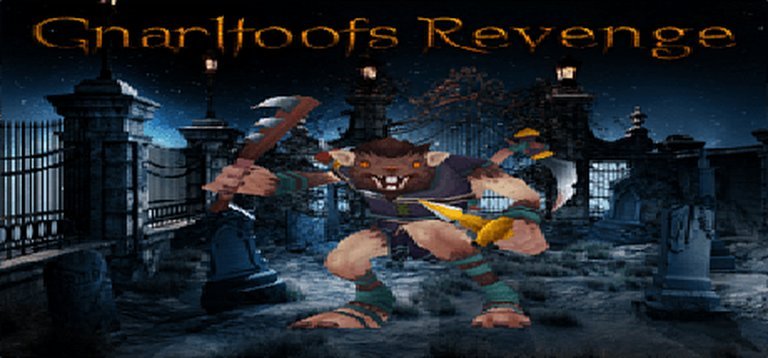
Gnarltoof’s Revenge is a fast-paced 2D hack-and-slash platformer set in a dark fantasy world where the player, empowered by a failed experiment, seeks vengeance against the lich lords who tormented their kin. The game features randomly generated castles, varied power-ups, and intense combat as you battle through obstacles and monsters to defeat the 10 lich lords ruling the realm.
Gnarltoof’s Revenge Guides & Walkthroughs
Gnarltoof’s Revenge Reviews & Reception
videogamegeek.com (20/100): A platform game where you run from one side of the board to the other until you come to a transporting ‘aura’ that raises you a level.
Gnarltoof’s Revenge: A Cautionary Tale of Ambition, Controversy, and the Perils of Indie Development
Introduction: The Game That Became a Symbol
Gnarltoof’s Revenge (2016) is not just a game—it is a relic of one of the most infamous chapters in modern indie game development. Released by Digital Homicide Studios, a developer whose name would later become synonymous with legal threats, poor design, and the dark side of Steam’s Greenlight system, Gnarltoof’s Revenge stands as both a forgotten curiosity and a cautionary tale. On the surface, it is a 2D side-scrolling hack-and-slash platformer with a fantasy revenge narrative, but beneath its pixelated veneer lies a story of broken promises, community backlash, and the consequences of unchecked ambition.
This review will dissect Gnarltoof’s Revenge not just as a game, but as a cultural artifact—a product of its time, its creators, and the turbulent ecosystem of early-access indie gaming. We will explore its development history, narrative structure, gameplay mechanics, artistic direction, and the explosive controversy that ultimately led to its downfall. By the end, we will determine whether Gnarltoof’s Revenge is a hidden gem, a failed experiment, or simply a footnote in gaming history.
Development History & Context: The Rise and Fall of Digital Homicide
The Studio Behind the Infamy
Digital Homicide Studios, founded by James and Robert Romine, was a small indie developer that gained notoriety not for the quality of its games, but for its aggressive legal tactics against critics. Before Gnarltoof’s Revenge, the studio had released a string of low-budget, asset-flip-heavy titles, many of which were criticized for being unpolished, repetitive, and lacking in originality.
The studio’s most infamous moment came in 2016, when they filed a $18 million lawsuit against 100 Steam users for leaving negative reviews on one of their other games, The Slaughtering Grounds. This move backfired spectacularly—Valve banned Digital Homicide from Steam entirely, effectively ending their ability to sell games on the platform. Gnarltoof’s Revenge, released just months before this controversy, became one of their final offerings before their permanent removal from Steam.
Technological Constraints & the Unity Engine
Gnarltoof’s Revenge was built using Unity 5.2.2f1, a popular engine for indie developers at the time. However, the game’s visual and mechanical simplicity suggests that the studio either lacked the expertise or the resources to fully utilize Unity’s capabilities.
Key technical limitations include:
– Basic 2D sprite work with minimal animation.
– Repetitive level design due to procedural generation constraints.
– No advanced physics or particle effects.
– Direct control scheme with no controller remapping or accessibility options.
The game’s freeware/public domain business model (despite initially being sold on Steam) further indicates that Digital Homicide was prioritizing quantity over quality, churning out titles to capitalize on Steam’s Greenlight system rather than crafting a polished experience.
The Gaming Landscape in 2016
2016 was a golden age for indie platformers, with critically acclaimed titles like Inside, Hyper Light Drifter, and Salt and Sanctuary redefining the genre. Meanwhile, Steam Greenlight was still in full swing, allowing even the most amateur developers to publish games—often with little oversight.
Gnarltoof’s Revenge entered this crowded market with:
– No marketing push beyond a Steam store page.
– No significant press coverage (Kotaku briefly mentioned it in a screenshot gallery).
– No post-launch support (no patches, updates, or community engagement).
In this environment, the game was doomed to obscurity—until Digital Homicide’s legal missteps turned it into a symbol of everything wrong with unchecked indie development.
Narrative & Thematic Deep Dive: A Revenge Story Without Depth
Plot Summary: A Simple Premise with No Payoff
The game’s official description (from the IndieGala store page) sets up a dark fantasy revenge tale:
“Your kin have long been the victims of brutal experiments performed by the lich lords of the land. One fateful night an experiment gone wrong empowered you and now it’s time for revenge. Battle through randomly decorated castles on your quest to defeat the 10 lich lords of the realm and free your people from a life of agony!”
On paper, this sounds like a classic underdog revenge story, akin to Castlevania or Dark Souls. In execution, however, the narrative is almost nonexistent.
Characters: The Faceless Protagonist and Forgettable Villains
- Gnarltoof (The Protagonist) – A werewolf-like creature (or possibly a mutated experiment subject) with no personality, backstory, or dialogue. The player is given no motivation beyond “kill the lich lords.”
- The Lich Lords – Ten generic fantasy bosses with no unique designs, personalities, or lore. They exist solely as damage sponges in the final rooms of each castle.
- The Witch Assistant (Mentioned in RAWG’s Description) – A deus ex machina character who empowers Gnarltoof but is immediately killed off, serving no purpose beyond setting up the premise.
Themes: Revenge as a Hollow Concept
The game attempts to explore themes of:
– Oppression and liberation (Gnarltoof’s people are experimented on).
– Vengeance as catharsis (the player’s drive to kill the lich lords).
– Sacrifice (the witch assistant’s death).
However, none of these themes are developed. There are:
– No cutscenes.
– No environmental storytelling.
– No dialogue beyond a single introductory blurb.
The result is a narrative void—a game that tells you it’s about revenge but never makes you feel it.
Dialogue & Writing: Nonexistent
- The game has zero in-game text or voice acting.
- The only “story” comes from the Steam/IndieGala description.
- Even the Steam Community discussions mock the lack of narrative depth, with players joking about the game’s absence of meaning.
Conclusion: A Missed Opportunity
Gnarltoof’s Revenge had the potential for a dark, atmospheric revenge tale, but it fails to deliver on every narrative front. The lack of character development, world-building, or emotional stakes makes the revenge premise feel hollow and mechanical.
Gameplay Mechanics & Systems: Repetitive, Unbalanced, and Uninspired
Core Gameplay Loop: Run, Click, Repeat
Gnarltoof’s Revenge is a side-scrolling hack-and-slash platformer with the following structure:
- Enter a randomly generated castle (procedural layout with minor decorative variations).
- Run from left to right (or right to left in alternating levels).
- Click enemies to death (left-click for basic attack, right-click for a “special” attack).
- Avoid obstacles (spikes, pits, and occasional traps).
- Reach the end of the level, where a transportation aura takes you to the next floor.
- Repeat until you reach a lich lord, then mash attacks until they die.
This loop is repeated 10 times, once for each lich lord.
Combat: Mindless and Unbalanced
- Basic Attack (Left-Click) – A slow, wide swing with no combo system.
- Special Attack (Right-Click) – A faster, stronger hit with a cooldown.
- Enemies – Most are slow-moving, low-HP fodder that die in 1-2 hits.
- Bosses (Lich Lords) – Damage sponges with telegraphed but unavoidable attacks.
Problems with Combat:
✔ No skill progression – Gnarltoof never gains new abilities.
✔ No weapon variety – You only have one weapon (your claws).
✔ No enemy variety – Most foes are pallet swaps of the same few models.
✔ No dodge/block mechanics – Combat is purely offensive.
Progression & Power-Ups: Randomized but Meaningless
The game features:
– Randomized chest pickups (health, temporary buffs, or “awesome power-ups”).
– No permanent upgrades – Everything is temporary.
– No XP or leveling system – Gnarltoof starts and ends the game with the same stats.
Power-Up Examples:
– Health Restore – Heals a small amount.
– Speed Boost – Makes Gnarltoof run faster for a short time.
– Damage Boost – Increases attack power temporarily.
Issue: Since nothing carries over between levels, these power-ups feel pointless.
Level Design: Procedural but Repetitive
- Castles are “randomly decorated” but follow the same linear path.
- Obstacles are placed haphazardly—some levels are trivially easy, others unfairly punishing.
- No secrets or exploration – The game is purely linear.
UI & Controls: Barebones and Unintuitive
- No tutorial – Players must figure out controls themselves.
- No pause menu – The game cannot be paused.
- No options for rebinding keys – Mouse-only controls (no controller support).
- Health bar is small and hard to read.
Innovation? None. Flaws? Many.
Gnarltoof’s Revenge brings nothing new to the hack-and-slash or platformer genres. Its only “innovation” is its procedural castle decoration, which does little to enhance gameplay.
Major Flaws:
❌ Repetitive to the point of tedium.
❌ No difficulty curve – Enemies are either too weak or unfairly strong.
❌ No replay value – Once you beat the 10 lich lords, there’s nothing left to do.
❌ Buggy hit detection – Some attacks miss for no reason.
Verdict on Gameplay: A Chore, Not a Challenge
Gnarltoof’s Revenge is not fun. It is not engaging. It is not rewarding. It is a grind—a mindless, repetitive slog that tests patience more than skill.
World-Building, Art & Sound: A Fantasy Setting Without Atmosphere
Setting: Generic Fantasy Castles
The game takes place in 10 procedurally generated castles, each ruled by a lich lord. However:
– No distinct themes – All castles look almost identical.
– No environmental storytelling – No lore scrolls, no NPCs, no hints at the world’s history.
– No atmospheric details – No flickering torches, no eerie sounds, no sense of dread.
Visual Design: Basic and Uninspired
- 2D pixel-art sprites with minimal animation.
- Repetitive tile sets – The same bricks, spikes, and platforms reappear constantly.
- No lighting effects – The game is flat and visually uninteresting.
- Enemy designs are generic – Most look like recycled assets from other games.
Comparison to Other 2016 Indies:
| Game | Visual Style | Atmosphere | Originality |
|---|---|---|---|
| Inside | Cinematic, moody | Haunting | High |
| Hyper Light Drifter | Neon-pixel art | Mysterious | High |
| Salt and Sanctuary | Dark fantasy | Gothic | High |
| Gnarltoof’s Revenge | Basic pixel art | None | Low |
Sound Design: Silent and Forgettable
- No soundtrack – The game has no music.
- Minimal sound effects – Basic attack noises, enemy death grunts, and nothing else.
- No voice acting – Complete silence beyond combat sounds.
Atmosphere: Nonexistent
A revenge story set in a dark fantasy world should feel tense, oppressive, or triumphant. Gnarltoof’s Revenge feels empty.
Reception & Legacy: From Obscurity to Notoriety
Critical Reception: Ignored or Mocked
- No professional reviews exist on Metacritic, OpenCritic, or major gaming sites.
- Player reviews on Steam (before the game was removed) were overwhelmingly negative.
- VideoGameGeek gives it a 2.0/10 (based on 2 ratings).
- RAWG has no user reviews, only a 1/5 rating from a single user.
Common Criticisms:
– “Worse than free Flash games from the early 2000s.” (Steam user r4m3)
– “Literally cancer.” (Steam user HOUSE MD)
– “A turd in a box.” (Steam user Elie)
Commercial Performance: A Failure
- No sales data is available, but given its lack of marketing and poor reception, it likely sold poorly.
- After Digital Homicide’s Steam ban, the game disappeared from major storefronts.
- It is now freeware/public domain, meaning it can be downloaded for free on obscure sites.
Legacy: A Symbol of Indie Gone Wrong
Gnarltoof’s Revenge is not remembered for its gameplay—it is remembered for:
1. Being one of Digital Homicide’s final games before their Steam ban.
2. Representing the worst of Steam Greenlight—low-effort, asset-flipped, and unpolished.
3. Serving as a warning to indie developers about how not to handle criticism.
Influence on the Industry: A Cautionary Tale
The Digital Homicide lawsuit and subsequent Steam ban led to:
– Stricter moderation on Steam’s user review system.
– More scrutiny on asset-flip games.
– A cultural shift where developers could no longer sue critics without severe backlash.
In this sense, Gnarltoof’s Revenge indirectly shaped indie gaming—not through its quality, but through its infamy.
Conclusion: The Worst Kind of Revenge—Against the Player
Gnarltoof’s Revenge is not a good game. It is not a bad game in an interesting way. It is not a cult classic. It is not a hidden gem.
It is nothing.
A hollow, repetitive, visually bland, narratively empty experience that wastes the player’s time without offering anything in return.
Final Verdict: 1/10 – A Failure on Every Level
| Category | Score (1-10) | Notes |
|---|---|---|
| Narrative | 1 | No story, no characters, no dialogue. |
| Gameplay | 2 | Repetitive, unbalanced, no progression. |
| Visuals | 3 | Basic pixel art, no atmosphere. |
| Sound | 1 | No music, minimal SFX. |
| Replay Value | 0 | No reason to play twice. |
| Innovation | 0 | Brings nothing new. |
| Polish | 1 | Buggy, unfinished, no options. |
| Overall | 1/10 | A waste of time. |
Where Does It Stand in Gaming History?
Gnarltoof’s Revenge is not a game worth preserving. It is not a game worth revisiting. It is not a game worth remembering.
But it is a symbol—a reminder of a time when Steam was flooded with low-effort games, when developers lashed out at critics, and when revenge stories could be as empty as the game itself.
In the end, Gnarltoof’s Revenge is not about the player’s revenge against the lich lords—it is the lich lords’ revenge against the player, for daring to waste their time on something so utterly forgettable.
Play it only if you enjoy punishment. Otherwise, let it fade into obscurity where it belongs.