
- Release Year: 2022
- Platforms: Windows
- Publisher: 8floor Ltd.
- Developer: Somer Games
- Genre: Puzzle
- Perspective: Fixed / flip-screen
- Game Mode: Single-player
- Gameplay: Cards, Tiles
- Average Score: 33/100
Description
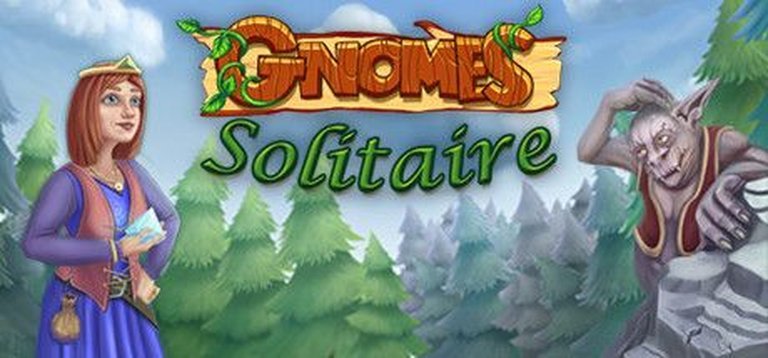
Gnomes Solitaire is a puzzle card game set in a fabulous kingdom where brave heroes, likely gnomes, embark on an adventure to overcome dangers, unravel secrets, and explore 20 enchanting locations while collecting rare trophies. Players enjoy levels of varying complexity in this solitaire-style gameplay, featuring chain-building mechanics, special Golden Cards, jokers for faster clears, combo multipliers for coins, vivid graphics, a pirate-inspired soundtrack, original themed decks, and 12 card back styles for hours of exciting daily play.
Where to Buy Gnomes Solitaire
PC
Gnomes Solitaire Reviews & Reception
steambase.io (33/100): Player Score of 33 / 100 from 6 total reviews, with 2 positive and 4 negative.
Gnomes Solitaire: Review
Introduction
In an era where digital card games flood Steam’s bargain bins, Gnomes Solitaire (2022) emerges as a curious artifact—a pint-sized fantasy adventure wrapped in the timeless mechanics of solitaire, evoking the whimsical gnomes of folklore amid a kingdom rife with secrets and perils. Released on March 20, 2022, by developer Somer Games and publisher 8floor Ltd., this casual puzzle title promises “fabulous atmosphere” and heroic exploits, yet it stands as a microcosm of indie gaming’s hit-or-miss landscape. While lacking the grandeur of epic RPGs or the polish of modern match-3 giants, its legacy lies in quietly perpetuating the solitaire evolution, blending narrative progression with card-chaining puzzles. This review posits that Gnomes Solitaire is a competent but unremarkable entry in the casual solitaire canon, elevated by its gnome-themed charm and undermined by repetitive design, cementing its place as a niche curiosity rather than a genre-defining triumph.
Development History & Context
Somer Games, a modest studio with a penchant for themed solitaire variants, crafted Gnomes Solitaire amid the 2022 casual gaming surge on platforms like Steam, where low-barrier puzzle titles thrived post-pandemic. Led by game and level designer Yuri Parshin—who wore dual hats to shape both core systems and 20+ progressive locations—the seven-person team included production head Ivan Parkhomenko, technology partner PlayJin Technologies, art director Victor Proskurin, graphics artist Ihor Portnoy, manager Konstantin Grant, and composer Maxim Ermolaev. This lean crew, many veterans of 8floor’s output (e.g., Ermolaev’s 114 credits, Parkhomenko’s 82), reflects the era’s indie ethos: rapid development for digital distribution, prioritizing accessibility over innovation.
Technological constraints were minimal, targeting Windows XP SP3 with just 512 MB RAM and 65 MB storage—reminiscent of early 2000s browser games, ensuring broad compatibility in a Steam Deck-agnostic world. The 2022 landscape brimmed with solitaire clones (Pirate’s Solitaire, Knight Solitaire), fueled by Steam’s algorithmic promotion of cheap, family-shareable indies. 8floor Ltd., prolific publishers of fairy-tale puzzlers, positioned Gnomes Solitaire as a $14.99 Steam exclusive (often discounted to $4.49), tapping into gnome nostalgia from titles like Gnomes Gone Wild (2004) and Snow White Solitaire: Legacy of Dwarves (2018). Vision-wise, the blurb suggests a heroic gnome quest, but the fixed/flip-screen visuals and point-and-select interface betray roots in mobile-era tileset solitaires, constrained by budget yet ambitious in scope.
Narrative & Thematic Deep Dive
At its heart, Gnomes Solitaire weaves a lightweight fantasy tale of “brave heroes”—presumably stout gnomes—venturing through a peril-filled kingdom to “overcome dangers and unravel secrets.” Absent a MobyGames-approved synopsis, the Steam ad blurb serves as canon: players aid these diminutive protagonists across 20 locations, collecting rare trophies amid escalating challenges. This structure mirrors adventure solitaires like Mystery Solitaire: Powerful Alchemist, where card victories unlock story beats, implying a loose plot progression: gnome explorers delving into enchanted forests, dwarven mines (nodding to aka Zwerge Solitaire), or mythical realms, each level a narrative vignette.
Characters remain archetypal—brave, unnamed gnomes embodying folklore’s industrious tinkerers—without voiced dialogue or deep backstories, prioritizing puzzle purity. Dialogue, if present, likely manifests in interstitial text or tooltips, reinforcing themes of perseverance (“Let your emotions run wild!”) and discovery (“Get lots of rare items!”). Underlying motifs draw from gnome mythology: hidden kingdoms, magical artifacts (Golden Cards as enchanted aids), and communal heroism, subverted by the solitary gameplay. The “Pirate soundtrack” jars thematically—swashbuckling shanties clashing with terrestrial gnomes—perhaps a quirky nod to 8floor’s eclectic sound design or a mislabeling for adventurous flair. Critically, the narrative serves as window dressing, elevating basic solitaire into a “fabulous atmosphere” without the emotional heft of peers like The Dwarves (2016), rendering it thematically rich on paper but narratively thin in execution.
Gameplay Mechanics & Systems
Gnomes Solitaire deconstructs classic Klondike solitaire into a progression-driven loop: collect chains of cards by matching sequential ranks or suits, clearing boards to advance through 20 locations of “varying complexity.” Core mechanics emphasize point-and-select simplicity—mouse over tiles, drag to chain—augmented by power-ups: jokers for wild substitutions, Golden Cards for bonus fun, and combo multipliers scaling coin earnings. Players spend coins on “rare items,” original themed decks, and 12 card back styles, fostering light metaprogression.
Innovations shine in level variety: “super exciting levels” with daily challenges imply time-limited boards or modifiers, extending playtime to “several hours every day.” UI is clean but fixed-screen bound, with flip mechanics for multi-angle puzzles, though Steam’s 6 user reviews lament repetition and potential win-locks without hints. Flaws emerge in progression rigidity—no robust character builds, just trophy unlocks—and economy balance, where combos reward skill but low player scores (33/100) suggest frustration. Compared to Solitaire Pro (2015), it innovates thematically but falters in depth, lacking robust undo stacks or multiplayer. Overall, a solid casual loop for short bursts, hampered by solitaire’s inherent grind.
World-Building, Art & Sound
The game’s world unfurls across 20 gnome-infused locales—envisaged as verdant gardens, cavernous lairs, and trophy-laden vaults—bolstered by “vivid graphics” under Victor Proskurin’s direction and Ihor Portnoy’s pixel work. Fixed/flip-screen vistas evoke hand-drawn storybooks, with themed decks (gnome tools? mushroom motifs?) and customizable backs enhancing immersion. Atmosphere thrives on progression: each cleared level unveils secrets, trophies sparkling as narrative payoffs, crafting a cozy fantasy realm akin to Gnomes Garden bundles.
Art direction prioritizes charm over realism—bright palettes, whimsical gnomes—contributing to a “win-win” allure for casual audiences. Sound design, courtesy Maxim Ermolaev, deploys a “Pirate soundtrack” of jaunty flutes and percussion, an odd fit for gnomes yet injecting energy into card flips and combos. No full audio localizations (English, French, German, Russian interfaces only) limit depth, but the combo evokes pirate-gnome syncretism, perhaps intentional whimsy. Collectively, these elements forge an inviting, low-stakes escape, where visuals and audio amplify solitaire’s zen, though repetition dulls the magic.
Reception & Legacy
Launch reception was muted: no Metacritic critic scores, MobyGames’ n/a MobyScore, and Steam’s 6 user reviews yielding a dismal 33/100 (2 positive, 4 negative), citing bugs, brevity, and value woes despite bundles like Fairytale Solitaire Bundle 3 in 1. Commercially, low ownership (1 MobyGames collector) reflects obscurity amid 2022’s solitaire glut, yet 8floor’s bundling sustains visibility. Reputation evolved minimally—Wikidata notes casual/single-player tags, but no cult following.
Influence traces to solitaire’s lineage (Solitaire Genius 2001 to Desktop Solitaire 2006), inspiring gnome-puzzle hybrids like upcoming Gnomes (2025). It exemplifies 8floor’s formula—quick, thematic cash-ins—shaping Steam’s budget puzzle ecosystem, though unremarkably. Legacy: a footnote in casual gaming, preserving gnome lore digitally without revolutionizing the genre.
Conclusion
Gnomes Solitaire distills solitaire’s enduring appeal into a gnome-tinted package: heroic quests via card chains, vivid worlds, and modest progression across 20 levels, crafted by a nimble team against 2022’s indie tide. Strengths—accessible mechanics, thematic flair, power-up zest—clash with flaws like repetition, mismatched audio, and scant narrative depth, yielding mixed Steam verdicts and niche status. In video game history, it occupies a humble alcove: not a masterpiece like The Dwarves, nor flop, but a testament to casual gaming’s accessibility. Recommended for solitaire aficionados seeking gnome whimsy at discount; a 6/10 earns it Recommended with Reservations, a fleeting diversion in gaming’s vast deck.