
- Release Year: 2020
- Platforms: Nintendo Switch, Windows Apps, Windows, Xbox One, Xbox Series
- Publisher: PrimeBit Games S.A.
- Developer: PrimeBit Games S.A.
- Genre: Action
- Perspective: Diagonal-down
- Game Mode: Hotseat, Single-player
- Gameplay: Arcade, Puzzle elements
- Setting: Fantasy
- Average Score: 60/100
Description
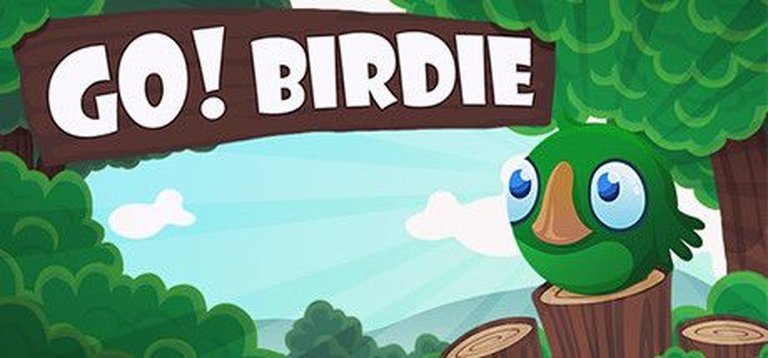
Go! Birdie is an action-puzzle game where players guide the titular bird through grid-based, maze-like levels to collect fruits and avoid or defeat other animals. Set in a vibrant fantasy world, the game features diverse locations like forests, castles, and underwater realms, with bonus levels adding time-based challenges. Inspired by classics like Pac-Man, it offers both single-player and local multiplayer modes, blending arcade-style gameplay with light puzzle elements.
Gameplay Videos
Where to Buy Go! Birdie
PC
Go! Birdie Patches & Updates
Go! Birdie Guides & Walkthroughs
Go! Birdie Reviews & Reception
metacritic.com (40/100): Taking inspiration from classics like Pac-Man and Bomberman, Go! Birdie doesn’t quite live up to an ’80s-era level of quality.
opencritic.com (63/100): Since I grew up as an arcade gamer from their emergence into the world I’m a fan of, by modern terms, simplistic action play that’s simply engaging without a need for a bunch of trappings like story or character development…
steambase.io (100/100): Go! Birdie has earned a Player Score of 100 / 100.
mobygames.com (40/100): Average score: 40% (based on 1 ratings)
ladiesgamers.com : Go! Birdie is a simple, easy-going game. It would be suitable to dip in and out for short quick play sessions. There wouldn’t be much replay value in the game but for the few pounds it costs, I wouldn’t expect there to be.
Go! Birdie: A Retro-Inspired Arcade Adventure That Falls Short of Its Inspirations
Introduction: A Modern Homage to Classic Arcade Games
Go! Birdie (2020) is a charming yet flawed attempt to revive the golden age of arcade gaming. Developed by PrimeBit Games S.A., this title draws heavy inspiration from classics like Pac-Man, Bomberman, and Dig Dug, blending maze navigation, fruit collection, and enemy avoidance into a colorful, grid-based adventure. At its core, Go! Birdie is a love letter to the simplicity and addictive gameplay of 1980s arcade titles, but does it capture the magic of its predecessors, or does it merely scratch the surface?
This review will dissect Go! Birdie from every angle—its development history, narrative and thematic elements, gameplay mechanics, artistic direction, critical reception, and lasting legacy. By the end, we’ll determine whether this budget title is a hidden gem or a forgettable footnote in the long lineage of arcade-inspired games.
Development History & Context: A Small Studio’s Retro Dream
The Studio Behind the Game
PrimeBit Games S.A., a relatively obscure Polish developer, is the creative force behind Go! Birdie. The studio’s portfolio consists primarily of budget-friendly, family-oriented titles, often leveraging the Unity engine to produce accessible games with broad appeal. Go! Birdie is no exception, designed as a lightweight, pick-up-and-play experience that caters to both casual gamers and nostalgic arcade enthusiasts.
Inspiration and Vision
The developers explicitly cite Pac-Man and Bomberman as their primary influences, aiming to recreate the tension and satisfaction of navigating maze-like levels while evading enemies. The game’s premise—a bird named Birdie collecting fruits to uncover the legendary Golden Grain—is straightforward, harkening back to an era when games prioritized gameplay over complex narratives.
Technological Constraints and Design Choices
Released in late 2020, Go! Birdie is a product of modern indie development tools but deliberately embraces retro aesthetics. The Unity engine allows for smooth performance across multiple platforms (Windows, Nintendo Switch, Xbox), but the game’s visual and mechanical simplicity suggests a conscious decision to emulate the limitations of 8-bit and 16-bit hardware. The fixed, diagonal-down perspective and flip-screen mechanics further reinforce this retro sensibility, though they also highlight the game’s lack of innovation.
The Gaming Landscape at Launch
Go! Birdie entered a crowded market dominated by both AAA blockbusters and indie darlings. While retro-inspired games like Shovel Knight and Celeste had proven that classic gameplay could thrive in modern contexts, Go! Birdie lacked the polish and depth to stand out. Its $4.99 price point positioned it as a budget impulse buy, but without a strong marketing push or unique hook, it struggled to gain traction.
Narrative & Thematic Deep Dive: A Simple Tale of Adventure
Plot Overview
The story of Go! Birdie is minimalist by design. Birdie, a young bird who grew up hearing legends of the Golden Grain, embarks on a quest to find this mythical treasure. His journey takes him through diverse environments—lush forests, opulent castles, and the depths of the ocean—each teeming with hazards and adversaries. The narrative is delivered through brief text snippets, leaving much to the player’s imagination.
Characters and Dialogue
Birdie is the sole protagonist, a silent hero whose motivations are clear but whose personality remains underdeveloped. The game’s antagonists are generic animal foes (e.g., bombs-dropping creatures, patrolling predators) that serve as obstacles rather than meaningful adversaries. There is no dialogue to speak of, reinforcing the game’s arcade roots where storytelling took a backseat to gameplay.
Themes: Perseverance and Nostalgia
At its heart, Go! Birdie is about perseverance. Birdie’s childhood dream drives him forward, mirroring the player’s own determination to conquer each level. The game also taps into nostalgia, not just through its mechanics but through its vibrant, cartoonish aesthetic, which evokes the whimsy of Saturday morning cartoons.
However, the lack of deeper thematic exploration or character development means these ideas remain superficial. Go! Birdie is content to be a lighthearted romp rather than a narrative-driven experience.
Gameplay Mechanics & Systems: Arcade Simplicity with Modern Tweaks
Core Gameplay Loop
The gameplay in Go! Birdie is deceptively simple:
1. Collect all fruits in a grid-based level.
2. Avoid or eliminate enemies using power-ups.
3. Navigate hazards like bombs, traps, and environmental obstacles.
4. Progress through chapters or attempt a full-game speedrun.
This loop is reminiscent of Pac-Man’s dot-collecting mechanics but incorporates elements from Bomberman (e.g., bomb-dropping enemies) and Dig Dug (e.g., tunneling through levels).
Combat and Power-Ups
Birdie is initially defenseless, forcing players to rely on evasion. However, power-ups scattered throughout levels grant temporary abilities, such as:
– Bombs: Destroy enemies in a small radius.
– Invincibility: Brief immunity to damage.
– Speed Boosts: Temporary increase in movement speed.
These power-ups add a layer of strategy, encouraging players to weigh risk versus reward when pursuing them.
Level Design and Progression
Levels are divided into chapters, each with a distinct theme (e.g., forest, castle, underwater). The maze-like layouts are procedurally generated to some extent, ensuring replayability, but the overall difficulty curve is shallow. Later levels introduce more aggressive enemies and tighter time constraints, but the challenge never reaches the punishing heights of its arcade inspirations.
Multiplayer and Co-Op
Go! Birdie supports local co-op for two players, a welcome addition that enhances the game’s accessibility. Playing with a friend makes fruit collection easier and adds a chaotic, competitive edge as players jockey for position. However, the lack of online multiplayer limits its appeal in an era where remote play is increasingly expected.
UI and Controls
The user interface is clean and functional, with a minimalist HUD displaying health (hearts), score, and remaining fruits. Controls are responsive, supporting gamepad, keyboard, and mouse inputs. The simplicity of the control scheme (directional movement + single action button) ensures accessibility for younger or less experienced players.
Flaws and Missed Opportunities
While Go! Birdie excels in simplicity, it suffers from several notable flaws:
– Repetitive Gameplay: The core loop grows stale quickly, with little variation between levels.
– Lack of Depth: No unlockable abilities, character upgrades, or branching paths limit long-term engagement.
– Underwhelming Enemy AI: Enemies follow predictable patterns, reducing tension.
– Limited Replay Value: Beyond high-score chasing, there’s little incentive to revisit levels.
World-Building, Art & Sound: A Vibrant but Shallow Aesthetic
Visual Design
Go! Birdie employs a bright, cartoonish art style that contrasts sharply with the pixelated aesthetics of its inspirations. The environments are colorful and varied, from verdant forests to eerie underwater caverns, but the visuals lack the polish of modern indie hits like Celeste or Hollow Knight. The character designs are cute but generic, and animations are functional rather than fluid.
Sound and Music
The soundtrack is upbeat and cheerful, with chiptune-inspired melodies that complement the game’s retro vibe. However, the tracks loop frequently and grow repetitive, a common pitfall in arcade-style games. Sound effects are similarly basic, with satisfying but unremarkable cues for collecting fruits, explosions, and enemy defeats.
Atmosphere and Immersion
The game’s atmosphere is lighthearted and whimsical, perfectly suited to its family-friendly rating. The lack of voice acting or detailed lore means immersion is superficial, but the vibrant colors and peppy music create an inviting, stress-free experience.
Reception & Legacy: A Mixed Bag of Criticism and Niche Appeal
Critical Reception
Go! Birdie received lukewarm reviews upon release, with critics praising its accessibility and charm but criticizing its lack of depth. The sole critic review on Metacritic (from Video Chums) awarded it a 40/100, stating:
“Taking inspiration from classics like Pac-Man and Bomberman, Go! Birdie doesn’t quite live up to an ’80s-era level of quality.”
Other outlets, such as Nindie Spotlight, were slightly more generous, scoring it a 6.3/10 and noting:
“It’s a simple, engaging action game that channels classic arcade play, but its Flash game-like presentation skews it toward casual audiences.”
User reviews on Steam are overwhelmingly positive (100% approval based on 8 reviews), suggesting that the game resonates with its target audience—casual players and fans of retro arcade games.
Commercial Performance
As a budget title priced at $4.99, Go! Birdie likely found modest success, particularly on the Nintendo Switch, where family-friendly games thrive. However, it failed to make a significant splash in the broader gaming market, overshadowed by higher-profile indie releases.
Influence and Legacy
Go! Birdie is unlikely to be remembered as a groundbreaking title, but it serves as a reminder of the enduring appeal of arcade mechanics. Its legacy, if any, lies in its role as a minor entry in the long lineage of maze-chase games, proving that even simple concepts can find an audience in the right context.
Conclusion: A Flawed but Charming Nostalgic Trip
Go! Birdie is a game that knows exactly what it wants to be: a straightforward, accessible homage to classic arcade titles. It succeeds in capturing the essence of Pac-Man and Bomberman but fails to innovate or elevate its source material. The gameplay is fun in short bursts, the visuals are cheerful, and the co-op mode adds replayability, but the lack of depth and repetitive design prevent it from achieving greatness.
Final Verdict: 6/10 – A Decent but Forgettable Arcade Throwback
For fans of retro gaming or parents seeking a kid-friendly title, Go! Birdie is a harmless diversion. However, those expecting the polish and depth of modern indie classics will find it lacking. It’s a game best enjoyed in small doses, a fleeting reminder of gaming’s simpler past rather than a lasting contribution to its future.
Where It Shines:
✅ Accessible, pick-up-and-play gameplay.
✅ Bright, cheerful visuals and music.
✅ Local co-op adds fun multiplayer chaos.
Where It Falters:
❌ Repetitive level design and shallow mechanics.
❌ Lack of long-term progression or unlockables.
❌ Underwhelming enemy AI and challenge.
In the grand tapestry of video game history, Go! Birdie is a minor footnote—a brief, colorful blip that pays tribute to the arcade era without redefining it. For those who grew up feeding quarters into Pac-Man cabinets, it’s a nostalgic curiosity. For everyone else, it’s a forgettable but inoffensive way to pass the time.