
- Release Year: 2017
- Platforms: Windows
- Publisher: First Time Games
- Genre: Simulation
- Perspective: 1st-person
- Game Mode: Single-player
- Setting: 1950s, 1960s, Historical events, North America
Description
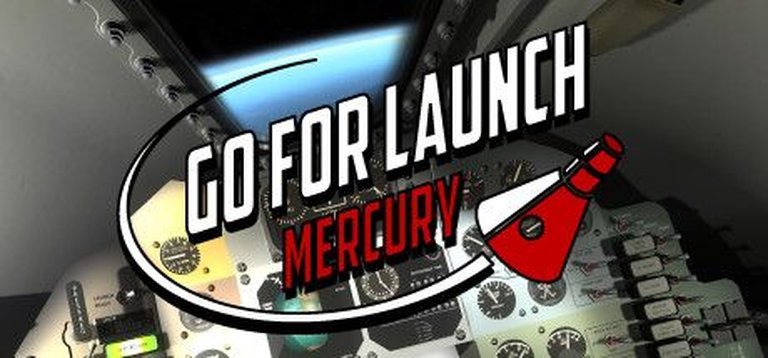
Go for Launch: Mercury is a historically accurate space flight simulation game that places players in the cockpit of the Mercury spacecraft, faithfully recreating the experiences of the original Mercury Seven astronauts during the 1950s and 1960s. Featuring fully interactive spacecraft interiors and exteriors, detailed models of Atlas and Redstone rockets, and a scaled Earth from low orbit, the game supports both standard monitors and virtual reality headsets. Designed as both an engaging simulation and an educational tool, it is suitable for schools and colleges to teach astronomy, spaceflight history, and related STEM fields.
Gameplay Videos
Where to Buy Go for Launch: Mercury
PC
Go for Launch: Mercury Guides & Walkthroughs
Go for Launch: Mercury: A Historical Simulation in the Virtual Trenches
Introduction
In the crowded landscape of spaceflight simulators, Go for Launch: Mercury positions itself not as a flashy action game or a sprawling sandbox, but as a meticulous, reverent time capsule. Released in 2017 by solo developer Joe Chisholm under the First Time Games banner, it emerged during the zenith of consumer Virtual Reality (VR) hype, promising an unparalleled educational pilgrimage into the perilous, pioneering days of Project Mercury. This review argues that Go for Launch: Mercury is a fascinating, deeply sincere artifact of historical simulation, whose significant technical shortcomings and isolated development context ultimately define a project more valuable for its ambitious intent and niche communal legacy than for its finished, playable form. It represents the passion-project extreme of the VR boom—a game that intimately understands its subject but often wrestles with the medium it chose to portray it.
Development History & Context
The story of Go for Launch: Mercury is intrinsically the story of its creator, Joe Chisholm (credited in communities as Inter Solar 83). As a one-person studio operating under First Time Games, Chisholm embodied the indie developer ideal: a single-minded visionary pursuing a deeply personal passion project. The game was born from an Indiegogo crowdfunding campaign, which set the stage for its development ethos—community-involved, slow-burn, and transparently the work of an individual. This context is paramount; every update, bug, and feature request played out in public Steam discussion threads, where Chisholm directly addressed backers, explaining that “as a lone developer these things take time.”
Technologically, the game was built in Unity, a versatile but demanding engine for VR. Its 2017 release placed it alongside the commercial maturation of the HTC Vive and Oculus Rift CV1. The stated goal was a “fully functioning, interactive” simulation suitable for “schools and colleges,” a dual mandate of entertainment and education that created a unique tension. The gaming landscape of late 2017 was dominated by accessible VR experiences and established space sims like Elite Dangerous, but there was a glaring gap for a hyper-focused, historically accurate Mercury simulator. Go for Launch: Mercury aimed to fill that void with a level of detail targeting a specific, educated audience: students and space history buffs. Its development was therefore a balancing act between academic rigor, VR’s nascent usability standards, and the finite resources of a solo developer, a challenge made evident by the persistent community reports of technical friction.
Narrative & Thematic Deep Dive
Go for Launch: Mercury possesses no traditional narrative with characters and dialogue. Its story is the historical record of the Mercury Seven missions, and its “narrative” is the player’s own procedural journey through that record. The game’s thesis, repeated in its official descriptions, is one of vicarious historical experience: “let you re-live the exact experiences of those early pioneers.” This is not a dramatization with fictionalized tension; it is a simulation of procedure, environment, and physical reality.
Thematically, the game orbits several core ideas:
1. Authenticity as a Sacred Trust: Every feature—”Fully functioning, interactive spacecraft interiors and exteriors,” “Detailed models of the Atlas and Redstone rockets,” a “full scale recreation of earth”—is presented in the service of historical accuracy. The inclusion of the cancelled Freedom 7II mission is a telling deep-cut detail, speaking to a fanatical devotion to the complete Mercury program timeline, not just the famous successes.
2. The Intimacy of Early Spaceflight: By placing the player inside the Mercury capsule (via VR) or its control stations, the game explores the claustrophobia, mechanical complexity, and sheer vulnerability of the first American manned spaceflights. The theme is the bridge between man and machine, astronaut as systems operator.
3. Education Through Embodiment: The explicit goal to be “suitable for use by schools and colleges” frames the entire experience as a pedagogical tool. Learning about the Mercury program isn’t through reading or watching, but through doing—performing the checklist, viewing the instrument panel, witnessing the launch from the pad. The narrative is the curriculum.
The “characters” are therefore the astronauts (the Mercury Seven) and the hardware itself. The game’s dialogue is the language of telemetry, CAPCOM updates (implied), and the physical feedback of switches and levers. Its plot is the mission timeline: launch, orbit, re-entry, splashdown. This is a narrative of procedure and survival, where the drama stems from fidelity to historical events and the player’s execution of complex tasks under simulated stress.
Gameplay Mechanics & Systems
Gameplay is structured around mission-based simulation. The core loop involves selecting one of the seven Mercury missions (from Freedom 7 to Gordon Cooper’s 22-orbit endurance test), then experiencing it from multiple potential perspectives:
- Spacecraft Pilot: The premier VR experience. Here, the player is sealed inside the iconic, cramped Mercury capsule. Gameplay is a intense ballet of physical interaction using motion controllers (or mouse/keyboard) to manipulate switches, pull levers, monitor gauges, and follow mission timelines. The “systems” are the spacecraft itself—life support, attitude control, retro-rockets—all modeled with stated accuracy.
- Launchpad/Ground Observer: A unique feature allowing players to witness the Atlas or Redstone rocket launches from the historically accurate launch pad. This provides a spectacular, contextual view of the vehicle they are eventually meant to pilot or control.
- Mission Control: The game references “A virtual recreation of mission control including control room, spacecraft hangar and pilot’s office.” This suggests a secondary gameplay layer where the player might observe or even participate in the ground segment of the mission, though specifics from sources are limited.
Innovative Systems:
* Multi-Perspective Historical Fidelity: The ability to not only fly the mission but also witness the launch from the ground is a standout educational feature rarely seen in sims. It connects the human-scale pilot experience with the monumental power of the launch vehicle.
* Dynamic Spacecraft States: The description notes spacecraft interiors/exteriors crafted to “accurately portray the changes in design and loadout.” This implies different mission configurations (e.g., sub-orbital Redstone vs. orbital Atlas flights) are visually and functionally distinct.
Flawed & Problematic Systems (Per Community Feedback):
* VR Implementation & Stability: This is the most cited flaw. Steam discussions are replete with reports of the game “Hangs at the VR adjustment screen,” “Crashes Instantly (Rift S),” and general non-functionality on various setups. One user noted, “Unable to start a flight because my widescreen monitor doesn’t display all controls,” indicating UI scaling issues outside VR.
* Lone Developer Paces: The slow, sometimes silent, update schedule (e.g., “it’s been about 2 months since the last update”) created anxiety among backers. This points to a development cycle where critical bug fixes and compatibility updates for the fast-evolving VR ecosystem were a constant, likely overwhelming challenge.
* Scope vs. Polish: The ambition to model “7 Fully functioning” spacecraft and multiple rocket variants for a solo developer inevitably led to a product where the depth of simulation in one area may have been sacrificed for breadth. Community posts hint at unfinished or rough edges, asking “Are you finished modeling the Atlas rocket and its launch?”
The gameplay, therefore, is a high-fidelity simulation concept perpetually at war with the practical realities of a small-scale VR development. Its systems are brilliant in conception but often brittle in execution.
World-Building, Art & Sound
World-Building & Setting: The game’s world is not a sandbox but a hyper-specific historical reconstruction. The setting is “North America,” specifically the Cape Canaveral launch complexes and the low Earth orbit of the 1950s/60s. Every asset is built to serve this period. The “full scale recreation of earth as seen from low orbit” is a critical piece of world-building, contextualizing the Mercury missions’ awe and terror with a believable, if simplified, planetary view.
Art Direction: Relying on the Unity engine with a focus on 3D realism, the art targets a documentary aesthetic. The priority is accurate cockpit instrument layouts, panel textures, and rocket geometry over stylistic flair. Screenshots and descriptions suggest a clean, functional, and somewhat sparse visual style appropriate to the era and the simulation’s educational purpose. The “hangar” and “pilot’s office” mentioned in the VR Wiki hint at a museum-like curation of the era.
Sound Design: Sources are silent on specifics, but for a VR simulation of this nature, sound is paramount. One can infer a design focused on diegetic audio: the roar of launch vehicles (Redstone’s punch versus Atlas’s thunder), the hum and click of cockpit machinery, the radio chatter (presumably sourced or recreated), and the profound silence of orbit. The sound design would be a crucial tool for immersion, selling the physical reality of the historical experience.
Collectively, the audiovisual presentation aims for immersive authenticity over entertainment spectacle. It builds a world to be studied and operated within, not just gawked at. The atmosphere is one of sober, respectful simulation, where the glamour of space is always undercut by the gritty reality of analog switches and ballistic trajectories.
Reception & Legacy
At launch and in the years since, Go for Launch: Mercury has existed in a curious limbo. Critical reception is almost non-existent; Metacritic lists “0 Critic Reviews” for the PC version. It flew under the radar of mainstream gaming press, a fate common to niche educational/VR titles. Commercial reception is harder to gauge—its price fluctuated ($3.99 to $16.99 on different storefronts), and it remains a obscure listing on platforms like Steam and SideQuest.
Its reputation is built almost exclusively on community feedback, particularly within the Steam forums and among VR enthusiasts seeking hard sims. Here, its Very Positive Steam rating (81/100 from ~73 reviews at time of writing) tells a nuanced story. Positive reviews likely praised its unparalleled detail, its successful capture of the Mercury capsule experience, and its value as a teaching tool. Negative reviews, evident in the persistent discussion threads, are dominated by technical frustrations: crashes, incompatibility, control issues, and fears of abandoned development.
Its legacy is therefore dual:
1. As an Educational Artifact: It stands as a notable, if imperfect, entry in the “games as educational tools” movement. Its direct targeting of curricula and its painstaking historical modeling make it a reference point for what a dedicated individual can achieve in this space.
2. As a Cult Historical Sim: Within the tight-knit community of spaceflight enthusiasts and VR simulation devotees, it is remembered as a unique, deeply authentic experience. Its influence is indirect—it did not spawn clones, but it demonstrated a demand for hyper-specific historical VR simulations that bigger studios have yet to fully address. The frequent community requests in its forums for a “Gemini and Apollo mission simulator” sequel speak to its aspirational impact, even if that sequel never materialized from this particular developer.
The game is a footnote in VR history that illustrates both the medium’s potential for profound, specific immersion and its pitfalls during a period of turbulent hardware and software fragmentation.
Conclusion
Go for Launch: Mercury is a simulation of profound ambition and unmistakable passion. It successfully transports the player into the claustrophobic cockpit of a Mercury capsule and onto the launchpad of a Redstone or Atlas rocket with a fidelity that remains rare in gaming. Its unwavering commitment to the historical record of Project Mercury, down to the cancelled missions, gives it a scholarly weight that elevates it beyond mere entertainment.
However, it is also a game defined by its constraints. The solo development model, while granting it a singular vision, also left it vulnerable to the relentless pace of VR hardware iteration and the sheer complexity of simulating intricate 1960s systems. The result is a title that is frequently cited as brittle, buggy, and demanding of patience to even access its core experience.
Its place in video game history is not that of a genre-defining blockbuster, but of a pure, uncut historical artifact simulator. It is a testament to what one dedicated developer can build for a dedicated audience, and a cautionary tale about the fragility of such projects in a fast-moving technological landscape. For the historian, the educator, or the hardcore sim enthusiast with a robust PC and a tolerance for technical troubleshooting, Go for Launch: Mercury offers a singular, invaluable journey. For the general player seeking a polished, accessible space adventure, it remains a problematic curio. Its ultimate value lies in its rare and successful pursuit of a single, difficult goal: to make the history of human spaceflight feel physically present, one meticulously modeled switch at a time.